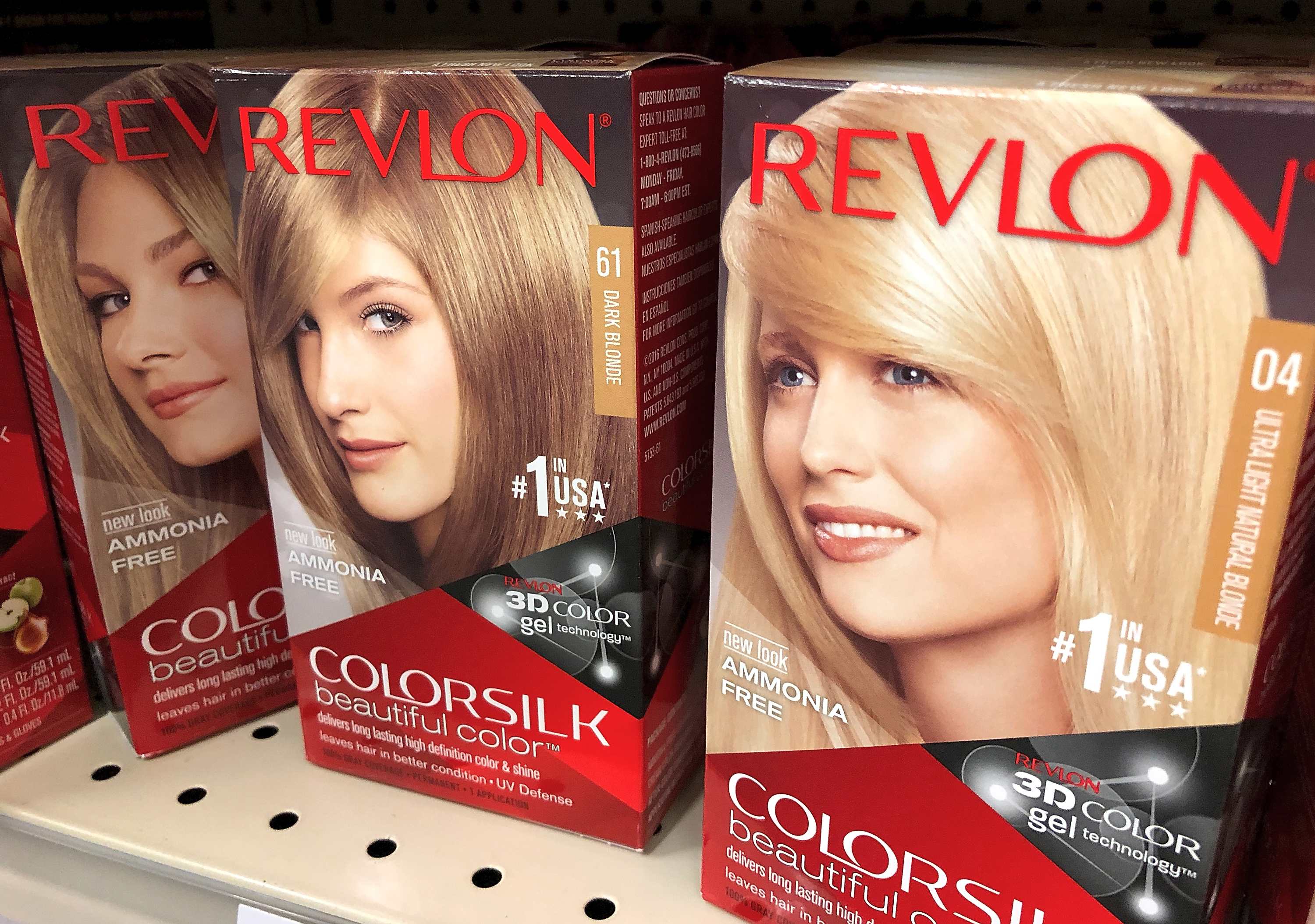

An analysis of 23 popular hair color products sold in the United States found that all of them contained at least one carcinogenic chemical.
The tests were conducted on 21 boxed dyes and two temporary hair chalk products from brands including L’Oreal Paris, Dark & Lovely, Madison Reed, Manic Panic, Revlon, and Clairol, consumer advocacy group Consumer Reports said in a recently published report.
Product samples were sent to an accredited lab, where the items were tested for heavy metals, volatile organic compounds (VOC), and phthalates.
“All 23 samples tested positive for dichloromethane (methylene chloride), a volatile chemical widely used in the U.S. for a variety of products, including paint, adhesives, and pharmaceuticals,” Consumer Reports said.
The chemical “is classified as a probable carcinogen for humans. Its use is restricted in cosmetics and is generally prohibited except for limited applications, such as in certain hair dye formulations.” Six product samples contained toluene, a chemical toxic to the central nervous system and a lung irritant.
Analysts identified four samples with DEHP, another chemical linked to several health issues, including high blood pressure, reproductive problems, early menopause, and insulin resistance.
One sample showed trace amounts of the chemical benzene, which can cause acute myeloid leukemia, a type of cancer that affects blood and bone marrow.
In a Sept. 25, 2025, post, the U.S. Food and Drug Administration warned that coal-tar hair dyes, in which the colors are made via chemical processes, can cause health issues.
“Hair dyes have caused eye injuries, including blindness, when used in the eye area. Eyebrow and eyelash dyeing are not permitted uses of coal-tar hair dyes,” the FDA said.
“Some coal-tar hair dyes can cause allergic reactions or sensitization that may result in skin irritation and hair loss. People can develop sensitivities with repeated exposure. In addition, formulations may change over time. So, it’s possible to have a reaction even if you have dyed your hair in the past without a problem.”
The FDA advised people who experience reactions to contact their health care providers regarding treatment options.
In the Consumer Reports analysis, the following products were tested:
- Oriental Black from Bigen
- Root Touch Up Permanent by Nice'n Easy, and Natural Instincts, Black, from Clairol
- Honey Blonde and Jet Black from Dark & Lovely
- Nutrisse Ultra Creme, Dark Chocolate from Garnier
- Feria, Downtown Brown, and Magic Root Permanent, Dark Brown from L'Oreal Paris
- Radiant Color from Madison Reed
- Dark Chestnut Brown from Naturtint
- ColorSilk Beautiful Color, Dark Brow, and ColorSilk With Bond Repair Complex, Dark Brown, from Revlon
- Color Ultime, Sapphire Black, and Keratin Color, Espresso, from Schwarzkopf
- Black from Simpler
- Purple AF, from Arctic Fox
- Mystic Gray from Creative Image Adore
- Color & Clenditioner, Merlot, from Keracolor
- Unicorn Hair, Jello, from Lime Crime
- Raven from Manic Panic
- Black Hair Dye Shampoo from Waverlo
- Hair Chalk Salon from Desire Deluxe
- Pink Shade Stix from Hally
Product Analysis
The samples were tested for 62 VOCs of concern, with the results showing that all brands had “detectable levels” of these substances. There are currently no FDA limits for VOCs in hair dyes.
“Our testing found that some hair dyes released VOCs at levels high enough to raise real concern, particularly for people who color their hair frequently at home,” Ashita Kapoor, director of product safety at Consumer Reports, told The Epoch Times.
“What the data made clear is that a single application may seem low-risk, but chronic, repeated exposure is a very different picture. That cumulative risk is something most consumers simply don’t consider when reaching for an at-home hair dye.”
Waverlo’s Black Hair Dye Shampoo was found to have the highest total VOCs out of all 23 tested products.
L’Oreal Paris’s Feria Downtown Brown contained the highest amount of dichloromethane, a potential carcinogen, followed by Revlon’s two products in the second and third spots.
Meanwhile, Bigen’s Oriental Black had the lowest total VOCs, and Clairol’s Natural Instincts, Black had the lowest amount of dichloromethane.
Regarding heavy metal tests, 15 products contained no detectable levels of five heavy metals—arsenic, mercury, lead, chromium, and cadmium.
Trace amounts of arsenic were detected in Bigen’s Oriental Black, Clairol’s Root Touch Up, Desire Deluxe’s Hair Chalk Salon, and Hally’s Pink Shade Stix.
As for phthalates, the product samples were tested for 13 types.
Madison Reed’s Radiant Color had three phthalates, with detected amounts being higher than in other products. A phthalate linked to high blood pressure, reproductive issues, and insulin resistance was detected in four products—Bigen’s Oriental Black, Garnier’s Nutrisse Ultra Creme, Simpler’s Black, and Desire Deluxe’s Hair Chalk Salon.
Company Responses
Of the 18 companies whose products were tested in the Consumer Reports analysis, seven responded to the report.
Madison Reed and Bigen said they were committed to meeting applicable regulatory standards for their products. Desire Deluxe said all their products are developed in line with applicable safety frameworks.
Responding to VOC presence in the company’s products detected in the consumer report, Desire Deluxe told The Epoch Times, “We do not routinely perform full VOC screening on every finished product batch; however, in response to your findings, we have initiated independent confirmatory testing” across multiple production lots.
Schwarzkopf told The Epoch Times that all its raw materials and finished products undergo “vigorous assessments and tests” to ensure they are safe for use.
Arctic Fox told The Epoch Times that trace detections of VOCs found in its products “reported from highly sensitive analytical methods do not establish intentional use and, on their own, do not indicate a safety risk.”
In its response to the report, Simpler said it was committed to monitoring the safety of ingredients used in its products.
The trace level of toxic contaminants mentioned in the report is “commonly found across many cosmetic products due to naturally occurring background levels in pigments, raw materials, and the environment,” Hally told The Epoch Times.
“These amounts are well below levels considered to pose any health risk by regulatory agencies and independent toxicologists,” the company said.
In an emailed statement to The Epoch Times, SoftSheen Carson, which owns the Dark & Lovely brand, said that its products and ingredients undergo “extensive screening.”
“The ingredients we use in our products are selected based on their record of safety. Each and every ingredient used in our products has been thoroughly reviewed and tested by our internal safety team, made up of toxicologists, clinicians, pharmacists, and physicians. No cosmetic product can be appropriate for every individual; even the safest products may contain ingredients to which a few individuals may be sensitive,” the company said.
The Epoch Times was unable to reach Creative Image Adore and reached out to the nine remaining companies for comments, but did not receive a response by publication time.
Hair Dye Studies
A study published in the JAAD International journal in February raised concerns about toxic elements in hair dyes.
The study reviewed nearly 100 studies and found that some of them suggested potential associations between hair dye use and cancer risk. This includes higher bladder cancer risks among people irrespective of sex, and an elevated risk of estrogen receptor and breast cancer among African American women.
The children of women who used hair dyes during the first trimester of pregnancy faced “significantly” higher risk of acute lymphoblastic leukemia, a cancer of the blood and bone marrow, according to the study.
“There is evidence to suggest possible increased cancer risks for frequent, long-term hair dye use in specific populations,” the study said.
However, a September 2020 study published in The BMJ, which analyzed data from more than 117,000 women, reported no links between hair dye use and most types of cancer, except for a few.
The women initially had no cancer and used permanent hair dyes, with researchers following them for 36 years.
“No positive association was found between personal use of permanent hair dye and risk of most cancers and cancer-related mortality,” the study said.
“However, we did find a positive association for risk of some cancers, including basal cell carcinoma, breast cancer (estrogen receptor negative, progesterone receptor negative, hormone receptor negative) and ovarian cancer.”
According to a 2022 post published by the National Cancer Institute, an estimated 50 to 80 percent of women in the United States, Japan, and the European Union have used hair dyes.
“Given the widespread use of hair dye products, if these products had even a small effect on cancer risk that could translate into a considerable public health impact,” the post said.
In an April 14 statement, Consumer Reports called for immediate industry and legislative action based on its findings of toxic chemicals in hair dyes.
“Consumer Reports’ findings confirm what we already feared: The products people use on their bodies and in their own homes are not being held to a basic standard of safety,” Oriene Shin, safety advocacy manager at Consumer Reports, told The Epoch Times.
“For years, industry has ignored warnings from advocates about toxic chemicals in personal care products, putting people’s health at serious risk. Companies must step up to eliminate these harmful chemicals and regulators must strengthen safety standards so that they put people’s health first.”