

California public health officials warned the public April 30 of a dangerous toxin present in mussels gathered by recreational harvesters along the coast that can cause severe, and sometimes fatal, shellfish poisoning.
The California Public Health Department has issued its annual quarantine of all species of mussels gathered by recreational sport harvesters from the state’s ocean shore from May 1 though Oct. 31.
During the quarantine, any mussels gathered should not be consumed by humans, the department said.
“The quarantine area extends from the Oregon border to the Mexican border, including all bays, inlets, and harbors in Los Angeles County,” the Los Angeles County’s public health department said.
The annual quarantine may be extended if monitoring results indicate the presence of dangerous levels of biotoxins outside of the normal period, the state reported.
“The annual quarantine is in place so the public does not collect mussels during this high-risk period for marine toxins,” the state health department stated.
Mussels eaten during these months can have concentrated levels of naturally occurring toxins that contain highly poisonous paralytic shellfish poison and domoic acid biotoxins that are poisonous to humans.
Shellfish are filter feeders that pump water through their systems. They eat algae and other food particles. When mussels eat the algae that “blooms” during the summer months and produces the toxins, the shellfish can accumulate the poisons in their tissues.
Early symptoms of paralytic shellfish poisoning include tingling and numbness of the lips and tongue, which can start within minutes to a few hours of eating the toxic shellfish.
The symptoms are typically followed by a loss of balance, lack of muscular coordination, slurred speech, and difficulty swallowing.
Complete muscular paralysis and death from asphyxiation can occur in severe cases in the absence of proper medical care, health officials said.
Domoic acid poisoning, also referred to as amnesic shellfish poisoning, can happen within 30 minutes to 24 hours after eating toxic seafood.
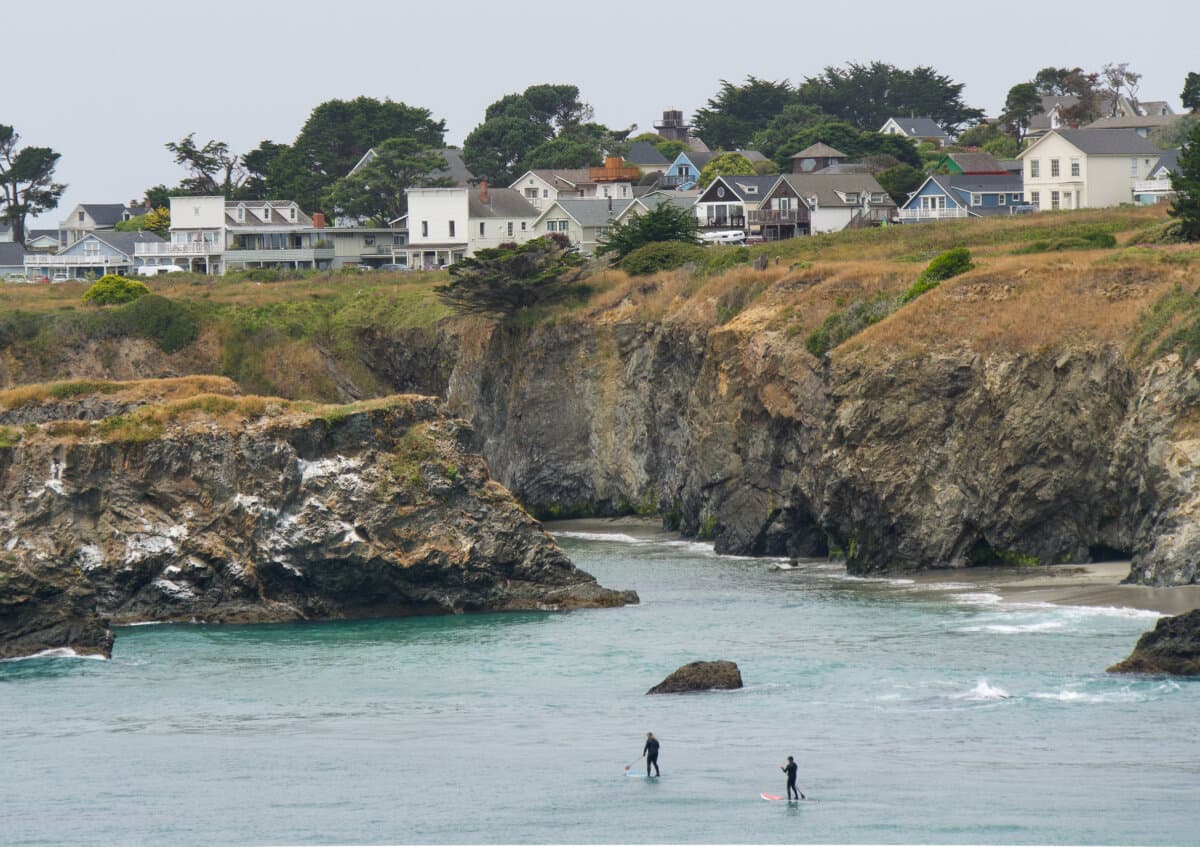
The village of Mendocino on the Northern Coast of California, as seen on July 20, 2024. (Travis Gillmore/The Epoch Times)
In mild cases, symptoms of domoic acid poisoning can include vomiting, diarrhea, abdominal cramps, headache, and dizziness.
In severe cases, the victim can have trouble breathing, confusion, disorientation, cardiovascular instability, seizures, excessive bronchial secretions, permanent loss of short-term memory, coma, or death, according to health officials. There is no known antidote to the toxin, though symptoms tend to resolve completely within a few days in most cases.
People eating clams or scallops are warned to remove and discard the digestive organs or viscera and other dark parts. Only the white meat of the clams and scallops should be eaten by humans.
Bivalve shellfish should not be collected for food from any area subject to sewage or chemical contamination, according to the health departments.