“Fate may push you to the edge, but the one who decides whether to rise again and stand tall is you.”
These are the hard-won words of Tu Jing-wei, a Taiwanese cancer survivor reflecting on his 10-year battle with stomach cancer in an interview with The Epoch Times.
For years, Tu endured chronic stomach pain while working at a tech company. During flare-ups, he refused to take leave—instead, he'd summon his wife, a nurse, to his office for a quick pain-relief injection.
In 2015, one episode struck with unprecedented severity. Sensing something unusual, his wife immediately arranged a gastroscopy. The diagnosis was grim: stomach cancer.
At just 39 years old, Tu underwent a total gastrectomy, a surgery that removed his entire stomach.
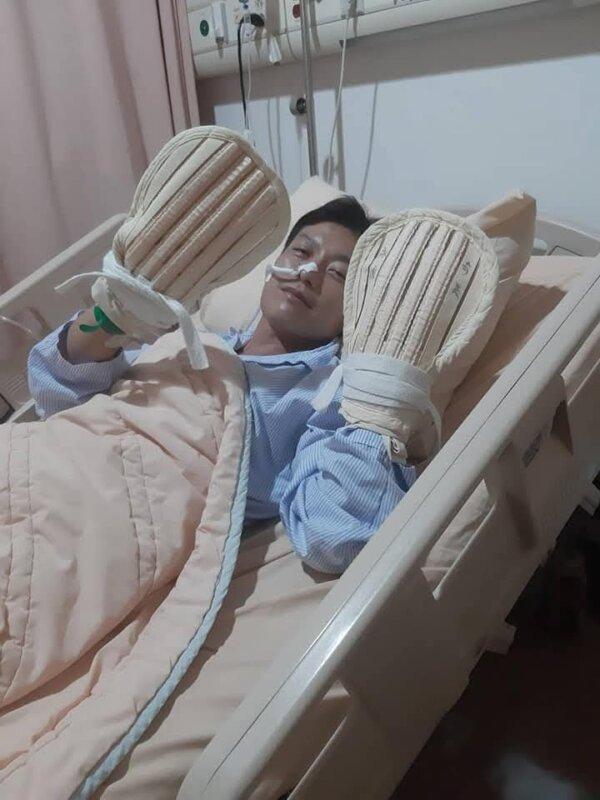
Tu Jing-wei after undergoing gastrectomy surgery. (Courtesy of Tu Jing-wei)
The 1st Meal: A 2-Hour Ordeal
After losing his stomach, sensations of both hunger and fullness disappeared entirely. For nine days in the hospital, he survived solely on intravenous fluids.
Before discharge, his oncologist told him: “Without a stomach, you’ll have to relearn how to eat. You must persevere—I know you can do it.”
The concept of “relearning to eat” initially left Tu bewildered. Then came his first meal at home. His wife carefully prepared a thin porridge and, out of habit, he took two quick spoonfuls. The porridge lodged painfully at the surgical connection between his esophagus and small intestine. He felt as though he were suffocating—unable to swallow further or bring it back up. Cold sweat broke out, and dizziness overwhelmed him. The torment lasted more than two hours.
He later learned what he experienced was called “dumping syndrome”—the first major challenge for total gastrectomy patients. From then on, he had to sip even water in three separate swallows—otherwise, it would get stuck or forcefully spray back out.
The Darkest Days
“The day I left the hospital, I decided I no longer wanted to live,” Tu said. “I couldn’t see myself enduring this. Chemotherapy had destroyed my career, and every meal brought excruciating pain just to stay alive. In an instant, my life plunged into darkness.”
At his lowest point, his wife pulled him back from the brink, reminding him of his responsibility—their children were still young—and giving him a sense of duty.
Tu set himself a lifeline: “I’ll hold on for at least 10 more years—long enough to see the kids grow up.”
After a month of sick leave, he returned to work. Lunch was often skipped entirely or limited to a few cautious bites.
He underwent chemotherapy twice a month. Due to severe malnutrition, treatment had to be paused after the fourth month for a full month of recovery. His body grew increasingly frail. Two years after diagnosis, he developed cancer cachexia, a condition marked by rapid weight loss, low blood sugar, muscle wasting, and anemia.
“I realized at the time that promising myself 10 more years was overly optimistic,” he said. “In another two years, I’d probably be ready to end it all.”
The Moment Everything Changed
The turning point came in early 2018. At his wife’s suggestion, Tu joined a company-organized trip to Thailand. After walking for just 15 minutes, he became so exhausted that he had to sit down. Holding his wife, they both broke into tears.
“We’re out here taking a walk. If you get tired, we can sit down and rest—that’s nice, too,” she said.
Her unconditional love dissolved his deep guilt and ignited a fierce determination to fight back and heal. “I had thought, if I died, it might be a relief for my family. But what if I didn’t die? What if I still couldn’t die after two more years? How much more suffering would they endure because of me?”
At that moment, an unyielding will to survive surged from deep within his heart. Tu made up his mind: “Once I’m back in Taiwan, I’ll start exercising—I’m going to reawaken my body.”
Rebuilding Through Tai Chi
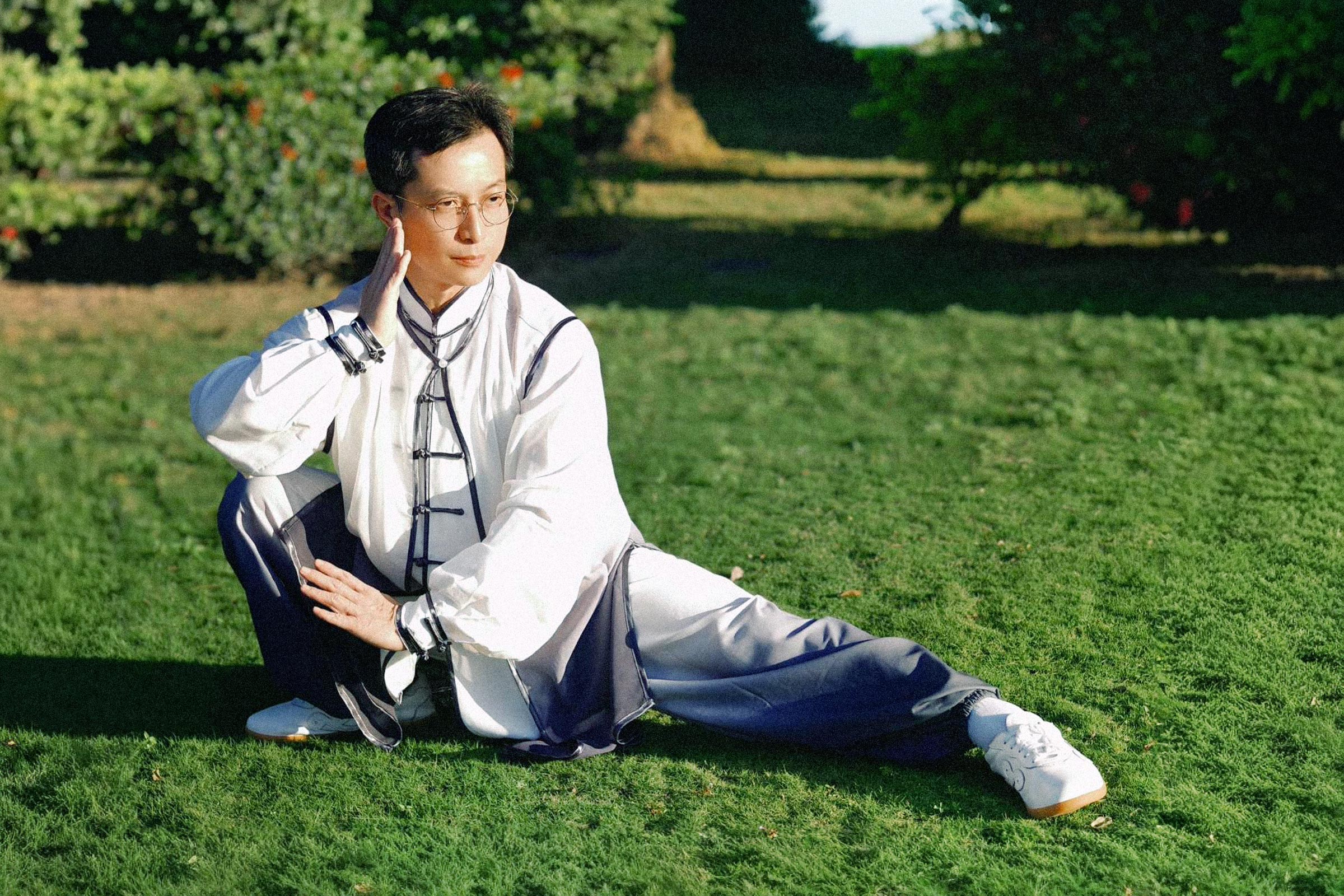
Considering his physical weakness, Tu chose a gentle form of exercise—Tai Chi, along with simple warm-up routines and stretching. Although Tai Chi movements are slow, he could manage no more than half an hour at first. After each session, his entire body ached, and he needed massage therapy to ease the soreness. The process was grueling, but gradually, both his physical strength and his appetite began to return.
Numerous studies have confirmed the benefits of exercise in post-cancer rehabilitation, showing sustained improvements in cardiopulmonary function, mobility, quality of life, sleep, and emotional well-being.
Two years after he began exercising, Tu suggested a trip to Vietnam with his wife. For the first time, he was able to keep pace with the tour group.
“I felt exhilarated,” he said, smiling widely, his eyes bright and sparkling.
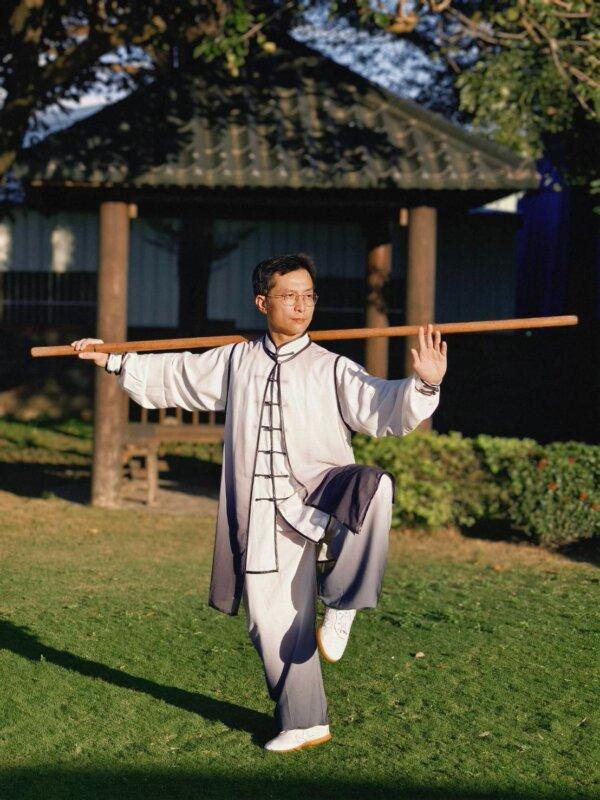
Tu Jing-wei practicing Tai Chi. (Courtesy of Tu Jing-wei)
When Unemployment Became a Gift
Just as his body was regaining strength, Tu faced another setback—he was laid off. He sank into sadness, feeling as if he had lost his place in society. About a month later, a friend who exercised with him invited him to visit an elderly man living with stomach cancer. Standing by the patient’s bedside and seeing the despair in the man’s eyes, Tu suddenly recognized the same helplessness he had felt two years earlier.
That visit changed the way he saw his unemployment.
“I just don’t have a job—so what’s the big deal?” Tu said.
The pain of losing a job paled in comparison to losing his health. Once health is lost, all desires shrink to one thing—regaining it. He decided to treat unemployment as a gift—a chance to finally rest and heal after years of illness without proper respite.
During that period, life became simple and disciplined. He exercised every day, rested when he was tired, ate small amounts when it was time, and lay down to sleep whenever dumping syndrome struck.
Then, for his birthday in September 2019, his wife asked him what he’d like for dinner. Without thinking, he blurted out: “I want a steak.”
The reply stunned them both. He realized fear of food had faded. His body, now demanding energy to fuel increased activity, had sent a clear signal of recovery.
From then on, he began exploring a wider variety of foods. Though discomfort lingered at times, he knew he was finally breaking free from dumping syndrome.
Finding His Calling
Tu persisted with his training, and through exercise, he met his mentor—a master of traditional Tai Chi. More than guiding him in harnessing the art for his own rehabilitation, the mentor also encouraged him to promote physical activity among others, bringing hope and renewed health to those in need. This cast him into quiet contemplation, and he rediscovered a renewed sense of purpose and meaning in life.
In 2021, Tu competed in the Formosa Cup Tai Chi Championship in Taiwan and claimed the title.
He said that his only goal entering the competition was “to stand on stage without experiencing low blood sugar.”
“I didn’t want a trophy or applause,” he said. “I just wanted to stay alive.”
Winning the championship restored his confidence. “That victory made me feel, for the first time, that I was like a normal, healthy person again. Maybe I was even a little stronger than the average person. It was a validation of my self-worth.”
In 2022, Tu was named one of the top 10 Cancer Warriors of the Year by the Taiwan Cancer Foundation.
Drawing from his journey, he uplifts cancer patients with plain words: “Why didn’t you die the moment cancer struck? It means heaven has a purpose for you. If you have faith, this is a test given by the god you believe in—and your experience is meant to move and inspire others.”
Today, Tu regularly volunteers as a Tai Chi teacher. This year, he chose early retirement to become a full-time Tai Chi instructor.
Quoting Confucius, he said, “At 50, one understands one’s destiny.”
Tu, now nearing 50, believes he has found the mission entrusted to him by heaven: helping others regain their health.
“I want to spend the rest of my life promoting exercise, so the people around me know that we can, in fact, learn to love ourselves more,” he said.
It has now been a full decade since his cancer diagnosis in 2015. “After cancer, I spent three years in despair, three years rebuilding myself, and the last four giving deeper meaning to my life beyond the tragedy.”
Cancer Is Not a Death Sentence
Tu hopes to tell every cancer patient that “with advances in medical treatment today, cancer is no longer an incurable disease. The real crisis is losing confidence and hope.”
In recent years, new treatments for stomach cancer have advanced rapidly, Dr. Yelena Y. Janjigian, professor and chief of the gastrointestinal oncology service at Memorial Sloan Kettering Cancer Center in New York, told The Epoch Times. For instance, biomarker testing reveals each patient’s unique tumor characteristics, enabling personalized treatment plans—some patients can even avoid surgery altogether.
The incidence of stomach cancer is rising among younger adults, ages 40 to 50. Even mild symptoms, such as anemia, acid reflux, or vague abdominal discomfort, should prompt early medical consultation and endoscopic examination, she added, as early detection dramatically improves cure rates.
Dr. Chen Hong-yun, attending physician in gastroenterology at New Taipei City Hospital, told The Epoch Times that stomach cancer is closely linked to Helicobacter pylori infection, a common bacterium transmitted through contaminated food, water, or close contact, and poor dietary habits—especially high-salt, pickled, smoked foods, and overly hot foods and drinks—that repeatedly damage the gastric lining and raise cancer risk.
He recommended cultivating regular exercise as a robust preventive measure. A meta-analysis published in the Journal of Sport and Health Science found that moderate-to-high levels of physical activity significantly reduce the overall risk of digestive system cancers.
A Choice That Shapes Destiny
“I want people to know,” Tu said, “that even when fate pushes you to the edge, the choice to rise still belongs to you.”
Ten years after his diagnosis, Tu stands as more than a cancer survivor—but as living proof that healing is not only about medicine. It is about perseverance, movement, love, and the courage to choose life again—one step, one breath, and one gentle Tai Chi movement at a time.