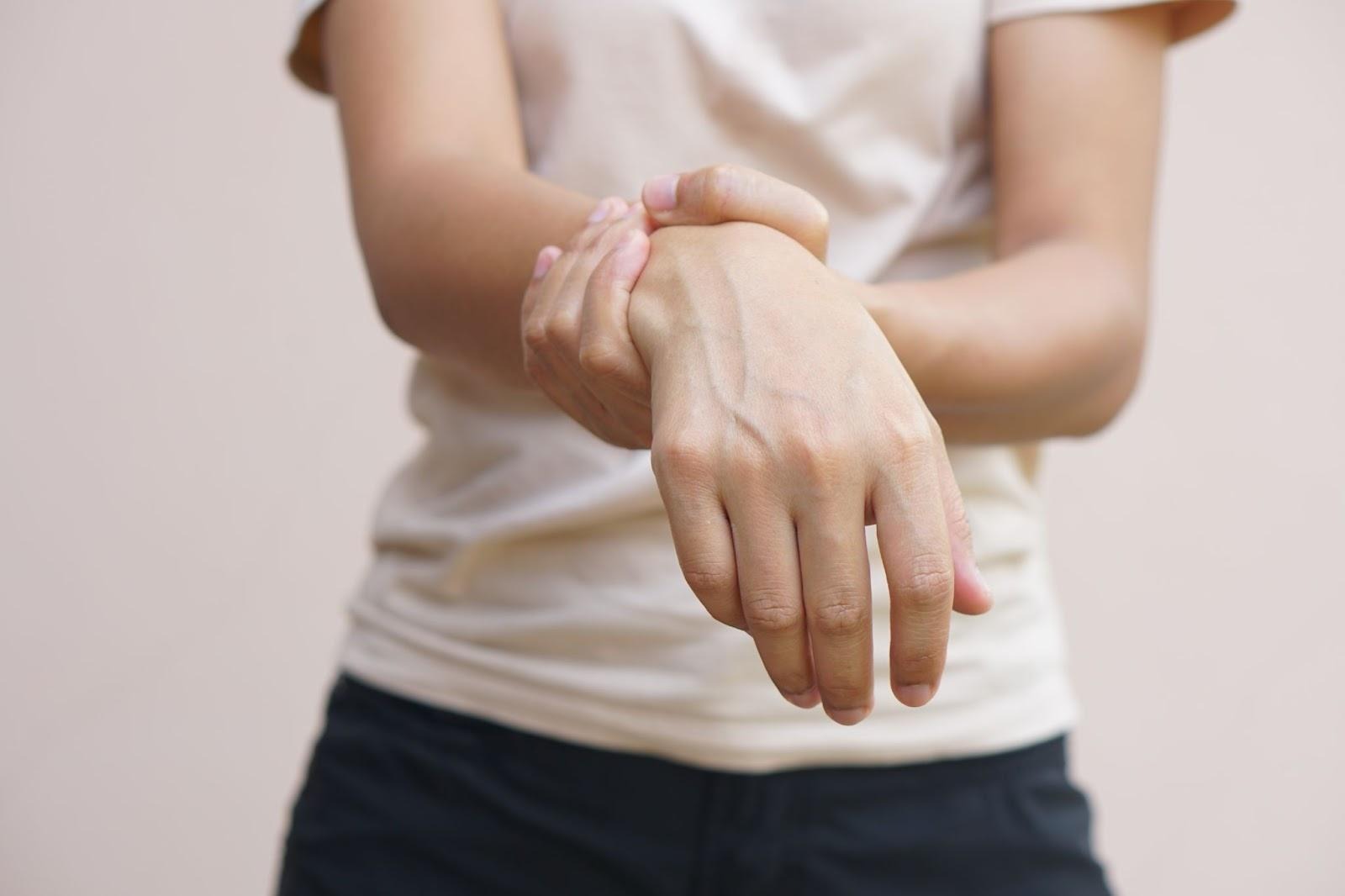
At 44, Mr. Chen had endured months of soreness and numbness in his left hand. Despite normal strength, the discomfort flared the moment he turned his head left—and nearly vanished when he turned it to the right.
Examination revealed a markedly tight and raised left sternocleidomastoid muscle and an elevated left clavicle. Compression of nerves and vessels in the thoracic outlet—caused by muscle tension and bone misalignment—is known as thoracic outlet syndrome. After manual release of the tight muscles and a clavicle adjustment, Chen’s symptoms improved by about 90 percent.
Dr. Wang Sheng-Xiang, vice director of Jia Pin Chinese Medicine Clinic in Kaohsiung, Taiwan, shared this case in an episode of “Health 1+1” on NTD, a sister outlet of The Epoch Times. He said that hand numbness stems from various causes—pinpointing the exact one and addressing it with personalized treatment is essential for real and lasting relief.
‘Tech Neck’: High Risk for Thoracic Outlet Syndrome
Have you ever been scrolling on your phone when your hand suddenly goes numb, or woken up in the middle of the night with a tingling hand? If the numbness changes with your posture—such as turning your head, raising your arm, or looking down—it may be caused by irritation of the peripheral nerves. The most common cause is thoracic outlet syndrome.
Thoracic outlet syndrome frequently affects people whose hands are raised overhead for long periods, such as painters or teachers writing on blackboards, as well as those who spend long hours on a computer or looking down at a phone. Carrying a heavy single-shoulder bag can also compress the nerves near the collarbone, triggering hand numbness.
Wang suggested a simple self-test: Raise both arms as if surrendering, keeping your elbows and shoulders at 90 degrees, and repeatedly open and close your palms. If you experience intense shoulder soreness, arm heaviness, or numbness in your hands within 30 seconds to 3 minutes, it may indicate thoracic outlet syndrome.
At-Home Relief and Rehab Tips
In addition to professional treatment, Wang recommends simple self-care methods to ease symptoms.
Warm Compress
Applying a warm compress to the affected area is the most commonly recommended method. It helps relax muscles, improve blood circulation, and reduce pressure on nerves.
Posture Correction
For tech neck or rounded shoulders, tucking the chin and lifting the chest helps to relieve nerve compression sites.
Wall Push Exercise
Stand against a wall and use the back of your head to perform a “wall push” movement. Contract the muscles at the back of your neck for five to 10 seconds, then relax. Repeat this exercise to help correct forward head posture.
Precise TCM Treatment
Long-standing hand numbness can be largely improved with TCM, according to Wang. “The strength of TCM lies in its integrative approach,” he said. By combining Western anatomical knowledge with traditional orthopedic techniques, practitioners can identify the root cause of pain and deliver targeted treatment.
He shared the case of a woman in her 60s who, one month after a car accident, developed tightness in her left elbow that prevented full extension. Her left pinky and ring finger began showing obvious numbness, especially severe at night—often waking her up. Symptoms worsened with prolonged elbow bending, such as during long phone calls or while sleeping with the elbow flexed. She frequently dropped small objects from her left hand due to reduced grip stability.
Wang first ruled out central nervous system issues—such as facial drooping, slurred speech, or leg weakness—to confirm she had not suffered a stroke. Local examination revealed reduced sensation along the inner side of her ring and little fingers, and tapping the inner elbow produced an electric-like sensation. The diagnosis: ulnar nerve compression.
Treatment involved TCM orthopedic techniques to relax the muscles and soft tissues around the elbow, including the forearm flexor group and flexor carpi ulnaris, combined with acupuncture and herbal therapy to improve her overall constitution. Wang also advised her to avoid prolonged elbow bending and reduce pressure on the inner elbow while sleeping. After just two treatment sessions, her finger numbness was significantly reduced, and hand stability steadily returned.
Research has shown that acupuncture can regulate nerves at the wrist and influence the brain’s sensory centers, offering lasting benefits for conditions such as carpal tunnel syndrome.
Hand Numbness Could Signal a Stroke
Hand numbness is often caused by nerve compression, but Wang warns that the first step isn’t always to look for a compressed nerve, but rather to determine whether the numbness could be a warning sign of stroke.
Numbness not related to stroke usually stays in a fixed area—like just the little finger or a few specific fingers—and may change with posture. For example, it can worsen when you turn your head, raise your arm, or look down.
In contrast, hand numbness caused by a stroke typically comes with these six major warning signs:
- Sudden Hand Weakness: The hand feels powerless, and you may drop objects.
- Speech Difficulties: Speech becomes slower, slurred, or unclear.
- Facial Asymmetry: The face feels unusual, or one corner of the mouth droops.
- Weakness in the Same-Side Leg: The leg on the same side of the body loses strength.
- Unsteady Gait: Loss of balance while walking.
- Sudden Onset: Symptoms appear suddenly, rather than over time.
If any of these signs occur, seek emergency medical attention immediately.
Hand Numbness as a Sign of Diabetic Neuropathy
Another common cause of hand numbness is diabetic neuropathy, which develops gradually. It often starts in the feet and progresses to the hands, typically affecting both hands symmetrically. Patients usually feel burning or tingling sensations that do not improve with changes in posture.
For people with diabetes, hand numbness is considered an upper-limb complication. Carpal tunnel syndrome is a common cause, affecting 10 percent to 14 percent of diabetic patients—almost twice the rate seen in the general population. For mild numbness, wearing a wrist brace at night to avoid excessive elbow flexion can help.
Persistent symptoms may require surgery to relieve ligament pressure, but recovery in diabetic patients can be slower, with a higher risk of wound infection. Studies have also shown that combining acupuncture with conventional treatment can improve diabetic neuropathy more effectively than Western medicine alone.