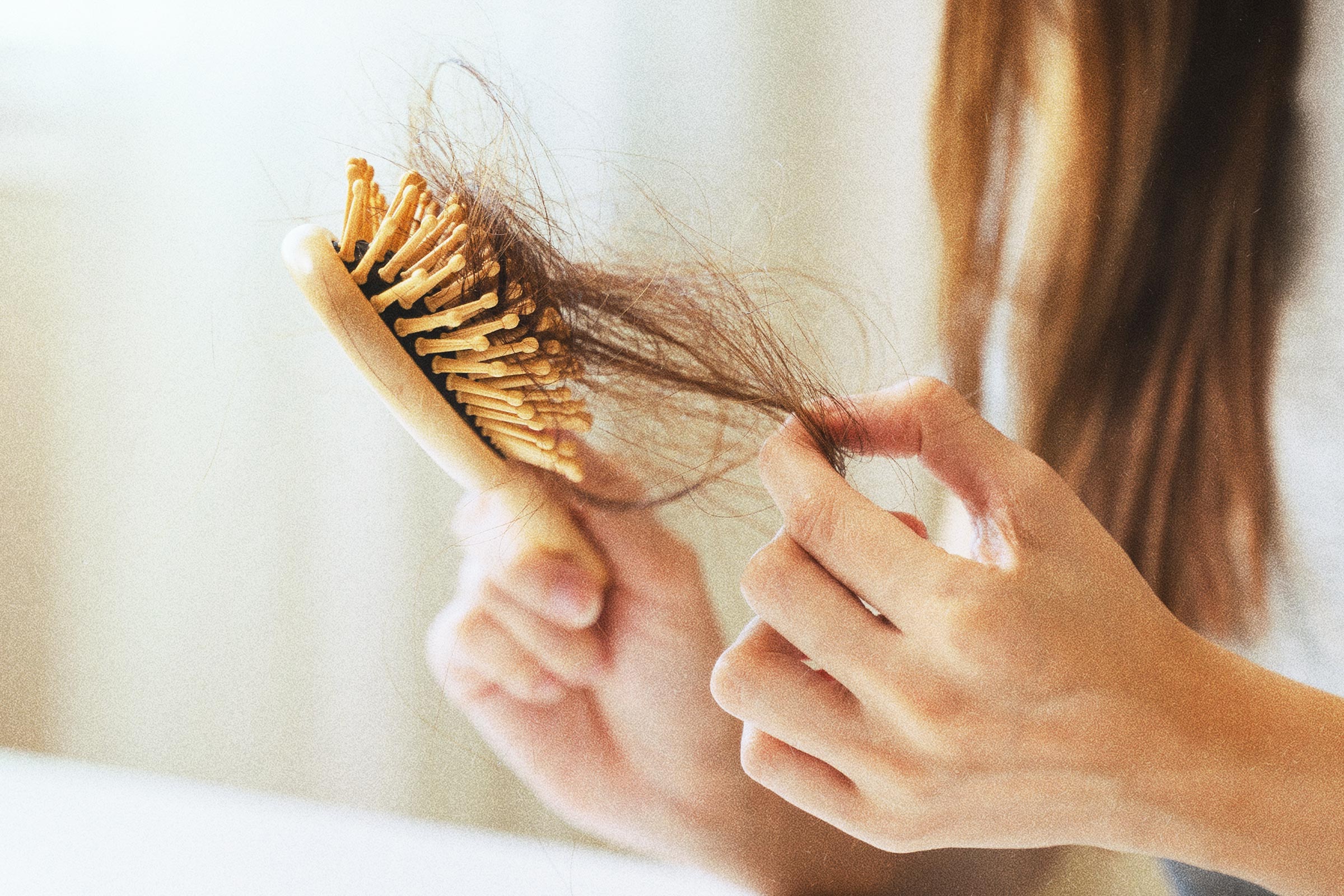
Hair loss can be frustrating, emotional, and confusing—especially when the usual explanations don’t seem to fit. Traditional Chinese medicine (TCM) offers a different perspective: hair thinning often reflects deeper imbalances in the body’s internal systems. These patterns—rooted in a person’s unique “constitution”—influence stress resilience, hormone balance, circulation, and inflammatory tendencies.
By identifying these patterns, TCM practitioners use tools such as herbal teas, acupressure, and lifestyle adjustments to support healthier hair growth from the inside out.
TCM Perspective on the Causes of Hair Loss
In an episode of the NTDTV “She Health” program, Cheng-Hsiu Shih, a Taiwanese TCM practitioner and president of the Tongde Medical Association, said that hair loss seldom has a single cause. Instead, it typically reflects disruptions in several body systems. The most common patterns involve blood deficiency, kidney yin deficiency, damp-heat accumulation, chronic stress, or the side effects of medication, including cancer therapy.
Blood Deficiency and Kidney Yin Deficiency
In TCM, it is believed that “hair is the surplus of blood,” highlighting the close relationship between healthy hair and adequate blood circulation. When blood is abundant and flows smoothly, it nourishes the scalp and supports strong hair growth.
“When blood is insufficient, or circulation is poor, the body prioritizes vital organs, and less essential parts—like the nails and hair—are the first to be affected,” Shih said.
Likewise, the kidneys are believed to store “essence,” which governs growth, reproduction, and aging. As kidney yin energy declines with age, hair often becomes thinner, drier, and more brittle.
These concepts parallel modern understandings of age-related hormonal shifts, reduced circulation, and diminished cellular repair.
Damp-Heat Constitution
Another common cause of hair loss in TCM is a “damp-heat” constitution. Although the term may sound unfamiliar, it closely corresponds to a state of chronic, low-grade inflammation described in Western research.
People with this constitution often experience oily skin and scalp, redness, irritation, or recurrent seborrheic dermatitis. Damp-heat can worsen in hot, humid weather and may be aggravated by diets high in sugar and refined carbohydrates.
Shih noted that excessive sugar intake is a particularly strong trigger. This connection is supported by modern research: A 2023 study published in Nutrients found that young men who drank more than 3,500 milliliters of sugar-sweetened beverages per week had more than three times the risk of hair loss compared with those who didn’t.
When internal inflammation meets external humidity—especially in warm climates—the inflammatory load on hair follicles increases, increasing the likelihood of shedding.
The Effect of Stress
Stress is another major contributor to hair loss, and its effects can be both gradual and sudden. The most dramatic example is alopecia areata, where hair falls out in round patches.
A 2021 Harvard University study published in Nature demonstrated that chronic stress elevates corticosterone (the rodent equivalent of human cortisol), prolonging the resting phase of hair follicle stem cells and preventing new hair growth.
Shih noted that patients with stress-related alopecia often present with a pale scalp, which reflects reduced circulation and energy flow.
Cancer Treatments
Chemotherapy is well known for causing hair loss, but Shih noted that patients who begin Chinese herbal medicine before undergoing chemotherapy or radiation often experience less severe hair thinning.
These treatments help strengthen the body, support blood production, and reduce inflammation. Even when hair has already fallen out, TCM therapies may help accelerate regrowth and improve recovery by restoring internal balance.
Shih recommends that cancer patients consider using TCM to strengthen their bodies before beginning chemotherapy or radiation therapy, as this may help reduce the severity of side effects.
Different Patterns in Men and Women
Hair loss manifests differently in men and women, Shih noted. In men, it is often influenced by androgens (steroid hormones present in higher levels in men) and typically appears as a receding hairline or balding at the crown—commonly known as male pattern baldness. In women, hair loss is usually more diffuse, with general thinning across the entire scalp.
Hormonal imbalances in women can sometimes trigger localized hair loss patterns similar to those seen in men. Shih shared the case of a female patient nearing menopause who was experiencing high levels of stress and significant emotional fluctuations.
In such cases, TCM treatment focuses on soothing the liver and regulating qi, combined with kidney-tonifying herbs to help rebalance hormones and stabilize mood.
Patients with hair loss often have distinct body constitutions, which can sometimes be identified through changes in scalp coloration—particularly in acute cases, Shih said. For instance, the scalp of a person with stress-induced alopecia areata may appear noticeably pale—sometimes even lighter than the surrounding skin. In contrast, those with a damp-heat constitution often have red, itchy scalps that may be accompanied by pustules.
These physical signs help guide TCM practitioners in selecting treatments tailored to each patient’s underlying condition.
Herbal Teas for Supporting Hair Health
Shih recommends specific herbal teas to target different causes of hair loss in TCM:
Blood Deficiency: Chuanxiong Tea
Hair loss related to blood deficiency is more commonly seen in women and may be accompanied by symptoms such as light-colored menstrual blood, low menstrual volume, pale lips, and a lack of color in the nails.
Shih recommends Ligusticum chuanxiong (Chuanxiong), a traditional Chinese herb known for its ability to improve circulation. It is often used to support cardiovascular health and help regulate hormonal balance.
How to Make: Add three slices of Chuanxiong to a cup of hot water. For better extraction, you can briefly simmer the mixture. If you are short on time, steeping the slices in hot water works as well.
Stress: Peppermint Tea
For stress-related hair loss, peppermint tea is commonly used in TCM to “soothe the liver,” a concept referring to calming emotional fluctuations and promoting smooth energy flow. Peppermint’s natural aromatic compounds have relaxing effects, and modern
research highlights its strong antioxidant, antibacterial, and even anticancer properties, all of which may help counteract stress-related inflammation.
How to Make: Pour boiling water into a cup, then add about 0.07 to 0.11 ounces (2 to 3 grams) of dried peppermint leaves and stir. If using fresh peppermint, increase the amount to roughly 4 to 6 grams because fresh leaves contain more water and are less concentrated in active compounds.
Damp-Heat Constitution: Dandelion Tea
A damp-heat constitution is commonly seen in people with seborrheic dermatitis or those who experience scalp redness and itching. In TCM, dandelion is valued for its heat-clearing and detoxifying properties, making it particularly effective for hair loss linked to damp-heat conditions.
Studies have shown that dandelion leaves are rich in antioxidants and have anti-inflammatory effects.
How to Make: Add about 0.07 to 0.11 ounces (2 to 3 grams) of dried dandelion to a cup of hot water. Let it steep for a few minutes before drinking.
When using herbal teas for general wellness, Shih suggests starting with small amounts to avoid overuse. If you experience any discomfort after drinking, discontinue use. For those incorporating herbal teas into a treatment plan, it is important to consult a TCM practitioner, who can adjust the dosage based on personal needs.
Acupressure and Scalp Combing
Scalp massage can help promote blood circulation in the head and may help prevent hair loss. According to TCM, the scalp contains numerous acupoints—specific locations along the body’s meridians, or channels through which energy flows, that are believed to have therapeutic effects.
Shih recommends using a wide-toothed comb with rounded tips to gently comb the scalp in broad strokes. This technique stimulates the acupoints on the scalp, enhancing circulation of both blood and qi, or vital energy.
For people with poor circulation due to kidney or blood deficiency, regular scalp combing can be particularly beneficial. However, those with seborrheic dermatitis should avoid frequent combing, as it may aggravate scalp irritation and itching. In such cases, Shih often prescribes herbal powders that can be massaged into the scalp during shampooing to ease symptoms.
In addition to scalp combing, Shih recommends applying pressure to specific acupoints to support hair health. These include:
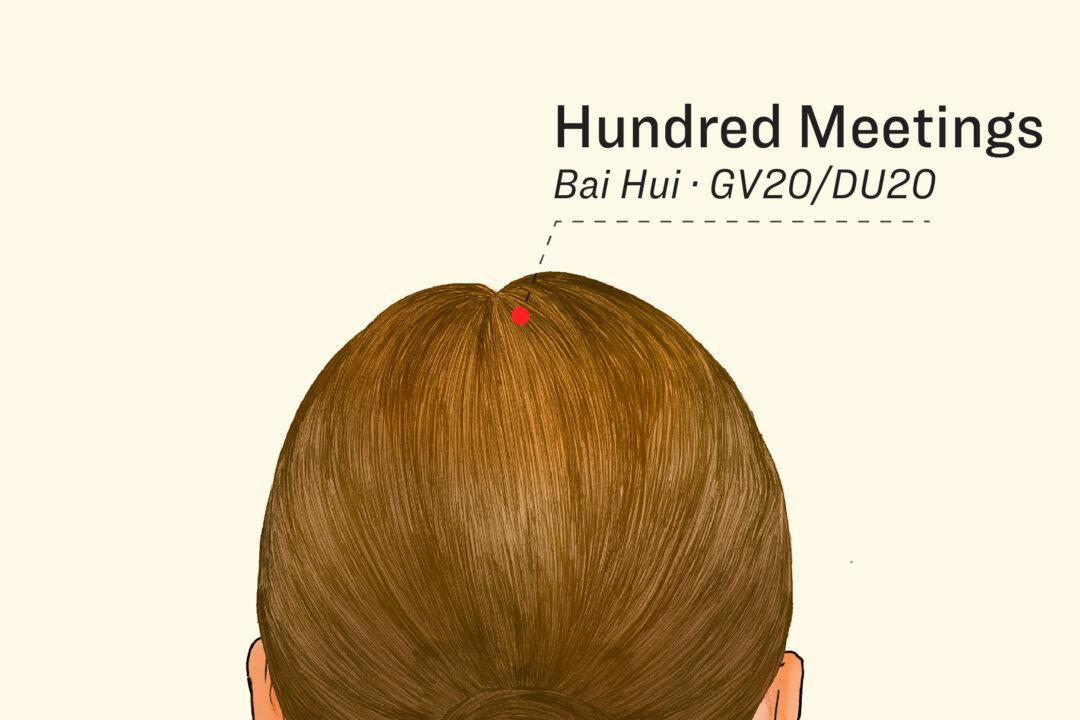
Hundred Meetings (Baihui, DU20)
- Main Functions: Lifts qi, improves circulation to the head, and calms the mind.
- Location: At the top of the head, where the midline meets a line drawn between the tops of the ears.
The Epoch Times
- Benefit for Hair: Enhances blood flow to the scalp and supports hair growth in cases linked to stress, poor circulation, or age-related thinning, especially at the crown.
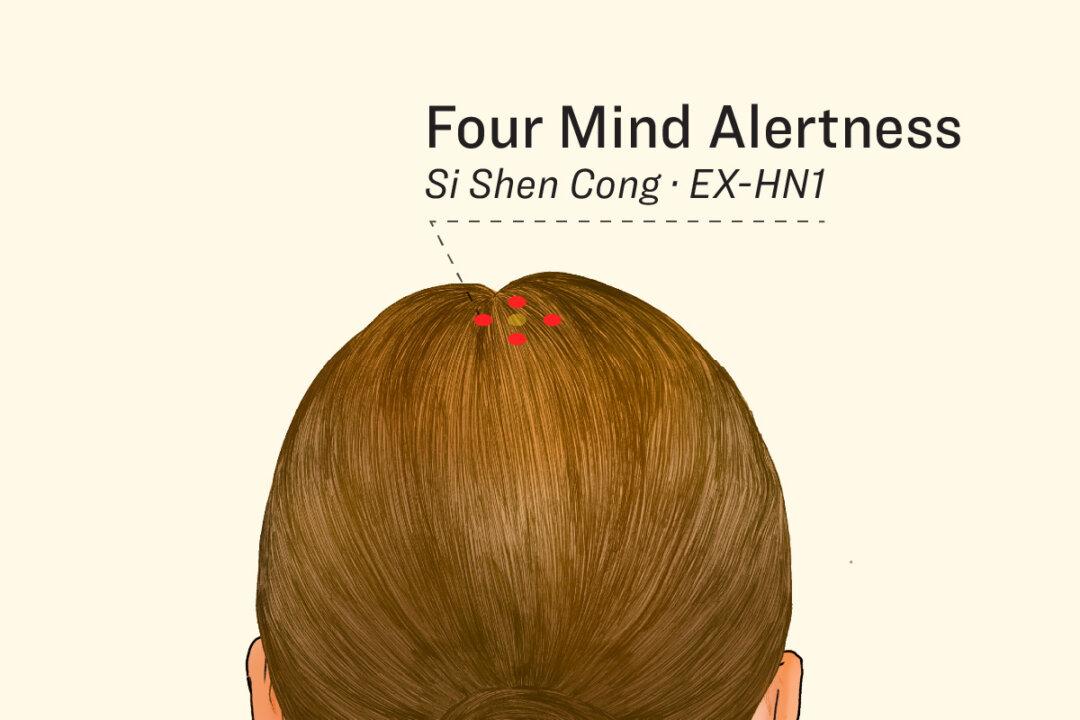
Four Mind Alertness (Sishencong, EX-HN1)
- Main Functions: Regulates the nervous system and promotes circulation around the vertex of the scalp.
- Location: Four points located 1 cun (about a thumb-width) in front, behind, and to each side of Baihui.
The Epoch Times
- Benefit for Hair: Stimulates nutrient delivery to hair follicles and is useful for diffuse thinning related to blood deficiency, kidney deficiency, or chronic mental strain.
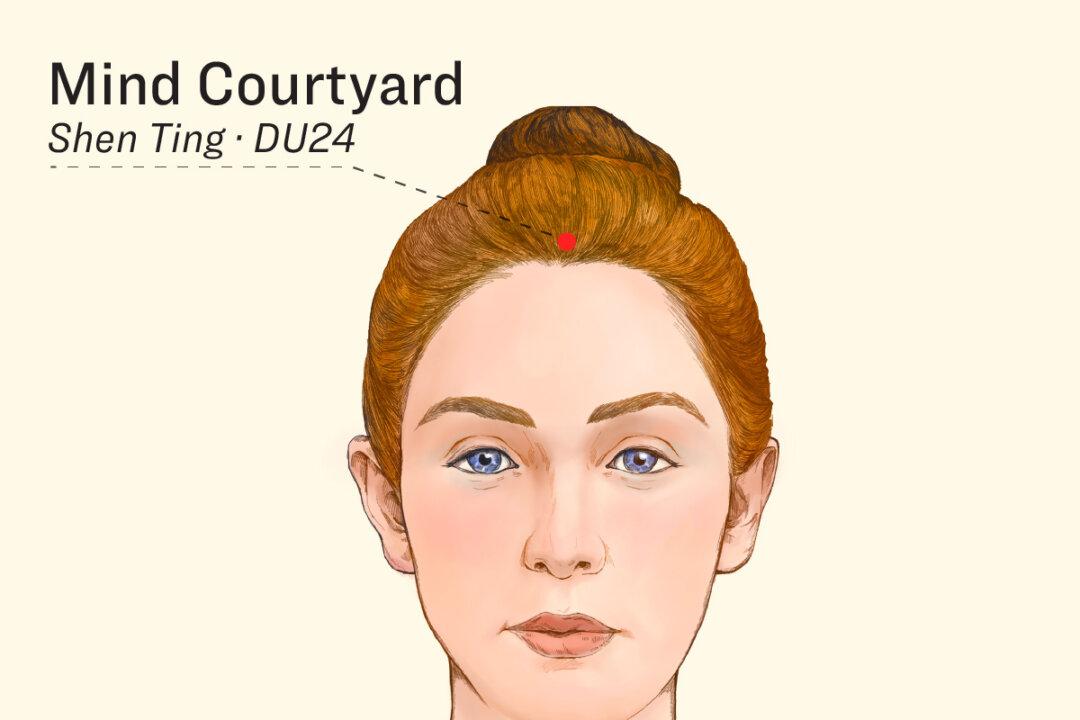
Mind Courtyard (Shenting, DU24)
- Main Functions: Clears the mind, relieves tension, and reduces frontal heat and inflammation.
- Location: On the midline, about 0.5 cun (half an inch) behind the front hairline.
The Epoch Times
- Benefit for Hair: Supports regrowth along the frontal hairline and helps reduce stress-related shedding.
Wind Palace (Fengfu, DU16)
- Main Functions: Releases tension in the neck, improves circulation to the head, and nourishes the brain.
- Location: In the hollow below the occipital bone, at the base of the skull.
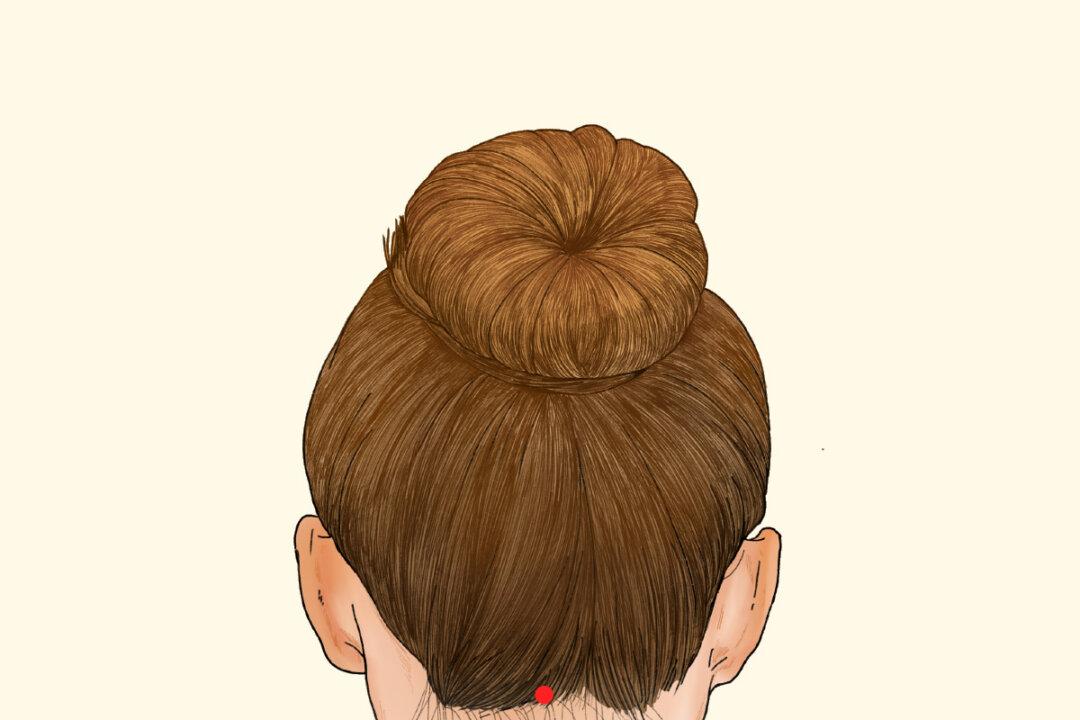
The Epoch Times
- Benefit for Hair: Relaxes tight neck muscles that restrict blood flow to the scalp, supporting healthier hair at the top and back of the head.
Wind Pool (Fengchi, GB20)
- Main Functions: Promotes blood circulation, clears heat, and relaxes the neck and shoulders.
- Location: In the depressions below the occipital bone and slightly outward, on both sides of the neck.
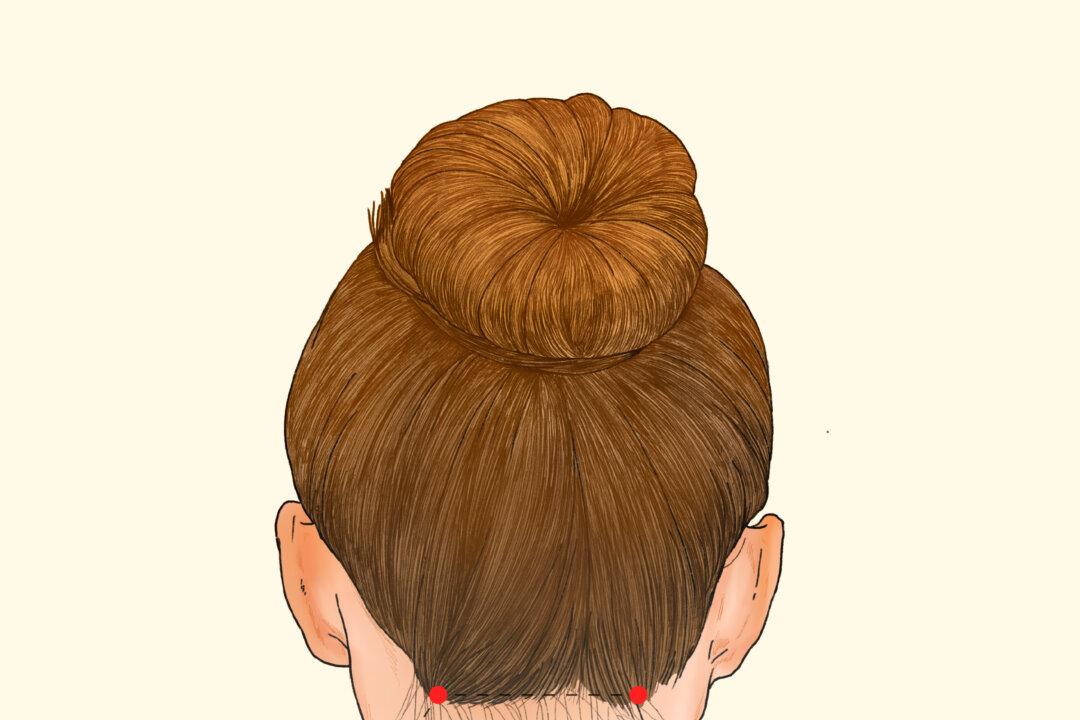
The Epoch Times
- Benefit for Hair: Improves scalp circulation and may reduce symptoms of damp-heat such as oily, itchy, or inflamed scalp—common contributors to hair thinning.
Massage each point gently with the fingertips in circular motions for 30–60 seconds once or twice daily. These techniques can be combined with scalp combing to further encourage blood flow and support follicle health.
A 2022 review found that acupuncture can effectively treat several types of hair loss, including alopecia areata, androgenetic alopecia (male pattern baldness), and seborrheic dermatitis.
Lifestyle Adjustments to Improve Hair Loss
When experiencing hair loss, the most important step is to restore balance to the body, mind, and spirit, Shih said. Modern lifestyle factors such as chronic stress, poor diet, medication overuse, lack of sleep, and insufficient rest are commonly linked to hair loss.
Shih emphasized the importance of adopting the following habits:
Avoid Staying Up Late: Sleep deprivation can weaken the body’s overall constitution and worsen chronic inflammation, which may aggravate internal imbalances such as damp-heat or internal heat.
Manage Stress: Chronic stress not only drains the body’s energy but may also accelerate hair loss, making emotional balance an essential part of hair health.
Follow a Light, Balanced Diet: Maintaining a balanced diet can help prevent the buildup of internal damp-heat, which is often associated with hair loss, and may ease the burden on the body, especially for those with irregular sleep patterns.
Some herbs mentioned in this article may be unfamiliar, but they are generally available in health food stores and Asian grocery stores. It is important to note that treatment methods may vary depending on the person. Please consult with a health care professional for a specific treatment plan.