In the Yuan Dynasty, around the 14th century, a brilliant physician named Zhu Zhenheng (1282–1358) faced a puzzling case. A young lady, bedridden for six months, had lost all desire to eat, and no doctor could revive her. After carefully checking her pulse, Zhu uncovered the root of her ailment: lovesickness. Her fiancé had been away for five years with no word of his return, leaving her thinking about him all the time.
Zhu, known for blending medical expertise with keen psychological insight, devised an unconventional plan. He told the girl’s father, “This illness needs to be shocked with anger to heal.” Boldly entering her room, Zhu confronted the young woman, scolding her sharply: “You’re an unmarried lady, yet you’re pining for a man!” Stung by his words, the girl erupted in tears, her pent-up emotions pouring out. Astonishingly, right after this emotional storm, her appetite returned—she was hungry again!
This story was documented in a well-known traditional Chinese medicine (TCM) literature, “Medical Case Records.”
From the perspective of TCM, the spleen physically governs digestion. Mentally, it is linked to thinking. When the young lady was thinking excessively about her fiancé, she weakened her spleen and therefore lost her appetite.
The Spleen—More Than an Organ, It’s a System
The Eastern concept of the “spleen” differs significantly from Western medicine, in which the spleen is an organ located in the upper-left abdominal cavity, primarily responsible for four key functions: blood production during embryonic development, blood storage, filtering out aged cells and bacteria, and supporting immune defense.
In contrast, TCM views the “spleen” not only as a physical organ but as a comprehensive functional system.
While modern medicine defines organs in a concrete, physical sense, traditional medicine views the human body more fluidly—as an interconnected, holistic system rather than separate parts.
Dr. Lai Kok, a registered TCM practitioner in Hong Kong, told The Epoch Times that the spleen governs a range of abdominal organs, including the stomach, pancreas, small intestine, and large intestine. The spleen has also earned the title of the “foundation of postnatal existence,” meaning that after birth, one’s growth and daily life activities heavily depend on the spleen’s functionality.
The spleen’s primary physical functions include:
- Transformation and Transportation: Managing the digestion and absorption of food and fluids
- Blood Regulation: Providing nutrients for blood production and preventing excessive blood loss
On a mental level, the spleen is associated with thought and cognitive processes. A person with strong spleen function has clear thoughts.
The connection between the digestive system and the brain is reflected in modern research, which has uncovered a complex bidirectional communication network between the two. A comprehensive study suggests that the gut microbiota is closely linked to cognitive function, and modulating gut microbiota may enhance cognitive performance.
Rooted in the Earth Element
In TCM, the spleen is aligned with the “earth” element within the five-element framework—wood, fire, earth, metal, and water. Much like fertile soil yields abundant crops, the spleen’s primary role is to transform and transport nutrients from food and fluids, supplying the body with vital nourishment.
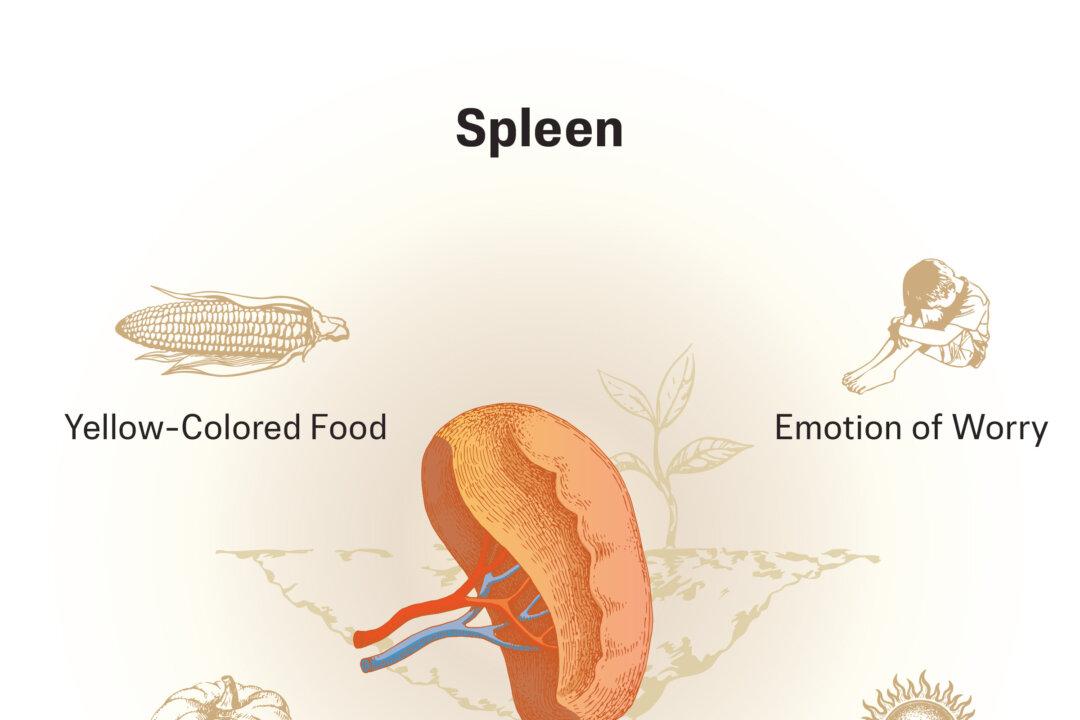
(Illustration by The Epoch Times, Shutterstock)
In the previous article of this series, we discussed how one element—corresponding to one organ and one emotion—can influence another. The five elements are interconnected through cycles of generation and control. The liver, associated with the wood element and the emotion of anger, exerts control over the spleen (earth). Thus, short-term, intense anger can counterbalance excessive mental rumination.
In the story, by provoking anger, Zhu triggered an emotional release that broke through the young lady’s mental and physical blockage. Her outburst of tears cleared the stagnation in her mind, leaving her feeling lighter and revitalizing her spleen’s energy, thus restoring her appetite and setting her on the path to recovery.
To further address the excessive worry that had led to spleen damage, Zhu told her that her fiancé had sent a letter promising his imminent return. The news brightened her mood, and her health began to recover swiftly. Three months later, when her fiancé actually returned, the young woman’s health had been completely restored.
How to Assess Spleen Health
TCM has a saying: “What exists within must manifest outwardly,” meaning that internal health conditions are reflected in external appearances.
A healthy spleen results in a rosy complexion, glossy lips, and firm muscles. Conversely, a weak spleen may lead to a sallow or dull complexion, pale or cracked lips, bad breath, diarrhea or unformed stools, and drooling during sleep.
How to Nourish the Spleen
The five elements also connect the five organs to seasonal cycles. While conventional calendars divide the year into four seasons, TCM recognizes five seasons: spring, summer, late summer, fall, and winter. The late summer, occurring around August, is marked by hot, humid conditions and corresponds to the spleen. During this period, the spleen’s energy is at its strongest yet most susceptible to harm. Excessive heat and humidity can lead to a frequent craving for cold beverages, which often weakens the spleen and stomach, resulting in digestive issues and other symptoms.
Li Yingda, a TCM practitioner at Cihang TCM Clinic in Taiwan, recommends the classic Chinese medicinal formula four herbs soup (si shen soup) to support overall health. This remedy strengthens the spleen, making it particularly effective for people with weak digestion or low immunity.
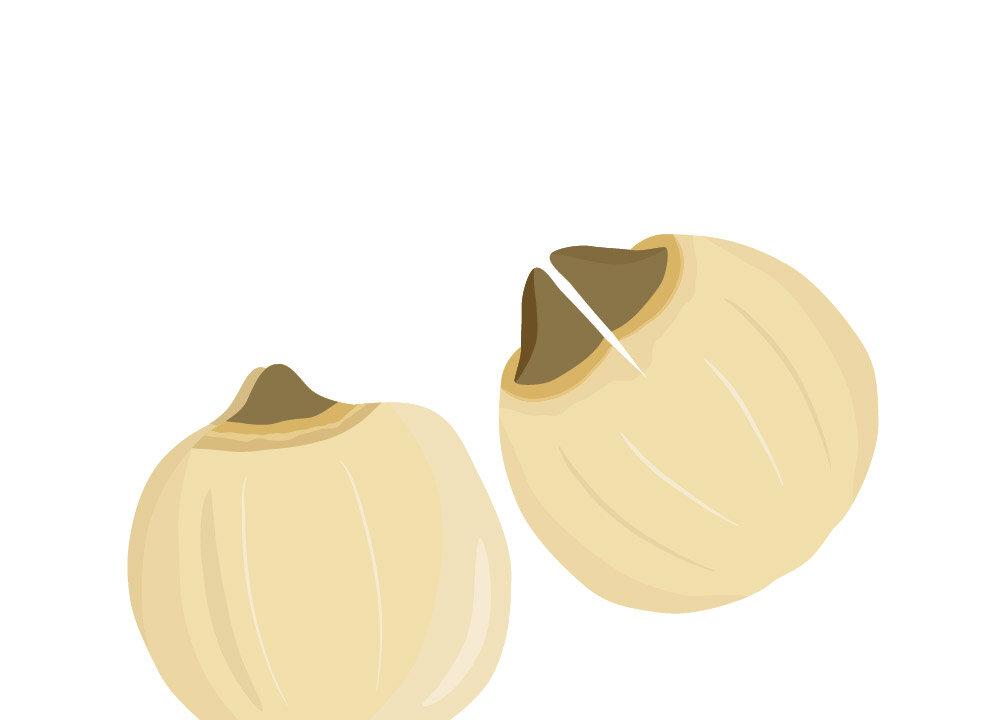
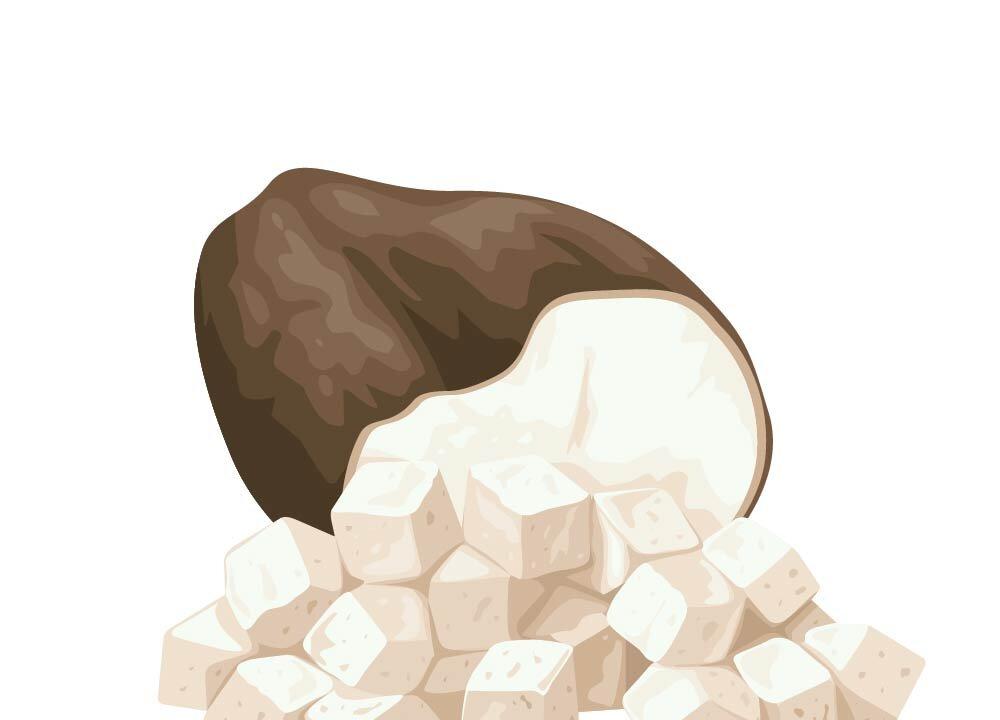
Four herbs soup is composed of four food-therapy ingredients with medicinal and nutritional value: Chinese yam (Huai Shan), lotus seeds, Gordon Euryale Seed(Qian Shi), and Poria fungus (Fu Ling). All four are neutral in nature and sweet in taste, and they help strengthen the spleen.
Studies have shown that complex carbohydrates in Poria fungus can improve antibiotic-associated diarrhea by modulating gut microbiota and enhancing the intestinal mucosal barrier, as well as supporting immune and metabolic regulation. Another study published in Carbohydrate Polymers found that polysaccharides in Chinese yams have anti-inflammatory properties and help protect the gut.
A common variation includes adding coix seeds (Job’s tears or Yi Ren) to enhance the effects of reducing excessive fluid in the body. Li said that drinking cold drinks to beat the heat can lead to the body accumulating excessive moisture that it can’t eliminate, and puts extra burden on the spleen and stomach, which TCM refers to as internal dampness accumulation—closely related to spleen function.
Recipe
Four Herbs Soup
Ingredients:
- 30 grams dried Chinese yam (Huai Shan)
- 60 grams lotus seeds
- 60 grams gordon euryale seed(Qian Shi)
- 25 grams poria fungus
- 30 grams coix seed
Preparation:
- Rinse all ingredients thoroughly and soak them in water for 20 minutes.
- Place all ingredients in a pot with 1,500 milliliters of water.
- Bring to a boil over high heat, then simmer on low heat for about one hour until the ingredients are soft and tender.
Precautions:
- Coix seeds have a mild diuretic effect and are unsuitable for those with cold or weak constitutions, frequent urination, or chronic loose stools.
- Pregnant women should consult a qualified TCM practitioner before using this formula.
- Eating the soup warm is important. Cold or iced versions may counteract its spleen-strengthening effect.
- This soup is a gentle tonic for support, not a substitute for medical treatment. If symptoms such as bloating, diarrhea, or fatigue persist, seek professional medical or TCM evaluation.
Moreover, the spleen also corresponds to the color yellow. To nourish the spleen, incorporate yellow, naturally sweet foods, particularly whole grains and root vegetables.
- Whole Grains and Root Vegetables: Brown rice, oats, millet, corn, barley, pumpkin, and yellow sweet potatoes.
According to the “Compendium of Materia Medica Supplement (Bencao Gangmu)”—a comprehensive and encyclopedic medical text of TCM compiled by Li Shizhen during the Ming Dynasty—sweet potatoes can “warm the stomach and nourish the five organs,” meaning they enhance blood circulation in the digestive tract, promote digestion, and provide nourishment to various organs. They are an excellent staple for those with spleen deficiency. Modern studies support their anti-inflammatory, gut-protective, and microbiota-modulating effects.
- Yellow Beans and Nuts: Soybeans, soybean sprouts, peanuts, cashews, and walnuts.
- Yellow Fruits: Pineapple, mango, and papaya, which bolster spleen and stomach function while aiding digestion.
A robust spleen is responsible for a wide range of physical and mental activities, and nourishing it affirms the TCM principle that the mind and body are inseparably connected, as vividly demonstrated in Zhu’s case.