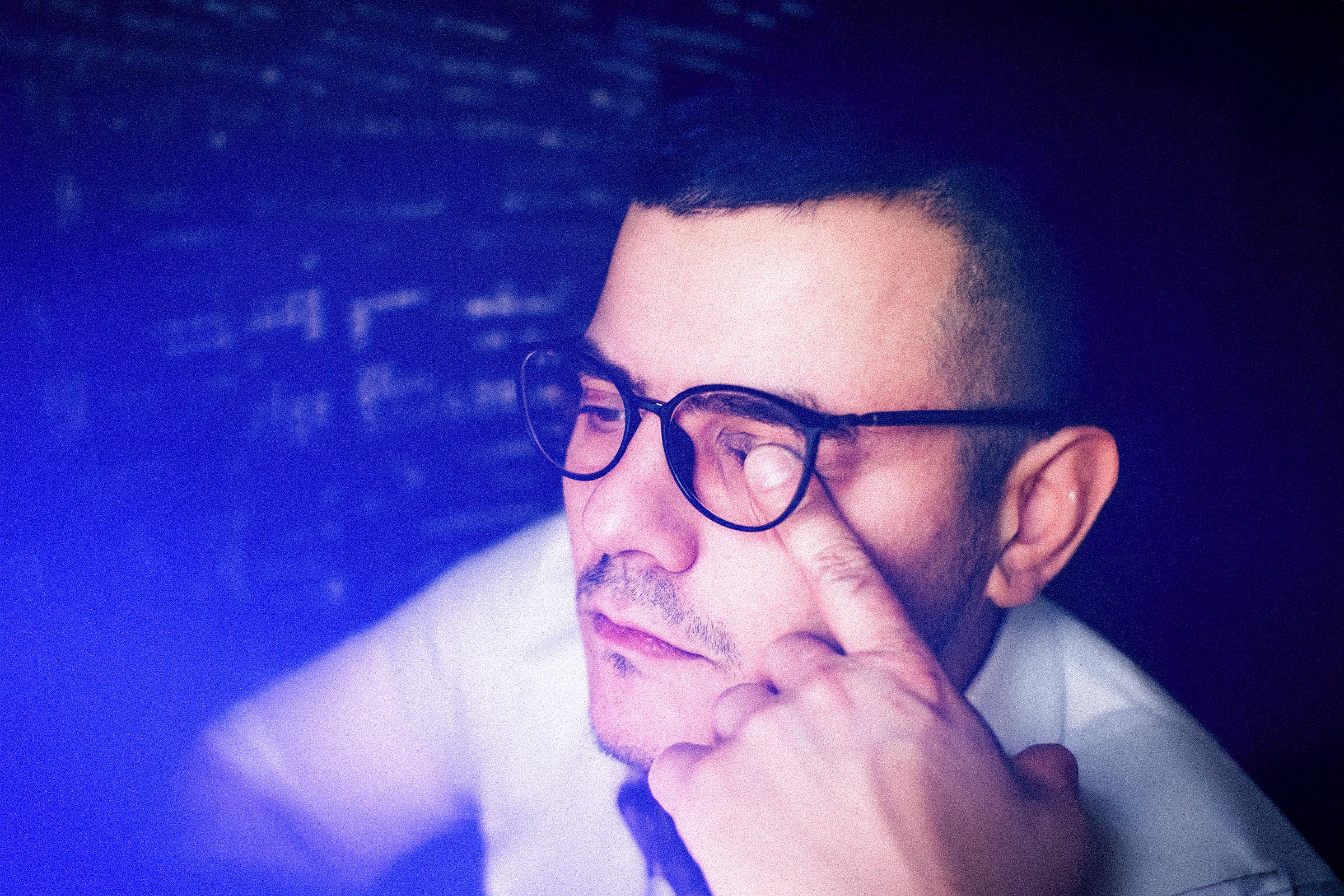
After a laboratory at Tsinghua University installed LED lights, an assistant saw an ophthalmologist for eye pain, but the prescribed eye drops were ineffective. The problem was later attributed to blue light emitted by the LED lights, and his condition improved after he started wearing blue-light-blocking glasses.
Professor Jou Jwo-Huei of the Department of Materials Science and Engineering at National Tsinghua University in Taiwan shared this case in an interview on “Health 1+1” on NTD, a sister outlet of The Epoch Times. As a researcher who studies light, he said that some light sources we encounter in modern-day life may be “invisible killers” of health. Excessively bright or blue light can not only cause eye diseases but may also affect the endocrine system, leading to insomnia and increasing the risk of cancer.
LED Blue Light More Harmful to the Eyes
Using a mobile phone or computer, or prolonged exposure to bright light, especially LED, blue, or violet light, can harm the
eyes and overall health, Jou said.
Prolonged close-up work keeps the cells responsible for near vision constantly in demand, leading to eye fatigue and inflammation, potentially causing myopia. Because the visual cells responsible for low-light environments and those responsible for perceiving bright light and color must alternate, prolonged exposure to intense light can cause the latter—which account for only 5 percent of visual cells—to become overworked.
Blue LED light is particularly harmful. Vision itself is a biochemical process: When light enters the eye, retinal photoreceptor cells convert light signals into electrical signals through photochemical reactions, Jou said.
These reactions naturally generate oxidative stress and metabolic waste. Because blue light carries higher energy than red or green light, it places greater metabolic demands on photoreceptor cells, leading to increased oxidative stress and a higher risk of cumulative retinal damage.
Blue Light May Cause Insomnia and Increase Cancer Risk
In addition to its effects on the eyes, blue light may contribute to other health issues, including sleep disruption. Because blue light suppresses the secretion of melatonin, a sleep-inducing hormone, prolonged exposure, especially at night when using electronic devices such as mobile phones and computers, can disrupt the body’s biological clock and affect
sleep quality.
Long-term exposure to blue light may lead to endocrine disorders, anemia, or toxin accumulation. It may also cause neurodegeneration, increase the risk of Alzheimer’s disease, shorten lifespan, and increase the risk of obesity and cancer, Jou said.
A 2024 study found that high-energy visible blue light emitted from screens at night is a risk factor in breast cancer development.
People exposed to light at night, especially blue light, may have an increased risk of cancer.
A Harvard University study that followed about 110,000 female nurses for 24 years found that women living in communities with high exposure to residential outdoor light at night may be at increased risk of invasive breast cancer.
Reading Does Not Require Bright Light
LED lights, because they save energy and are very bright, have become the primary lighting source in modern homes and offices. However, LED lights have a high blue light content, and harm to the eyes should not be underestimated.
Fluorescent lights are “the worst light source invented by mankind,” Jou said, because the white light they emit contains a large amount of blue and violet and even more damaging ultraviolet and deep blue light, which can cause eye inflammation and other problems. He recommends using warm-colored lighting and choosing effective blue-ray-blocking products, such as blue-ray-blocking glasses, to mitigate the harmful effects of white light.
Jou and his team, through thousands of tests, found that the suitable brightness for reading is far lower than commonly believed.
Ideal brightness is only about 24 lux (a measure of illuminance), equivalent to the brightness of two candles, which is sufficient to meet the visual needs of most people.
To protect eyesight when reading or working, Jou suggests enlarging the text or adjusting the light source to a candle-like intensity, which is better for the eyes and provides clearer vision because the eye contains scintillating cells in addition to bright-vision cells. Dimming the light and allowing three to five seconds for the eye to adjust significantly reduces the perceived required brightness.