
Farmers in California’s Central Valley work hard to produce food for the country. At the same time, law enforcement is protecting farmers from thieves targeting the copper inside their equipment.
Copper theft has been a persistent problem for farmers and, in more recent years, telecommunications networks, Merced County Sheriff Vernon Warnke told The Epoch Times.
“I’ve been [in law enforcement] for 47 years, and it’s plagued this county, plagued the state, nation, everybody, for decades,” said Warnke.
Copper is often called the “king of non-ferrous metals” in the recycling and industrial sectors due to its widespread use in everything from wires to kitchen equipment to plumbing pipes. It’s a highly effective conductor of electricity and heat, is easy to melt, and can be recycled indefinitely without losing its core properties.
Following the technological developments and economic changes in the 2000s, the price and demand for copper spiked.
“It’s kind of lucrative,” Warnke said, adding that copper mining has slowed down over the past decade, which has led to a limited supply of the metal and an increase in its value.
“It’s costing more to mine the copper, so they’re going after these recyclings, and that’s why it’s so precious,” he said. “The problem is that when copper is recycled, most of the time, we know it’s stolen.”
Copper is sold as scrap metal to dealers or recyclers. There, the material can be accepted without knowledge of its origins, packaged, and shipped overseas to countries like China or Vietnam that build electronics, according to Warnke.
National Challenge
At the national level, U.S. copper scrap exports have generally trended upward from 1995 to 2025, fluctuating between about 500,000 and 1,000,000 metric tons, according to data from the U.S. International Trade Commission.
At the same time, theft has surged, with the U.S. Department of Justice reporting in 2010 that copper theft was highest in Hawaii, Arizona, California, and Oregon.
In California in 2024, the Tulare County Sheriff’s Office completed Operation Tractor Pull, in which officers recovered 24 pieces of stolen equipment worth over $2.25 million after they received reports of a stolen backhoe and excavator.
The suspects later told detectives about their trips “hauling equipment stolen from around the Valley across the open border to various locations in Mexico.”
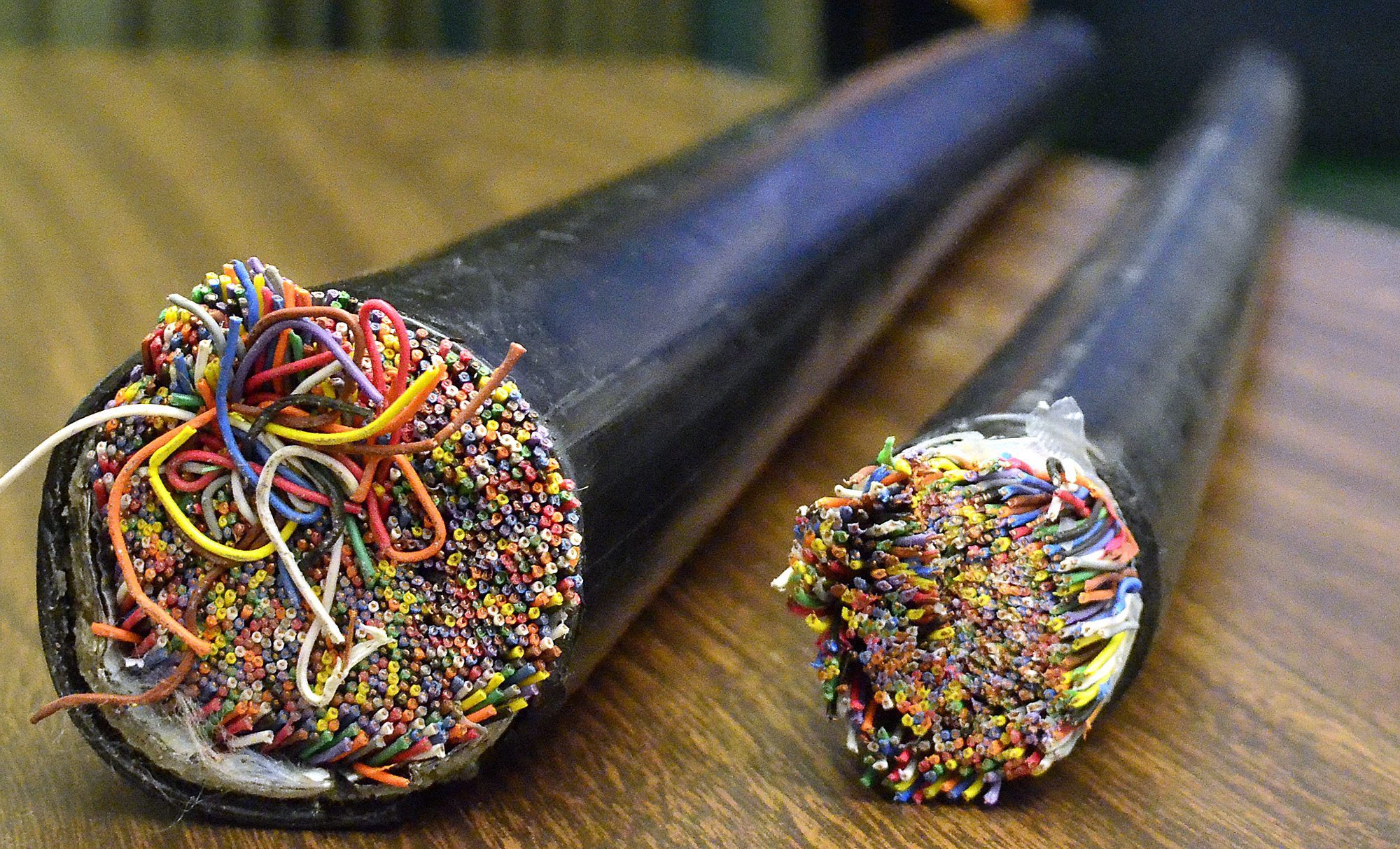
In addition to farm equipment, telecommunications lines have become a popular target for copper thieves.
“The most notable cases that we’re getting now—and because it affects so many people—is the phone lines and the fiber optic lines,” said Warnke. “When they take those down, it shuts down entire industries. A few weeks ago, we had a cable theft, and it shut down the county infrastructure for a couple of days while they got that fixed.”
Last August, California Attorney General Rob Bonta said his department had been discussing collaborative solutions with local law enforcement and government to hold copper thieves accountable.
According to the State Department of Justice, the telecommunications industry reported around 6,000 incidents of copper theft and infrastructure vandalism nationwide between June and December 2024, with roughly one-third of those cases taking place in California. The department added that thieves harvest raw copper from cables and may cause millions of dollars in damage.
In addition to the financial impact and the labor needed to fix the damaged equipment or infrastructure, the downtime during repairs can impact a farmer’s ability to produce food, Warnke said. Impacts to phone lines can affect law enforcement’s ability to respond to 911 calls.
Warnke said addressing copper theft is not easy, because property theft valued under $950 is not considered a felony under California law.
“The laws hand-tie law enforcement,” said Warnke. “These need to be made into crimes again, and funding needs to go to state prisons.”
He added that he believes copper theft should count as a felony because the subsequent replacement or repair costs and long-term infrastructure damage surpass the $950 threshold.
Proactive Deterrence
The sheriff’s office provided suggestions for residents to reduce theft risk on their properties.
Warnke said the best way for farmers and residents to protect their property is “to be proactive.”
He said his own home is equipped with alarms and 15 cameras to ensure that he can be alerted instantly when there is an intruder or when any unusual situation arises. He said the presence of cameras and alarms can often be enough to deter would-be thieves.
“What we’re doing is we’re moving it around. Trying to get everybody in jail is one thing, but just you protecting your property is going to make some of the bad guys go to a different property,” said Warnke.
Installing security cameras can also help provide evidence to law enforcement officers and agricultural detectives responding to a call.
He also encourages ranchers and farmers to get their equipment tagged free of charge with identification numbers assigned through the State Department of Justice’s Investigation Bureau. This allows law enforcement to track stolen equipment back to the owner.
“It’s not just for our county. Every county in this state can do it,” he said. “If I stop a car in [Merced County] and it’s got the Tulare County number on it with an identification, we can track it that way, and fast. There is a database.”
People interested in the service can contact their county’s district attorney’s office or sheriff’s office for more information.
Warnke said residents of Merced County can contact him about the ID service directly at vern.warnke@countyofmerced.com
“It’s really important to mark their equipment, mark their items, mark their copper,” said Warnke.