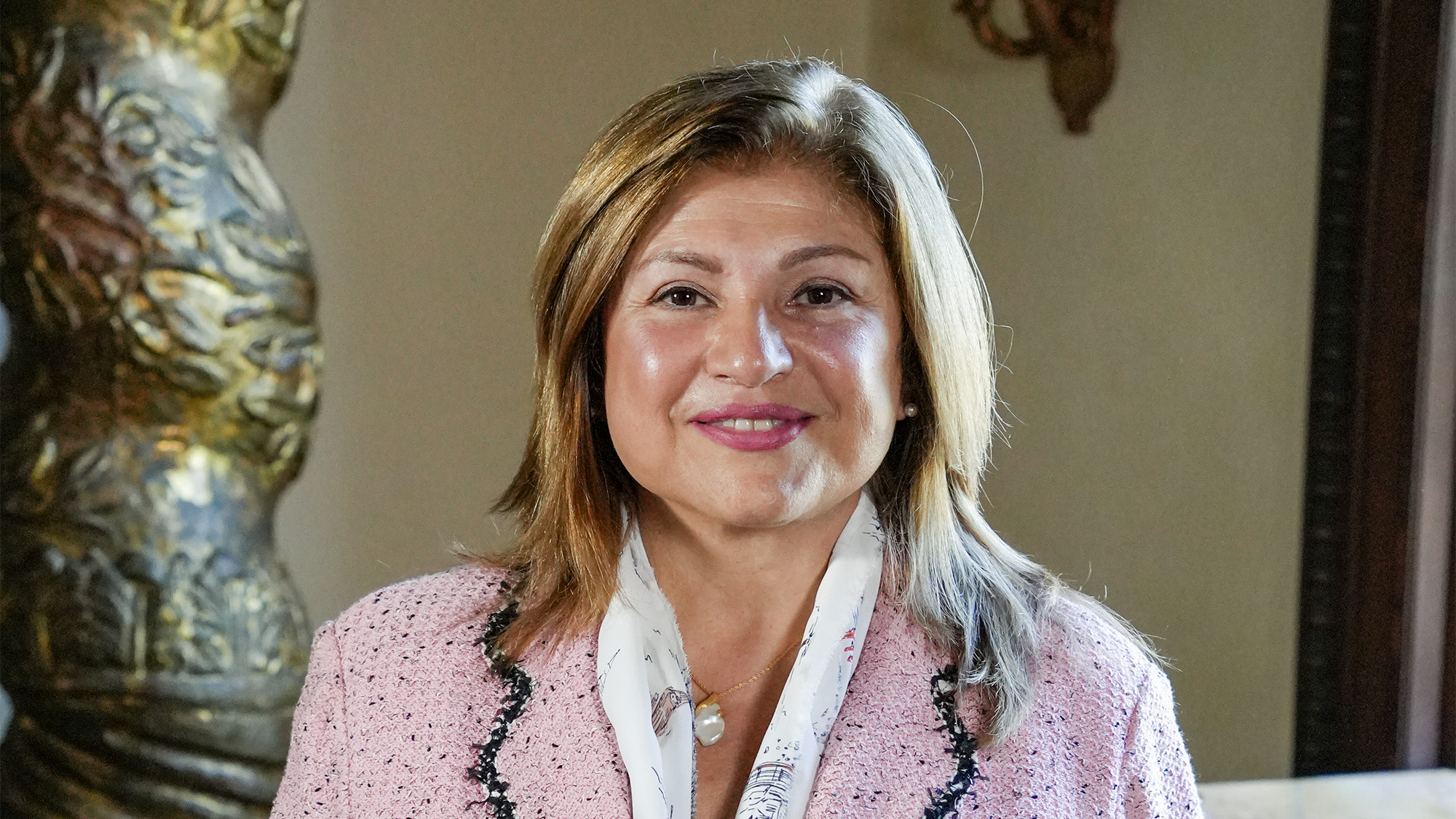

A Silicon Valley-based CEO has shifted her focus from biotechnology to Assyrian arts and is producing an opera to keep her Assyrian heritage alive.
Nora Lacey, CEO of biotech company Cell Marque Corporation, told EpochTV’s “Bay Area Innovators” program about her journey and decision.
Lacey was always interested in science and wanted to be on the cutting edge of research, with a focus in molecular biology. Her company was producing products that were meant to detect cancer, so working to save lives became meaningful. And she is proud of what she has done.
Lacey sold her business in 2014 and retired at age 55. Her passion is in art, and she knew she wanted to do philanthropy.
“[I] did one year of gap analysis and saw where the gap is and how I can help my people, and I decided that art is where I need to be focused at. So I switched from being a scientist to somebody that created an art organization, running it like a science company,” she said.
In 2016, she founded the Assyrian Arts Institute, which aims to preserve Assyrian culture and arts and raise awareness about its traditions.
“Assyria was [the] cradle of civilization, and now is the stateless nation; and our people, most of them live in diaspora—in U.S., in Australia, in Europe, away from their homeland that is Iraq, Syria, south of Turkey, west of Iran. And the empire spread all the way to Egypt when it was in their most powerful time,” she said.
Most Assyrians resided in northern Mesopotamia, and Assyria controlled Sumer and Babylon at certain times. The Assyrian empire fell to Persians, and Persians lost to Alexander the Great. Assyria has never been able to establish a country since.
Lacey believes it is important to bring back Assyrian culture, such as the “Epic of Gilgamesh,” the oldest known fictional story.
“It reflects a lot of our values and beliefs that our ancestors have instilled in us and we continually carried to modern-day time. So it is important, in that sense, because when you’re a stateless nation, sometimes you’re invisible and you don’t have a voice,” she said.
Lacey is currently working on producing an opera called “Gilgamesh, The Opera,” a retelling of the 4,000-year-old tale of a demigod in search of immortality.
“I believe that there is a higher power to put all this beautiful earth, people, bodies all in a perfect harmony with each other. They don’t happen out of nowhere. There must be something that puts it all together so perfectly,” she said.
According to the legend, Gilgamesh’s father was the king of Uruk, and his mother was a goddess. After Gilgamesh’s father dies, he assumes the throne and becomes a spoiled and cruel king. The gods order Ishtar, the goddess of beauty, fertility, and war, to create a friend on par with Gilgamesh to ease his loneliness and let him enjoy the presence of a companion. The friend’s name is Enkidu, and he grows up in the forest with animals. Enkidu challenges Gilgamesh and fights until they reach a stalemate. They decide not to fight anymore and instead become friends.
“Enkidu had a very positive effect on Gilgamesh to bring him the values that are important—to respect people, to respect his citizens, to have compassion, friendship,” said Lacey.
Seeing this, Ishtar—the goddess of beauty, fertility, and war—falls in love with Gilgamesh and proposes to marry him, but he refuses. Infuriated, Ishtar tries to destroy Gilgamesh and his kingdom. The gods kill Enkidu, an event that marks a pivotal moment for Gilgamesh. As a demigod, he wonders whether he is mortal or immortal. He goes on a journey to find Utnapishtim, a Noah-like character who survived a great flood by building an ark and was granted immortality himself. Gilgamesh learns from Utnapishtim that leaving behind a legacy in this world is more important than gaining physical immortality.
“People will remember you positively and kindly; then you stay alive, as Gilgamesh is right now. That’s why we are bringing him to life on stage ... after four to five thousand years of silence,” said Lacey. “I believe that through the universal language of art, we can have a voice. And this opera is an example that is going to demonstrate our culture, our ancestors, beliefs, and stories in a way that appeals to modern-day audiences.”
Her opera performance about Gilgamesh is set for March 28, 2026, at the Cerritos Center for the Performing Arts near Los Angeles.