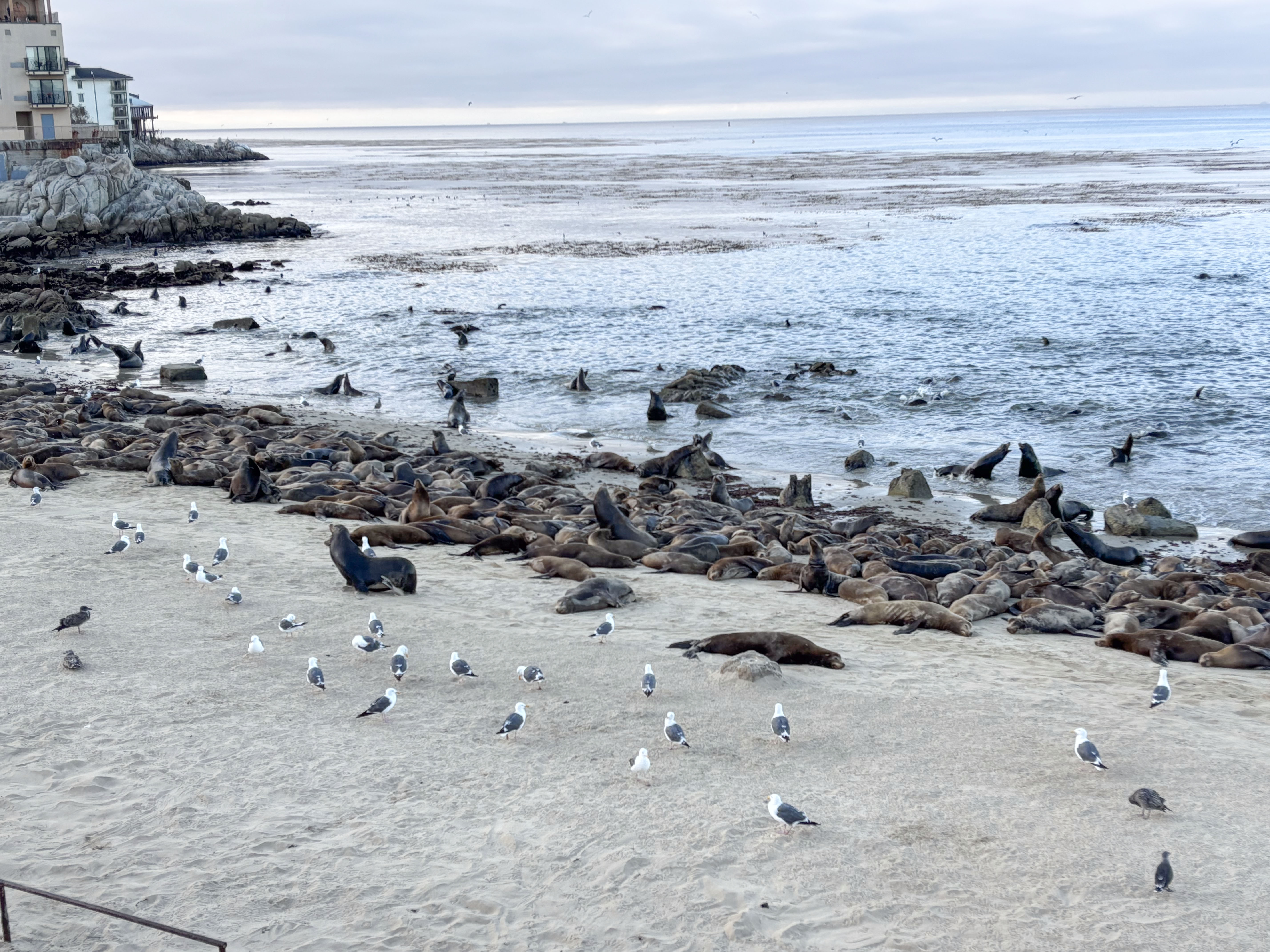

A popular beach in Monterey, California, has again been temporarily closed because of congregating sea lions.
According to the City of Monterey, public access to the San Carlos Beach will be closed for public safety reasons. Visitors who would like to observe the sea lions are asked to stay at least 50 yards away.
“If [people] are not familiar with sea lions, they may assume that they’re the cuddly, cute sea lion that they see in the movies or see on TV, not knowing that they can be defensive. They can want to protect themselves, and they do bite from time to time,” Thys Norton, park operations manager for the City of Monterey, told The Epoch Times.
The area usually sees an increase in California sea lions during the summer months, typically in the hundreds, Giancarlo Rulli, associate director of public relations for The Marine Mammal Center, told The Epoch Times in an email. Young and adult males return to Northern California from Southern California’s Channel Islands to rest, eat, and reproduce in the waters of the Monterey Bay National Marine Sanctuary.
“The length of stay can vary year to year and often depends on shifts in local food resource availability as sea lions are opportunistic feeders and the area offers a wide, diverse variety of foraging opportunities,” Rulli said.
Their growing population has seen sea lions choose to rest on San Carlos Beach, which is a beach on the south end of the bay protected from strong winds by the Monterey Peninsula. Many of the local beaches have flat beachheads, which makes it easy for sea lions to swim in and out of the bay.
Parks and Recreation staff do not have a reopening day announcement, as it will depend on when the sea lions leave and when bacterial levels in the waters are deemed safe again for visitors.
“Even though it does require a little extra maintenance,“ Norton said, ”I think it’s still fun and worth it. You can see the families get a real big thrill at seeing this kind of event happen.”
Staff will continue to monitor the beach, including the adjacent Sister City Park between Fisherman’s Wharf and Cannery Row, where the sea lions can also be found.
In the last few years, the Marine Mammal Center has received reports about people disregarding signage warning them about the dangers of getting too close to sea lions and taking selfies. The center warns that such behavior can lead to stress for the animals and for territorial male sea lions to react dangerously if they feel threatened. Females can also be aggressive.
According to the Monterey Bay Aquarium’s website, the California sea lion population is the only species that has been increasing under the Marine Mammal Protection Act. The Japanese sea lion is now extinct.
The Center reminds members of the public that the best way they can help in the conservation of the marine mammal is to stay at least 150 feet away, and use their camera’s zoom function to take photos.
Visitors can call the Center’s hotline at 415-289-SEAL (7325) if they see a marine mammal in distress in the Monterey area.