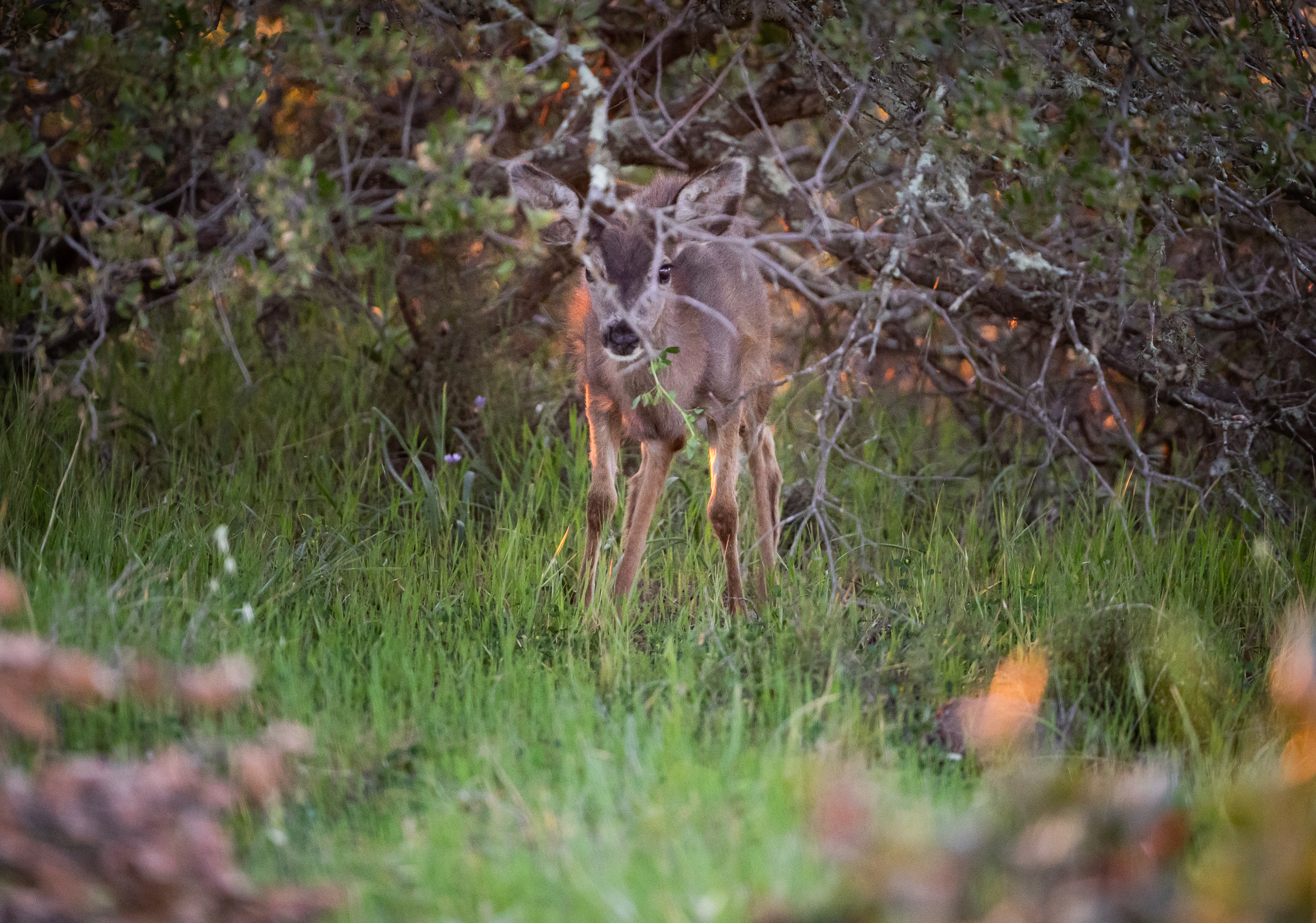

SANTA CATALINA ISLAND, Calif.—A pair of mule deer yearlings bat their ears and tails, swishing the insects away from their faces as they nibble on grass amid shrubs on the crest of the island. The sun begins to sink into the sea on the western coast.
Within five years, the picturesque scenes of the native chaparral and shrubs adorning the island’s hillsides will remain, but the deer, aptly named for their long, mule-like ears, won’t be in them. Their days are numbered.
It wouldn’t be the first time wildlife has been purged from Santa Catalina Island.
Pastor Lopez, a 77-year-old Vietnam veteran and lifelong islander, witnessed wild goats being killed by aerial gunners in the late 1980s and early ’90s.
“My daughter and I were on a hill, and there was a herd of goats, and the helicopter swooped in and they started blasting them with gauge shotguns—spinal shots, blowing their legs off,“ he said. ”It was horrible. It’s cruel. It’s inhumane. How could someone of any heart or soul or good conscience slaughter living animals like that?”
Lopez complained to the conservancy about the wounded animals he saw but was told that it was the most humane way to eradicate them.
“I was in Vietnam,” he said. “I know you’re not going to make a clean kill from a moving helicopter on running animals with 12-gauge shotguns.”
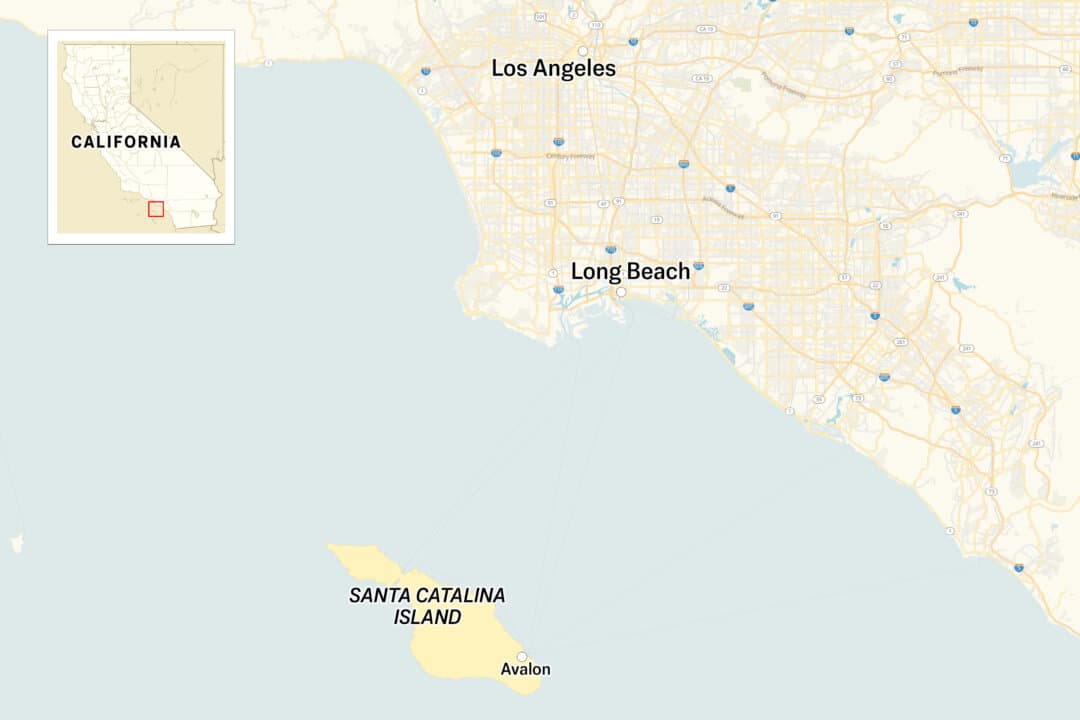
A map shows Santa Catalina Island and the city of Avalon off the Southern California coast. (Illustration by The Epoch Times, Public Domain, MapTiler)
Legal Battle Brewing
In 2024, the Catalina Island Conservancy withdrew a proposal to shoot the deer with high-powered rifles from helicopters after intense public outcry.
But in late January, after state laws were changed, the California Department of Fish and Wildlife approved an extensive restoration management permit, allowing it to hire professional sharpshooters and kill all the deer on the island over the next five years.
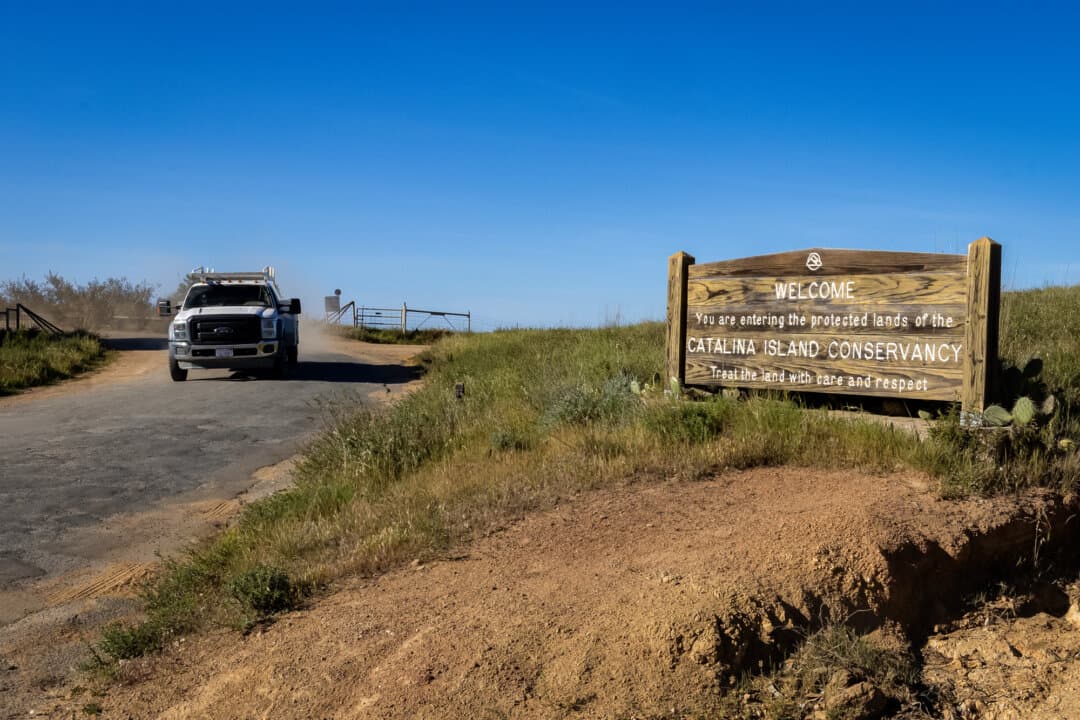
A Catalina Island Conservancy sign marks protected lands outside of Avalon, Calif., on March 17, 2026. The conservancy, a nonprofit that controls 88 percent of Santa Catalina Island’s 48,000 acres, claims that mule deer overgraze rare native plants and pose a threat to the island’s fragile ecosystem. (John Fredricks/The Epoch Times)
The conservancy, a nonprofit that controls 88 percent of the island’s 48,000 acres, claims that mule deer overgraze rare native plants and pose a threat to the island’s fragile ecosystem. But debate runs deep over what is a reasonable approach to preserving the ecological integrity of the island and what is an overzealous push for ecological purity.
The conservancy tried in 2012 and again in 2016 to eradicate the deer, but was denied a permit because of insufficient scientific evidence about ecological impacts and a lack of public transparency.
The Ground Assault
The newly approved permit allows the conservancy to shoot the deer on land—not from helicopters.
But Lopez said “putting mercenaries on the ground” to shoot the deer will still leave the wounded to suffer and die.
“Those animals know fear,“ he said. ”They know pain. It’s morally wrong.”
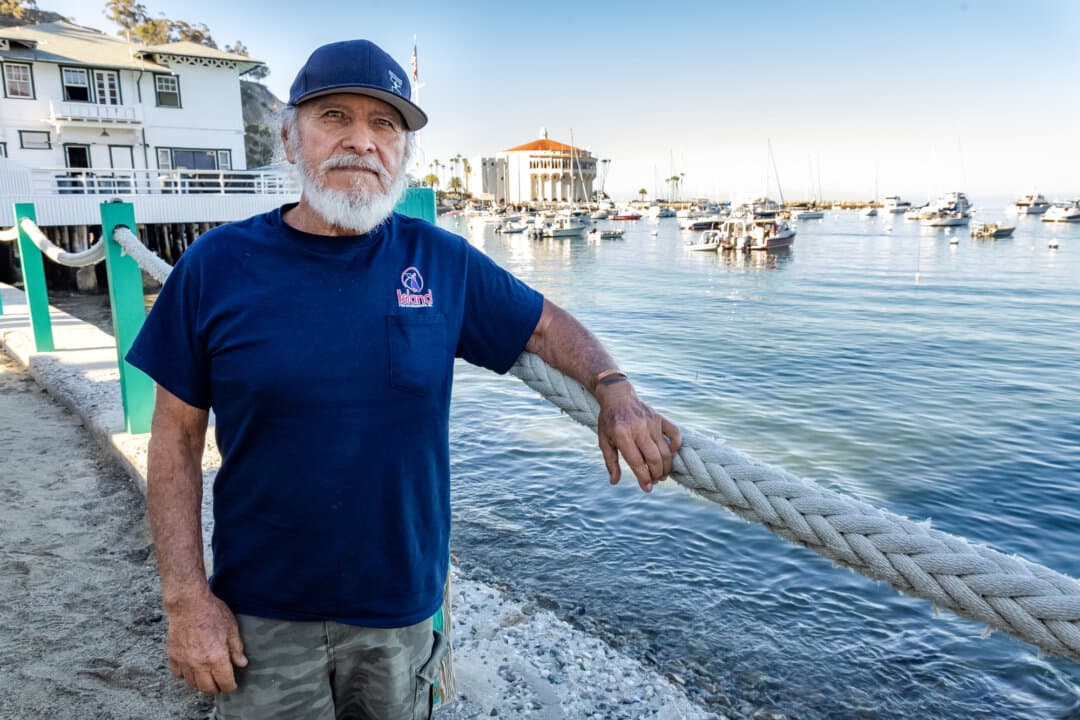
Pastor Lopez, a 77-year-old Vietnam veteran, stands near the beaches of Avalon, Calif., on March 18, 2026. Lopez, who witnessed aerial gunners shooting wild goats in the late 1980s and early 1990s, said the methods used to eradicate the animals were “inhumane” and “cruel.” (John Fredricks/The Epoch Times)
Lopez said his Native American grandmother told him that her tribe saw the deer as “messengers from the spirit world” and a symbol of the sunrise.
“My grandmother loved it here, and she said that truly God must have walked here, because it’s so beautiful,” he said. “That’s what Catalina means to me. That’s what all living things here mean to me. It’s special. It’s sacred.”
During the Great Depression, when money was scarce, his family and other islanders did not starve because they could hunt.
“They could go out in the hills and get a pig or goat or a deer and feed their families, and someday that might be a necessity again,” he said.
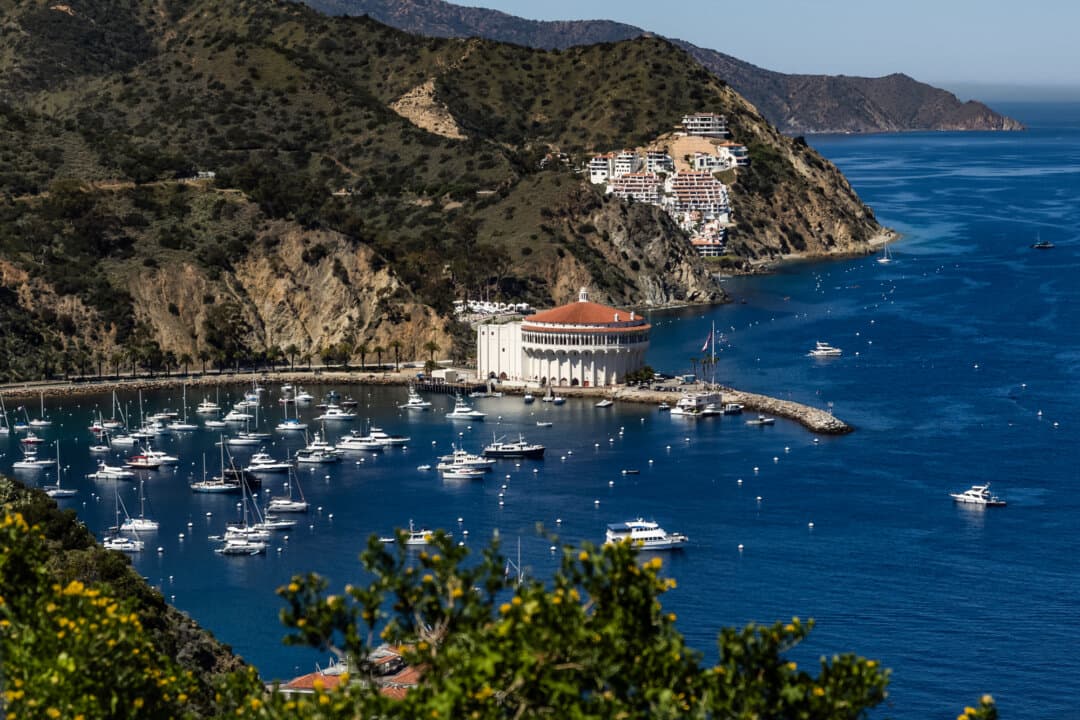
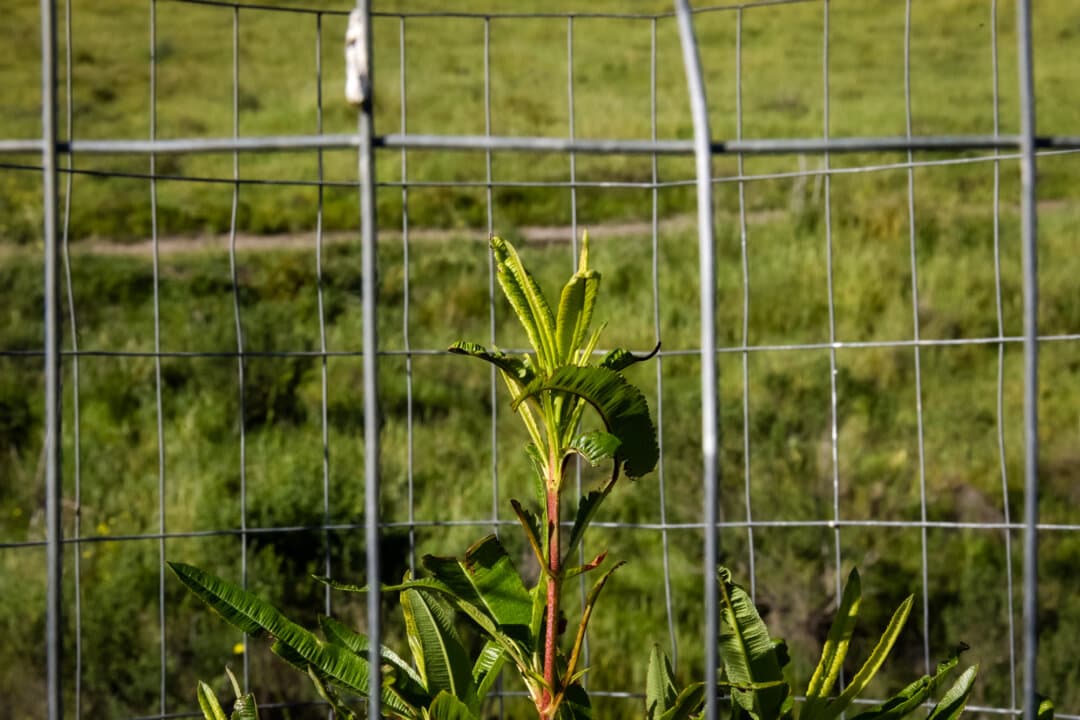
(Top) An aerial view of Avalon, Calif., on March 18, 2026. Avalon, the only city on the island, is a tourist destination and a popular stop for cruise ships. (Bottom Left) A plant protected by wire fencing to prevent animal grazing sits outside Avalon, Calif., on March 18, 2026. Some people argue that the mule deer consume native plants, allowing invasive grasses to take over the island landscape. (Bottom Right) A pelican prepares for flight in Avalon, Calif., on March 18, 2026. (John Fredricks/The Epoch Times)
The Backlash
A group of mainly Catalina Island residents, including hunters, conservationists, business owners, and environmentalists, have formed an unlikely alliance called the Coalition to Save Catalina Island Deer. They have so far gathered more than 31,000 signatures on a petition to “stop the slaughter” of the animals.
The coalition, along with several hunting and wildlife conservation groups, such as Safari Club International and Howl for Wildlife, filed a lawsuit against the state wildlife department and the Catalina Island Conservancy last month in Los Angeles County Superior Court. The coalition, seeking to stop the eradication plan, claims that the state failed to conduct mandatory environmental reviews before approving the eradication permit.
Cort Klopping, a California Department of Fish and Wildlife spokesman, told The Epoch Times in an email that the agency does not comment on pending litigation, and deferred questions about the permit to the Catalina Island Conservancy, which is under private land management.
The decision to grant the permit was based on a scientific and legal review of the application, and state law allows permits “for projects that restore native plants, wildlife, or habitat and that are expected to result in a substantial net benefit to native species or their habitats and ecosystems,” the department said.
Several environmental organizations, including The Nature Conservancy, the Center for Biological Diversity, and the California Native Plant Society, along with the local Gabrielino-Tongva tribal groups, support the conservancy’s plan to eradicate the mule deer.
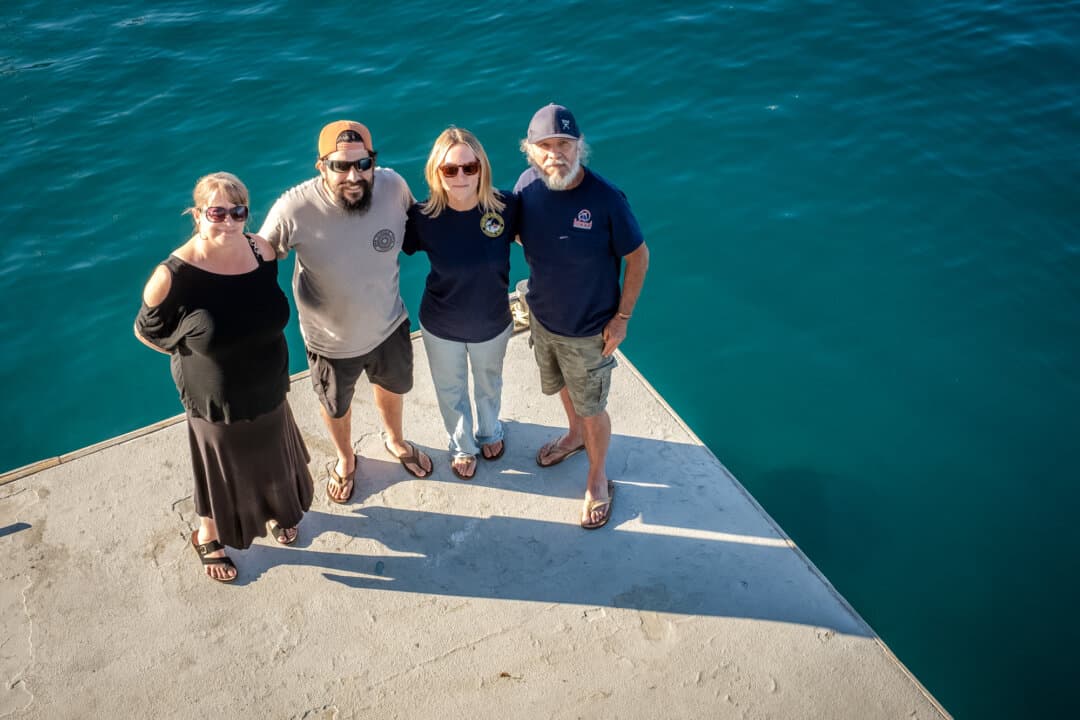
(L–R) Coalition to Save Catalina Island Deer members Wendy Hernandez, Taylor Bussard, Bre Bussard, and Pastor Lopez stand on a dock in Avalon, Calif., on March 18, 2026. Hernandez said that the coalition is “very aware” that the number of deer on the island needs to be controlled but that “how that happens
The Nature Conservancy, the Catalina Island Conservancy, and the California Department of Fish and Wildlife said they were unable to accommodate interview requests.
The law regarding depredation permits was changed in 2024, when California Gov. Gavin Newsom signed Assembly Bill 1581, the Restoration Management Permit Act, which took effect on Jan. 1, 2025. The change allows the wildlife department to issue permits “to authorize the take, possession, import, or export of any species or subspecies of fish, wildlife, or plants in association with a management or propagation project that, among other things, has the primary purpose of restoring native fish, wildlife, plants, or their habitat.”
David Solomon, Catalina Island Conservancy’s interim president and CEO, issued a statement in response to the lawsuit, saying that the decision to eradicate the deer is based on decades of scientific research.
“We are confident in both the science and the process behind the permit,” Solomon said.
The island, according to the conservancy, is home to more than 60 endemic plants and animals, including invertebrates, found nowhere else in the world.
Among the rare plants—including three species and six subspecies—are the Catalina ironwood, Catalina manzanita, Catalina liveforever, Catalina popcorn flower, Catalina mountain mahogany, Santa Catalina bedstraw, Santa Catalina Island bush-mallow, St. Catherine’s lace, and Trask’s yerba santa.
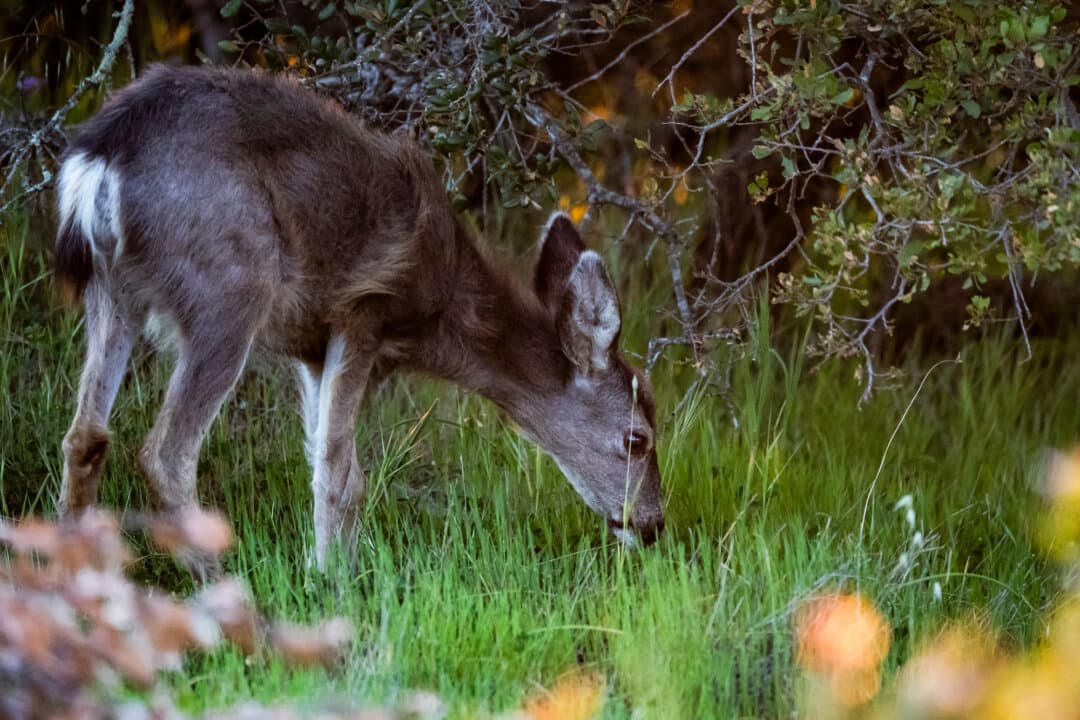
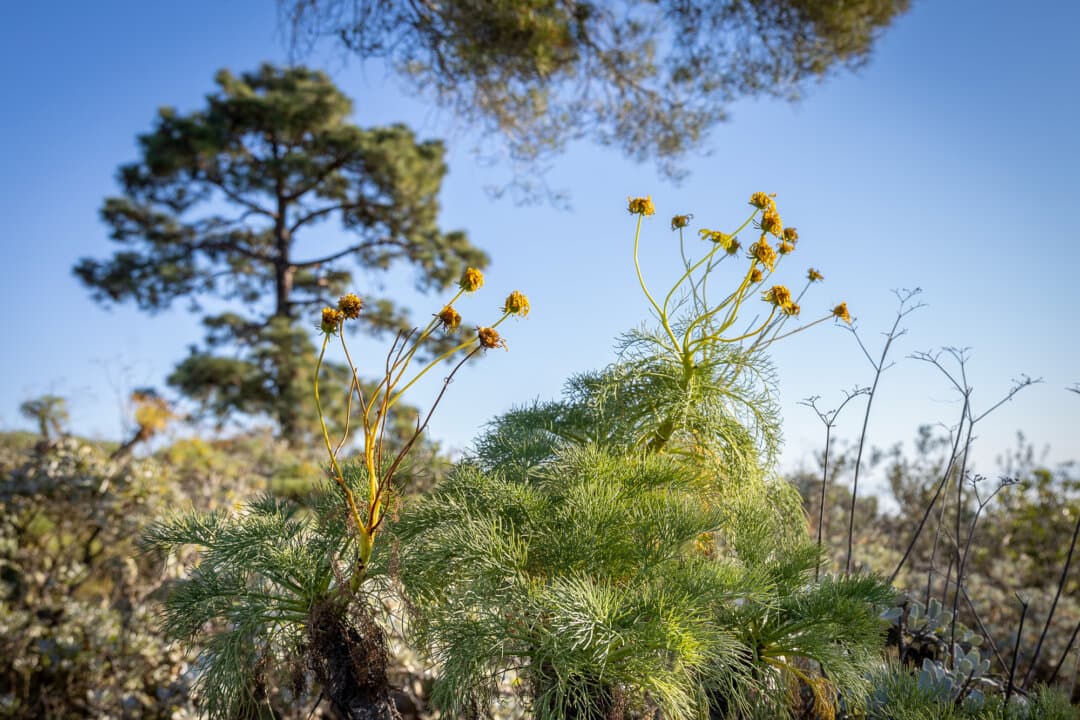
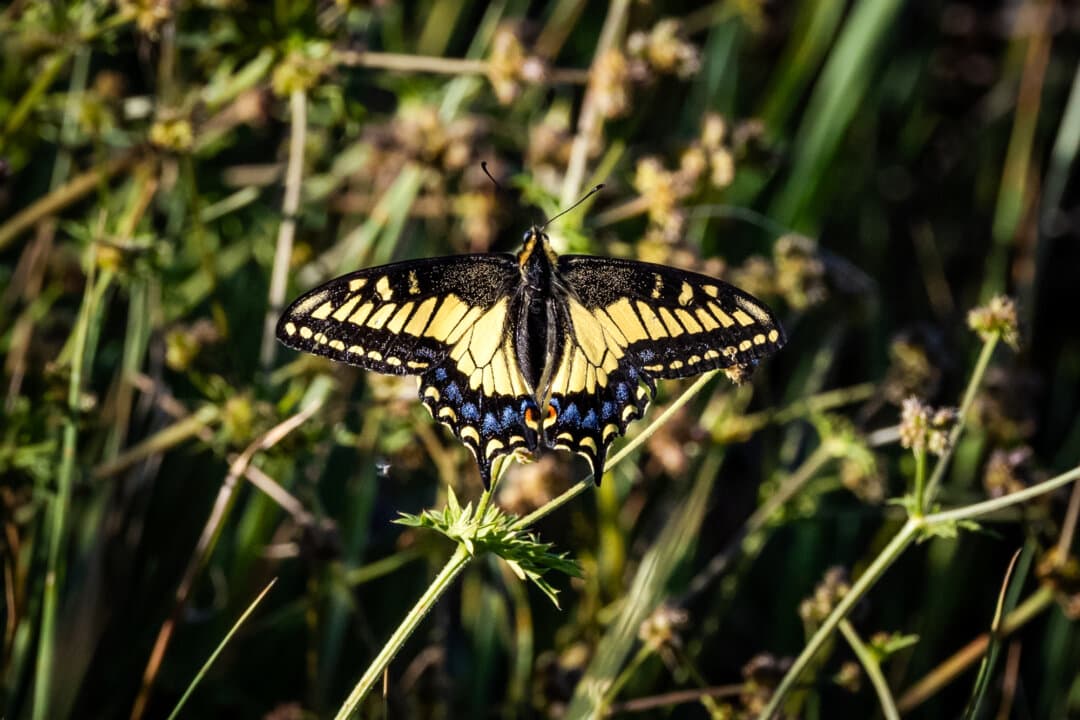
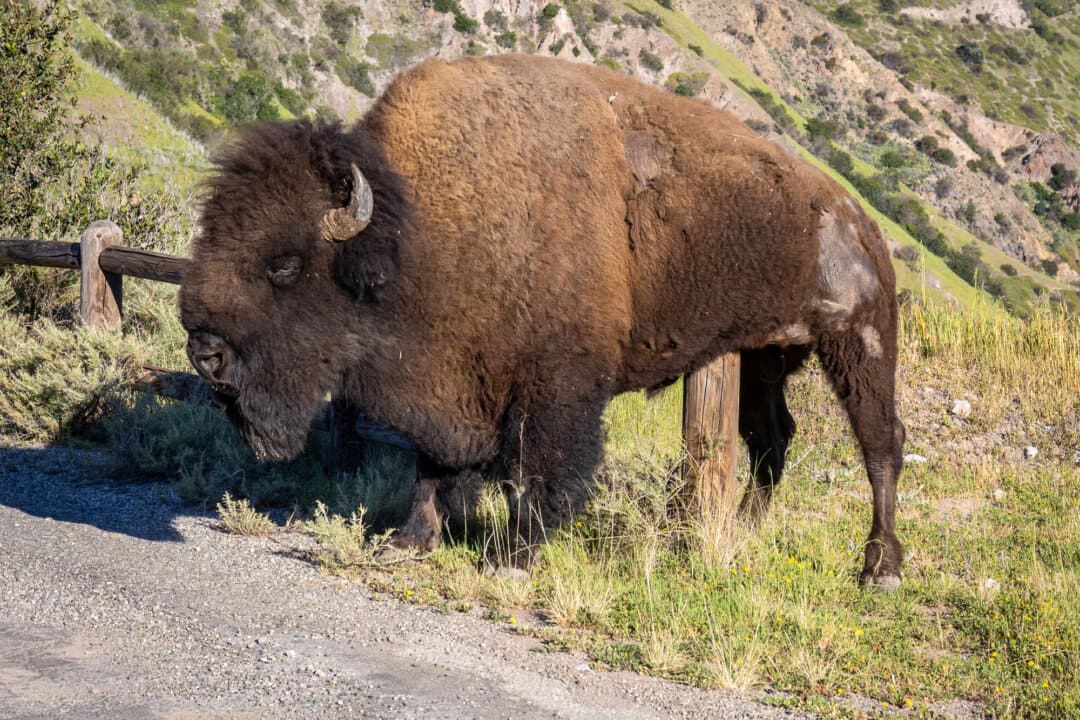
(Top Left) A mule deer wanders into the brush outside of Avalon, Calif., on March 17, 2026. (Top Right) A giant coreopsis plant grows in an enclosure protected from wild animals outside of Avalon, Calif., on March 18, 2026. (Bottom Left) A butterfly lands on flowers outside of Avalon, Calif., on March 17, 2026. (Bottom Right) Bison roam the hills outside of Avalon, Calif., on March 18, 2026. (John Fredricks/The Epoch Times)
William Flickinger, a hunter and island resident for 38 years, opposes the conservancy’s eradication plan, which he says will spell an end to hunting and the chance to teach younger people how to hunt, as well as the loss of “clean” venison.
He said he believes that the deer population is smaller than reported and advocates for a more balanced approach and tailored solution.
“Harvesting is very important, and we’re going to lose that,“ he said. ”We have a lot of land out here ... and we need to find a common ground—a way to allow hunting and preserve the plants they’re concerned about. There is no one-size-fits-all, and we’ve got to find a way around all that.”
Another hunter conservationist, who asked not to be named out of fear of reprisal, suggested that money allocated for eradication would be better spent on building more rare plant exclosures to keep the deer out.
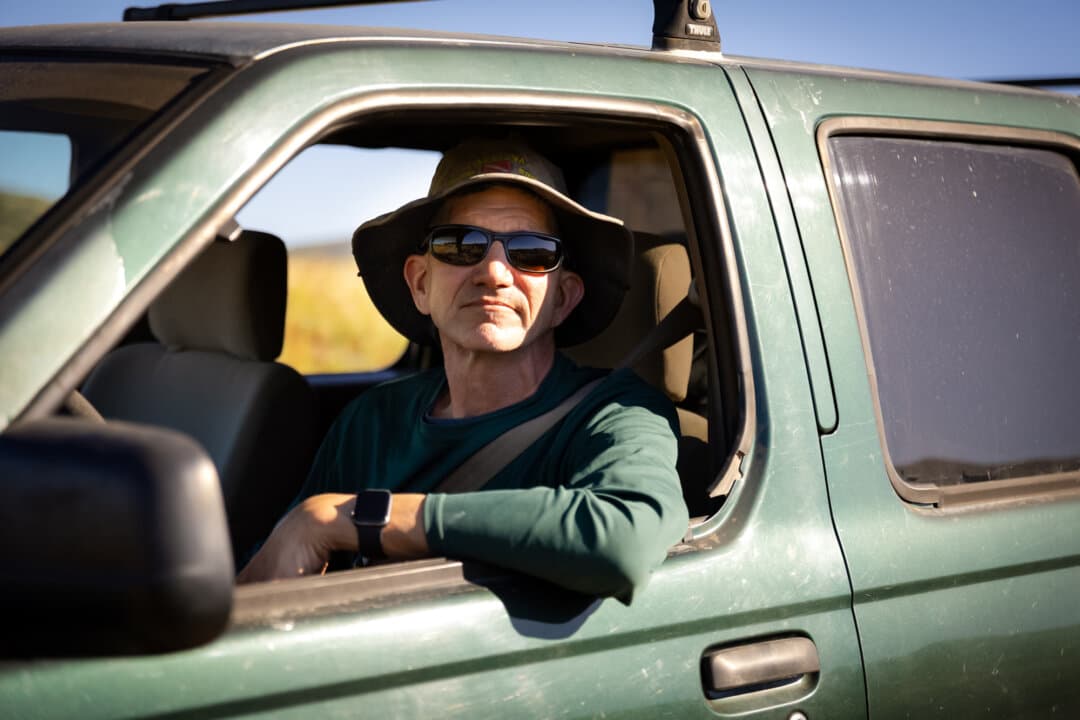
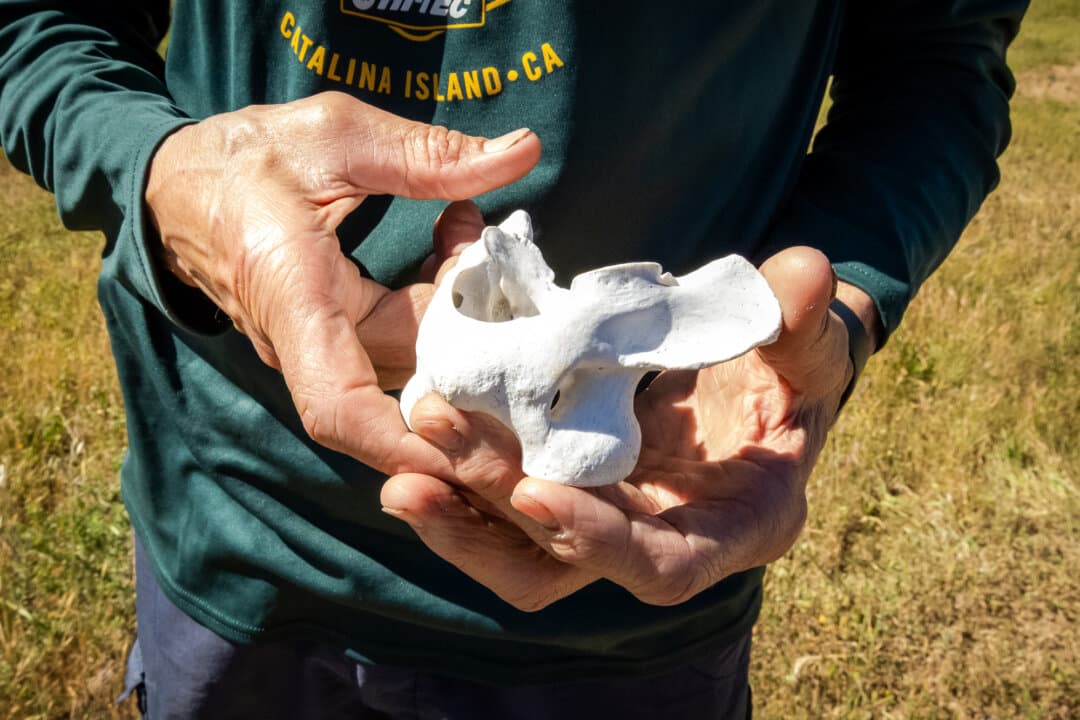
(Top) William Flickinger drives along a dirt road outside Avalon, Calif., on March 18, 2026. A hunter and Catalina Island resident for 38 years, Flickinger opposes the conservancy’s eradication plan, saying that it would end hunting, eliminate a source of “clean” venison, and limit opportunities to teach younger people how to hunt. (Bottom) A hunter holds a deer bone outside of Avalon, Calif., on March 18, 2026. (John Fredricks/The Epoch Times)
The Backstory
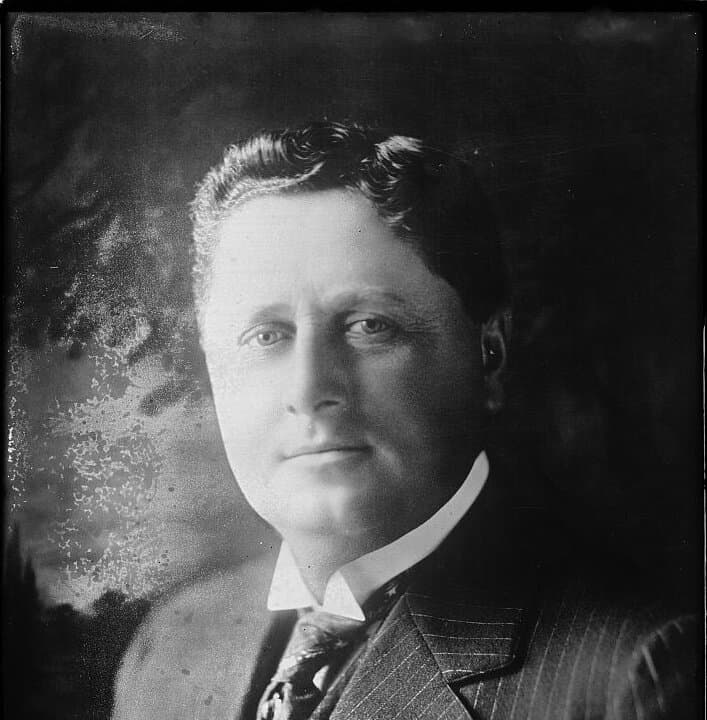
A portrait of William Wrigley Jr., a millionaire and gum magnate, in 1915. (Public Domain)
The island—about 26 nautical miles or a one-hour boat ride from Long Beach—is a treasure trove of natural beauty and wonder. Avalon, its only city, is a tourist destination and popular stop for cruise ships.
William Wrigley Jr., the famous chewing gum magnate from Chicago, purchased Catalina Island for $3 million in 1919. Known for his vision to make the island a “playground for all” and an escape for the common man, Wrigley brought three deer—a buck and two does—from Modoc County to the island in 1928. Between 1930 and 1932, 19 more mule deer—mostly fawns—were brought from Los Angeles County.
His great-granddaughter Alison Wrigley Rusack, as well as other relatives, sits on the board of the conservancy, while her husband, Geoff Rusack, is the CEO of the Santa Catalina Island Co., which owns several businesses, including Rusack Vineyards.
Ethical Hunting
Wendy Hernandez, an islander and founding member of the Coalition to Save Catalina Island Deer, told The Epoch Times that Wrigley Jr.’s vision for the island has been lost.
“I don’t feel like that vision is being fulfilled anymore,” Hernandez said. “It’s sad for a lot of people.”
The coalition is “very aware” that the number of deer on the island needs to be controlled, but “how that happens” is what concerns the group, Hernandez said.
“An ethical, well-managed hunting program is the only way to manage this herd appropriately, ethically, and humanely,” she said.

Wendy Hernandez stands near the beaches of Avalon, Calif., on March 18, 2026. Hernandez, an islander and founding member of the Coalition to Save Catalina Island Deer, thinks that William Wrigley Jr.’s vision for the island is lost. (John Fredricks/The Epoch Times)
Bre Bussard, a small-business owner who runs history tours in Avalon, told The Epoch Times that the eradication plan is “just wrong” and that there is not enough scientific evidence to justify killing all the deer.
“I don’t believe that there’s a deer problem,” she said, citing Tony Budrovich, a former head of the conservancy who said at an Avalon City Council meeting in 2018 that the island can “very easily” sustain 500 mule deer.
Bussard said tourists come to the island for more than beaches and restaurants.
“They come here for our wildlife,” she said. “We all rely on tourism, so if people stop coming here because of the conservancy slaughtering all of the deer, it’s definitely going to impact all of us.”
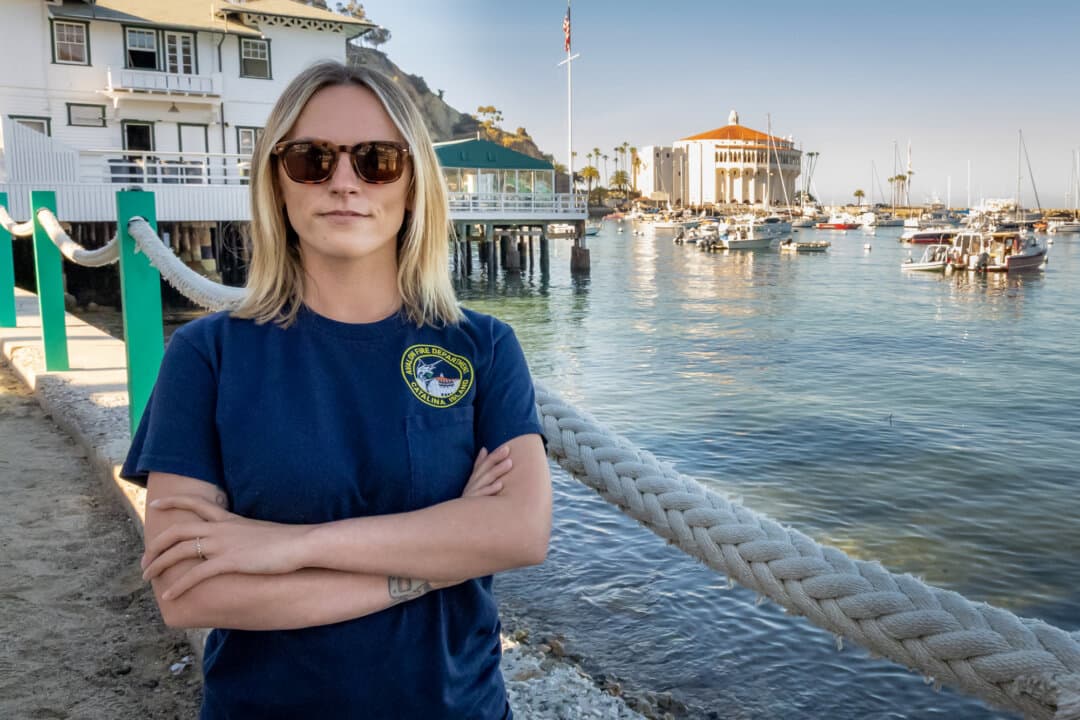
Bre Bussard stands near the beaches of Avalon, Calif., on March 18, 2026. Bussard, a small-business owner who runs history tours in Avalon, said the eradication plan is “just wrong,” and that there is not enough scientific evidence to justify killing all the deer. (John Fredricks/The Epoch Times)
Charles Whitwam, founder of Howl for Wildlife, a pro-hunting and conservation group, recently released “Killing Catalina,” a documentary examining the mule deer controversy.
Whitwam said he disagrees with the conservancy’s stance that “all other potential alternatives” for managing the mule deer population “have been exhausted.”
Opponents of the eradication plan say the hunting programs were never fully implemented or properly managed, and that the conservancy never set a target for how many mule deer should be harvested annually.
He also dismisses the notion that the deer are “somehow going to destroy the island’s ecosystem” when non-native wild pigs, goats, bison, and “tens of thousands of livestock” did not.
“It doesn’t make any sense,” he told The Epoch Times.
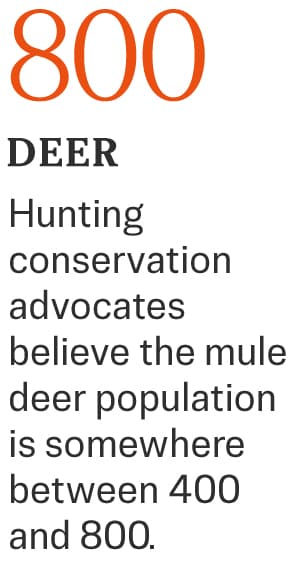
Whitwam and other hunting conservation advocates believe that the mule deer population is somewhere between 400 and 800—less than half of the estimated 2,000 the conservancy claims.
The conservancy rejected Howl’s offers to use thermal imaging drones to count the deer, instead relying on spotlighting surveys that involve counting pairs of deer eyes that reflect from night lighting, which Whitwam and other conservationists say are less accurate.
When asked why the conservancy turned down thermal-imaging drones to count the deer, Pepe Barton, a conservancy spokesman, told The Epoch Times in an email that spotlight surveys are a “well-established method to identify deer density and population trends.”
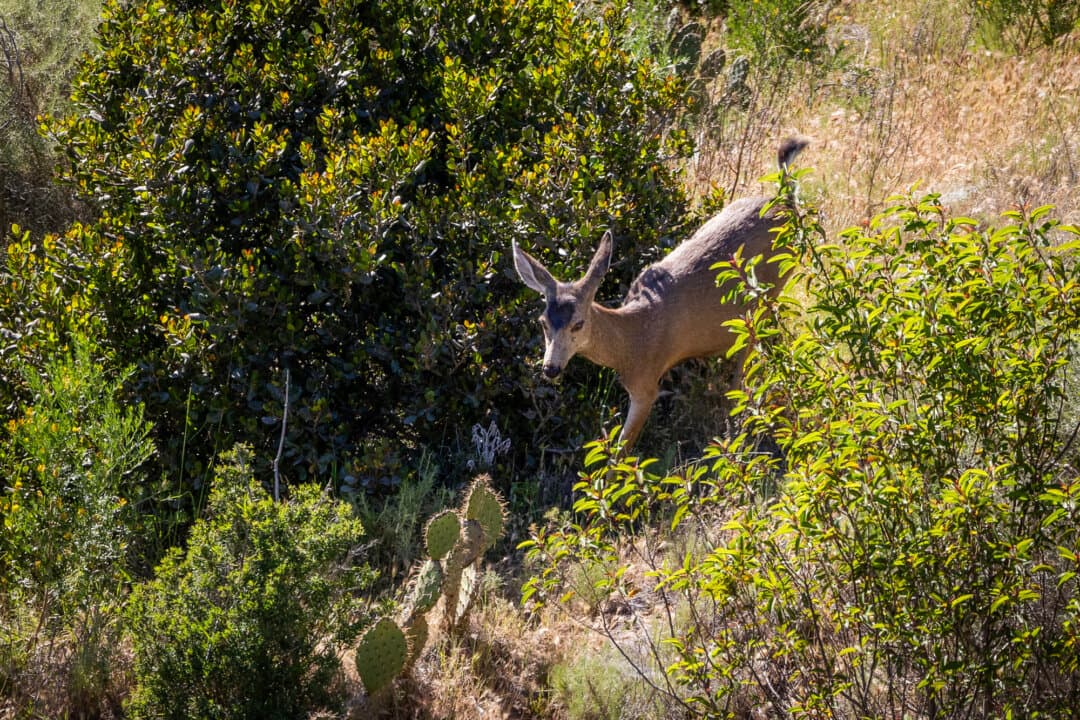
A mule deer wanders into the brush outside of Avalon, Calif., on March 17, 2026. Charles Whitwam and other hunting conservation advocates believe that the island’s mule deer population is somewhere between 400 and 800—less than half of the estimated 2,000 the conservancy claims. (John Fredricks/The Epoch Times)
Ben Myhre, whose company, Wildlife West Inc., had an exclusive contract with the conservancy for more than 20 years to operate a guided hunting program with the “sole purpose” of controlling the deer population on the island, told The Epoch Times that he disagrees with the eradication plan.
His hunters averaged harvests of 220 deer per year and the venison was not wasted, Myhre said.
When Myhre learned in 2023 that the conservancy was shooting for an eradication permit, he advised them against it, especially because of “the way they wanted to go about it.”
He said both the conservancy and the state wildlife department should provide science-based proof that the deer are damaging the island and can destroy it.
The conservancy decided last June to discontinue guided hunting operations, allowing hunts for locals only, Myhre said.
Hunters say the island mule deer population is healthy—unlike some deer herds on the mainland with chronic wasting disease—and should be controlled through ethical hunting, not completely killed off, because one day they may be needed.
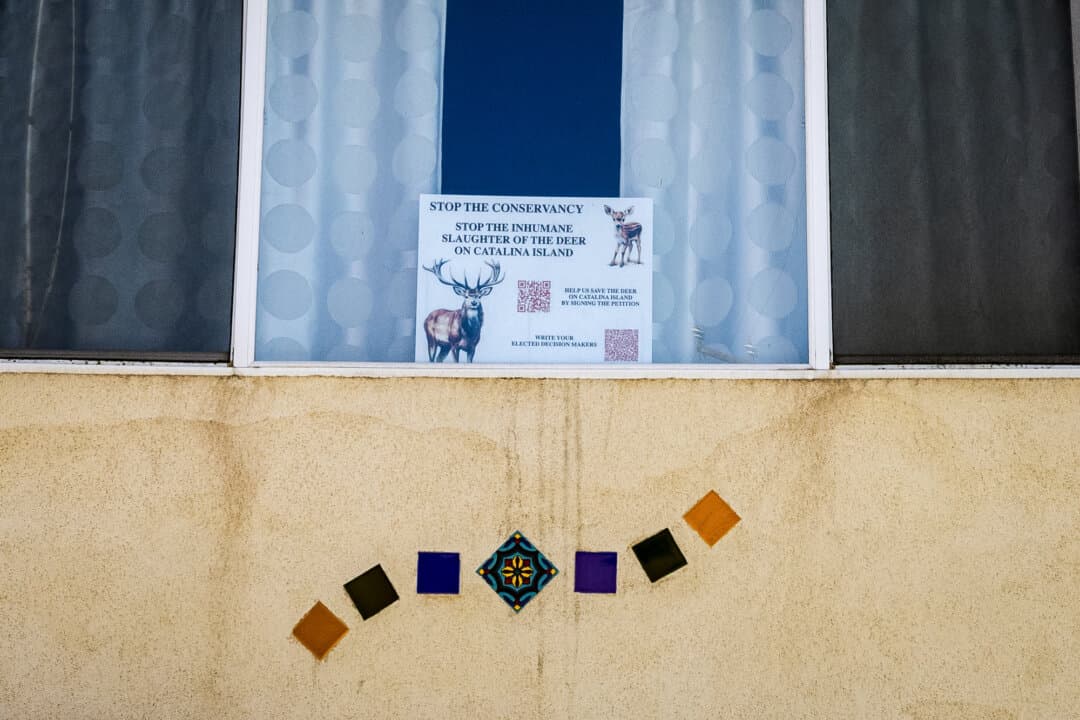
A resident displays a sign supporting Catalina Island’s deer population in Avalon, Calif., on March 18, 2026. (John Fredricks/The Epoch Times)
Wildfire Risks
“The residents of Catalina Island live alongside an ecologically fragile and rare landscape,” Barton said, citing Operation Protect Catalina Island, a long-term plan that combines conservation initiatives, habitat restoration, and wildfire prevention.
A wildfire in 2007 burned more than 4,750 acres of “inland chaparral, grassland, and woods” across 10 percent of the island, “leading to a 93 percent reduction in canopy cover for certain native shrub species due to subsequent grazing,” according to a study published in 2012.
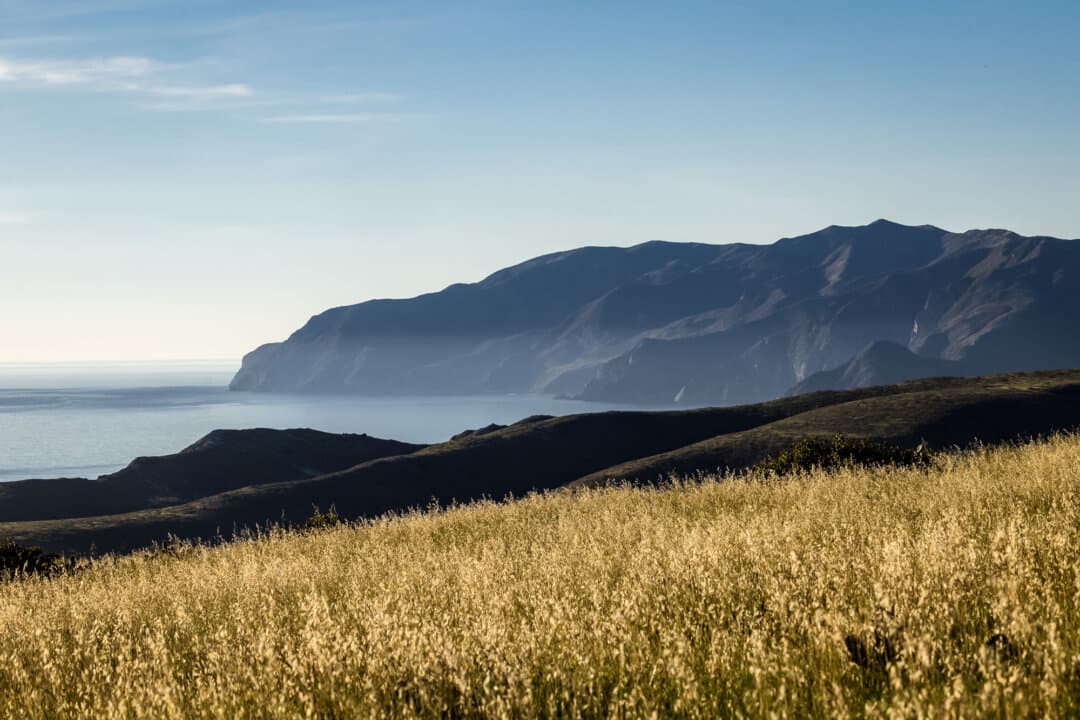
The western coast of Santa Catalina Island, Calif., on March 17, 2026. (John Fredricks/The Epoch Times)
According to Barton, the mule deer consume native plants, allowing invasive grasses to take over the landscape.
“The deer herd’s ongoing damage to the island’s endemic plants and native habitats has been well documented, including through independent scientific research conducted after the 2006 and 2007 wildfires,” he said. “Non-native mule deer contribute to the conversion of native shrubs to invasive annual grassland.”
That shift, he said, creates continuous carpets of fine wildfire fuel that dries early in the season, ignites more easily, and spreads faster, which can lengthen the fire season and contribute to more frequent fires.
Reducing “flashy fuels” to decrease ignition risk is a cornerstone of wildfire management in Southern California, Barton said.
The conservancy has been trying to solve “the deer issue” for decades, Barton said, noting that the animals cannot migrate, have no natural predators, and are subject to the island’s drought cycles.
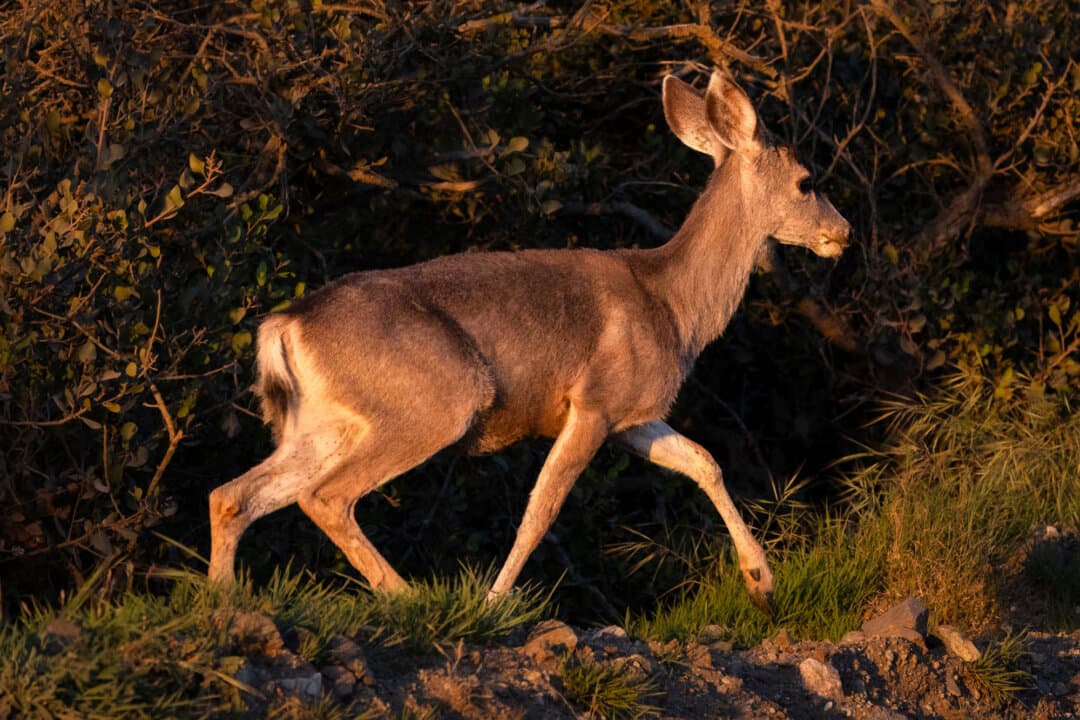
A mule deer wanders into the brush outside of Avalon, Calif., on March 17, 2026. (John Fredricks/The Epoch Times)
“Removing the deer is about ensuring the island is more resilient against a changing climate and wildfire risk,” he said.
People come to the island mainly to visit Avalon, hike the Trans-Catalina Trail, camp, and see the bison, but rarely cite the deer, which can be seen on the mainland. Hunters make up less than 1 percent of the 1.2 million annual visitors, Barton said.
‘Drastic and Inhumane’
Los Angeles County Supervisor Janice Hahn has strongly opposed the eradication plans and led the board of supervisors to a unanimous vote against the aerial shooting plan in 2024.
Some islanders in her district “were terrified at the thought of bullets raining down from helicopters over their beloved island” and others “couldn’t stand the thought of the deer carcasses that would be left in their wake,” Hahn said in a 2023 statement.
She has asked the conservancy to reconsider several alternatives, such as relocating the deer, extending the hunting season, and sterilization.
In a Jan. 26 letter to the state wildlife department, Hahn wrote that her concerns remained unchanged. The revised plan, she wrote, “continues to represent a drastic and inhumane approach” and “disregards the deeply held values of many Catalina residents and visitors.”
The deer are cherished and an important part of the island’s identity, Hahn wrote.