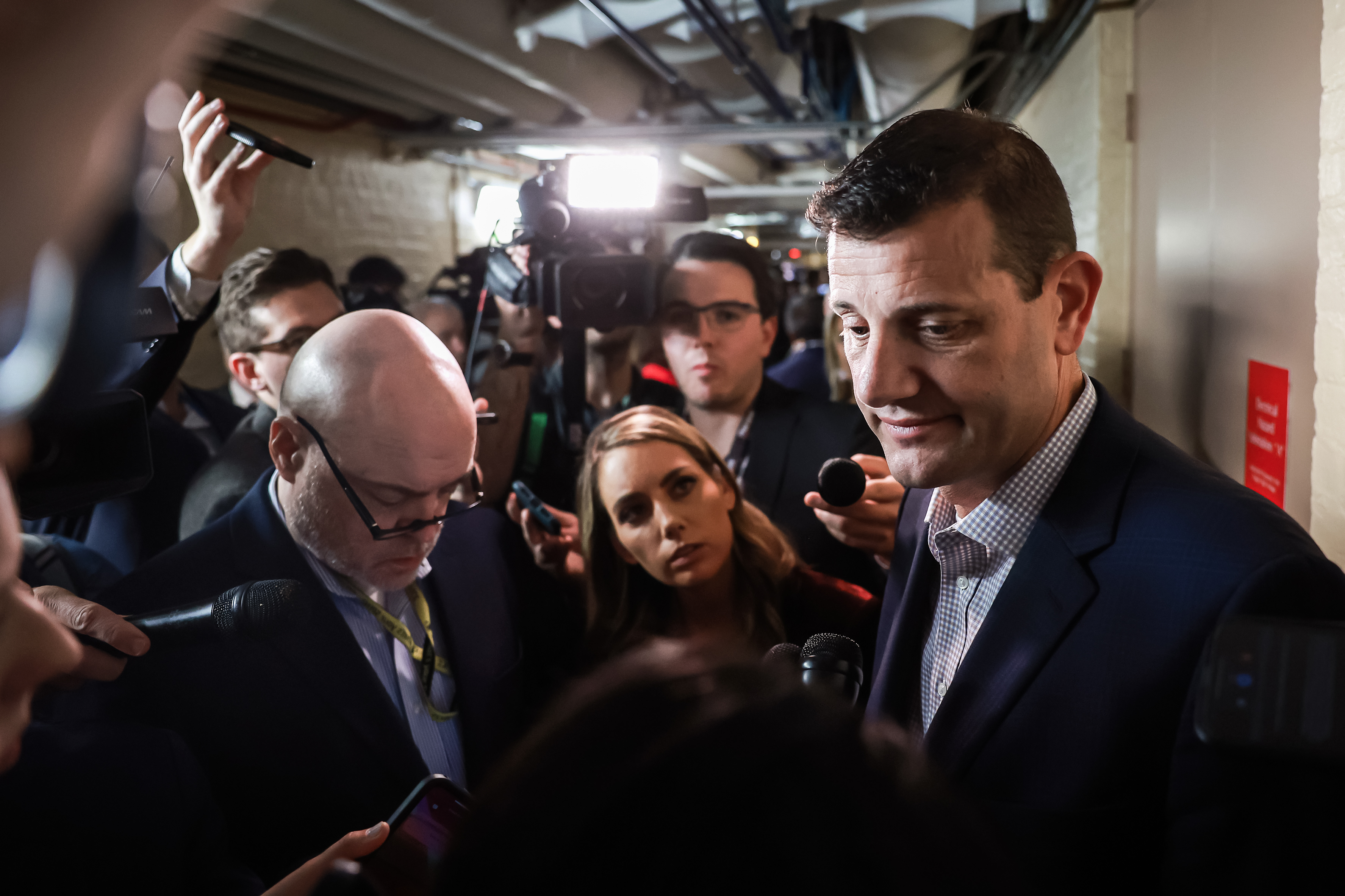
California’s Congressional District 22 is becoming one of the most closely watched battleground races ahead of the June 2 jungle primary, in which incumbent Rep. David Valadao, a Republican, will face Democrat opponents Randy Villegas, a college professor and business owner, and state Assemblywoman Jasmeet Bains, a family physician.
Valadao came under fire from Democrats in July 2025 for casting the deciding vote in Congress that tightened eligibility for Medicaid coverage as part of President Donald Trump’s One Big Beautiful Bill Act, ushering in sweeping federal policy reforms last summer.
Valadao’s seat is the only California congressional race listed as a “toss up” by the Cook Political Report.
As of May 24, 6 percent—or 20,166 of 318,962 ballots—have been returned in early voting, according to the Political Data Inc.’s tracker for the June 2 nonpartisan primary, in which the top two candidates, regardless of party affiliation, will advance to the Nov. 3 general election.
Of the total returned ballots, about 43 percent were from Democrats, 39 percent were from Republicans, and 18 percent were from voters categorized as “No Party Preference and others.”
So far, about 8,783 of 134,307 ballots mailed out to Democrats have been cast, compared with 7,874 of 82,897 mailed out to Republicans.
A Data for Progress partisan poll of 517 likely voters from May 1 to May 6, sponsored by the Working Families Party PAC, shows Valadao with 44 percent of the vote. The poll shows Villegas with 25 percent and Bains with 21 percent, according to The New York Times. The PAC is backing Villegas in the race.
Valadao has held the Central Valley seat for six of seven elections, but the district was recently redrawn under Proposition 50 to favor Democrats. He represented California’s 21st congressional district from 2013 to 2019 and 2021 to 2023.
He won the District 22 race against Democrat Rudy Salas by 7 percentage points in 2024.
Although it remains centered in California’s vast Central Valley, the district now includes more blue areas—mainly in Fresno County—and excludes some red-leaning regions. The district is predominantly Hispanic and has an agricultural-based economy, and it includes parts of Kern, Kings, Tulare, Fresno, and Madera counties, eastern parts of Bakersfield, and portions of Hanford, Tulare, Porterville, and Caruthers.
The redrawn district also excludes Avenal and parts of Hanford, Valadao’s hometown.
Last year, after Texas Republicans launched a congressional redistricting effort, California Gov. Gavin Newsom wrote on X on July 15, “Two can play that game.” On Nov. 4, the state held a special election, when 64 percent of voters passed Prop. 50—a constitutional amendment to redraw California’s congressional district boundaries.
Prop. 50 replaced the independent Citizens Redistricting Commission’s 2021 congressional maps with those redrawn by the Democrat-controlled Legislature under state Assembly Bill 604.
Medicaid ‘Loophole’ Closing for Noncitizens
Valadao’s support for the “One Big Beautiful Bill Act” threatens Medicaid coverage—called Medi-Cal in California—for many living in the state, as on Jan. 1, 2024, California became the only state in the nation to offer full Medi-Cal benefits to all low-income residents, regardless of immigration status.
U.S. law prohibits the use of federal funds for nonemergency care of illegal aliens. A 2024 audit found that California had improperly claimed roughly $52.7 million in federal reimbursements for nonemergency services provided to low-income illegal aliens, according to the U.S. Department of Health and Human Services Office of Inspector General.
Critics claim that the state uses a “loophole” to draw extra federal funds when it taxes health insurers via California’s Managed Care Organization, which frees up state funds to pay for illegal aliens.
“The state taxes Medicaid insurers and then makes higher payments to those same insurers with that tax revenue,” according to the Paragon Health Institute, an independent nonprofit think tank launched in 2021 by Brian Blase, a former health policy adviser to Trump.
“The higher payments enable the state to claim additional federal matching dollars. These federal funds leave California with surplus money to spend elsewhere. This scheme effectively allows the state to ‘launder’ federal Medicaid funds without spending any of its own money.”
The state argues that such a practice isn’t against the law.
Reforms in the Pipeline
Recent guidance from the Centers for Medicare & Medicaid Services (CMS), issued in April, calls for strict limits on federal matching funds to prevent the diversion of these funds for noncitizens. The change will take effect on Oct. 1.
“The Trump Administration has a public mandate, a statutory obligation, and a moral duty to safeguard our federal healthcare programs,” CMS Administrator Dr. Mehmet Oz said in an April 8 press release.
The guidance, he said, provides “clear guidelines to help states follow the law and safeguard taxpayer dollars.”
Meanwhile, Newsom and other Democrats—including Villegas and Bains—have accused the Trump administration of threatening healthcare coverage for 3.4 million people.
Villegas states on his campaign website that he’ll “fight to roll back Trump’s health care cuts and make sure everyone can afford health care by passing Medicare for All.”
Bains accused Valadao of voting for “the largest cut to healthcare in history to give tax breaks to Wall Street and billionaires” and said that “no district in the country has as many families on Medi-Cal.”
Valadao said in a May 22 statement he was clear from the beginning that he wouldn’t support a bill that included any reduction in Medicaid coverage to the most vulnerable populations, including children, seniors, those with disabilities, and pregnant women.
The bill, he said, honors this commitment, while implementing commonsense reforms to strengthen the program. He said he will work with the Senate “to ensure critical programs like Medicaid and SNAP are protected for those who need them most.”
Valadao noted that the House version of the bill “blocks the largest tax hike in American history” and delivers tax relief for working families and seniors.
“More than 90 percent of my constituents rely on the standard deduction, and this legislation preserves the provisions that doubled it,“ he said. ”It also expands the Child Tax Credit, eliminates taxes on tips and on overtime, and enhances deductions for seniors. These are real wins that will put more money back in the pockets of hardworking Central Valley families.”
Meanwhile, Villegas has criticized the Trump administration’s policies, referring to Immigration and Customs Enforcement officers enforcing U.S. immigration laws as “unidentified masked men kidnapping innocent mothers selling fruit, or ripping children away from their parents” on his campaign website.
“The current policies of blanket detention and deportation are unconstitutional and un-American,” Villegas stated on the site. “As the son of immigrants from Mexico, this is personal to me. We need a working system that protects our communities while providing a path to citizenship, so our undocumented neighbors, friends, and coworkers aren’t forced to live in the shadows.”
He supports congressional term limits, banning members of Congress from trading stocks and becoming lobbyists, protecting Social Security, universal childcare and family leave, raising the federal minimum wage, and bringing down the cost of living, among other planks in his platform.
“I dare any sitting D.C. politician to explain to ordinary Americans how they would survive on $7.25 an hour, let alone support a family,” Villegas states on the website.
Bains promises to fight for better economic opportunities by protecting existing jobs and creating new ones by investing in agriculture and infrastructure.
“The Central Valley has fueled California’s economy for generations but too often, gets left behind,” Bains states on her campaign website.
She also promises to reduce the cost of living, curb inflation, and “eliminate reckless tariffs that hurt Valley farmers and raise prices on working families.”
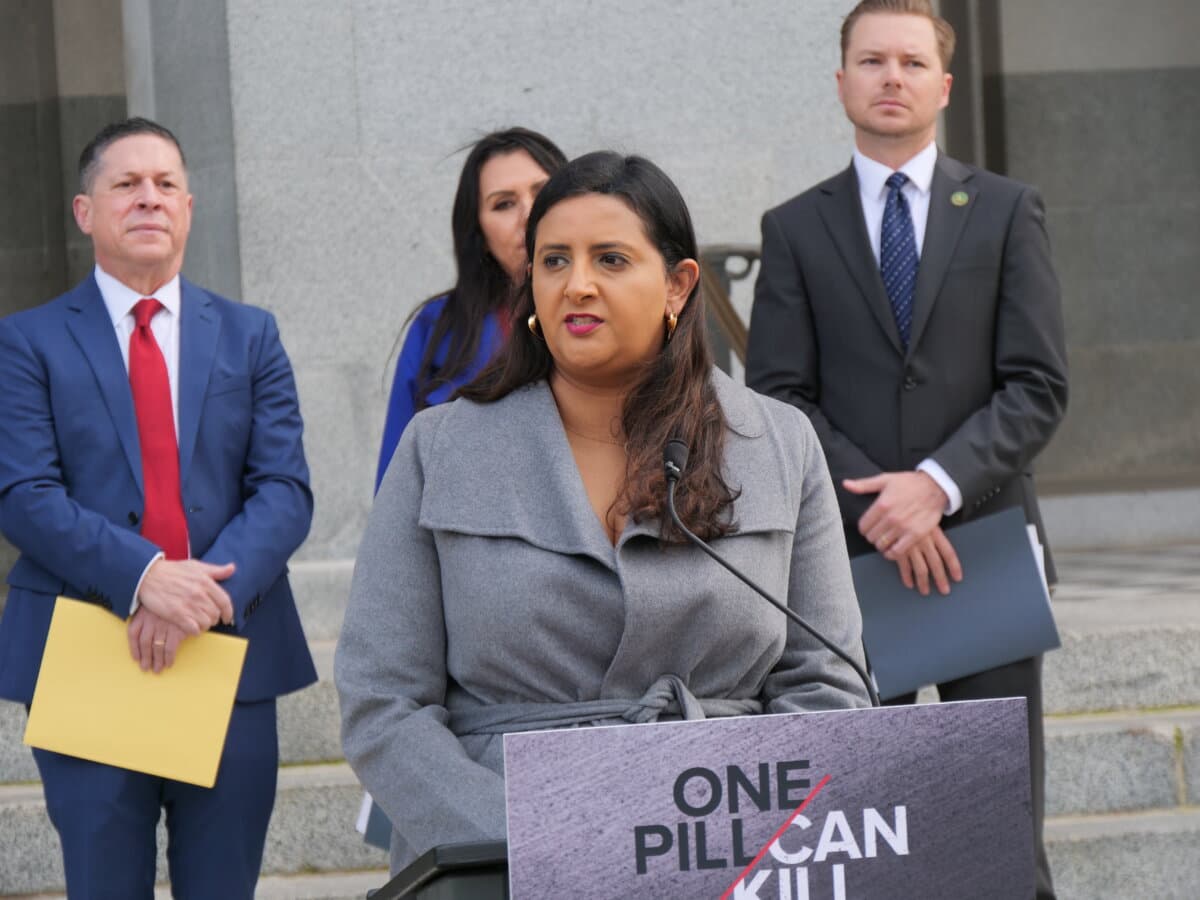
Assemblywoman Jasmeet Bains, speaking at the Capitol on Feb. 14, said the policy of increasing access to medications such as Narcan is not the answer. (Travis Gillmore/The Epoch Times)
Among the planks in Valadao’s platform are defending rural families and communities, cutting wasteful spending, balancing the federal budget, and cutting the cost of healthcare.
Valadao has also promised to protect the water supply of the Central Valley and make sure communities and farmers receive a clean, reliable water supply.
“In the Central Valley, life as we know it is dependent upon securing a reliable and clean supply of water. Farmers, families, and entire communities must receive the water they need to strengthen the economy and raise our families,” he states on his website.
“While the stock market is at an all-time high and the unemployment rate nationally continues to drop, too many people in the 21st Congressional District are out of work and aren’t feeling the positive effects of our growing economy. The unemployment rate in the San Joaquin Valley is nearly double the national average.”
Valadao said that the economy “needs to work for rural and working families, not just big cities.”
He said he seeks to eliminate needless regulations and reduce the tax burden on small businesses, which he says are the backbone of the American economy. He also said he wants to pass “common sense legislation” to put people back to work.
He supports a market-based approach to healthcare reform to provide competitive choices and to address the need to make quality healthcare available and affordable to all Americans, noting those who currently can’t afford insurance.
“It is important to enact reforms that lower the cost of healthcare, while maintaining access to healthcare for America’s most vulnerable populations—like the elderly, poor, and those with pre-existing conditions,” he said.
Valadao said that as the son of immigrants, he supports comprehensive immigration reform and a “reasonable and responsible pathway to citizenship” for those wishing to enter the United States and for those already in the country.
“This will allow many undocumented immigrants to come out of the shadows, get involved in their children’s education, find employment, and raise their families,” he states on his website. “Developing a guest worker program that will enable access to a reliable workforce is crucial to the stability of our local agricultural economy.”