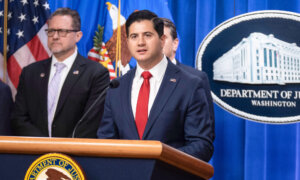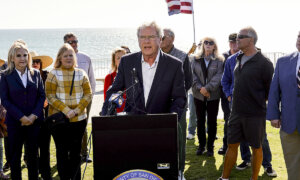
A progressive Democrat in San Francisco who has championed pro-transgender legislation in California is leading the primary race to fill the House seat long held by Rep. Nancy Pelosi (D-Calif.), who is retiring.
State Sen. Scott Wiener, described by The New York Times as a “moderate state senator,” has dominated every poll as of May 28.
Trailing Wiener in the lead-up to primary election day on June 2 are three other Democrats: Saikat Chakrabarti, a founder of Justice Democrats and former chief of staff for U.S. Rep. Alexandria Ocasio-Cortez (D-N.Y.); Connie Chan, a member of the San Francisco Board of Supervisors heavily backed by state labor unions and endorsed by Pelosi, and Marie Hurabiell, a moderate Democrat and attorney with a background in the tech industry.
A recent San Francisco Chronicle poll shows about 40 percent of respondents said they either planned to vote for Wiener or leaned toward voting for him. Chakrabarti and Chan were nearly tied, receiving 18 and 17 percent support, respectively, while Hurabiell, a former Republican-turned-Democrat, showed 5 percent.
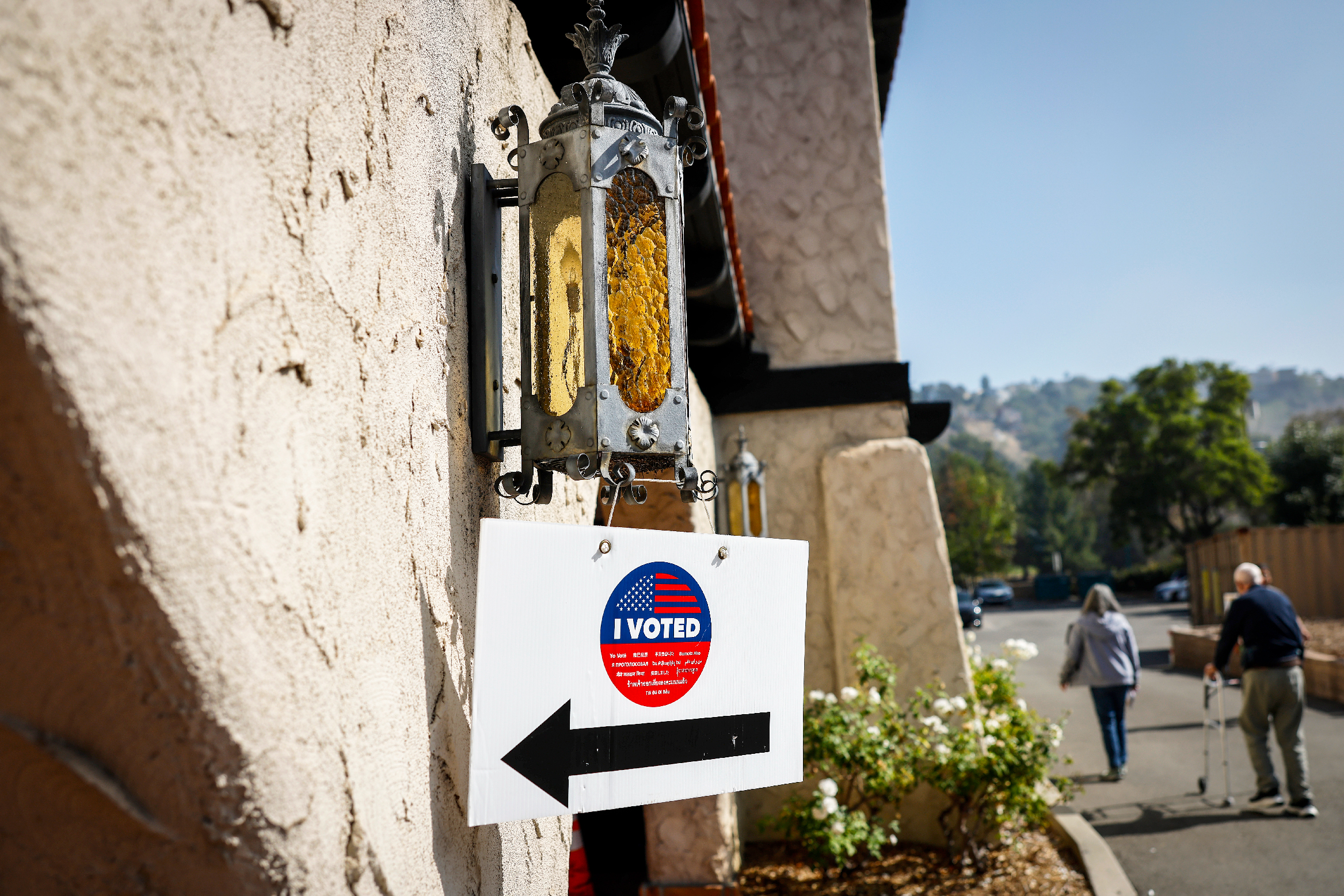
In California’s “jungle primary” system, only the top two candidates in the primary advance to the general election ballot, regardless of party affiliation.
In all, eight Democrats, two Republicans, and an independent are running in California’s 11th Congressional District, a long-time Democratic stronghold. The other Democrats are John Buffler, Keith Freedman, Omed Hamid, and Gregory Haynes.
Neither of the two Republicans—David Ganezer and Jingchao Xiong—have been endorsed by the Republican Party of California.
Nathan Deer, the sole independent, is listed as a No Party Preference candidate.
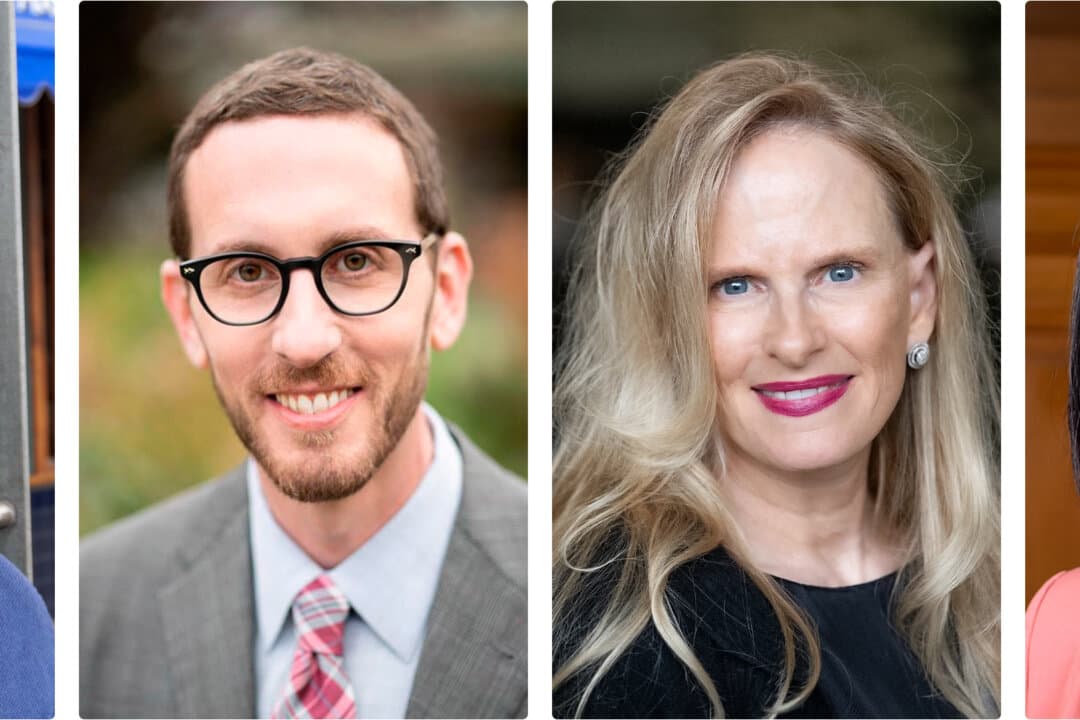
Pelosi was first elected to the U.S. House in a special election in 1987. Two decades later, she became the first—and remains the only—woman to serve as House speaker. She was elected speaker in 2007 when Democrats took control of the House and again in 2019, following the 2018 midterm elections.
The former House speaker announced last November she will retire when her current term ends Jan. 3, 2027. In 2024, she garnered 81 percent of the vote defeating Republican Bruce Lou. Pelosi has represented San Francisco in Congress for nearly four decades.
Wiener, endorsed by the Democratic Party of California—but not Pelosi—has represented San Francisco for 28 years as a state senator, former county supervisor, former deputy city attorney, and longtime community leader. He has served in the state legislature for nearly a decade.
Wiener, an LGBT activist, recently made the national media spotlight after appearing in a video standing next to a drag queen made up as a pig and wearing skimpy pink lingerie singing “Wiener is a girl’s best friend,” at a campaign event attended by children.
The author of several bills supporting gender ideology, Wiener has fought for access to so-called gender-affirming care and—according to his campaign website—against federal cuts to Medicaid and the Affordable Care Act.
Wiener wrote Senate Bill 107, which pushed for “gender-affirming” health care and making California a trans sanctuary state, a refuge for transgender-identified children and their parents leaving states where gender surgeries and treatments have been banned. In 2022, California Gov. Gavin Newsom signed SB 107 into law and it took effect Jan. 1, 2023.
He was also behind the Senate Bill 357, called the “Safer Streets for All Act,” which repealed the state’s anti-loitering law that police had used as a tool to prevent street prostitution.
Newsom signed the bill into law in 2022, stating: “To be clear, this bill does not legalize prostitution. It simply revokes provisions of the law that have led to disproportionate harassment of women and transgender adults.” Opponents say SB 357 has led to an increase in street prostitution, making the streets less safe.
Wiener has pushed for “harm reduction” policies, including supervised “safe consumption” sites where addicts can use illicit drugs, such as heroin and fentanyl, and the decriminalization of psychedelic drugs. He authored Senate Bill 58 to decriminalize the personal possession and use of plant-based psychedelics. The bill successfully passed the California Legislature but was vetoed by Newsom.

He also authored Senate Bill 79, controversial housing legislation that forces cities to upzone areas near public transportation hubs for taller, high-density housing in designated counties. Opponents argue it strips communities of local control, threatens neighborhood character, and reduces the availability of affordable housing, including single-family homes.
He has promised to continue fighting climate change and has called for greater Big Tech oversight.
In a video pinned to the top of his campaign website, Wiener brands President Donald Trump and the MAGA right as fascists.
“My family escaped fascism in Europe. I never thought the United States would slip into fascism like we’re seeing today,” he says as images of Trump, Elon Musk, and Vice President JD Vance flash across the screen.
“San Francisco has always been on the right side of history, standing up for democracy and civil rights, even when it’s hard,” he says as images of LGBT activist Harvey Milk and people carrying a “National March for Lesbian/Gay Rights Banner,” appear in the video.

Wiener, an attorney, says he is running for Congress to defend San Francisco, its values, its people, and the U.S. Constitution.
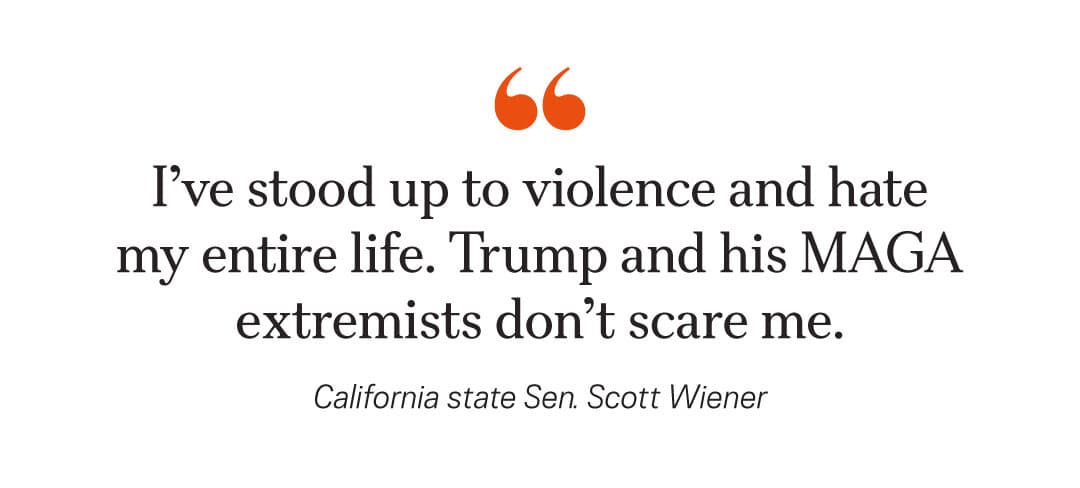
“I’ve stood up to violence and hate my entire life. Trump and his MAGA extremists don’t scare me. They won’t stop me or the people of our great city from fighting back and doing what’s right,” he says in the video.
He promises to hold insurance companies accountable “so families get the medical care they need” and “protect LGBTQ kids and families.”
Wiener highlights his efforts to protect LGBT rights and asks voters to join him in preserving San Francisco’s progressive ideals. He prides himself as a champion of progressive policies, including nearly 100 state laws—“to improve affordability and make San Franciscans safer, happier, healthier, and more secure.“
Wiener highlights legislation that he authored banning federal Immigration and Customs Enforcement officers from wearing masks “like secret police”—legislation that was later overturned by a federal court.
What Is ‘A Moderate’?
While local media The Voice of San Francisco in January called Wiener “the moderate standard bearer in this race,” not everyone agrees Wiener is a moderate or that his platform represents what the majority of district constituents want.
Hurabiell is a sixth-generation San Franciscan and a founder of ConnectedSF, a nonprofit grassroots advocacy group that promotes neighborhood and civic engagement and tracks local policies and community initiatives.
A former Republican, she switched party affiliation in 2022 and has positioned herself as a truly moderate Democrat offering an alternative to radical progressive policies.
A self-described “pragmatic” and “common sense” candidate, Hurabiell told The Epoch Times that so-called harm reduction policies that supply needles, pipes, and other drug paraphernalia to addicts on the street have only made San Francisco’s situation worse.
“Instead, we just have more people on drugs. We’re just making it easier and easier for people to be on our streets on drugs in a situation that is not healthy or safe for them or for the rest of the community,” she said.
Needle exchange programs, she said, went from an actual exchange of dirty needles for clean ones to drug addicts getting clean needles whenever they wanted and discarding used syringes on the streets and in city parks.

The needles are a danger to everyone, including addicts and others living on the streets, she said.
“I’ve taken pictures of piles of needles on our streets,” Hurabiell said. “It’s also just highly hypocritical of us as a community to say we’re going to ban plastic straws, but we’re going to give out these needles to anybody who wants them.”
Although Hurabiell says she rejects socialism, she suggests government should explore universal-income options to prepare the American workforce for the AI revolution and job displacement.
Despite losing the White House, Senate, and House of Representatives in 2024, Democrats have doubled down on policies most people don’t want, she said.
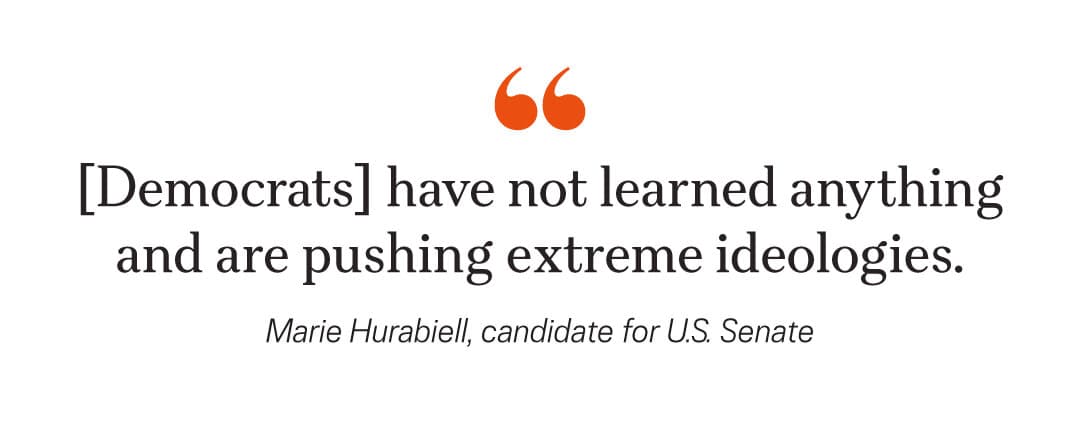
“They have not learned anything and are pushing extreme ideologies,” she said.
One of those extremes is gender ideology, and allowing medical interventions such as puberty blockers, cross-sex hormones, and life-altering surgeries on minors, Hurabiell said.
Wiener “is the most dangerous state legislator in America” and “has done a lot to sideline women and girls,” she said.

Neither Wiener nor his campaign responded to a request for comment.
“Mutilating and sterilizing children is medical malpractice, in my opinion, and even large medical associations are acknowledging that transitioning children before they’re of legal age of consent is malpractice,” Hurabiell said.
“We don’t let people vote until they’re 18. We don’t let people drink until they’re 21,” she added. “It is highly irresponsible to allow children to make this kind of decision.”
Hurabiell opposes policies that allow males who identify as female to compete in girls’ and women’s sports and men who identify as women being sent to women’s prisons.
“Women and girls deserve their own sports and spaces. Two-thirds of Democrats agree, according to a New York Times study done in 2025, so I don’t think I’m off the deep end here,” she said. “Most of us see that the emperor has no clothes.”
When Hurabiell strongly criticized SB 357, which she argues removed tools from the police to rescue trafficked children, she said Wiener’s campaign called her “homophobic.”
“I’m sorry,” Hurabiell said, “but there’s no way. ... I want someone representing me in Congress who can’t defend his own legislation, who has to devolve to name-calling.”
Hurabiell has also grown weary of identity politics, which she believes have left the country dangerously divided.
“Scott Wiener is hiding his radical record by avoiding tough interviews. He is not answering for these things,” she said.

Reconfiguring the American Dream
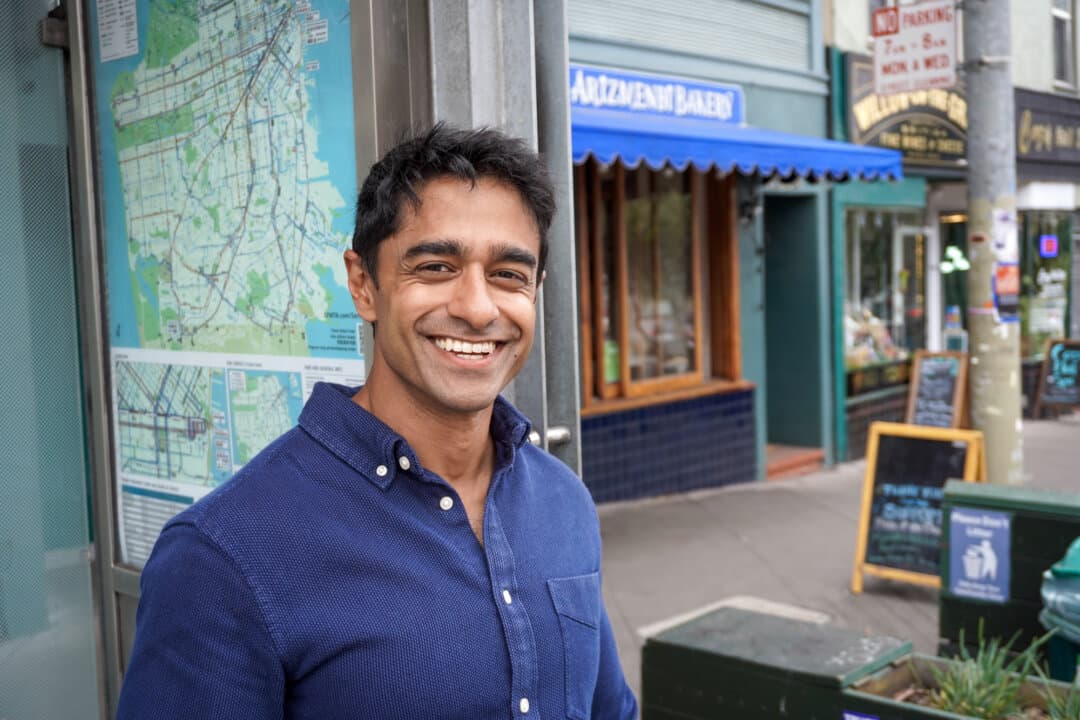
Chakrabarti is a first-generation American born in Fort Worth, Texas, to Indian-immigrant parents who moved to San Francisco in 2009.
He studied computer science at Harvard University and became a software engineer. He is a multi-millionaire who earned much of his fortune through investments in Stripe, Inc., an Irish and American multinational financial and software services corporation dual-headquartered in the San Francisco Bay Area and Dublin.
Chakrabarti believes the American Dream is slipping away for most people, according to his candidate profile on Ballotpedia.
“I left tech because I couldn’t ignore the deeper crisis. I wanted to use my skills to fight for an economy and a democracy that actually work for ordinary people,” he wrote.
Chakrabarti helped launch progressive campaigns, built organizing tools for Bernie Sanders’s 2016 campaign, co-founded Justice Democrats, and recruited and ran campaigns for candidates, including Ocasio-Cortez. He served as the congresswoman’s first chief of staff and helped launch the Green New Deal. She has repeatedly declined to endorse him.
After leaving Washington, he started the New Consensus think tank with the goal of developing plans to rebuild American industry, create high-wage jobs, and deal with climate change.
“San Franciscans are being crushed by the cost of living and betrayed by leaders who are too comfortable in power to fight for us. We need bold action, and I know how to make it happen,” he wrote.
Pelosi’s Blessing
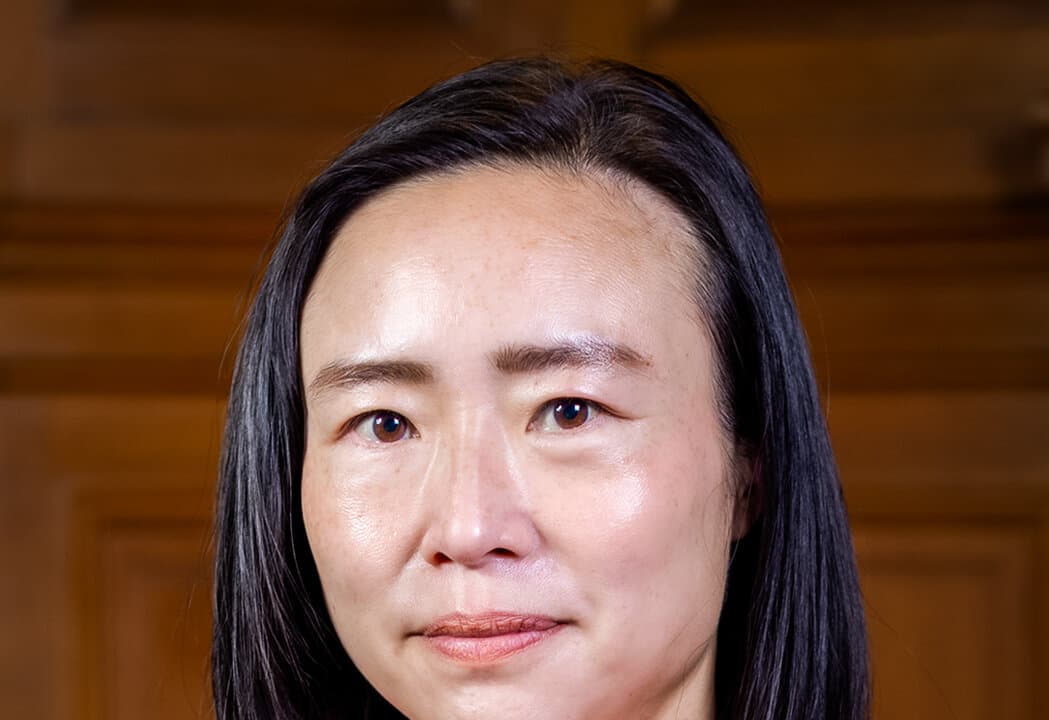
Chan, a Chinese immigrant born in British Hong Kong, moved to Taiwan before moving to San Francisco’s Chinatown with her family when she was 13 years old. She is a San Francisco County supervisor and a progressive with deep ties to labor unions. She also worked on former Vice President Kamala Harris’s staff when Harris was state attorney general.
Pelosi endorsed Chan for Congress in a video released May 18.
“Like all of you, I have watched this race closely, and I believe one candidate stands above the rest,” Pelosi says in the two-minute video. “Connie Chan is the leader best prepared to carry forward the fight for San Francisco in the congress of the United States.”
Pelosi said Chan understands San Francisco and its values, diversity, communities, and “responsibility to lead with both compassion and strength.”
Chan’s story, she said, reflects the American Dream with “the hopes and the courage of so many families who came to this country believing in opportunity, dignity, and democracy.”
Both Chan and Hurabiell have strong support from San Francisco’s Asian community.
Election forecasters, including the Cook Political Report, have rated the 11th Congressional District in the general election as “Solid D.”
Chakrabarti has raised the most campaign funds at about $9.2 million, compared with Wiener at $4 million, Chan at $649,000, and Hurabiell at $632,000, according to Federal Elections Commission (FEC) data.
The 11th district’s boundaries were redrawn under California Proposition 50 in 2026, which made the state more favorable for Democrats. About 64 percent of California voters approved the redistricting plan as a legislatively referred constitutional amendment on Nov. 4, 2025, in a special election ballot.
Correction: An earlier version of this article misstated Connie Chan’s name in a photo caption.