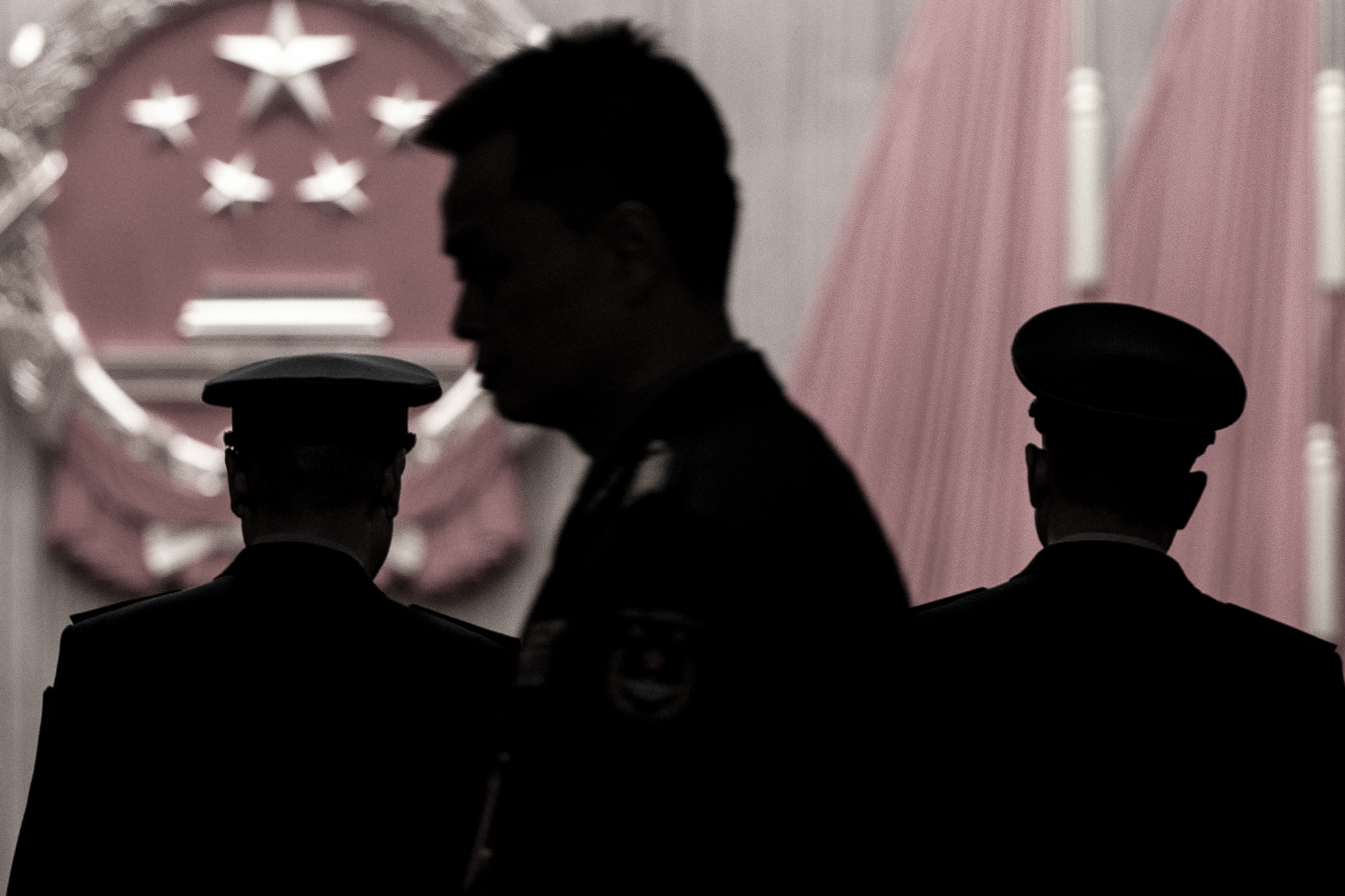

The Chinese Communist Party (CCP) is intensifying its focus on internal discipline and anti-corruption campaigns as its leader, Xi Jinping, prepares for the Party’s 2027 National Congress, a move analysts say reflects both his efforts to consolidate power and the mounting challenges of governing the country.
The CCP’s four-day Fifth Plenum of its 20th Central Committee concluded in Beijing on Oct. 29, with Party building and strict governance taking center stage.
At a forum on Oct. 29 at Taipei University of Marine Technology, Taiwanese academics discussed its implications for Xi’s political future, the military leadership, and personnel arrangements ahead of next year’s National Congress.
Wang Chan-hsi, a research fellow at Taiwan’s Institute for National Defense and Security Research, said at the forum that the plenum should be understood in the context of Xi seeking to extend his rule at the next National Congress.
Wang pointed to a commentary published by the CCP’s state-run outlet People’s Daily before the meeting that compared Xi’s efforts to enforce Party discipline and address China’s economic, diplomatic, and social difficulties to a “new Long March.”
The Long March was the CCP’s historic retreat during the Chinese civil war, which helped establish Mao Zedong’s leadership within the Party. Wang said the comparison appeared intended to elevate Xi’s historical standing and build a political justification for his continued rule.
However, he said it remains important to see whether the plenum’s official communiqué or other Party documents incorporate the “new Long March” narrative and references to Xi’s historical position. Their inclusion would suggest that Xi’s position has gained broader acceptance within the Party, while their absence could indicate a lack of consensus.
Wang said the emphasis on comprehensive, strict Party governance could also allow Xi to avoid scrutiny of his record in governing China.
“Over the past four years, the CCP has faced more challenges in diplomacy, international affairs, economic development, and social governance,” Wang said. “Xi Jinping actually has no outstanding achievements to support his seeking another term.”
He said the campaign could become more routine and institutionalized, strengthening Xi’s political foundation through anti-corruption measures and tighter internal controls.
Military Purges
The plenum also focused on the military leadership, as sweeping purges have left the Central Military Commission (CMC), China’s top military command body, with only two members—Xi himself and Zhang Shengmin.
The plenum also confirmed the expulsion of several senior officials from the Party, including former CMC vice chairman Zhang Youxia, former Joint Staff Department chief Liu Zhenli, former International Department minister Liu Jianchao, and former Politburo member Ma Xingrui.
The meeting reviewed disciplinary investigation reports concerning 18 officials accused of serious violations of Party discipline and law.
Hung Yao-nan, an assistant professor in international relations at Tamkang University in Taiwan, said at the Taipei forum that the failure to appoint replacements to the largely vacant CMC was unlikely to reflect a shortage of qualified candidates.
Instead, he said, it could signal a fundamental change in how the military is governed.
Hung said the arrangement reflected the implementation of the CMC chairman’s system of responsibility, under which the commission had effectively shifted from a collective leadership body to one in which the chairman makes the decisions.
If the vacancies remain unfilled, Hung said, it would amount to exchanging vacant positions for absolute control.
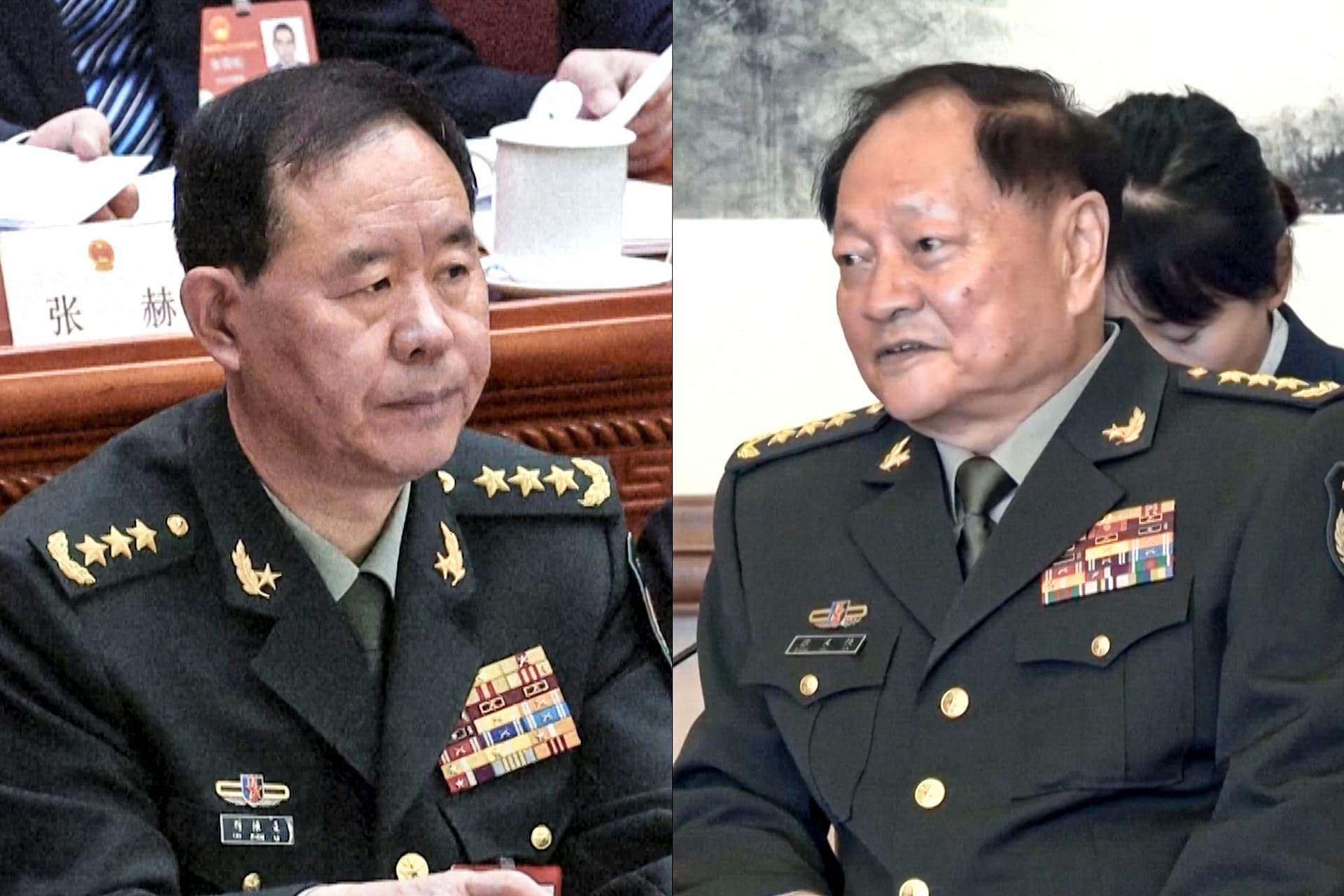
(Left) Liu Zhenli at the Great Hall of the People in Beijing on March 5, 2025; (Right) Chinese Central Military Commission Vice Chairman Zhang Youxia attends an official event in Beijing on Oct. 15, 2024. (Reuters/Russian Defense Ministry)
Personnel Changes Offer Clues to Xi’s Political Future
Beyond the military purge, analysts said personnel appointments ahead of the 21st National Congress would offer clues about Xi’s plans for the next generation of Party leadership.
Hung noted that several officials born in the 1970s, now around 50, have recently been promoted to local leadership positions. He said the appointments could be intended to develop a younger pool of officials for the 22nd and 23rd party congresses, rather than identify a successor to Xi.
Hsiao Tu-huan, secretary-general of the Cross-Strait Policy Association, said that Xi is gradually promoting younger officials who are both politically loyal and capable of delivering results.
He said future appointments to the Central Committee and its alternate membership would likely reflect the leadership’s preference for officials who could demonstrate both obedience and administrative competence.
Hung said more significant indicators of succession planning would include younger officials taking over key positions such as president of the Central Party School, state vice president, CMC vice chairman, or members of the Secretariat of the CCP Central Committee.
Without changes to those positions, he said, there would be little evidence that Xi was preparing a successor.
“Internal challenges are far greater than external challenges for Xi,” Hung said.
Tzeng Wei-feng, a research fellow at Taiwan’s National Chengchi University Institute of International Relations, identified three areas to watch following the plenum—whether Xi’s political theories on Party building would be incorporated into official Party documents; how anti-corruption purges would be translated into governance; and how personnel reshuffles would affect the Party’s preparations for the 2027 National Congress.
He also said the selection of Central Committee members following the military purge, local government appointments, and the Party’s approach to political loyalty and corruption would be important indicators of its future direction.
Chung Yuan and Wu Min-chou contributed to this report.