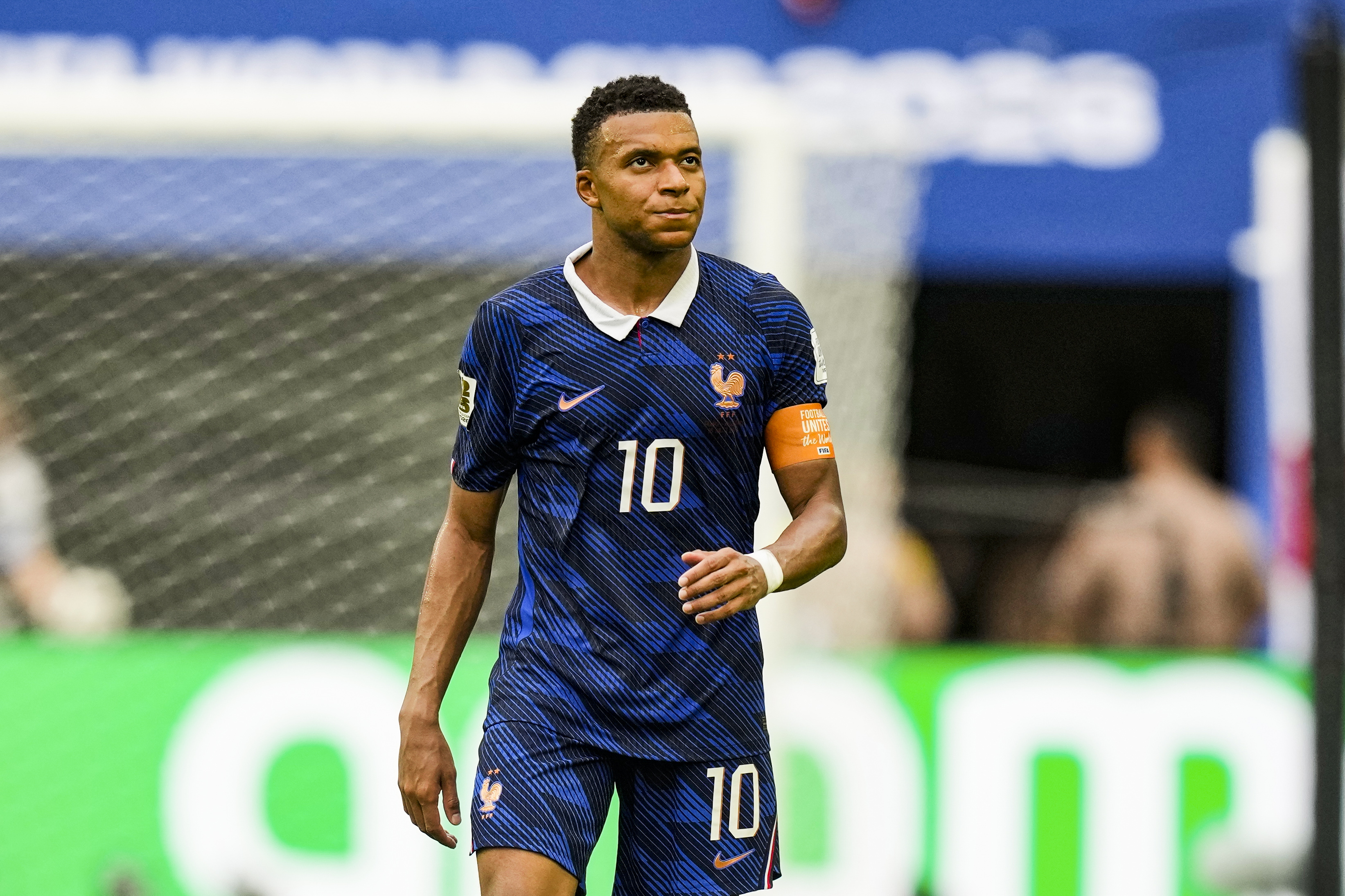
French soccer star Kylian Mbappe lost sponsorship deals with several Chinese brands on Oct. 27 after joking about an internet meme depicting him as Mao Zedong, triggering criticism from Chinese state media and a response from Beijing.
The 27-year-old Real Madrid forward was being filmed getting ready for a talk show when he described the meme, referring to the person depicted as a Chinese dictator. The remark prompted commercial boycotts and restrictions on his coverage in China, where the Chinese Communist Party (CCP) continues to promote Mao as a revered founding figure.
Mbappe issued an apology in French, Chinese, and English, saying his comments were “ill-judged” and had upset people in China and Chinese communities overseas.
At an Oct. 27 press briefing, Chinese Foreign Ministry spokesman Guo Jiakun said remarks and actions that hurt the feelings of Chinese people would naturally encounter opposition from across Chinese society.
As criticism spread across Chinese social media, some users complained that they could not find out what Mbappe had actually said.
Chinese Brands and State TV Cut Ties
The controversy stemmed from footage recorded backstage as Mbappe was preparing for The Bridge, a French-language online talk show hosted by his Real Madrid teammate Aurélien Tchouaméni. The short clip circulated on Oct. 26 and was subsequently removed from the show’s social media accounts.
In the clip, Mbappe described the image superimposing his face on Mao as amusing and said he often shared it with friends while playing video games online.
His remark referring to Mao as a Chinese dictator sparked criticism on Chinese social media, where nationalist users accused him of insulting China and demanded a boycott.
On Oct. 27, Mengniu Dairy, Shanghai Milkground Food Tech, and Dongpeng Beverage announced they were terminating their partnerships with Mbappe. Dongpeng’s electrolyte drink brand Bushuila issued a separate termination statement.
Swiss sportswear company On, which announced a partnership with Mbappe in September, removed promotional material featuring him from its Chinese social media accounts. No formal termination of that partnership had been confirmed.
Chinese social media platform Xiaohongshu also said it was removing promotional material featuring Mbappe, but clarified that its content partnership with him had expired on Dec. 31, 2024.
State media China Central Television (CCTV) said it had suspended broadcasts of Spain’s LaLiga matches, other matches featuring Mbappe, and advertisements featuring him, beginning Oct. 26. The broadcaster also demanded public apologies as well as a written apology from Mbappe and Real Madrid.
Chinese Platforms Withhold Remarks
While Chinese state media and major sports platforms condemned Mbappe’s remarks, their reports did not mention that the controversy concerned a meme depicting Mao Zedong or his description as a Chinese dictator.
Chinese soccer information platform Dongqiudi explicitly announced on Oct. 26 that it would not translate Mbappe’s comments, saying they had offended China and its people.
Some Chinese internet users complained that they knew Mbappe had lost endorsement deals over supposedly inappropriate remarks but could not find out what he had actually said. One user said even Doubao, a Chinese artificial intelligence chatbot, would not provide the remarks.
The CCP maintains extensive controls over political speech, particularly criticism of party leaders and politically sensitive accounts of communist history.
The U.S. House Select Committee on the CCP criticized the reaction in an Oct. 27 post on X.
“The CCP gets upset when you call Mao Zedong a dictator,” the committee wrote.
It pointed to Mao’s launch of the Cultural Revolution in 1966, describing it as one of the darkest chapters in Chinese history, and shared a video about the oppression and tyranny of that period and its continuing influence on the CCP.
Responding to Mbappe’s apology on X, Chinese-language user LuJun Quan wrote: “You didn’t say anything wrong. You’re not the one at fault, and you’re certainly not the one who should apologize.”
Chinese commentator Li Chengpeng wrote on X that joking about dictators was common in the United States and Europe. He argued that nationalist critics feared such jokes could eventually target China’s current leader.
Feng Chongyi, a scholar at the University of Technology Sydney, told the Chinese edition of The Epoch Times in a 2021 interview that accusations of “insulting China” had increasingly been used under Chinese leader Xi Jinping to suppress dissenting political views, including criticism of the CCP.
Apology Draws Further Demands
In his Oct. 27 statement, issued through Interconnected Ventures, Mbappe said his remarks were not intended to offend anyone.
He apologized to those upset by his comments and said he respected Chinese people and their history.
LaLiga, Spain’s top professional soccer league, also apologized, emphasizing that Mbappe had spoken in a personal capacity and did not represent the league.
CCTV acknowledged Mbappe’s apology but maintained that his subsequent actions would determine whether the broadcaster considered the matter resolved.
The broadcaster called on Mbappe, Real Madrid, and LaLiga to demonstrate genuine remorse and learn from the incident.