
The White House plans to expand its support for domestic rare earth businesses to counter China’s near monopoly on rare earth minerals.
Senior officials informed a group of rare earth companies at a recent meeting that the Trump administration intends to form public-private partnerships to boost domestic production and extend a minimum price guarantee to their products.
A White House official confirmed the July 24 meeting with The Epoch Times on Aug. 1. Reuters first reported the development.
U.S. governmental support to the rare earth sector would be similar to a recent investment deal with MP Materials, the company that owns the only active rare earth mine in the United States.
Tune in to China Watch, a podcast on Chinese politics, technology, and business.
In July, MP Materials announced a 10-year partnership with the Department of Defense. The Pentagon will guarantee a floor price of $110 per kilogram for neodymium-praseodymium products stockpiled or sold by MP Materials. Additionally, the Defense Department will ensure a $140 million profit for the rare earth magnet facility the company is constructing in Texas.
In return for the deal, which begins in the last quarter of the year, the Pentagon will receive privileges in accessing the company’s products and owning a share of the upside profit above the guaranteed amount.
The key is to build a “vertically integrated supply chain” from mines to magnets in the United States, according to James Litinsky, CEO of MP Materials, during a press call announcing the deal.
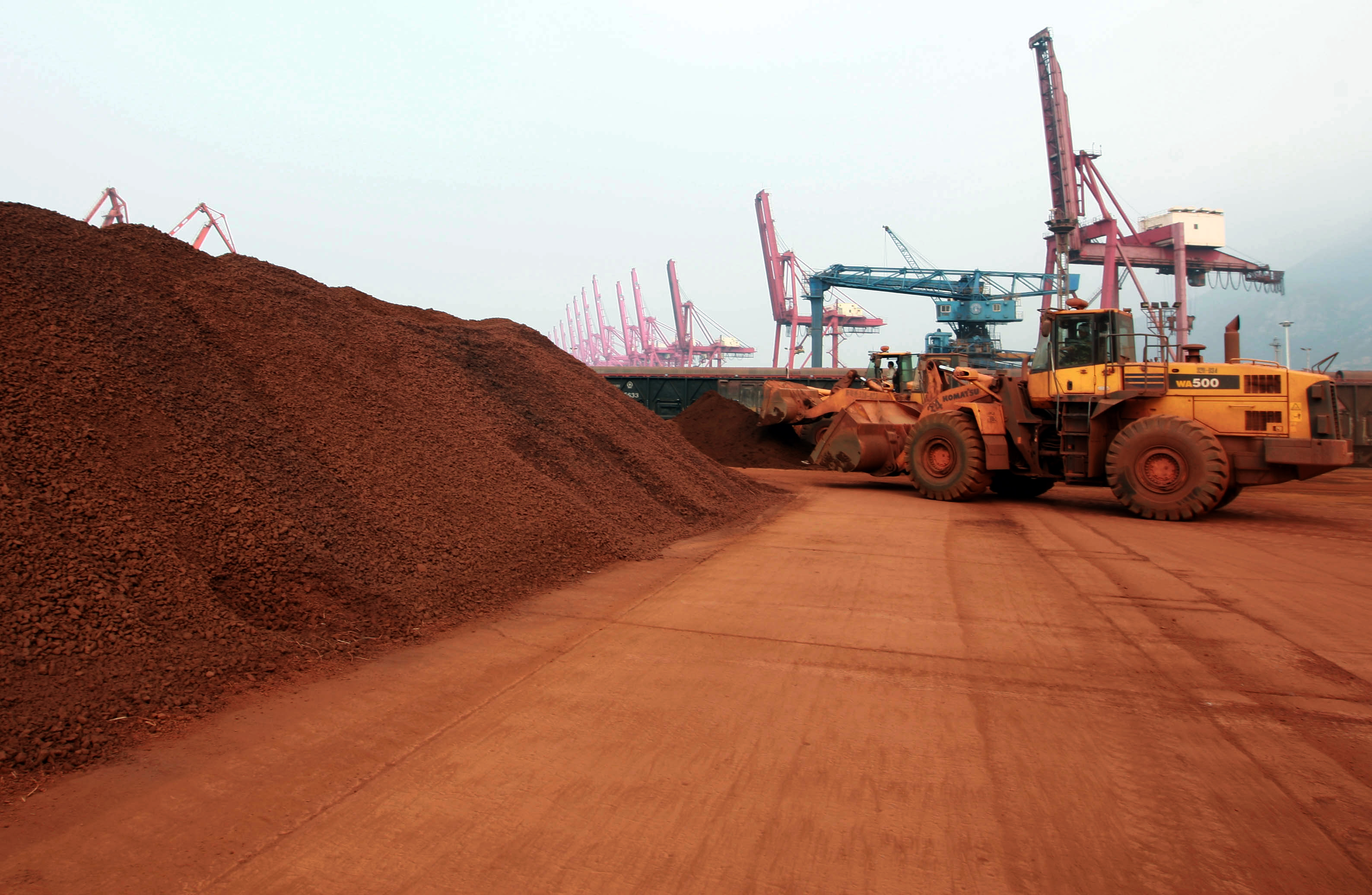
Rare earths, the 17 critical metals essential for converting magnetic energy into the mechanical energy that underpins modern manufacturing, have become a focal point in the U.S.–China trade war.
Beijing has played the rare earth card in the trade negotiations, seeking to lower the U.S. export controls on advanced semiconductor technology, which the regime deems a critical hurdle to its rise to global dominance.
China holds a near monopoly on the critical metals, accounting for 90 percent of the refining of the world’s rare earth elements, according to the International Energy Agency.
Beijing strengthened its overwhelming control of the sector by subsidizing its domestic rare earth industry, allowing it to sell at low prices that deterred foreign businesses because of a lack of profit, Litinsky said at a forum earlier this year.
Chinese players have also been periodically making the sector difficult to invest in by imposing unusual price volatility, sometimes as high as almost 50 times, as documented by the Center for Strategic and International Studies, a Washington-based think tank.
In a previous interview with The Epoch Times, Ken Mushinski, CEO of Rare Element Resources, described this nonmarket practice as “withhold and flood.”
Therefore, a stable price of rare earth elements backed by the U.S. government would make the domestic sector investable.
Peter Navarro, trade adviser to President Donald Trump, told Reuters that the administration would like to remove the U.S. vulnerabilities in the critical minerals industry “in ‘Trump Time,’ which is to say as fast as possible while maintaining efficiency.”
“Our goal is to build out our supply chains from mines to end-use products across the entire critical mineral spectrum, and the companies assembled at the meeting have the potential to play important roles in this effort,” Navarro said.
At the meeting, senior White House officials also informed businesses that Trump aims to replicate the speed of Operation Warp Speed during his first term. The initiative facilitated the development of the COVID-19 vaccine in less than a year.
Emel Akan contributed to this report.