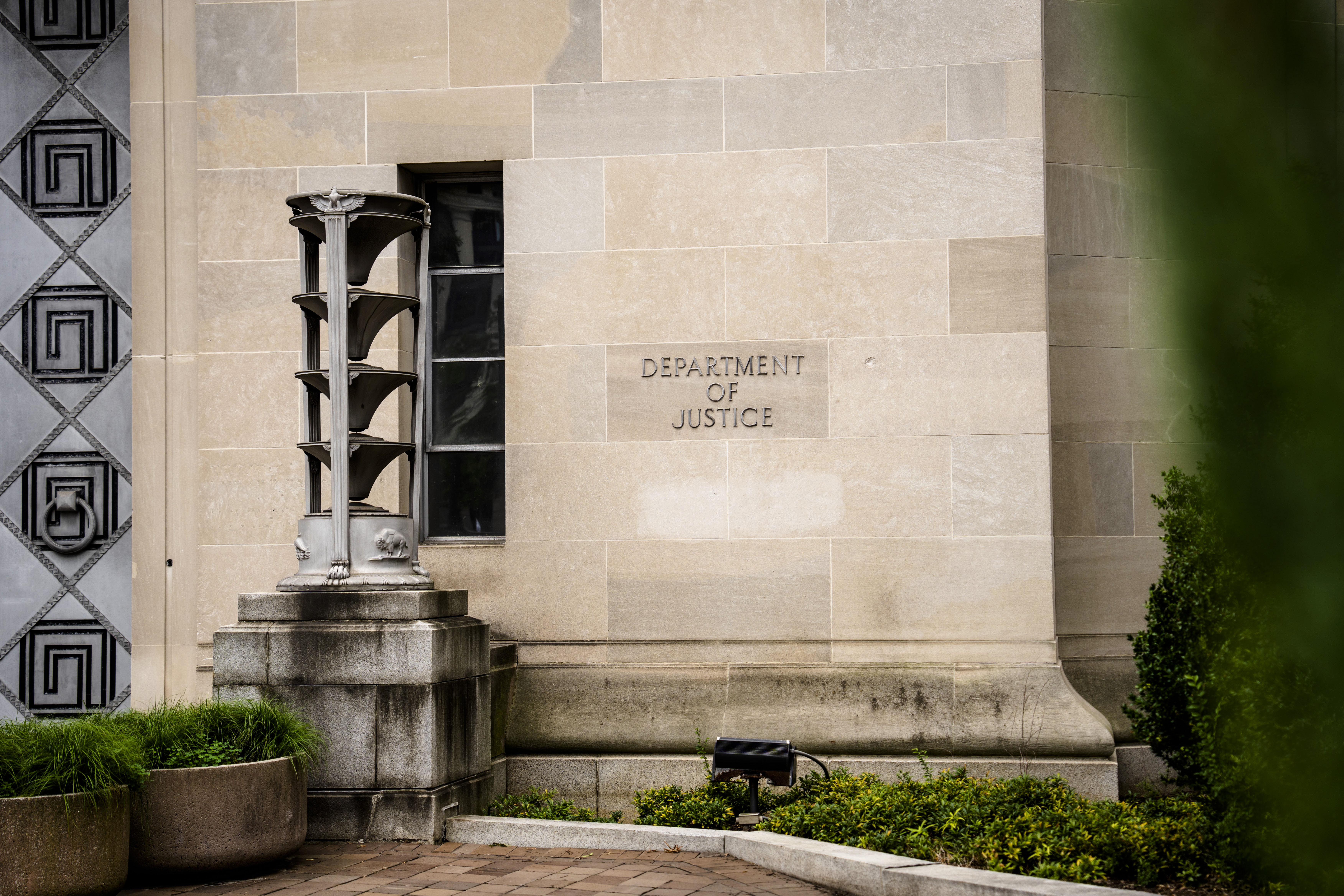

Federal prosecutors have shut down a Chinese smuggling network that allegedly attempted to ship advanced Nvidia chips to China, in violation of U.S. export control laws, the Department of Justice (DOJ) announced on Dec. 8.
Gong Fanyue, 43, a Chinese citizen and New York-based tech company owner, was arrested in New York on Dec. 3.
Yuan Benlin, 58, a Canadian citizen from China and the chief executive of a Virginia-based information technology (IT) service company, was arrested in Virginia on Nov 28.
Gong and Yuan were accused of independently conspiring with employees of a Hong Kong-based logistics company and a China-based artificial intelligence (AI) technology company to circumvent U.S. export controls, according to the prosecutors, who estimated that the scheme started in at least November 2023.
“The United States has long emphasized the importance of innovation and is responsible for an incredible amount of cutting-edge technology, such as the advanced computer chips that make modern AI possible,” Assistant Attorney General for National Security John A. Eisenberg said in a statement.
“The National Security Division, along with our partners, will vigorously enforce our export-control laws and protect this edge.”
Scheme
According to a criminal complaint, Gong and his coconspirators obtained Nvidia graphics processing units (GPUs) through straw purchasers and intermediaries, and falsely claimed that the chips were destined for U.S. customers or countries that didn’t require an export licence, such as Taiwan and Thailand.
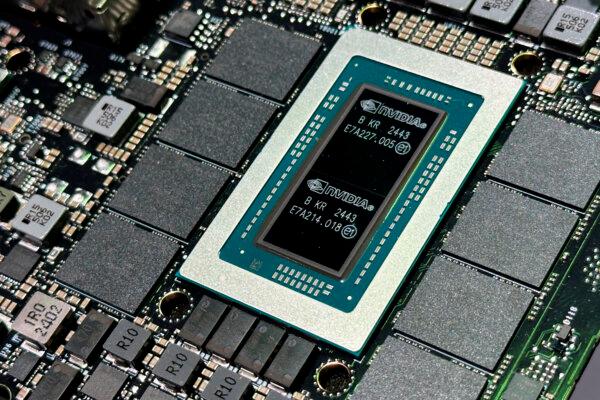
Nvidia's GB10 Grace Blackwell Superchip is displayed at the company's GTC conference in San Jose, Calif., on March 19, 2025. (Max A. Cherney/Reuters)
The GPUs were sent to several U.S. warehouses, where individuals hired by Gong—referred to as “engineers”—removed the original Nvidia labels from the chips and replaced them with new labels for a fake company called “SANDKYAN,” according to the criminal complaint.
The shipping and export papers for the GPUs were allegedly misclassified as generic computer parts, such as adapters, adapter modules, or contactor controllers, according to the criminal complaint.
Gong is charged with conspiracy to smuggle goods from the United States and faces a maximum prison sentence of 10 years, according to the DOJ.
According to a separate criminal complaint, Yuan allegedly assisted in recruiting and organizing individuals to inspect the mislabeled GPUs on behalf of the Hong Kong logistics company, and allegedly directed the inspectors not to state that the goods were destined for China.
After some of the GPUs were seized by federal authorities, Yuan allegedly directed discussions on creating a “compliance back-story” to secure the release of the seized items, according to the complaint.
Yuan also allegedly “engaged in several conversations about providing false information to U.S. authorities regarding the ultimate consumer of the goods,” the complaint said.
Yuan, who is charged with conspiring to violate the Export Control Reform Act, could face up to 20 years in prison and a $1 million fine, according to the DOJ.
The third defendant, Hsu Haochun, 43, of Missouri City, Texas, and his company, Hao Global, pleaded guilty on Oct. 10 to smuggling and unlawful export activities, according to the DOJ.
Prosecutors said that Hsu and his company accepted more than $50 million in wire transfers from China to bankroll the scheme, which exported and attempted to export at least $160 million worth of Nvidia H100 and H200 GPUs.
The DOJ noted that the two different GPUs can be used in civilian and military applications, as the two chips are designed to handle enormous data workloads, advance generative AI and large language models, and fuel scientific computing.
“Operation Gatekeeper has exposed a sophisticated smuggling network that threatens our Nation’s security by funneling cutting-edge AI technology to those who would use it against American interests,” Nicholas J. Ganjei, U.S. attorney for the Southern District of Texas, said in a statement.
“These chips are the building blocks of AI superiority and are integral to modern military applications.”
Yuan’s lawyer and Hsu’s lawyer declined to comment, while Gong’s lawyer could not be contacted.
Nvidia
An Nvidia spokesperson told The Epoch Times that the export system is “rigorous and comprehensive.”
“Even sales of older generation products on the secondary market are subject to strict scrutiny and review,” the spokesperson said.
“While millions of controlled GPUs are in service at businesses, homes, and schools, we will continue to work with the government and our customers to ensure that second-hand smuggling does not occur.”
A similar case occurred last month, when two Chinese nationals and two U.S. citizens were charged with multiple counts, including conspiracy to violate the Export Control Reform Act, smuggling, and conspiracy to commit money laundering—all tied to illicit shipments of Nvidia GPUs.
On the same day that the DOJ unveiled the latest case, President Donald Trump said in a Truth Social post that he told Chinese Communist Party (CCP) leader Xi Jinping that the United States would permit exports of Nvidia H200 chips to “approved customers” in China.
Trump’s decision has sparked some concerns in Congress.
In an X post on Dec. 9, the House Select Committee on the CCP said that, since China cannot produce chips such as H200s in terms of capability and scale, it will use the imports to help close its gap with the United States in the AI race.
“Publicly available analysis indicates that the H200 provides 32% more processing power and 50% more memory bandwidth than China’s best chip,” the committee wrote.
“The CCP will use these highly advanced chips to strengthen its military capabilities and totalitarian surveillance.
“Nvidia should be under no illusions–China will rip off its technology, mass produce it themselves, and seek to end Nvidia as a competitor. That is China’s playbook and it is using it in every critical industry.”