
President Donald Trump said he will impose a 10 percent global tariff following the Supreme Court’s ruling on Feb. 20.
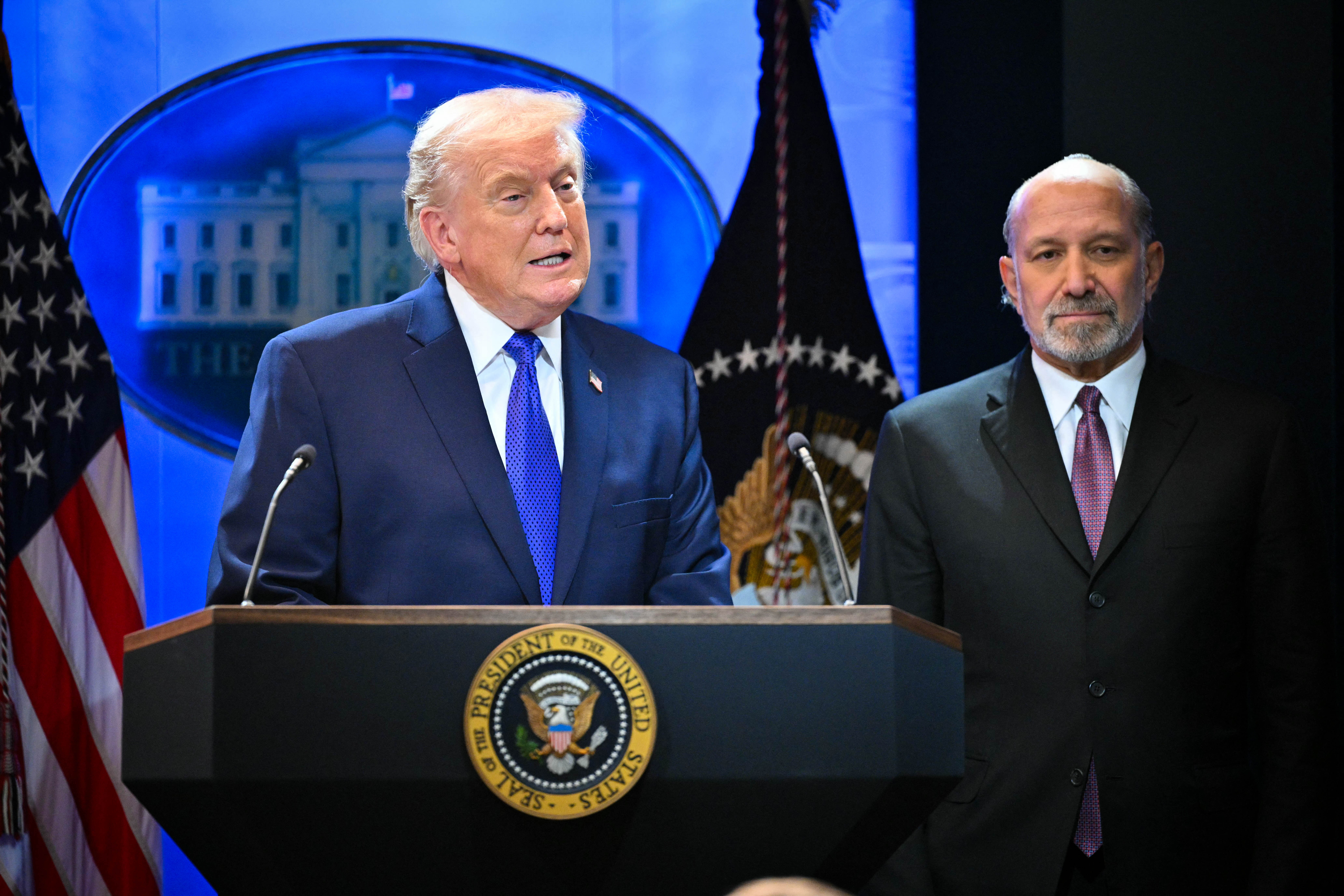
“Today, I will sign an order to impose a 10 percent global tariff under Section 122, over and above our normal tariffs already being charged,” he told reporters at a press briefing.
He called the high court’s ruling “deeply disappointing” and said he was “ashamed” of some of the justices.
“I’m ashamed of certain members of the court—absolutely ashamed for not having the courage to do what’s right for our country,” the president stated.
Other alternatives will now be pursued “to replace the ones that the court incorrectly rejected,” Trump said.
He pointed to several measures, including Sections 122, 201, and 301 of the Trade Act of 1974 and Section 338 of the Tariff Act of 1930.
“The good news is that there are methods, practices, statutes, and authorities, as recognized by the entire court in this terrible decision, and also recognized by Congress, which they refer to, that are even stronger than the IEEPA [International Emergency Economic Powers Act] tariffs available to me as president of the United States,” the president said.
Section 122 of the Trade Act of 1974 allows a president to impose tariffs of up to 15 percent—and potentially restrict import volumes—on countries running “large and serious” trade surpluses with the United States.
Any such tariff can last for 150 days. After this five-month period, the administration would need congressional approval to extend it, a hurdle that could be challenging as the midterms approach.
Using Section 301 of the same act would open a series of investigations into potential unfair trade practices—moves that could lead to additional tariffs.
The law gives the president broad authority to respond to such practices, including through tariffs or sanctions. It also empowers U.S. Trade Representative Jamieson Greer to examine and act on foreign government policies the White House views as violating U.S. trade agreements.
While Trump suggested that the high court’s ruling provides “greater certainty” to the economy, he also said, “We have the right to do pretty much what we want to do.”
Trump criticized the Supreme Court’s decision that prevents the president from raising “one dollar of revenue” using IEEPA authorities.
Treasury Secretary Scott Bessent said the new authorities will not change revenue projections.
“Treasury’s estimates show that the use of Section 122 authority, combined with potentially enhanced Section 232 and Section 301 tariffs, will result in virtually unchanged tariff revenue in 2026,” Bessent said in prepared remarks at the Economic Club of Dallas.
Market Reaction
U.S. stocks registered modest gains during the end-of-week trading session, mainly because the high court’s decision was “largely priced in,” says Gina Bovin, president of Bolvin Wealth Management Group.
The blue-chip Dow Jones Industrial Average rose 0.4 percent. The tech-heavy Nasdaq Composite Index and the broader S&P 500 picked up about 0.6 percent.
“Because IEEPA tariffs accounted for about 60 percent of those imposed, the decision’s economic impact is limited. Retail stocks are benefiting from expectations of lower cost pressures,” Bolvin said in a note emailed to The Epoch Times.
At the same time, overturning the president’s sweeping global tariffs could bring down inflation expectations and bolster interest rate cut expectations, according to Jamie Cox, managing partner for Harris Financial Group.
The futures market is still penciling in a quarter-point rate cut in June, CME FedWatch Tool data show.
“The Supreme Court decision will pave the way for accelerated rate cuts as inflation expectations from tariffs are now less of a factor,” Cox said in an emailed note to The Epoch Times.
The U.S. Dollar Index, a measure of the greenback against a weighted basket of currencies, slipped about 0.1 percent. The index registered a weekly gain of around 0.9 percent.
U.S. Treasury yields recorded tepid gains, with the benchmark 10-year hovering around 4.08 percent.
Correction: A previous version of this article misstated the year of the Trade Act of 1974 in one instance and the section of the Tariff Act of 1930 cited by Trump. The Epoch Times regrets the errors.