
Just four years ago, Canada’s first and only classical charter school opened with 300 students and about a dozen faculty members.
Today, the Alberta Classical Academy has 1,500 students and 100 teachers across three campuses: two in Calgary and one in Edmonton. Eleventh grade will be added this fall, and 12th in 2027.
The waitlist of students exceeds the current enrollment, as leaders are working diligently to open new campuses and hire more staff.
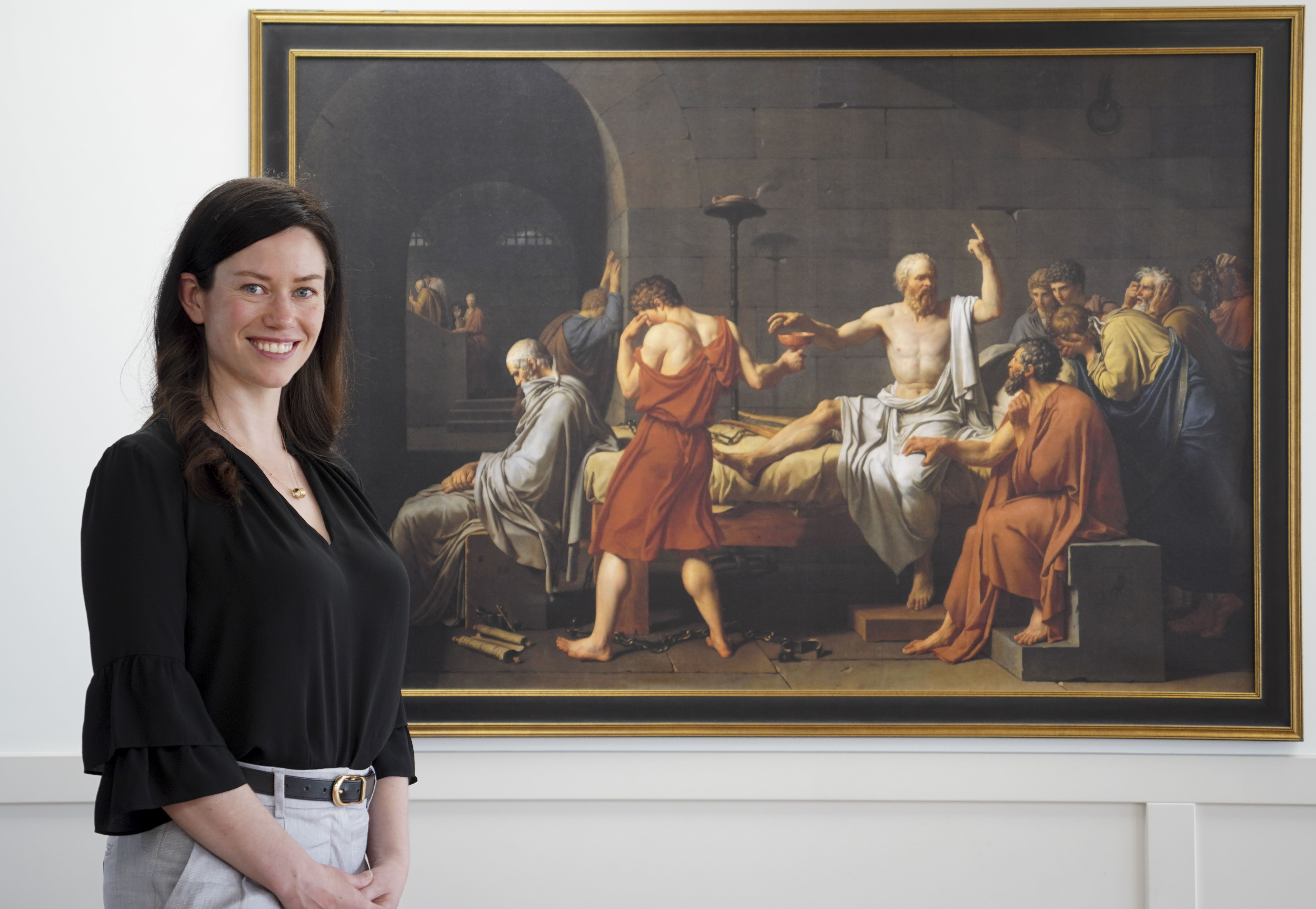
“We’re trying our best to meet the demand, because we know that parents are desperate for this,” Caylan Ford, the academy’s founder, said in an interview for EpochTV’s “American Thought Leaders” with Jan Jekielek.
Alberta is the only province in Canada that allows publicly funded charter schools; Ford’s schools are the only ones that offer a classical curriculum, according to the province’s official government website.
Like public schools, charters cannot charge tuition or provide any religious-based instruction. But unlike traditional public schools, they are operated independently without oversight from a district-level central office or a public board of education. Students are not assigned to charters based on their address, and the selection process must be random, through a lottery.
Classical academies, which are far more prevalent in the United States, are rooted in Western thought and ancient Greek philosophies, with pillars of learning focused on wisdom, not just understanding. The religious elements are only allowed in private classical schools, though Ford stressed that some level of theology and metaphysical grounds exist in this type of learning environment as a means of “finding truth” in any subject area.
Like its counterparts in the United States, Alberta Classical offers Latin at early grade levels, mandates the use of original documents instead of digital devices, and requires students to read classic literature dating back centuries.
There’s also a strong emphasis on character development and the arts. Music can be a tool for teaching math through an understanding of ratios and harmonies, Ford said.
“You study the harmony of things, and you tune your own soul to that harmony,” she said.
Alberta Classical has incorporated the province’s required curriculum but has many of its own offerings and is far more rigorous than traditional public schools, Ford said.
Still, she added, the number of students who continue on to elite universities is not the sole measure of success: Graduates are celebrated for civic participation, for getting married and having children, for continuing to read for pleasure, and for maintaining a meaningful and active spiritual life.
Ford said she was inspired by the neoclassical movement in the United States. There are very few schools like these in Canada, other than a few private, religious schools.
Canada’s public schools promote a “progressive” instruction model where children are taught that there’s something “disordered” about the world, and they are challenged to use their knowledge to remedy it, Ford said. This can push students to “enter every situation in their lives asking the question: Who is oppressing who, and how do I destroy this system?” she said.
By contrast, Alberta Classical operates on the premise that the universe is an orderly, harmonic thing—not random or chaotic, she said.
Opening the schools has not been an easy task. The sale of one of the properties that was to be converted into a school fell through a month before the planned opening. There were also holdups with the city permit process and a lack of bus drivers to provide student transportation, Ford said.
“Everything that could go wrong with a startup has gone wrong, and that’s to be expected,” she said.
That sense of resilience, Ford added, is cultivated in a learning environment.
“You can expect trials in life,” she said, “and the question is, how do you bear them well?”
As demand for classical education in Alberta increases, Ford’s organization will continue looking for existing facilities to convert into schools; new building construction costs more than $50 million.
She says she’ll have to boost teacher recruitment as well and hopes to eventually establish a college-level teacher training program for classical education in Canada. The staff so far consists of a mix of former public school teachers who disagreed with current teaching practices and educators with advanced degrees in linguistics, classics, and medieval studies who didn’t find a home in academia and prefer teaching in classrooms.
Many staff members came from other provinces in Canada.
“This was a total, ‘if you built it, they will come’ type of situation,” Ford said.