
A woman who started out with a desire to help with a child’s leukemia battle ended up leading a grassroots movement and opening a pediatric oncology hospital in her home country.
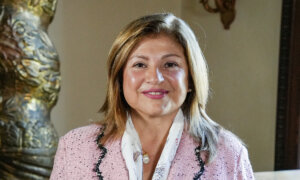
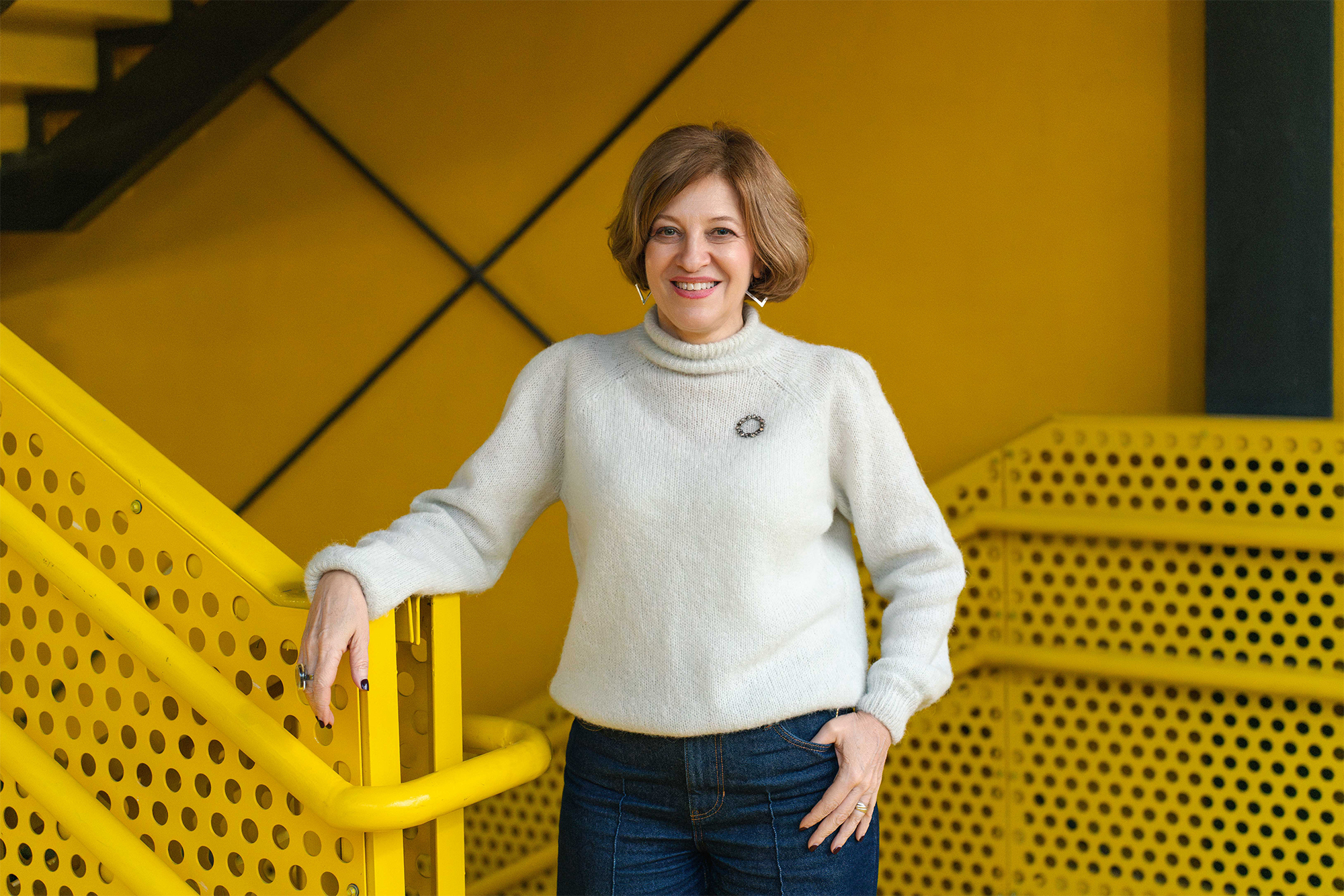
Oana Gheorghiu, co-founder of Give Life, told EpochTV’s “Bay Area Innovators” program about her journey of building Romania’s first pediatric oncology hospital entirely through private donations.
In 2009, an 18-year-old boy was dying of leukemia because the Romanian state couldn’t provide for his treatment. She and her friend Carmen Uscatu, who would later become a co-founder, fought for him.
“We realized how difficult it is in Romania for families with children with cancer and for families with patients ... and we decided to try to do something here in Romania to build infrastructure,” she said.
In 2016, they started to talk about the project of building a hospital. They tried to renovate the oncological department of the existing state-owned Marie Curie Hospital that was built in the 1980s.
“The existing ward for oncological treatment for children with cancer [was] treating 30 children, and they were together with their mothers, and they had access to only one toilet. Imagine, if you can imagine, 60 people having access to one, only one toilet,” Gheorghiu said.
They wanted to build bathrooms in every room, but consulting architects and engineers said it was impossible since the infrastructure could not accommodate the request. Instead, a new hospital needed to be built from scratch.
“We laughed because it sounds like it’s not possible ... but step by step, we started to think. We started to talk with people, and people looked at us with trust. So we started to believe, and step by step, we raised money. And we had a big chance to have with us the biggest TV station in Romania ... who helped a lot for our fundraising campaigns,” she recalled.
During this time, Romanians were frustrated with political problems, even decades after the 1989 Romanian Revolution that overthrew the communist regime, and needed a cause to believe in.
The project wasn’t without obstacles. Politicians did not view NGOs as partners and tried to use legislation to prevent them from raising money, she said. But Romanian citizens were very supportive and vocal, which allowed the duo’s campaign to receive over 350,000 donations from individuals and more than 10,000 companies.
Construction was completed on the new building in Bucharest in 2024.
“Everybody from our team was crying that day because after a lot of work and a lot of obstacles, we did it,” she recalled. “In the last 35 years, we were made to believe that we can’t build in Romania. ... This project was something that proved we can do it.”
The hospital was donated to the Romanian state, so it is a public hospital. In the future, she hopes there can be a partnership between NGOs and the Romanian state and authorities.
Currently, they are working on technical documentation with architects, designers, and engineers for construction of a new building that will be connected to the hospital. Gheorghiu said the documentation should be finalized by the end of this year, and after that, they would obtain permits and approvals before starting actual construction in May or June next year.
The new building will be about 32,000 to 34,000 square feet and will be constructed in two phases. After it is completed, they will consolidate the old building and convert it to house administrative offices, a canteen, a research center, an amphitheater, lecture halls for students and residents, and accommodations for visiting families.
“It will be the first pediatric medical campus in Romania,” she said.