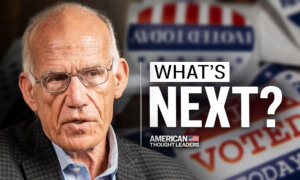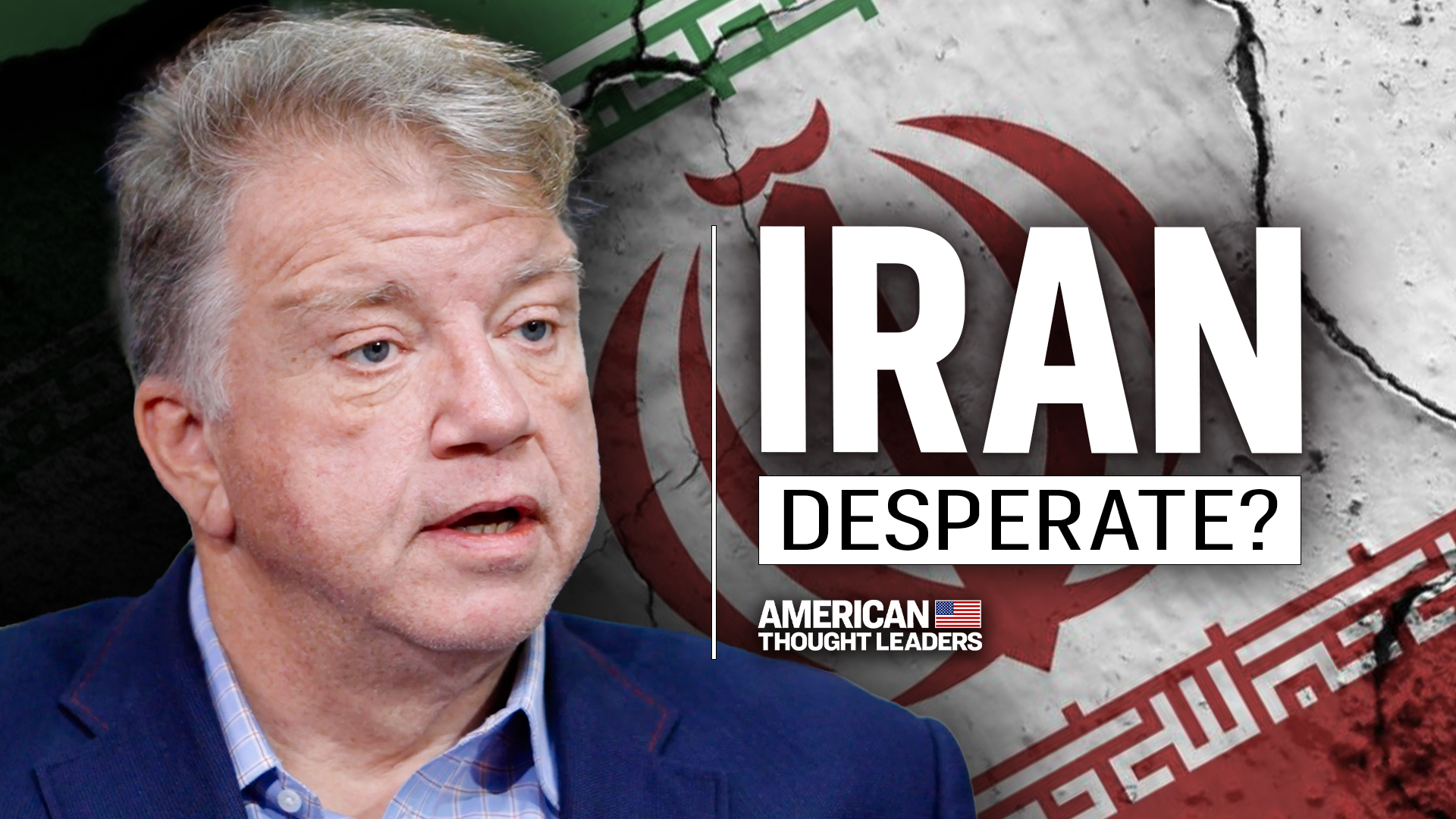

[RUSH TRANSCRIPT BELOW]“When you see the recent riots, destruction of stores, looting, burning [of] historic buildings, including churches ... you have to realize these things do not happen spontaneously,” says investigative journalist and bestselling author Richard Miniter.
What is the link between what’s unfolding on the streets of France and the Iranian regime?
Why might Iran be interested in influencing events in Europe—and is there a broader connection to the Iran war?
And what is U.S. President Donald Trump’s end game for the region?
“What hasn’t been explained—and is non-obvious to the American public—is that Iran is the gas station of Xi Jinping,” Miniter says. “What’s going on in Iran is designed to prevent a war off the coast of China in Taiwan.”
Views expressed in this video are opinions of the host and the guest, and do not necessarily reflect the views of The Epoch Times.
RUSH TRANSCRIPT
Jan Jekielek:
Richard Miniter, such a pleasure to have you on American Thought Leaders.
Richard Miniter:
Thanks, Jan. It’s good to be here.
Mr. Jekielek:
We’ve been planning to do an episode about Iran and the reality of the US-Iran war, everything surrounding that, where things are at. But now we have these protests, riots, and huge damage being done in Paris. And there’s a connection. So why don’t we start there? What’s happening?
Mr. Miniter:
First of all, we need to start with history. There is a long and special relationship between France, on the one hand, and Iran, on the other. Ayatollah Khomeini, after the mid-1960s, when he had to flee Iran, first holed up in Najaf, the Shia scholarly city in Iraq. But ultimately, the Iraqis were not comfortable having him there, and he fled to France. So, in France, Ayatollah Khomeini, the founder of the current regime, while he was in exile, gathered his followers and created an international network of financial support, possibly including the Soviet Union’s various intelligence arms.
But certainly, some of the Left-wing financial infrastructure came to get to know him in 1970s France. He took a number of minor university positions there and built a large following. When the political situation was right for Khomeini to return to Iran and ultimately to seize control of that country in 1979, he left with a plane full of American and French journalists. He was well known in French media, and a number of his followers stayed behind.
So, this relationship between the extreme regime in Iran today, that is currently at war with the United States and arguably with the civilized world, and France, these have a long history together. When you see the recent riots, destruction of stores, looting, and burning historic buildings, including churches, in France today, you have to realize these things do not happen spontaneously. The crowds are organized. They receive, some of them are paid. Some of them are able to get their pay through the loot they were able to acquire.
But there is coordination. There are people in the crowd whose job it is to surveil and monitor the police and update the rioters in real time, to direct them at some targets and not at others. So the question is, what is the role of Iranian intelligence or fellow travelers of Iran in organizing these results, this outcome in France, and what would be the Iranian regime’s interest in exploiting its long-term historic relationship with France?
And intelligence analysts that I’ve spoken to debate this. Some say that this is an attempt—these demonstrations in France, the attack that was foiled on the RAF [Royal Air Force] base that held American bombers in Britain—that those are both what one intelligence analyst told me was a brushback pitch, a way to push the United States back a step and try to get it to relax its anaconda-like naval blockade of the Iranian ports and Iranian oil. The situation for Iran is getting quite desperate.
For the last few months, they’ve had floating barges in the Indian and Pacific Oceans full of oil, which they’re able to move ship to ship and then bring that oil to China and receive about $25 billion a year in below-market oil sales. Those floating tankers, barges are gone now. They’ve exhausted all of their supply, and the Iranian regime is financially.
There have been riots and demonstrations inside Iran of civil servants demanding to be paid in US dollars or some other stable currency, which is a situation similar to the North Koreans who have to pay their bureaucrats in U.S. dollars and have been doing so since the 2008 financial crisis. So, North Korea would be a parallel example to the Iranians. But for the Iranians to do that, they need to get US dollars from somewhere. And they can’t get it from global trade. So, the uprisings in Europe.
Some intelligence analysts, both inside France and inside the United States, debate this. This is far from a consensus view, and I do not mean to present it here as fact. This is a conjecture from well-informed people. And I’m not an intelligence analyst. I’m a journalist. I can only tell you what my sources are telling me.
But that said, why would the Iranians want to do this now? They think if they can create enough pressure inside NATO [North Atlantic Treaty Organization] and perhaps inside the United States, the Trump administration will relax its grip on Iran and allow its regime to survive. I think this is a desperate move that is unlikely to occur. If you have studied Donald Trump at all, you realize that even the midterm elections will not affect his laser-like desire to totally change the nature of the regime. That doesn’t mean toppling the regime. He would be happy with that outcome, I’m sure.
But if the regime just says, okay, we’re going to give up on making atomic weapons. We’re going to give up on drones and long-range missiles. And most importantly, we’re going to give up on proxy terrorist groups. That would be a change in the nature of the regime without changing the regime itself. I think Trump would accept that.But the key to understanding Trump on Iran, which the Iranians simply do not understand, is that Trump was an adult and had a television set in the years 1979, 1980, and 1981.Why does that matter?
Because in 1979, shortly after Ayatollah Khomeini was able to seize power in Iran, he allowed a radical group that he claimed not to control, but in fact were his followers, to take the U.S. Embassy in Tehran and hold fifty-two diplomats hostage for four hundred and forty-four days. And that was a seminal moment in American history. This was the lead story in every nightly newscast every single day for more than a year. It defined the Carter presidency. And it’s impossible to imagine that that did not shape Donald J. Trump’s view of Iran.
This is an extremist regime that was born, came into its existence, during a hostage crisis that it initiated, and the most likely interpretation of its current attempt to take control of the oil and gas supplies coming out of the Persian Gulf is to create a second hostage crisis.That is how someone who was an adult consuming American media in 1979, 1980, and 1981 would view this situation. And it’s highly likely that’s how Donald Trump views it.
And once you understand that, you understand that the demonstrations in Europe, the failed attack on U.S. bombers in Britain, perhaps demonstrations and violence here, which may come in the weeks before the election—that is also possible—that none of that would dissuade a human being who made his initial and most lasting impression on him of the regime in Iran in those key formative years.
Mr. Jekielek:
Fascinating. Going back to these protests, can you spell out for me why the Iranian regime might think that these sorts of extreme protests could actually shift the American position?
Mr. Miniter:
Because it shifts the European position. So, for example, French intelligence services, in a closed-door session of the Assemblée Nationale, the French Parliament, last week, wanted to tell the public about Iranian interference operations and encouragement—both on social media and encouragement for the rioters—and perhaps even say more. We just know the little trickle of information that’s come out.
And the Macron government said no, no, these French intelligence reports should not be released publicly. It would impair the French state’s ability to negotiate with the Iranians. That has to be read only one way in Tehran, which is fear: that the French state is afraid of the Iranians and is afraid of offending them.
By truthfully documenting the degree of Iranian involvement in the uprisings across France, there is no other plausible way in which the Iranians interpret it that way. So, while the French probably comfort themselves by saying, we are the reasonable ones, we’re not trying to inflame the situation, we’re trying to stay calm, they sound like the battered housewife defending her abusive husband. The abusive husband in this case is Iran.
Mr. Jekielek:
Let’s do an overview, okay, here. So you’ve described a situation where the U.S. president is viewing Iran from this vantage point of a regime that will take a massive number of hostages, hold them for a very long period of time, and then cause all sorts of problems for the United States over the years. In conversations we’ve had before, you’ve described the whole kind of founding of the regime itself as being against America. And that is not something I think that’s generally known. Can you kind of unpack that for me, please?
Mr. Miniter:
So let’s divide the history of Iran into two parts: the world before 1979 and the world after. Before 1979, there was a close friendship not just between the Iranian government and the U.S. government, but between the two peoples. There were Iranian students studying. In fact, Iran was one of the largest non-European sources of foreign students to the United States in the 1970s.People studied at MIT, Stanford, Carnegie Mellon, and other elite institutions.
And when the hostage crisis began and dominated local news and national newscasts as well, there were protests at these campuses by Iranian students alongside Americans saying, we hate what you’re doing to our country. We don’t believe in this. But there were also, unfortunately, bigoted protests by Americans calling for all Iranians to go home. It was a complete change in the relationship.
So the nature of the regime changes when Ayatollah Khomeini comes to power. He comes to power with the support of Communist Party movements, both Kurdish and other Alawite, some Arab, by various ethnic minorities that had communist wings, as well as an Iranian Farsi-speaking Communist Party. And it’s what they call a red-green alliance; red being the color of communism, and green being the color of Islam.
And very quickly, once Ayatollah Khomeini has his hold on power, he begins to eliminate his Left-wing rivals, which is why the French philosopher Foucault, who was very close to these people before the revolution, writes a lament that the nature of the regime is not what he imagined. He thought it would be a kind of Left-wing utopia in Iran, which is what he'd been promised. But he wasn’t really reading the works of Khomeini and his followers. These works are profoundly anti-Western, anti-American, and anti-Israeli.
And it’s not a matter of interpretation. They specifically say that the United States, as the guardian of the West, has to be defeated and destroyed in order for their religious utopia and the return of the 12th Imam, the missing Imam, the 12th Imam in their religious doctrine, for that event to occur, for the Shiite, Khomeini’s view of the Shiite view of the end of the world, in order for that to happen, America must first be destroyed.
So, it’s not just a political goal of the regime, but a religious one. And it’s there at the beginning. It’s not something that the Americans did, and this is a reaction. This is something that is in their creed. This is something that this political movement said in the 1970s before it took power.
This is not something that they, you know, were mistreated by the Reagan administration or Bush or Clinton administration, and there was some personality issue. This is their doctrine.And that is something that means that it’s very, very difficult to negotiate with them because their anti-Americanism, their anti-Semitism, defines who they are as a political movement.
Mr. Jekielek:
What was the plan? We know officially the US went into Iran to stop Iran’s capability of building a nuclear weapon. Okay, so now we’re looking, you know, many, many months in, and all sorts of moves. We’re going to eliminate it, we’re going to bomb them. And going back and forth, the Strait of Hormuz, who controls it? It’s kind of a mass information war, if you will, and it’s very hard to understand what’s going on.
So, I want to kind of get you to create a timeline for me of sorts, but also just, do you believe the motivation was the stated motivation, how that’s gone? Is it an unforced error, as many people have been describing it as? And just kind of paint me a picture of where things are now.
Mr. Miniter:
So, in order for Donald Trump to go to war with Iran, he has to form a coalition inside his White House, right? And inside the Republican Party, so he has support on Capitol Hill. The typical way politicians do this is to give a big speech and announce their goals and agenda, and then try to line everyone up behind this single vision of the world. But that is not who Donald Trump is. Most of the people who are mystified by Donald Trump have failed to do the most basic bit of journalism, which is to read his book, The Art of the Deal.
If you read the book, you'll understand exactly how the man operates. He says, in his own words, how he operates. He does not operate by announcing a big goal and trying to drag the world toward that goal. Instead, what he does is he pretends not to want the thing that is his goal. And he changes. Oh, maybe I would take that building on Fifth Avenue. Maybe I would. I don’t know. It’s okay. It doesn’t really interest me.
It’s a little rundown, you know? Boy, it would take a lot to fix the plumbing. Oh, you’re going to fix the plumbing at all of your expense? And the lighting’s not so great either. Maybe, are you going to fix that? I’m going to need a tax abatement too. There are a lot of taxes on this building. I don’t know, maybe. Fifty years tax abatement? Oh, that’s too much.
Okay, well, I’m not interested. Oh, maybe I’m somewhat interested, but I wouldn’t be interested unless it was at least 30. Oh, 25? 25 years of no taxes? Okay, maybe I'll accept that. But you know, the sidewalk in front needs to be repaired.
It goes on like this. He says all these things. And his real goal was to get 10 years of tax abatement. He got more than his goal and he got all these elements of the building repaired. This is how he thinks. He doesn’t announce a goal.
So, everyone says he’s changed his goal; he’s pivoted. No, this is how he operates. He knows what the goal is. He’s not going to allow his adversaries to know what the goal is. He’s going to see what the result of all this pivoting and shifting is able to accomplish.And when he reaches his goal, he will end the conflict and accept victory.
Now, from the Iranian perspective, they are doomed. The U.S. Navy can withhold this blockade indefinitely. People say, how long can the U.S. keep forces deployed? We’re talking about 100,000 sailors and Marines, some Army soldiers as well, and the Air Force. We’ve had 250,000 troops in Western Europe for more than 75 years. We’ve had 40,000 troops in South Korea since the early 1950s. In Japan, similar amounts, similar time zones. The United States can sustain an overseas operation logistically for decades.
The Iranians will not outweigh us because of some logistical military matter. The critics who say that are just simply unobservant or uninformed about how military logistics works. What matters is political will. At least until January of 2029, I do not think U.S. foreign policy aims of President Donald J. Trump will change.
Mr. Jekielek:
What do you think the goal is?
Mr. Miniter:
The goal is probably the end of the regime, the end of the nature of the regime. The mullahs could leave and somebody else could be in charge, or the mullahs could stay and they give up on sponsoring international terrorism and attacking their neighbors, attacking us, building atomic weapons, building long-range missiles. It’s hard to believe they would give up the things that have defined their political movement since the days before they even had power. So it probably means a change in the regime.
Mr. Jekielek:
How’s it going?
Mr. Miniter:
About as well as could be expected. People don’t realize how long it takes to remove a dictator, a dictatorial regime. When dictators have a hold on power, they’re terrified to release that grip. And it takes an enormous amount of time and energy to dislodge them from power. And this war could go on for another six months to a year.
And it will probably end in a vast humanitarian tragedy. It will end in riots and murder, by both the regime and by the regime’s opponents, the people of Iran. Lots of innocent people will suffer. This will not be a beautiful Victory in Europe Day, like we got at the end of the 1940s. The end of the Iranian regime will be much more like the end of—far worse, in fact, than the end of Ceausescu in Romania. This could be quite tragic.
Mr. Jekielek:
How do you respond to people who would say, right, so this is all the Americans’ fault?
Mr. Miniter:
You’ve had a nation, the Iranians, at war with America since 1979. The Iranians have backed terrorist groups, including Hezbollah. Hezbollah has killed or kidnapped more Americans than any other terrorist group on Earth except for Al Qaeda. Hamas murdered American citizens on October 7th. Yes, many Israelis, about 1,400, but dozens of those were American passport holders, American citizens.
The Iranian regime has killed and tortured CIA [Central Intelligence Agency] station chiefs in Lebanon. At least two of them come to mind. They took an American man in a wheelchair and threw him off the MS Achille Loro to drown and die. So, this is a regime that has been at war with us for a long time. We have tried to ignore it, tried to distract from it, tried to talk to it.
Finally, after more than 40 years of this, we have a president who says, well, we’ve tried everything with you.I think we just have to bomb you until you realize that you can’t treat us this way. This is the only end to a deeply abusive relationship that the Iranians, the Iranian regime, not the Iranian people, started. They simply did not have to operate this way, and they could have stopped at any time. But to do so would mean they'd have to change the ideology that explains and justifies the formation and existence of their regime.
If you’re founded on anti-Americanism, you can’t tactically shift away from it. But at the same time, that ideology forces you to be at war with America. And ultimately, America will decide to deal with you. Americans are broadly aware of the nature of this regime. What Trump hasn’t explained is that what’s going on in Iran is designed to prevent a war off the coast of China and Taiwan.
What hasn’t been explained and is non-obvious to the American public is that Iran is the gas station of Xi Jinping. China is getting below-market fuel, oil, and natural gas, and it needs that fuel to maintain its economy, let alone go on to a war footing and project power 100 miles across the Chinese, the Taiwan Strait, to the island of Taiwan.There are published documents, various papers, and studies from the People’s Liberation Army [PLA] of China and others in China saying they should go to war in Taiwan in 2027.
Okay, let’s look at our calendars. Oh, right, that’s next year. So, how would you prevent China from invading Taiwan and forcing the United States to fight across the vast and cold Pacific Ocean, where its supply bases are thousands of miles, or in some handful of cases, hundreds of miles, from the Taiwan coast? How would you do that?
Well, if you take out their source of oil and natural gas and other energy products from Iran, it’s not possible to have this war over here in Taiwan. So, you can prevent a war in the Far East by taking out a regime that deserves to go anyway, from the Trump perspective. So, I don’t think the American public has been presented with the global benefits of the Trump strategy.
Now, why hasn’t Trump said that? Because he has other things to deal with the Chinese on, mainly trade, right? The U.S. is still the largest destination in dollar terms of Chinese goods in the world.
Mr. Jekielek:
Even though it’s considerably reduced. Yes.
Mr. Miniter:
China is actually a very large economy, but a very poor one. So, it is the second largest economy in the world, if you believe all those numbers that are published, but let’s assume they are correct. Second largest economy in the world, but in terms of per capita income, it’s 77th.The United States is unique in that it can produce goods at home, and its largest market would be its own home market. It can sell to itself. America can sell to itself and run entire industries, right?
Mr. Jekielek:
Which is indeed kind of the project right now, to kind of bring back that visibility.
Mr. Miniter:
But that has been American history since before the American Revolution. We have always been our largest consumers of products. Yes, during the Civil War, the South needed to sell its cotton overseas and before the Civil War. But once the Civil War ended, even the cotton markets of the South went north, not across the ocean, for the most part. But by and large, since the industrial age began, the U.S. has been its own largest market.
You can build a very large, globally large American business and only sell inside America. China cannot. Its per capita income, its income growth, is not sufficient to support a large consumer business. So it has to export. And so, what it has been doing is exporting way below cost and destroying industries in the United States, Canada, Western Europe, and Australia.
And what Trump said was, wait a minute now. Let’s take a fresh look at this. Let’s put some tariffs on you. Let’s put some restrictions. You’re destroying and hollowing out our industries and forcing us to become dependent upon you.
Now, if you were to turn the dial all the way to zero with Chinese imports, you would destroy the U.S. economy. There are so many different stages of production that rely on Chinese inputs. So you can’t go from 100 to zero, but you have to carefully adjust that dial up and down if you are believers in industrial policy.
Now, of course, in a perfect world, free trade would work all this out, but that is not the world that we’re politically living in these days. And so Trump can’t come out and say our goal in Iran is to destroy China’s gas station because he has other things to deal with the Chinese on.
And of course, the political prisoner Jimmy Lai and the almost slightly more than 100 Hong Kong political prisoners who were taken for leading democracy demonstrations or being involved in a newspaper or other media operations that are critical of the Communist Party? There are hundreds of these people in jail for political crimes. The Trump administration is eager to get these democracy advocates out of jail in China.
So there are lots of things for him to talk to Xi about. Of course, Xi knows the big picture. Of course, he knows he relies on energy from Iran. And of course, he knows the U.S. Navy is deciding how much oil flows out and by which country’s flag that oil is determined. So they know all this. Everybody knows this. But what is communicated to the public is not always the same thing as what is going on in private.
Mr. Jekielek:
I kind of gave you a common narrative that you hear around, right? Let’s tackle a few of these. You know, one, that installing Khomeini was all a CIA plot from the beginning. Like, how much truth is there to that?
Mr. Miniter:
So, people who say that there are CIA plots have either met a totally different CIA than I have, right, or they just watch too many movies. The CIA is a vast and incompetent bureaucracy, more than 200,000 people. Here is a fun fact. The CIA is the only federal agency that can have an unlimited number of political appointees.
As a result, presidents have stashed incompetent, politically active people there to give them government jobs for decades. This was Johnson, Nixon, Ford, Carter, Reagan, Clinton,and Bush. So, it is not a very focused, impressive bureaucracy that is capable of pulling things off like this. Secondly, Iranian politics is incredibly complicated. It’s, you know, the amazing thing about heart surgery is that it’s done while the patient’s alive and the heart’s beating, right?
Well, in Iranian politics, there are so many factions that are swirling and moving rapidly in unpredictable combinations. To be able to have the amount of knowledge necessary to put somebody in just the right place at just the right time in order for them to take over the country in 1979, this is simply beyond the ability of any intelligence service, let alone the CIA, which is one of the least effective intelligence services in the world.
Mr. Jekielek:
That’s an unusual characterization of the CIA. I’m just going to say it because that’s not how, at least, we’ve been taught to think.
Mr. Miniter:
Let’s look at the record of the CIA. Three or four months before the fall of the Berlin Wall, communism was here to stay. The East Germans supported their communist masters. Support for the Russians inside East Germany was genuine, right? Let’s look at what they said right before the fall of the Shah in 1979. He’s got a solid grip on power. The radicals are fleeing. All of their predictions about future events, major historical turning points, have been wrong since 1945, since their formation in the Truman years.
I will give you an example of a prediction. The CIA said that Fidel Castro was the George Washington of Cuba, that he'd be an incredible liberator and unite the various minority groups and create peace and freedom in Cuba. That was 1958, 1959. Castro comes in. And how did that turn out? Have they been right about anything important ever in their history? You judge an organization by its results, like the way you judge a tree by its fruits. The idea that it’s capable of pulling off a coup in Iran is laughable.
Now, there’s a parallel claim that’s often made that the 1953 Mosaddegh incident was a CIA plot. There is definitely a CIA and British intelligence component to that story, but most people get some important matters of Iranian constitutional law just wrong. So, Mosaddegh, his communist-backed party, wins the majority of seats in the parliament in the elections that year, and then has his party name him as prime minister.
And the Shah objects to him being prime minister because the Constitution says the majority party does not pick the prime minister; the Shah himself does. And this is a parliament trying to name its own prime minister. In parliamentary democracies in Western Europe, Britain and France, for example, the majority party does pick the prime minister.
So the communists were counting on the distinction between how Western parliaments work and how the Iranian constitution works to cover their claim. Mosaddegh is ultimately arrested at home, and the CIA sort of brings the Shah, who has briefly fled Iran, back to Iran. That’s the supposed coup. But really, it was a power grab against the Iranian constitution. And the Left in America has said that the CIA was behind it.
And no, in fact, their illegal attempt to control power and create a Soviet satellite state in Iran in 1953 failed.And that check on their ambitions is what they referred to as a coup. But the CIA was reactive and slow in that case and didn’t see it coming. So, if anything, it shows you the weakness of the CIA and not its perceptiveness or its power.
Mr. Jekielek:
Let’s go back today to the Strait of Hormuz. You mentioned, I think, an anaconda-like hold of the U.S. over the Strait. But again, we often hear narratives that the Iranians have some control of some parts and are, you know, kind of calling the shots. What is the actual reality there?
Mr. Miniter:
Okay, so the Persian Gulf or the Arabian Gulf, depending on what one wants to call the same body of water, is in seagoing terms fairly shallow. So, the channel by which heavy shipping can go through the strait is at its narrowest point less than two miles wide. There are a number of channels that come together at different points. So, there are various choke points. And as ships slow to merge into these channels in order to safely exit, they can become subject to drone attacks and missile strikes from Iran.
Basically, Iran wants to be able to control which nations can move ships in and out of the Straits of Hormuz and charge tolls on the ones it does allow. This has been an ambition of the Iranians since the 1830s. The predecessor to the Shah of Shahs, the King of Kings, as he called himself, at that time period, the 1830s, wanted to get steam-powered gunboats to patrol the Gulf and charge tolls and decide which nations could exit the Gulf. The British, whose colonies and protectorates lined the southern part of that Gulf, said, oh, no, you don’t.
At that point, an English-speaking navy pushed back on Iranian ambitions. They tried again in 1865. That failed. So, this has been a long-standing goal that’s prior to this extremist regime of Iran to control that body of water, to take it hostage, and to hold it and be able to turn it on or turn it off like a spigot.The U.S. Navy has essentially broken that hold. The amount of oil and natural gas flowing out of the Strait of Hormuz is now equal to or greater than it was before the war began earlier this year.
So Iran does have periodic abilities to strike. It has sunken caves along its coast from which drones and attack boats can emerge, and sometimes they do. The U.S. Navy bombs those places when they’re discovered, as well as different hidden radar facilities along its coast. But Iran has not given up trying to get control of that Gulf.
If the U.S. Navy continues to allow Arab nations to export their oil and not the Iranians to export their energy products,Iran’s economy will wither and die. That’s why the Iranians are so desperate to try to get control of the Gulf. But even moving into the future, this has been a long-term geopolitical desire of the people who run Iran for centuries to control that body of water and thereby control the Middle East.
Mr. Jekielek:
So it’s again fascinating. I wasn’t aware that there’s more oil going through the strait now than prior to the war. The gas pumps seem to suggest otherwise. Or again, here we have another narrative, right? This war is responsible for these increased gas prices, and that will probably cause the Republicans to lose the House at the very least.
Mr. Miniter:
The Republican Party is also not serious, right? So if you wanted to lower the gas prices in the United States, it could be done by the people a block from me at the Capitol in 20 minutes, right? We have a 19.6 cents per gallon federal gasoline tax, almost rounded to 20 cents, right? And then we’ve got the federal fuels mandate, which is another 30 cents. And then we have the Jones Act requirements, which is another 3 cents.
You put that together, that’s 53 cents a gallon. They could pass a simple bill today if they wanted to and drop the gasoline price by 53 cents a gallon. They haven’t done it. Why? Who knows? But a great deal of the price that Americans pay at the pump are federal taxes and federal regulations.
Some states have started suspending or trimming the state gasoline taxes. And that has led to lower prices in those largely Republican states. I think there are some Democratic-controlled states, such as Colorado, that are looking at doing the same thing. So bear in mind that very little of the price at the pump is actually set by international oil markets. Most of it’s set by local, state, federal taxes, and then regulations, both federal and state.
Mr. Jekielek:
But it’s the delta, right? It’s the change that people notice. I mean, I remember very distinctly, I don’t know how many years ago, a terrible sense of the passage of time, but some years ago, I remember, you know, 4.50, I remember high prices per gallon. Then they were brought down.
Mr. Miniter:
They were much lower in Trump’s first administration.
Mr. Jekielek:
And we’ve enjoyed that. And now they’re high again. But, you know, so it’s not because of the war. I mean, like, just…
Mr. Miniter:
No, I’m not saying that. Obviously, the war is driving. When you increase the risk premium, right, because it’s more dangerous to move oil, insurance companies raise rates on oil tankers. Some oil tankers are destroyed by drones or rocket attacks or what have you.The oil producers have to recover the cost of those lost tankers, so they raise prices. I’m not saying that international markets are not driving gasoline prices. That would be a ridiculous position. Now, what I’m saying is yes, that is definitely a factor in driving the gasoline price up. But in addition to that, there are state and federal taxes and state and federal regulations which also drive prices up.And if the states and the federal government were serious, as they saw the Iran war moving the prices up, they could move the taxes down and put things back into balance. But so far, our politicians, Republicans and Democrats, have not seen fit to do that. The question is, why?
Mr. Jekielek:
So much to think about. Sorry about that. Perhaps a final thought as we finish up.
Mr. Miniter:
I think there is a moral obligation of presidents to go before the American public and explain what you’re doing in foreign policy and why you’re doing it. I think it would have been helpful for President Trump to have done that, and it still would be helpful now. Why are Americans fighting and dying in and around Iran? Why is this strategically important? Why is the sacrifice that Americans are paying at the gas pump and for those in the Northeast with home heating bills and so on? Why is it worth it?
I think it would be healthier for American democracy if the president would describe his goals. I know it’s not his nature. If you’re negotiating, you don’t give away what you really want, but at least some explanation of the nature of the regime that he is fighting and why he is fighting and what he aims to accomplish. It shouldn’t be guessed at by journalists like me and you. He should come forward and say what he’s doing and why.
Mr. Jekielek:
Well, Richard Miniter, it’s such a pleasure to have had you on.
Mr. Miniter:
Thank you.
This interview was partially edited for clarity and brevity.