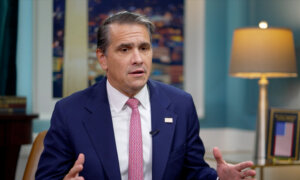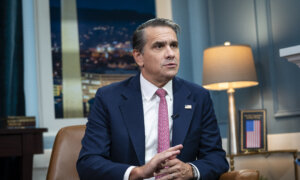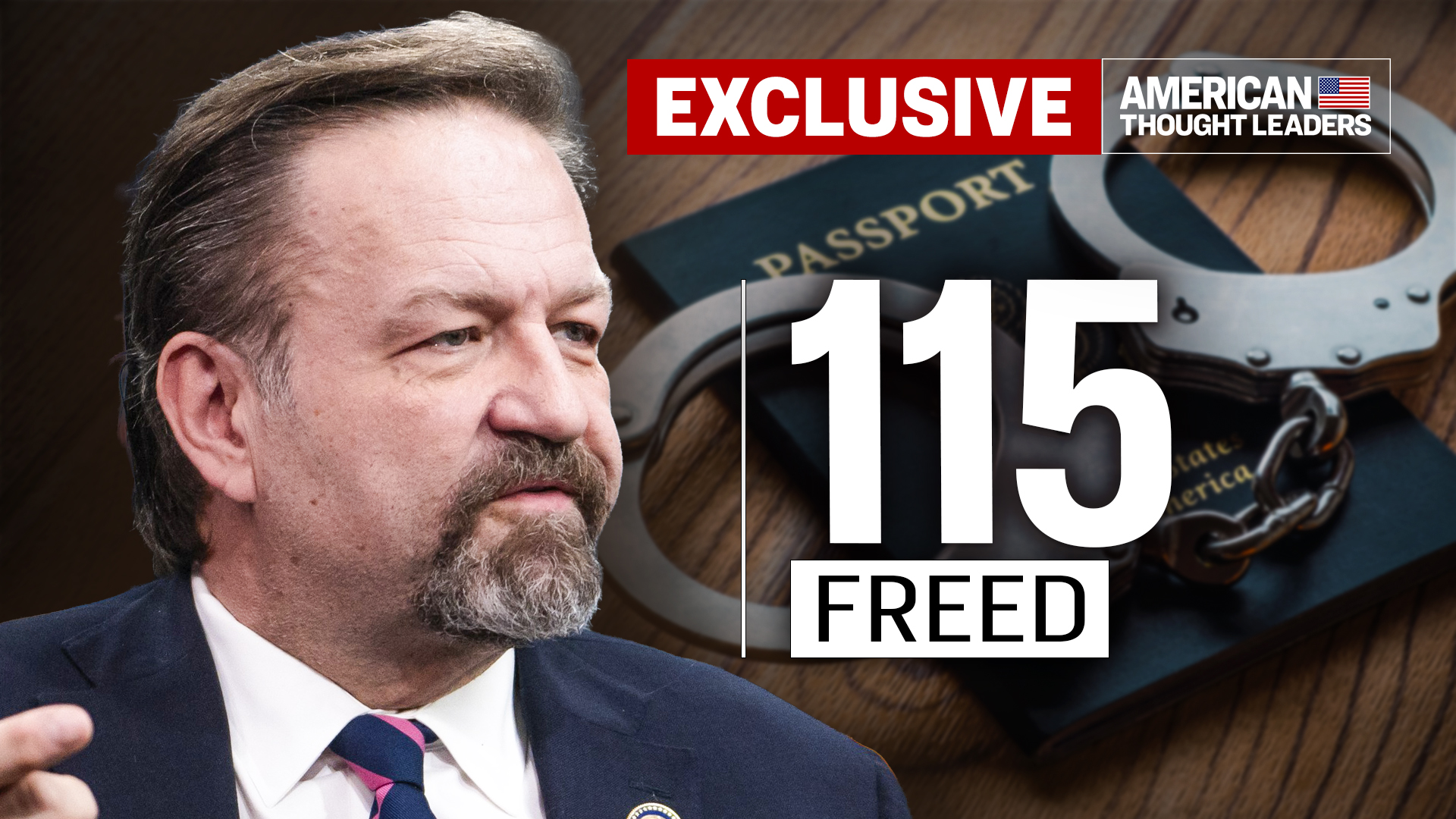

[RUSH TRANSCRIPT BELOW]115 Americans held hostage or wrongfully detained have been brought home in the last 20 months—with zero ransoms paid—said Sebastian Gorka, deputy assistant to President Donald Trump and senior director for counterterrorism at the National Security Council.
In this episode, Gorka takes us inside high-stakes hostage rescues, negotiation efforts, and the Trump administration’s strategy to go after radical jihadism and left-wing terrorism.
In this episode, we dive into:
A late-night mission to Kabul to meet top Taliban officials.
The hostage cases Gorka sees as the most difficult.
How many Americans are still being held hostage overseas.
The single largest counterterrorism operation since 9/11.
How terrorism threats have evolved since 9/11.
The State Department’s new China wrongful detention advisory and what Americans should know before traveling.
How the administration is targeting money flows to left-wing terrorism.
Views expressed in this video are opinions of the host and the guest, and do not necessarily reflect the views of The Epoch Times.
RUSH TRANSCRIPT
Jan Jekielek:
Sebastian Gorka, so good to have you back on American Thought Leaders.
Sebastian Gorka:
It’s been a while. Thank you for having me, Jan.
Mr. Jekielek:
Let’s talk about hostage rescue. Stephen Hubbard was recently brought back. So, give me the details. How did this happen? He’s been imprisoned for several years. And did we have to give anything up for this?
Mr. Gorka:
So, how did it happen? Let me put it into a broader context. As head of counterterrorism, I’m not Senate-confirmed, thank the good Lord. So, I started work at 12:01 on January the 20th as the President raised his hand to be sworn in. For the second time as Commander in Chief, I'd been assured by the White House security team that my new badge, because I served in the first administration, would work.
I was listening to him being sworn in in a little earbud. And sure enough, at 12:01, I swiped my badge, went through the turnstile onto the campus here at the White House, and went to my skiff. All of the work we do in counterterrorism is classified; we have to do it in a secure compartmentalized information facility.
But nevertheless, I’m old school. So, I found a whiteboard, took it to my skiff, and I wrote down the priorities for the President in counterterrorism so my whole team could understand the driving intent of the Commander in Chief. And right at the top was the word hostages because it is of paramount import to the President. That’s one of the most obvious examples of what America First means: that no man or woman is left behind.
As a result, I can report to you, thanks to the Stephen Hubbard liberation through the good offices of Envoy Witkoff, we have brought home 115 U.S. citizens who are either hostages or were wrongfully detained, like Mr. Hubbard. Hostages like Kevin Rideout, captured by ISIS in Africa, whom I recently had the honor of taking to the Oval with his family, his wife, his children, his father, to meet President Trump, the man who is responsible for what is, and I’m going to just state this for the record for The Epoch Times, history-making.
No other president has liberated 115 Americans in 20 months ever. And no other president, if we stick to the world of counterterrorism, has, through his leadership, facilitated the permanent removal from the battlefield of, as of today, 1,086 jihadis who were removed by our Tier One forces and our Tier Two forces, who will never threaten Americans again. In one operation recently in Africa, our forces removed 199 jihadis in one weekend. That is the largest counterterrorism operation since September the 18th. So that’s how Hubbard happens.
Let me put it into a broader context. When I came on as Senior Director for Counterterrorism, you know, what do you do when you come to a new job? You see what the situation is right now. I spent the first few months going around what we call in D.C. the interagency.
So whether it was the Pentagon, whether it’s the CIA [Central Intelligence Agency], whether it’s the NSA [National Security Agency] , whether it’s Joint Special Operations Command, and I just wanted to get a sense of, how bad is the situation? What were the last four years like under Biden? And what do you need? And it was truly freakish, Jan.
It was as if all my interlocutors, the generals, the intelligence professionals, had been given the same set of talking points. Because everywhere I went, almost every single individual said, sir, all we want is to be able to do our job and for the will to act to be communicated from the Oval office; 1,000 jihadis dead, 115 hostages and wrongfully detained, liberated. That is President Trump; that’s the will to act. That is America First.
Mr. Jekielek:
So, you mentioned that this bigger, broader context is really what facilitated getting Stephen Hubbard back. And so, can you maybe explain how that broader context works? So, the will existed, of course, but how does it actually work?
Mr. Gorka:
So, if you really want to know, I'll give you a view inside the sausage factory. When it comes to hostages or wrongfully detained individuals, Americans have three parts to the machine. If it’s an active hostage case, which is a crime against a U.S. citizen, the FBI [Federal Bureau of Investigation] has a role, thanks to something called the Levinson Act that came into force a decade ago, there is something at the Hoover building under Kash Patel called the Hostage Recovery Fusion Cell. It’s an interagency entity. It has members of the IC [intelligence community], law enforcement, and the Department of War.
They manage an active case. Who took that individual? Where are they? What can our intelligence capabilities do to find them? And then, if there is a need for a rescue operation, making sure through us, through the NSC [National Security Council], the president is provided options. So that’s the FBI, the active case.
Then, when it comes to the policy, what does the U.S. government do with hostages? What mechanisms do we put in place? Who does the negotiations? The policy stuff, not the raids, not the intelligence collection, the policy.Under my directorate, that’s the counterterrorism directorate in the National Security Council underneath Secretary Marco Rubio.
Then there’s a third piece, and this is where it goes straight to the Hubbard case. We have to have somebody who, when it’s a government that’s taken that U.S. citizen, or it’s a regime we don’t recognize, like the Taliban, because we have some Americans who were taken by the Taliban. We have to have somebody who can actually go toe-to-toe and negotiate. Not a law enforcement professional of the FBI, not a policy presidential appointee like me at the White House, but somebody who can go to Moscow, who can go to Kabul and negotiate, our envoys.
Until recently, the SPEHA [Special Presidential Envoy for Hostage Affairs] was Adam Boehler, an incredible man. He was just reckless in his abandon to save Americans, who took me to Kabul to negotiate with the Taliban last year to bring back one of our American citizens. And then the super envoys, we have Jared Kushner, of course, and then we have Steve Witkoff.
It was Steve Witkoff’s unrelenting determination, his repeated visits to whether it’s Moscow, whether it’s St. Petersburg, and as part of the overarching negotiation for the final settlement for peace in Ukraine.God bless Steve. He managed to get Stephen Hubbard after four years in prison as a 70-year-old American who committed no crime, to get him back to the United States. So, a member of my team from the NSC, a member from the State Department, SPEHA’s office, and Steve flew to Russia to bring Stephen home on the flight out of Russia.
Mr. Hubbard had a phone call with the president. We usually do this. When we’ve got them safe in our hands, we connect that American citizen to the man who made it possible. And after the call, I won’t go into the details of the call, but after the call, Stephen said, I am so grateful that it’s Donald J. Trump who’s the president right now. Remember, this person was taken under Biden’s tenure.
And let me say one thing, because I meet with all of these families. So, whether it’s our hostage families in Gaza, whether it’s Kevin Rideout who was taken in Africa, my job and my door, I give these families my personal phone number. I say, you can come here to the White House anytime. I want to listen to you, I want to hear your concerns. What can I do for you?
I had American family members tell me on these lengthy cases that started under the last administration that Jake Sullivan, the then national security advisor, one of the arch propagators of the Russia hoax conspiracy, would tell these families, don’t talk about your missing loved one. Please don’t tweet about it. Don’t put posts on Facebook. Let us deal with it. They did not want the Biden administration embarrassed.
What did I tell these individuals? You know what? Your loved one is in harm’s way. They’re a detainee. They’re a hostage. I want you to talk about them. I want you to put pressure on the Taliban, on ISIS, on whoever it is. And guess what? I will retweet them. I will repost them.
I will get the president’s team to draft something for the White House X account because that’s how we affect their release. We can rescue them, we can pressure them, and we can make the world care about those Americans. It is an absolute outrage.The people responsible for Americans wanted to sweep it under the carpet and not bring those people home. Not under this administration. This is America First.
Mr. Jekielek:
So, the SPEHA envoy took you to Kabul, I guess, presumably for a bit more leverage.
Mr. Gorka:
Yes, I don’t think I’ve discussed this one in much detail. The last time I was in Afghanistan was in 2006, traveling in armored convoys with large individuals with automatic weapons, wearing fully ceramic-plated body armor myself. I went back 19 years later, with no personal security detail, just this incredible envoy, Adam Boehler, a couple of members of his team and my team.
If I ever write a book about this, to land in Kabul at 10 o‘clock at night and then to get into an armored vehicle with no license plates because it had been our armored vehicle that Biden had left there, and all they’d done is rip the license tag off. And to get into this armored Land Cruiser with a turbaned Taliban driver, and then to drive with Adam Boehler next to me into the former Green Zone to meet with the Taliban Minister of Defense, to meet with the head of intelligence, to meet with the foreign minister.
Some of these cabinet members, who, remember, had been released in the Bergdahl deal when that private went AWOL to hang out with the Taliban, were caught. Then what did the last administration do? Release four leading Taliban members from Gitmo [Guantanamo Bay detention camp], so they could go back home and become members of the Taliban government that Biden would put in place after he surrendered Kabul.
If somebody told me, you know, two years ago, three years ago, I‘d be riding around Kabul, I would have said you’re insane, never going to happen. But that’s a function of the President’s determination to bring every American home. And here’s the good news: it may have been hairy at times, may have been surreal to sit down with the Taliban, but when we got back to Kabul International Airport, that American citizen who’d been languishing in a Taliban prison was on our jet, and we brought him back home.
One last little piece of the story that I don’t think I’ve told anyone: we landed at Dallas, and because this is a former wrongfully detained, quasi-hostage, we got special treatment from CBP [U. S. Customs and Border Protection]. This American did not have to go through the regular intake line at customs. We were met by two wonderful CBP agents at the jet, who took us in their patrol vehicle to a CBP office to in-process this American citizen. And he was crying, he was so emotional, he never thought he'd see his family again.
And he said to me, the last thing he said to me before we parted company here at Dallas, he said, he looked up in the sky and he said, there’s only God and then President Trump. That’s the essence of leadership, that’s the essence of statecraft. The whole mechanism, the gargantuan might of the most powerful nation the world has ever seen, mobilized to bring one human being back home.Whether it was that individual, whether it was Stephen Hubbard, whether it was that beautiful ballerina, Ksenia, that I was honored to meet at Dallas when she likewise was liberated from a Russian prison. What was her crime?
This beautiful ballerina was sent to a labor camp for eight years because she'd donated $50 to a Ukrainian charity that was deemed to be, you know, antithetical to Russia’s interests in the war with Ukraine. And this beautiful American was put in prison. No, no, we’re going to get her home. Adam Boehler, Steve Witkoff, Jared Kushner, and we’re going to meet her at the airport with a bouquet of flowers, like she’s just given a performance at the Kennedy Center.
It’s amazing what the consequences are of an election. It’s like the southern border. Remember, we were told about the border for years under the last administration; can’t fix the border. You need to legislate. Congress cannot fix the border situation.12, 14, 16 million illegals. Got to have new legislation.
Well, apparently, you didn’t need legislation. All you needed was an election and for the former president to come back as the new president. I mean, there are those wonderful moments at his rallies where even the president says, how is it possible no illegals have been released in the last month into America? It’s possible because of what he’s done to make sure that Stephen Miller, Secretary Mullin, Tom Homan have secured our borders and made us sovereign.This is the apotheosis of leadership.
Mr. Jekielek:
So, you gave an example during the Biden administration of a very big concession for a hostage rescue, so to speak. In these situations, like Stephen Hubbard, you get the sense that you’re saying that you’re not making such big concessions.
Mr. Gorka:
You asked me that right at the beginning, and I didn’t address it. Let me be explicit. The United States government, the president, and U.S. agencies across the interagency have given no concessions. We haven’t paid one red cent. Because when you pay a ransom, what happens? Well, then they'll take more Americans hostage. Absolutely nothing happens. We have not, we do not negotiate with those who hold Americans hostage.
Mr. Jekielek:
That’s astonishing. Some people would say this strains credulity. You must be doing something under the table here.
Mr. Gorka:
We don’t need to do anything under the table because President Trump, look, I tell people, you don’t have to like the man. You must respect him, but read The Art of the Deal. I’m not trying to be flip. Read the first chapter, the first real estate deal he does, the levers which he manages to pull, and the way in which he facilitates the right action and always wins. He’s just translated 50 years of unbelievable victories in the private sector to his role as the chief executive.
Whether it’s fear of President Trump or whether it’s respect for President Trump, we do not need to make concessions. Why? Because you look at the results. No president has killed as many jihadis as President Trump in less than two years.That sends a very certain message. Even the cartels know this is not an individual to be trifled with or to be taken in a fashion that is unserious.
There’s a great deal that can be done. If you are a serious individual, I spoke in the first administration about the need for serious men. Is it C.S. Lewis who wrote about the weak-chested man? We need men, we need actors who are taken seriously by their allies and by their enemies, and by those in between who are undecided. It’s the Sharm El-Sheikh Peace Summit.
Look at Sharm El-Sheikh. No president in history has brought together 30 heads of state. And the remarkable detail of Sharm El-Sheikh for that peace meeting everybody forgets who he invited who failed to show up, which really speaks to the president’s Art of the Deal. Who did he invite to that historic peace meeting for the Middle East?
He invited the then Ayatollah Khamenei. The president was so open. He said, okay, we’ve had our differences. You’ve been a threat to our country since 1979. But I'll open the door a little crack. Come and sit down with all of us here at this table.
Now, to quote a certain Indiana Jones movie, he chose poorly. And a few months later, that individual was dead. And we launched Operation Epic Fury. But whether it’s respect, admiration, fear, we don’t need to pay for hostages, and we won’t, because we know what that brings.
Mr. Jekielek:
I don’t want to beat the dead horse here, but maybe there’s some kind of trade decision. You just say, I would like this person, and they’re delivered.
Mr. Gorka:
Oh, would it be that it was so simple. Yes, not one request. For that Afghan detainee, that American in Afghanistan, Todd Adam Baker, was in negotiations for months and months and months. He was flying in and out. And finally, we thought, okay, this could be the moment. And we told them, okay, we‘ll come to Afghanistan, and I’ll join Adam, but he better be at the airport when we land. And we were fully prepared. If our citizen is not in the waiting area of the terminal, we’re not even going to open the door of the jet, and we’re just going to turn around.
It’s not instantaneous. With the Taliban, nothing is instantaneous. As we’ve seen with Russia, nothing is instantaneous. So it takes time, it takes convincing, it takes commitment. But at the end of the day, no ransom was paid by America for one of our citizens.
Mr. Jekielek:
I see. I mean, I’m just fascinated with how these negotiations work. I mean, maybe you don’t want to reveal the secret sauce, but that’s astonishing what you’re saying, right? That’s amazing. An amazing and astonishing thing, the way you’re describing.
Mr. Gorka:
Look, I’m only a deputy assistant to the president, but I'll give you some inside baseball. As we were leaving Kabul and I was saying goodbye to this Taliban minister of defense, I presented him with a book. It was one of my books. And I made sure he saw the back of the book, which is a very large photograph of me in the Oval Office with President Trump, to make him understand this isn’t just some bureaucrat who’s been sent here on a fool’s errand. You are talking to a commissioned officer of the president, and if you wish to have maybe better relations with America, there’s a possibility there, but you better give all our citizens back because I’m going to be reporting to the president if you don’t.
Mr. Jekielek:
What would be the toughest case that you’ve come across on the hostage side of things?
Mr. Gorka:
The toughest case, and for the purposes of protecting the families and their emotional state, there are a couple of cases where we have a certain level of certitude that the individual may have passed. In that case, you know, my demand is that we have to provide a modicum of closure to those families. We need to find the remains. Right now, we’re working on the recovery of the remains of a U.S. citizen in a very tough part of the world. Those are the toughest.
Outside of that, just everything that happened after October the 7th. People don’t know this, but we just had an incredible memorial event at the State Department led by Secretary Rubio and by Secretary Lutnick. And people don’t realize on October the 7th, 46 Americans were murdered in Israel. 46 American people.
Mr. Jekielek:
I think people forget this, actually.
Mr. Gorka:
It’s not just about Israelis. It’s not just about the girls at the Nova music festival. It’s American citizens murdered by jihadis in Israel, 46 of them. And then another dozen were taken hostage. So outside of the horror of that day, which I got to see. I saw the unedited video of what Hamas did that day. I’ve spent my career studying jihadis, watching their snuff videos. You remember the very famous one of the Jordanian pilot burnt alive in a cage by ISIS. It was my job to explain what this means to the intelligence community and to our war fighters.
My career used to be watching the full videos, not the edited ones, the full videos, the beheadings, all of them. And I thought I was pretty inured to that kind of true horror. When I saw that 47-minute video from the body cams of the Hamas murderers, little boys screamed with their eyes blown out because of a hand grenade that had been thrown into the building they were in. Their father murdered in front of these two little boys. And one of them, with his eye hanging out, is shouting to his other brother, I can’t see, I can’t see, where’s my eye?
When you see things like that, then because of my role for hostage policy, I don’t just meet with the families of American hostages in Gaza. I said, I‘ll meet with any family, Israelis. So, you know, every week during that benighted period of time, through my hostage director, we’d organize these meetings here in the White House. And I'd sit down with them and talk to mothers and fathers who know their son is dead, but just want the body back. And being told by them, please finish the job. We may never get our son back, but please finish the job of destroying jihadism. Yes, that’s the toughest.
Mr. Jekielek:
It’s about a year since you got the last October 7th hostages back. Is there anything notable about the process?
Mr. Gorka:
For me, as somebody who’s built my career on the ramifications of September 11th, something that hit me because I was standing in the back of the room at the State Department last week, as Secretary Rubio spoke, we had 44 family members of Gaza and hostages from Israel at the State Department. And after the secretary spoke, Howard Lutnick stood up. And I’m thinking, what’s Howard Lutnick? What’s Gaza, October 7th?
And of course, his wife had been incredibly supportive of those families, not just the Americans, but the Israeli hostage families. And then Howard, in this incredibly powerful way, connected it all. Howard said, as the head of a company that was on the top two floors of the World Trade Center, he, Howard Lutnick, simply because he was delivering his child to kindergarten that day, wasn’t in the World Trade Center. But he lost more than 600 of his employees. He survived, but 600-plus people who worked for him, including his 36-year-old brother, died that day as he survived. And he had this incredibly trenchant, soulful message to everyone in the room.
He said, our job is to live. He could have crumbled, he could have hidden for the rest of his life. And he said, you never get over it. The pain gets less and less. 25 years after 9/11, he still thinks about his brother every day. But he understands for his brother and his brother’s family, his job, the widow’s job, the friend’s job, is to live. And that message for the Gazan hostage families, I think, is as powerful as it is for anyone who lost someone on September 11th. Our job is to live.
Mr. Jekielek:
Your job is not done. There are still hostages. Do we know how many are out there right now? And perhaps even specifically in Russia, but more broadly?
Mr. Gorka:
I won’t talk about wrongfully detained, because that’s a separate category. That gets very complicated in terms of which countries we’re talking about. But I can say, because of President Trump, because of Jared Kushner, Steve Witkoff, and Adam Boehler, we are down to less than 10 hostage situations, which is incredible. And we have a new SPEHA coming in, John Cole.
And I told him, this man is incredible. This man has liberated over five or six hundred political prisoners in Belarus. Not Americans, just, you know, Belarusians. And nobody knows this either. I mean, this is the biggest problem in the Trump administration. I’m not trying to be cute. The biggest problem is we’re moving so fast because of the president. We can’t keep up with him.
But so much is happening. I don’t know the last time I sat down for this long to talk to somebody about everything we’re doing because we don’t usually have the time. We try to keep up with the president, with President Trump, which is impossible. But, but you know, when John is confirmed, he will have so few cases to deal with because the president is respected or feared. And because America First is real, we are down to less than a dozen.
Mr. Jekielek:
Do you think it’s conceivable that there would be zero?
Mr. Gorka:
Yes. Think about it, 115 in less than two years, less than a dozen left, and we have more than two years left in the president’s administration. Absolutely conceivable. And I will work with John and with everyone else, with the FBI, with the State Department, to make sure that is realizable.
Mr. Jekielek:
On this wrongfully detained side, I saw that the State Department issued this new wrongful detention advisory for China, which is interesting. So, what should people be thinking from this information?
Mr. Gorka:
I don’t want to steal the president’s thunder, but whether it’s wrongful, states think that they can leverage American citizens, often the malign actors. And even if it’s not wrongful detention, there are travel exit bans as well. So we’ve seen this in several cases with China and other countries where one of our citizens goes in for a completely legitimate reason. Sometimes they’re invited to go there to a conference or something. And then the passport is taken, and they’re on an exit ban.
We had many of these in Latin America that, thanks to the good offices of our envoys, have been brought back home. And we are sending a very clear message to those regimes that it doesn’t matter which tool you use, whether it is wrongful detention or whether it is exit bans, you will not use U.S. citizens as pawns. Yes, we know that there are trade negotiations. Yes, we know the whole tariff structure is one of the president’s tools in his toolkit. But we will not permit you to use Americans as pawns. That’s how that statement needs to be understood.
Mr. Jekielek:
And I’m very curious how that actually plays out because I’m concerned that Americans could be used as leverage. This is something the CCP has done.
Mr. Gorka:
Can I use this opportunity as a bit of a public service announcement as well? To my fellow Americans, especially certain NGOs out there that are doing good work, especially spreading the word of the Lord and other humanitarian purposes: Think twice before you send American citizens to countries that have a record of using Americans as bargaining chips.
This is America. You have freedom of conscience. This is the greatest nation on God’s green earth. Think twice before you put an American in harm’s way who isn’t a soldier, who isn’t a law enforcement officer, who isn’t an intelligence professional. The idea that you will send Americans to countries where they have these policies may not be the wisest thing. Let me just leave it there.
Mr. Jekielek:
Let’s jump to another piece of your portfolio, so to speak, which is, of course, counterterrorism. This is a huge part of what you do. As you say, you got involved around 9/11, right? How are things different today than around 9/11?
Mr. Gorka:
As I came into my new job here, it’s very easy to just get a sense of the situation: put your head down and address the president’s objective and just work, work, get all the organs of state to move towards the president’s objective. And sometimes you miss the broader picture, and you need to stop. Take a deep breath and just take account of the situation.
And as a result of doing that, about three, four months in, I started because I chaired these big government meetings. I would start by saying, ladies and gentlemen, can we just take stock for a moment that in the last 25 years, we have done some amazing things, and in fact, we are actually winning? How do I know that?
What was the biggest threat for the first 10 years of the Global War on Terror? It was the 9/11 scenario, meaning foreigners are recruited; they are taken to some foreign safe haven, like a training camp in Afghanistan. You remember that famous video of the monkey bars, the jihadi camps where they do the training, right?
So they recruit foreigners, provide them with training, whether it’s how to hijack a plane, build an IED [improvised explosive device], and then they are deployed as foreigners into America to do that attack, like 9/11. When was the last time we saw that? Because of our success.Because of what our military, our law enforcement, our intelligence professionals have done, they cannot do that anymore.
So, what have we seen in recent years as the only way that jihadists can effect an attack here in America? Because we’ve removed, because President Trump destroyed the ISIS caliphate in Iraq and Syria, removed their safe haven, because the camps, the Al Qaeda camps in Afghanistan, were destroyed.They don’t have these places to recruit people to, to train them, and then deploy them into America.
So they’ve been restricted to what? To most, to all intents and purposes, using the internet, social media platforms to encourage people who are already here, whether it’s the Bourbon Street attacker, remember New Year’s Eve, rolling that, you know, driving that pickup truck into the innocent revelers on Bourbon Street. Whether it’s the recent attacker of the National Guardsman, just a couple of blocks from where we’re sitting, they can’t penetrate our defenses with foreign fighters or foreign terrorists.
So they’re forced to try and encourage somebody online, hey, you’re an American, you’re disaffected. And you need to take action with your pickup truck, with your knife, with your gun. Their sphere of mobility has shrunken so much because of what we have perfected under what we call the find, fix, finish model. Meaning, if we know where you are, if we have assets available, we can kill you in about 72 hours, which we started on day 11 of the administration.
We walked into the Oval on day 8 with some intelligence for the president on a leader of ISIS who had killed Americans and was plotting to kill Americans, who Joe Biden had watched for a year-and-a-half and decided not to do anything with him. The president looked at me and the national security advisor and my colleague and said, kill him. And he signed the order.
Less than 30 hours later, we were in the Situation Room under the West Wing, watching that ISIS leader be permanently removed from the battlefield. We have capacities that have really constricted the sphere of mobility. Now, what has happened since then? Jihadis are losing. Great.
But as the new U.S. counterterrorism strategy states, which the president signed earlier this year, it’s not just about jihadis anymore. It’s about left-wing terrorists. It’s about Antifa. It’s about the anarchists. It’s about the Red-Green Alliance.
It’s about the kinds of people who have not only plotted against the life of the president and tried to kill him on more than one occasion, but the pro-radical transgender killers that killed my friend Charlie Kirk, or that absolute psychotic, evil piece of human excrement that killed a family man, father of two, on a sidewalk of Manhattan simply because he was the CEO of a health insurance company? That’s not jihadism.
And even a Left-wing organization like the Center for Security and International Studies in their recent report, not a MAGA entity, did the statistical analysis and said that in the last year, yes, there may be conservative or Right-wing extremists in America, but Left-wing terrorism is in the ascendancy. Why?
Well, we know why. Because we have one party in America that’s normalized violence from George Floyd on down to Antifa. And then we also have external interests, nation-state actors, be they Iran, be they China, be they others, that wish to engender that tension and encourage people to take action against the Republic because it serves their national purposes.
Mr. Jekielek:
You know, I have to ask since you mentioned it, there’s been, you know, we tracked how TikTok was used at one point to do exactly what you’re describing. And of course, something that was controlled by the Chinese Communist Party. We don’t really have good evidence, as far as I can tell, that those algorithms still don’t have influence from the Chinese Communist Party. And that’s a concern for me, anyway. And I don’t know if you want to speak to that at all.
Mr. Gorka:
I have a team member whose job it is to focus exclusively on this issue. And you don’t need a top secret clearance to just see what is happening. If you look at Tucker Carlson for a moment, whenever he posts a new anti-American interview, whether it’s the infamous one of the quote unquote historian who’s basically just a podcaster who said that Churchill was the aggressor, and Hitler was the victim.
This is what this guest of Tucker Carlson said, and Carlson sagely nods to this absolute perverse recasting of World War II, or whether it’s any of his recent rants about the justified war against the Islamo-fascist regime in Iran. Watch the speed with which posts like that are accelerated in ways that human beings can’t, right? It’s impossible in fractions of a second to have the kind of amplification that some of these anti-America first platforms have. So, how’s that being done?
I think we know how it’s being done. There are countries in whose interest, this is where it starts to get into classified territory. There are countries in whose interest it is to amplify artificially.Those voices that undermine the duly elected administration and commander in chief of the United States. And we know who these countries are, right? It’s obvious whether they’re.Whether it’s China, whether it’s Iran, whether it’s Russia, they want to see more of this. It’s not organic, so they have to artificially accelerate it.
Mr. Jekielek:
What means can we take? And this is a difficult question because we are, this administration is very pro-First Amendment, which I am very good, very happy to see. Hopefully, most journalists are. At the same time, these tools are very powerful, and dealing with them can step into that violation of First Amendment territory. In fact, it has in the past, and there are better ways and worse ways to deal with it. I’m just curious how you approach this question?
Mr. Gorka:
So, first things first.There is a default setting we have. It’s not just the First Amendment, the U.S. Constitution, but it’s the way that we were treated under the last administration. This is why I’m so proud that in the President’s preface to our new U.S. counterterrorism strategy, he makes it very clear, as does the strategy itself, that we will not permit the organs of U.S. national security to be used as a political weapon. We’re not going to allow Catholics in Richmond to be labeled domestic terrorists because they go to a Latin Mass, which is what happened under Christopher Wray’s FBI during the Biden administration.
We won’t let people like Tulsi Gabbard, serving members of the Army Reserve who are members of Congress, to be put on terrorist no-fly lists because she’s a Democrat who supports President Trump, or to have the FBI used to do raids at a former and future president’s home, as they did to Mar-a-Lago when Biden was in the Oval. We will not permit that to happen. We will not allow the distortion or the assaults on the U.S. Constitution in the name of quote-unquote national security.
So we are very sensitive to that because it was done to us. It was done to me. It was done to General Flynn. It was done to the president. So we have that knee-jerk First Amendment, don’t do anything. But there are things we have to do if there’s a threat to national security that actually comports with the U.S. Constitution.
Let me just give one example from history. There’s an incredible case study of something called the Active Measures Working Group that was created under the Reagan administration to fight Soviet propaganda and the exploitation of the First Amendment. And it was a very eclectic group of people, a small group.White House staffers, congressional staffers, members of the intelligence community who said, Russia is eating our lunch in terms of disinformation. What do we do about it?
Well, we believe in the First Amendment, but let’s show the world how they’re lying. And you remember that infamous, that noxious urban legend that America created the AIDS virus? Do you remember that for ethnic control reasons? That Fort Detrick engineered this thing.
Well, the Active Measures Working Group said, okay, where did that come from? And just as we had under COVID with that lunacy of contact tracing, they did a reverse contact tracing. Where did this story first erupt? And then can we do a tree of contacts to Genesis?
And they found out, sure enough, a cultural affairs attaché for the Soviet Union was at a cocktail party at an embassy in Africa.Told it to a local government employee. That government employee told it to somebody, and it finally made it to an Indian newspaper that blew the story up. Turns out that was a front organization for the Kremlin as well, and they held a press conference on it.
They held up the newspaper and said, Look, this is the GRU [Russian Main Intelligence Directorate] agent that seeded the story to a host nation who then fed it, inadvertently, unwittingly, to a front organization that made it a front-page headline story, but the whole thing was fabricated by the KGB [Russian Committee for State Security].
So, one of the best ways, and we’re working on options for this, had a discussion with the vice president on this just two weeks ago, is to educate the general public, not just Americans, but the world.Who’s lying about what and demonstrate how they’re lying? And it goes straight to, you know, COVID, the pangolins. Really?
The WHO [World Health Organization] first floated this, it’s the wet market. And where did that come from? And was there a connection to the actual government of China as opposed to any empirical evidence? That’s what you have to do: shine the light on the falsehood and demonstrate its actual genesis.
Mr. Jekielek:
Well, and I'll just make a comment because I know we need to finish up pretty soon. So, just my comment is, in this case, it’s a bit complicated with the virus origins because you had a very prominent American working on the narrative.
Mr. Gorka:
It’s not called the term. Sunlight has to be shone on that as well. If you’ve got somebody in government who’s trying to do an end run against U.S. policies by funding cutout NGOs so they can send federal funding to communist China, well, I think everyone in America should know that as well. I think Mr. Navarro has a new book on exactly that topic.
Mr. Jekielek:
Right. As we finish up, we’re talking about outside influences. You know, one of the things you’ve been tracking is these transnational funding links for Left-wing terrorism. Notably, I’m thinking about this Singham network that’s being explored. I want to find out what your greatest lesson from tracking down these terrorists in these types of operations was as well.
Mr. Gorka:
Look, I’m not trying to be self-aggrandizing. I didn’t learn much, because thanks to my wife and my family history, my wife literally wrote the book Next Gen Marxism. My father was rotting in a communist prison on the wrong side of the Iron Curtain until the freedom fighters of 1956, for which the 70th anniversary just occurred, until they liberated him.
So I was fully aware that there are bad actors outside of America who are communists, who will work hand in glove and fund bad actors in America who are Americans who think that America shouldn’t be a nation of free individuals but should have a one-party state. So I wasn’t surprised.
The conclusion I have after 30 years of doing counterterrorism is that this is a very different target set. So there is no organizational chart for Antifa, the same way there is for the Red-Green Alliance, or as there is for ISIS. These are different animals, different threats, so you can’t simply transpose 25 years of counterterrorism onto the left-wing threat and think it’s going to work exactly the same. However, we do have a way in.
And here I doff my cap to the incredible work of not just Secretary Bessant at the Treasury Department, but the team of people he has brought in there, who we work very closely with on regular threat finance issues to do with ISIS, Al Qaeda, and others, but their identification. For me, we’re not going to find that magic, you know, org chart. But what we start with is choking the money flow. When you see pro-Hamas demonstrations on the streets of, you know, Manhattan or the campuses of Berkeley, and every single protest placard is written with exactly the same fog.
Mr. Jekielek:
Yes, they’re not spontaneous.
Mr. Gorka:
They’re not spontaneous. And, you know, there aren’t enough Kinkos in America to just, you know, do that much organic, spontaneous propaganda printing in a day. Somebody paid for that. And because they’re all the same, somebody paid for it in a centralized, systematic fashion. Who’s interested in doing that outside of the United States is the key.
And that’s why counterterrorism threat financing tools are being so effectively applied today by Secretary Blinken and his team to things like the Singham network. And then, of course, maybe the biggest thing I learned is the depth.This surprised me, the depth of the collaboration between the Islamists and the communists. I mean, the Red-Green Alliance isn’t just sporadic; it’s truly deep.
Mr. Jekielek:
Perhaps a final thought as we finish?
Mr. Gorka:
The final thought is, and it’s hard for me to say this as the child of those who escaped communism: November 9, 1989, wasn’t the ultimate victory. Europe unshackled themselves from communism. China didn’t. North Korea didn’t. Cuba didn’t. But as an author in The New York Times wrote that week—this is shocking, and I'll send you the article—that week in 1989, wrote, as the socialists and communists have lost their grip on Europe, they’re taking over our campuses here in America.
Think about that, almost 30 years ago. That’s stunning. That’s what we need to redouble our efforts against when we see so many young Americans not understand, because they have been indoctrinated, that socialism is simply the penultimate station on a journey whose destination is communism. Socialism isn’t just a nice thing where people have equality.
Just read Marx. Socialism is the last stop before you arrive at communism. We have our work cut out in educating young Americans on the reality of what that ideology has wrought: over 100 million human souls murdered in the name of utopia. So we won half of the battle in ‘89, and now we need to win the whole battle.
Mr. Jekielek:
Well, and this is something that obviously The Epoch Times is very committed to over the last six years.
Mr. Gorka:
That’s why I sat down for such a long time with you today, because God bless you for what you’re doing, what you are doing to, you know, bang the drum on the internal threat of socialism. I salute you.
Mr. Jekielek:
Well, Dr. Sebastian Gorka, it’s such a pleasure to have had you on.
Mr. Gorka:
Thank you. Keep doing what you do. God bless.
This interview was partially edited for clarity and brevity.