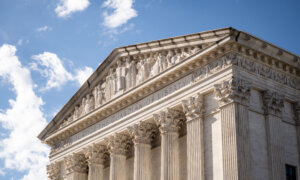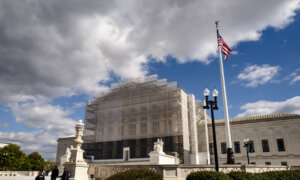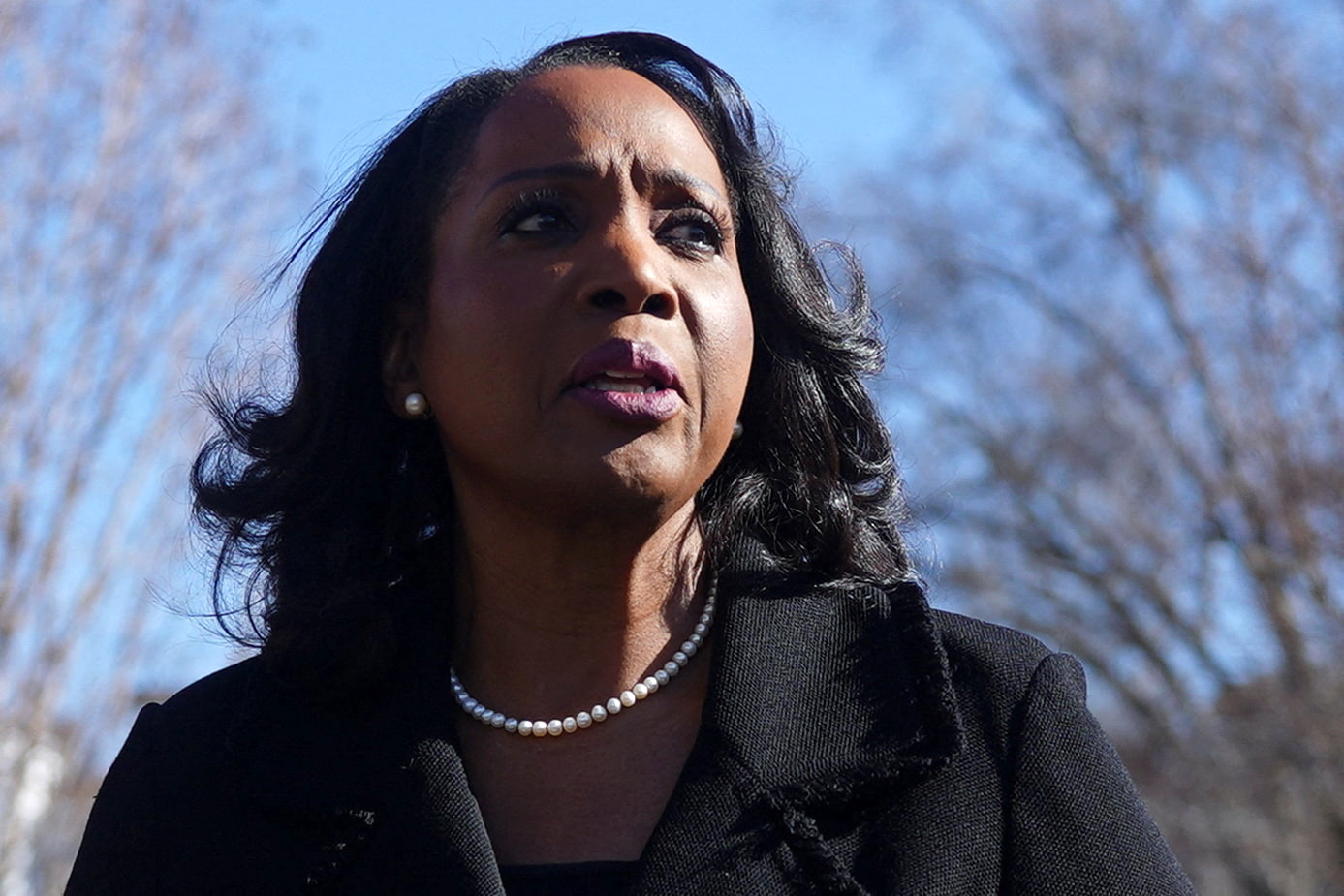

The Supreme Court seemed reluctant on Jan. 21 to grant President Donald Trump’s request to fire Federal Reserve Board of Governors member Lisa Cook as litigation over the issue proceeds in lower courts.
The case, known as Trump v. Cook, arose out of the president’s attempt to halt a lower court order reinstating Cook after he fired her last year.
It was brought in a more tentative way that required the justices to consider multiple factors, such as how the public interest would be impacted.
The Justice Department alleged that Cook engaged in the type of mortgage fraud that justified her removal.
During oral argument, multiple justices seemed skeptical of U.S. Solicitor General D. John Sauer’s arguments about the limits of judges’ abilities to halt the president’s firings.
Some raised questions about how granting Trump’s request would impact the public.
At one point, Justice Amy Coney Barrett asked about how the court should weigh the possibility of the court triggering a recession by ruling in Trump’s favor.
“We have amicus briefs from economists who tell us that if ... we grant you your stay, that it could trigger a recession,” Barrett told Sauer. “How should we think about the public interest in a case like this?”
Justice Brett Kavanaugh suggested that Sauer’s view of Trump’s authority would be detrimental to the Federal Reserve’s independence.
“That would weaken, if not shatter, the independence of the Federal Reserve,” Kavanaugh said.
The hearing followed a trail of litigation that resulted from Trump’s TruthSocial post stating that he wanted to fire Cook over alleged mortgage fraud. In his opening remarks, Sauer told the justices that Cook’s alleged behavior “impugns Cook’s conduct, fitness, ability, or competence to serve as a governor of the Federal Reserve.”
The Justice Department has argued that Trump’s firing was authorized by the Federal Reserve Act of 1913, which allows presidents to remove members of the Federal Reserve “for cause.” However, a federal district court preliminarily blocked Cook’s firing in 2025 on the basis that Trump neither had a valid reason for firing her nor gave her adequate due process.
After an appeals court upheld the block, the Supreme Court took up the case in an emergency posture. That means the justices are not just considering whether Trump gave Cook due process. They’re also focused on determining whether he is likely to succeed in his legal arguments on those issues, as well as the harms each side would incur without a temporary ruling in their favor.
Another factor that the justices are considering is how temporarily halting Trump’s firing would impact the public interest. Like Barrett, Justice Sonia Sotomayor touched on this point and the signal that the Supreme Court would send with its decision.
“We know that the independence of the agency is very important, and that that independence is harmed if we decide these issues too quickly, and with not due consideration,” Sotomayor said. “So, waiting, to me, to have at least the lower courts look at these issues first makes the most sense to the public’s confidence and to the world’s confidence about the due process of law.”
Sotomayor and Justice Ketanji Brown Jackson seemed the most critical of the administration’s case. By contrast, Justice Samuel Alito seemed especially critical of arguments from Cook’s attorney, Paul Clement.
He also questioned why the case, which was brought on the court’s emergency docket, was handled by lower courts and the executive branch “in such a hurried manner.”
The Jan. 21 hearing came after another round of oral arguments indicating that the Supreme Court would allow Trump to fire heads of independent agencies. It’s unclear how much leeway they will afford for Federal Reserve firings, however, as they’ve indicated that governors might enjoy more protection and independence than other agencies.
The hearing also comes amid an ongoing public disagreement between Trump and Federal Reserve Chairman Jerome Powell over the latter’s approach to monetary policy, as well as an investigation of the Fed chair by the Justice Department.
Multiple amicus briefs have warned that ruling in Trump’s favor could impact the economy by undermining confidence in the Federal Reserve’s independence.
“Granting the application could seriously harm monetary and financial stability even if the Court ultimately declines to fully embrace the Government’s constitutional theory,” an amicus brief from legal and economics experts said.
“Indeed, any ruling that markets could construe as abrogating the independence of the Federal Reserve System, even if temporarily or with respect to only some of its functions, could set the stage for significant market turmoil and undermine the credibility of Federal Reserve officials in ways that might not be easily reversed.”
In response to Barrett’s question about a potential recession, Sauer suggested that it was unlikely.
“We’ve already had a kind of ‘natural experiment,’ so to speak, about whether or not the predictions of doom will really be implemented,” he said.
“Surely that if investors are jittery, or whatever the argument is, you would have seen that on Aug. 25, and you did not see that.”
Sauer was referring to the date of Trump’s TruthSocial post.
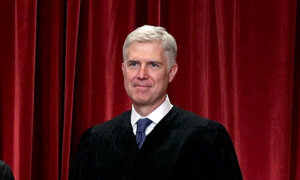
During oral argument, the justices also asked questions about the process that might unfold in lower courts and the executive branch. For example, Justice Neil Gorsuch wondered whether Cook might receive due process through a meeting in the Roosevelt Room of the White House.
Chief Justice John Roberts questioned what a hearing would accomplish.
“I’m not sure I understand exactly what you want a hearing for,” he told Clement.
He added that if Cook was arguing that she made an inadvertent mistake in her mortgage documents, there wasn’t much for Clement to say at a would-be hearing.
“You have one sentence to say: It was [an] inadvertent mistake,” he said.
Cook has told the Supreme Court that she acted properly and that Trump’s purported cause of removal was not enough to comply with the Federal Reserve Act.