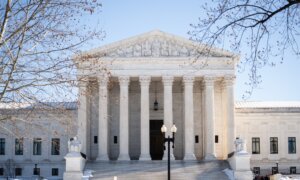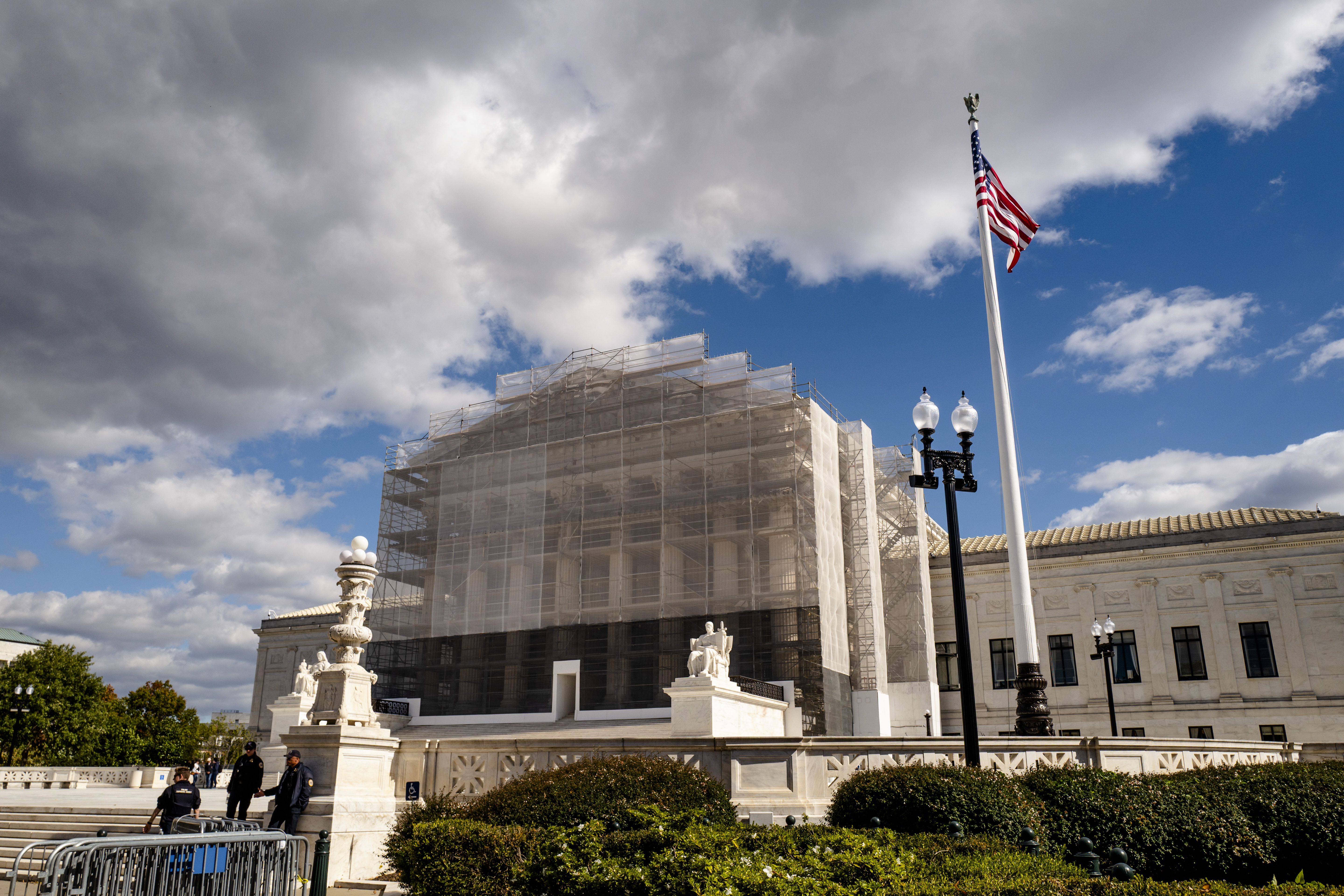

The U.S. Supreme Court on Dec. 23 ruled that President Donald Trump may not deploy National Guard troops to Chicago to protect federal immigration agents for the time being.
“At this preliminary stage, the government has failed to identify a source of authority that would allow the military to execute the laws in Illinois,” the court said in an unsigned order.
Justices Clarence Thomas, Samuel Alito, and Neil Gorsuch filed dissenting opinions.
The new ruling could undermine Trump’s arguments for deploying the National Guard in other locations throughout the country.
On Oct. 29, the high court delayed ruling on whether the Trump administration’s deployment of National Guard troops in Chicago was lawful.
Instead, the justices directed attorneys for the Trump administration, the state of Illinois, and the city of Chicago to address what the term “regular forces” means in a federal law that allows the president to take command of state National Guard troops.
Section 12406 of Title 10 of the U.S. Code allows the president to federalize state troops when he finds himself “unable with the regular forces to execute the laws of the United States.”
Although the federal Posse Comitatus Act restricts the ability of the federal government to use military resources for domestic law enforcement, a president may take over, or federalize, state National Guard troops under certain emergency circumstances. The Trump administration argues the deployment is needed to help the federal government enforce federal immigration laws in Chicago.
Illinois and Chicago filed a lawsuit on Oct. 6 after Secretary of War Pete Hegseth invoked Section 12406 of Title 10 of the U.S. Code to federalize up to 300 members of the Illinois National Guard and up to 400 members of the Texas National Guard for deployment in Chicago.
Illinois Gov. JB Pritzker on Oct. 6 called Trump’s deployment of the troops an “invasion.”
“There is no reason a president should send military troops into a sovereign state without their knowledge, consent, or cooperation,” the Democratic governor said at the time.
U.S. District Judge April Perry issued an order on Oct. 9 blocking the federalization and deployment of National Guard troops within Illinois, saying that the Trump administration was likely violating the 10th Amendment. The amendment states that “powers not delegated to the United States by the Constitution, nor prohibited by it to the states, are reserved to the states respectively, or to the people.”
Perry said deploying National Guard members “is likely to lead to civil unrest, requiring deployment of state and local resources to maintain order.” The judge said evidence is “overwhelming” that “the provocative nature of ICE’s enforcement activity has caused a significant increase in protest activity.”
The U.S. Court of Appeals for the Seventh Circuit upheld Perry’s order in part on Oct. 16, allowing Trump to federalize members of the National Guard, but prohibiting their deployment.
In its new order, the Supreme Court said that federal immigration enforcement efforts “have encountered significant resistance, as well as some violence, in Chicago.”
The order recounted that the federal government has said that federal officers have been “obstructed, threatened, and assaulted as they attempt to perform their duties,” and that an Immigration and Customs Enforcement processing facility in Broadview, Illinois, has seen “frequent and sometimes violent protests, damaging federal property and threatening the safety of federal officers.” The federal government says “these attacks ... have greatly impeded its efforts to enforce the immigration laws.”
The Supreme Court said that the term “regular forces” in Section 12406 “likely refers to the regular forces of the United States military.” This means the president may only call the National Guard into active federal service under that section when he is “unable” to execute federal law with the regular military.
The court said the federal government “has not carried its burden to show that [Section] 12406(3) permits the President to federalize the Guard” under his inherent authority as president “to protect federal personnel and property in Illinois.”
Justice Brett Kavanaugh concurred in the order, saying he agreed that “regular forces” means the U.S. military, but said the court went further than it needed to go in the case.
The court’s interpretation could “lead to potentially significant implications for future crises that we cannot now foresee,” he said, offering a hypothetical situation in which an angry mob threatened to attack a federal courthouse.
“Under the Court’s order today, even in those circumstances the President presumably could not federalize the National Guard under [Section] 12406(3),” Kavanaugh said, adding that he would “at least” have “invited further briefing and possibly also held oral argument” in the case.
In his dissent, Justice Samuel Alito said the court effectively added new language to Section 12406 and suggested that statute was not an act of Congress within the meaning of the Posse Comitatus Act, which is “a surprising conclusion, to say the least.”
The court found the phrase “execute the laws of the United States” in Section 12406(3) does not include “protective functions,” and this means, Alito said, that even if the National Guard is deployed properly under that provision, “it may not be given the task of preventing potentially lethal attacks on civilian federal law enforcement officers or the takeover or destruction of Government facilities.”
Alito said the court also found that National Guard members “may enforce the immigration laws by, for example, arresting and processing aliens, but they may not perform the protective functions for which they are better suited.” That finding is also “surprising,” he said.
Alito said rioters in Broadview, Illinois, have been organized, transported to sites by vans, and then picked up hours later by vans that bring new rioters. They have shown up prepared for physical combat, equipped with shields, gas masks, and protective padding, and the violence that has followed “has endangered the lives of federal personnel,” he said.
Justice Clarence Thomas joined Alito’s dissent.