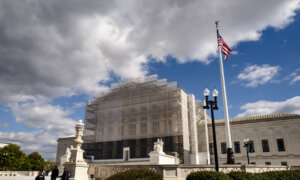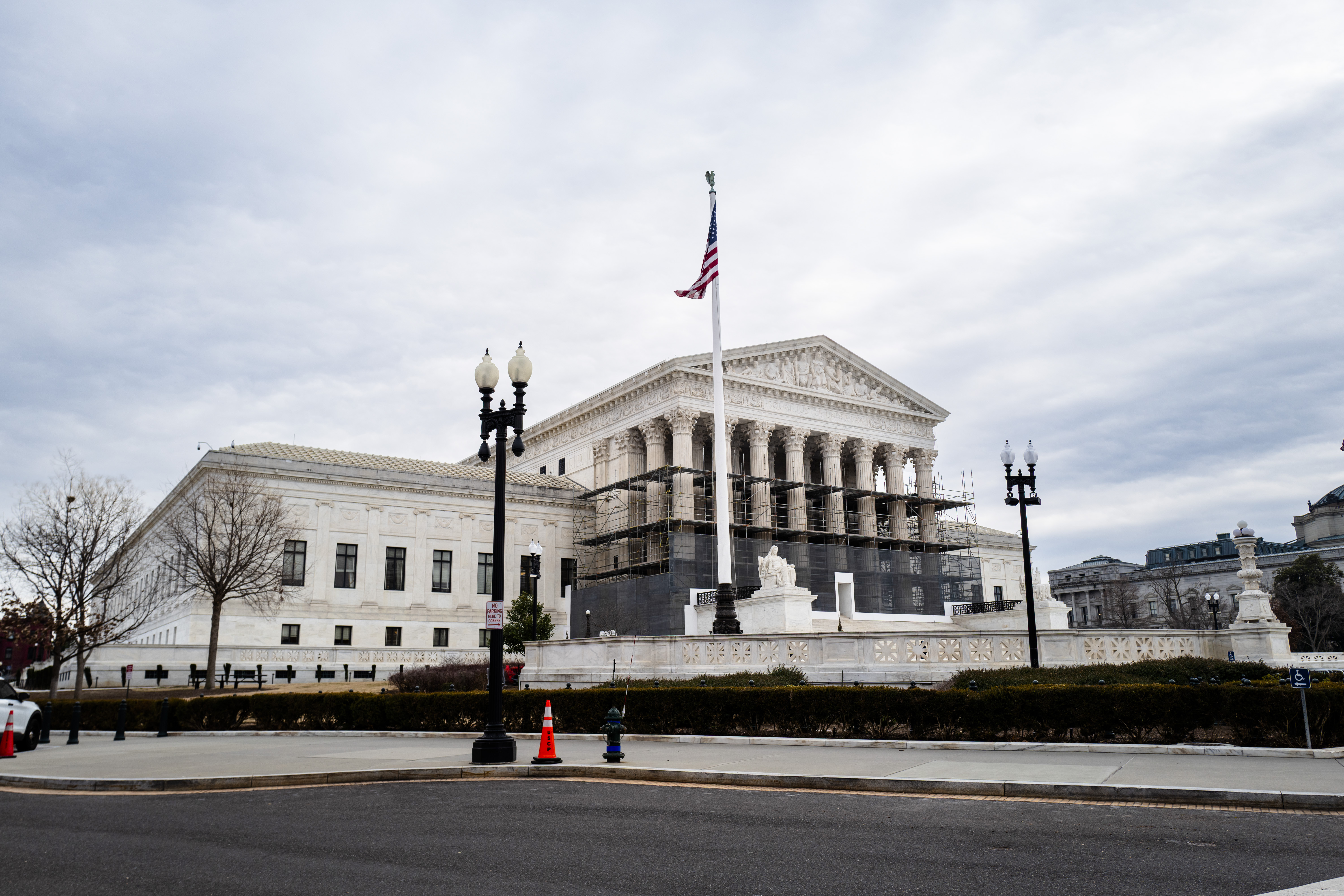

The U.S. Supreme Court on Jan. 20 declined to halt the extradition of a Japanese citizen with U.S. permanent resident status to Japan to face charges of vandalizing religious buildings.
The new order by the full court comes after Justice Sonia Sotomayor on Dec. 12, 2025, denied a previous emergency application in Kanayama v. Kowal without comment. Because she acted alone on the urgent matter, under Supreme Court rules, the unsuccessful applicant was allowed to present the application to another justice.
The applicant is obstetrician-gynecologist Masahide Kanayama, a lawful U.S. permanent resident and Japanese citizen who is also a Christian missionary. The respondent, Scott Kowal, is chief of U.S. pretrial services for the Southern District of New York.
After Sotomayor denied the application, Kanayama refiled it with Chief Justice John Roberts on Dec. 17, 2025. Roberts referred the application to the full court on Dec. 30, 2025, for consideration at the justices’ conference on Jan. 16.
On Jan. 20, the Supreme Court announced in an unsigned order that it was denying the application. No justices dissented. The court did not explain its decision.
According to the application filed by Kanayama, Japan alleges that he carried out two acts of vandalism in 2015 by putting vegetable oil onto wooden structures at the Narita Buddhist temple and lacquered surfaces at the Katori Shinto shrine, two culturally significant sites. No repairs were carried out at either facility, and “neither suffered monetary damages.”
Kanayama also produced scientific evidence at a federal district court hearing that the application of the oil “could not possibly have caused any permanent damage to the woodwork in question,” his application states.
Japan requested Kanayama’s extradition in a diplomatic note in December 2016. In May 2017, the U.S. government filed a legal complaint in court seeking extradition in accordance with a treaty between Japan and the United States.
The application states that a federal district court ruled on Jan. 26, 2023, that Kanayama should be extradited to Japan. He filed a petition with the court challenging the extradition order, and on April 11, 2024, it was denied.
The U.S. State Department authorized Kanayama’s surrender to Japan pursuant to the treaty with a letter dated Oct. 16, 2025. On Nov. 18, 2025, a three-judge panel of the U.S. Court of Appeals for the Second Circuit affirmed the district court, according to the application.
The application recounted that Kanayama regularly traveled between the United States and Japan, participating in missionary activities through a Christian nonprofit organization that he founded called the International Marketplace Ministry. Evidence was presented in court that he “anointed” Japanese shrines with oil for religious reasons.
The Sakura Summary Court in Japan issued warrants for Kanayama’s arrest for damaging a structure, an offense that could carry a year or more of incarceration.
In the application, Kanayama argued that the federal district court erred in its ruling in the case on dual criminality, a legal principle that applies to international prisoner transfers. Dual criminality requires that a person cannot be surrendered to another country unless the act concerned is a criminal offense in both the country seeking extradition and the country in which the person is located.
The application states that Kanayama could not be convicted of the New York state offense of criminal mischief, which was deemed comparable to the vandalism statute under which he would be prosecuted in Japan, because there was no “quantifiable damage” or injury that lowered the value of the Japanese temple or shrine. Although the temple and shrine received estimates for repairs needed because vegetable oil was applied, both institutions failed to carry out repairs because the oil “dissipated on its own after some time.” This means that the actual monetary damages to the structures were zero, the application states, and if charged with criminal mischief for doing the same in New York, Kanayama could not have been convicted.
In the application, Kanayama argued that he would face irreparable harm if he were to be surrendered and prosecuted in Japan. He suffers from health conditions such as malignant hypertension and diabetes, and his life “critically depends on uninterrupted access to his medications.”
In the State Department’s Oct. 16, 2025, letter, a department attorney said that the agency has shared information about Kanayama’s medical situation with Japanese authorities, “who confirmed that his medical needs will be met both in transit from the United States to Japan, and during any period of detention in Japan.”
Kanayama also said in the application that he should not be extradited because his medical practice benefits U.S. society in that he offers an innovative treatment for endometriosis, a debilitating condition that affects many women.
The federal government did not file a response to Kanayama’s application, nor did the Supreme Court request one.
The Epoch Times reached out to Kanayama’s attorney in New York and to the U.S. Department of Justice. No replies were received by publication time.