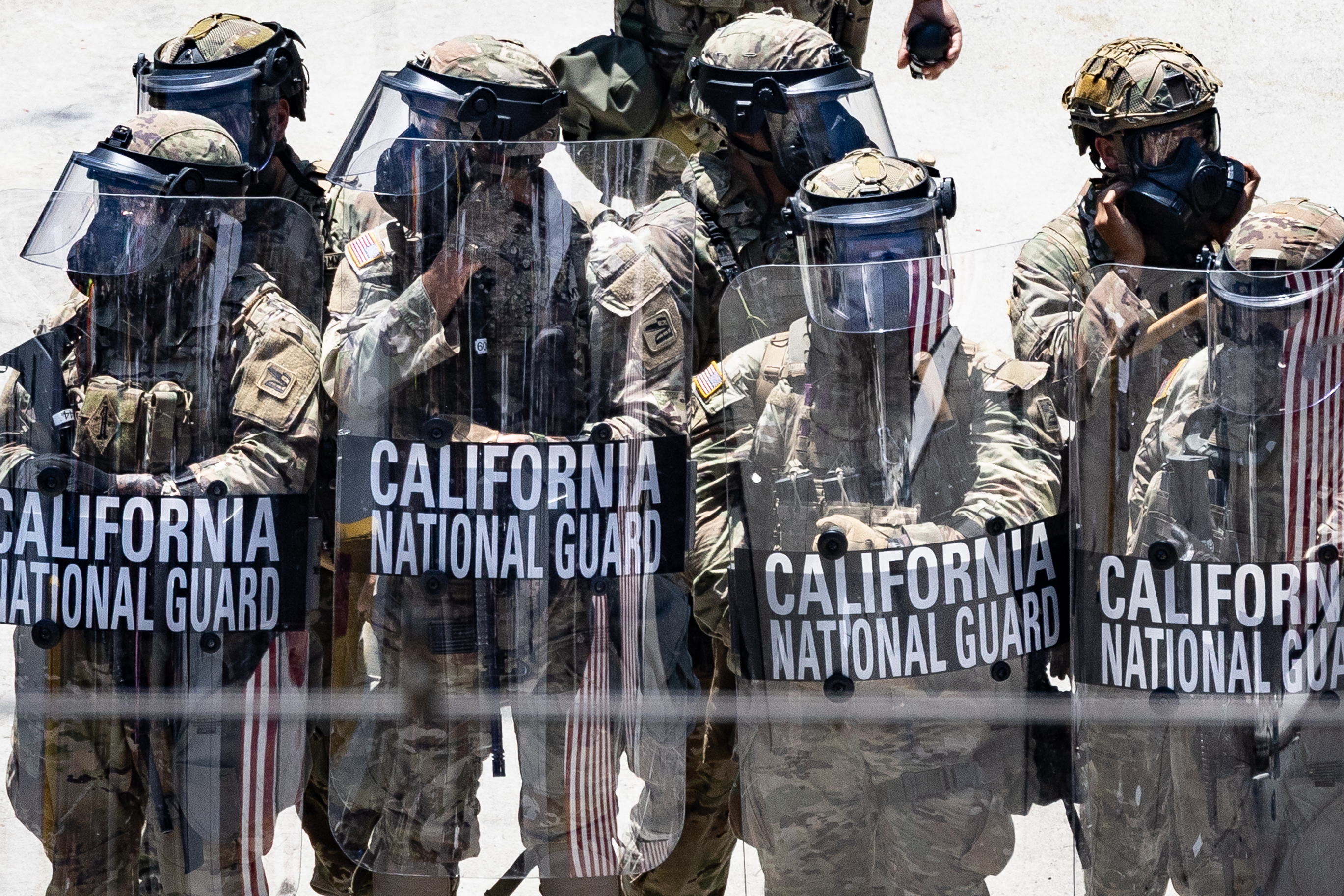

President Donald Trump said on Dec. 31 that he will be withdrawing National Guard troops from Los Angeles, Chicago, and Portland, Oregon. He had previously federalized the troops to deal with civil unrest.
Although the federal Posse Comitatus Act restricts the ability of the federal government to use military resources for domestic law enforcement, a president may take over, or federalize, state National Guard troops on an emergency basis under certain circumstances. The president has federalized troops in various cities to deal with violence that he said was interfering with the federal government’s ability to enforce immigration law.
Trump made the announcement on Truth Social, saying he would remove the National Guard from the three cities “despite the fact that CRIME has been greatly reduced by having these great Patriots in those cities.”
“We will come back, perhaps in a much different and stronger form, when crime begins to soar again,” Trump wrote. “Only a question of time!”
The president also criticized local leaders who have opposed his deployments.
He wrote in the post that it was “hard to believe that these Democrat Mayors and Governors, all of whom are greatly incompetent, would want us to leave, especially considering the great progress that has been made?”
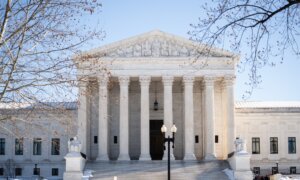
The federal government’s policy change came after a divided U.S. Supreme Court ruled on Dec. 23 that Trump may not deploy National Guard troops to Chicago to protect federal immigration agents.
“At this preliminary stage, the government has failed to identify a source of authority that would allow the military to execute the laws in Illinois,” the court said in an unsigned order. Justices Clarence Thomas, Samuel Alito, and Neil Gorsuch dissented.
Illinois and Chicago sued on Oct. 6 after War Secretary Pete Hegseth invoked Section 12406 of Title 10 of the U.S. Code to federalize up to 300 members of the Illinois National Guard and up to 400 members of the Texas National Guard for deployment in Chicago.
In its order, the Supreme Court acknowledged that federal immigration enforcement efforts “have encountered significant resistance, as well as some violence, in Chicago.”
The court said that the term “regular forces” in Section 12406 “likely refers to the regular forces of the United States military.” This means that the president may call the National Guard into active federal service only under that section when he is “unable” to execute federal law with the regular military.
The court said the federal government “has not carried its burden to show that [Section] 12406(3) permits the President to federalize the Guard” under his inherent authority as president “to protect federal personnel and property in Illinois.”
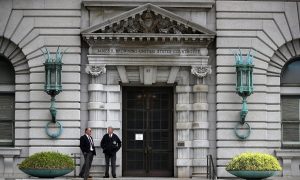
State officials in California and Oregon had also challenged Trump’s National Guard deployments.
California National Guard troops were taken off the streets of Los Angeles by Dec. 15 following a Dec. 10 ruling by a federal district court against the federal government.
On Dec. 12, a three-judge panel of the U.S. Court of Appeals for the Ninth Circuit temporarily paused a part of the Dec. 10 ruling that directed the federal government to restore control over the California National Guard to California Gov. Gavin Newsom.
On Dec. 31, the same day that Trump announced he was withdrawing the federalized California National Guard from Los Angeles, the Ninth Circuit lifted its stay of the control order. The panel noted in its new order that the federal government said in a Dec. 30 brief that it did not oppose lifting the stay.
Newsom, a Democrat, commented on the new ruling.
“The President deployed these brave men and women against their own communities and without regard for the constitution and federal law,” Newsom said in a statement.
National Guardsmen from California and Oregon were directed to Portland, but a federal judge issued an order blocking their deployment.
Trump also deployed the Tennessee National Guard to Memphis in September to combat crime, a move that the state’s Republican Gov. Bill Lee supported, but a state judge there blocked the deployment in November.
A federal appeals court on Dec. 17 allowed Trump’s use of District of Columbia National Guard troops in the nation’s capital to continue while an appeal of a lower court order blocking the deployment plays out.
The legal issues surrounding Trump’s use of the National Guard in the District of Columbia differ from those in cases challenging deployments in the states because D.C. is a federal enclave and not a state. The president is the commander-in-chief of the D.C. National Guard.
The appeals court said it was granting the federal government’s motion for a stay of the block pending appeal “because the District of Columbia is a federal district created by Congress, rather than a constitutionally sovereign entity like the 50 states.”
The federal government appears likely to prevail on the merits of its argument “that the president possesses a unique power within the district—the seat of the federal government—to mobilize the Guard,” the appeals court stated.
The ruling followed the Nov. 26 shooting of two West Virginia National Guard members stationed near the White House in Washington that left one dead and another in the hospital.
Before that, a West Virginia judge on Nov. 10 allowed the state’s Republican governor, Patrick Morrisey, to continue deploying members of the West Virginia National Guard to patrol the streets of the nation’s capital.
Illinois Gov. JB Pritzker, a Democrat, criticized the president after his Dec. 31 announcement.
“He lost in court when Illinois stood up against his attempt to militarize American cities with the National Guard,” Pritzker wrote on X.
“Now Trump is forced to stand down.”
Oregon Gov. Tina Kotek, a Democrat, said her office “has not yet received official notification that the remaining federalized Oregon National Guard troops can return home.”
“They were never lawfully deployed to Portland and there was no need for their presence,” she told The Epoch Times.
“If President Trump has finally chosen to follow court orders and demobilize our troops, that’s a big win for Oregonians and for the rule of law.”
California Attorney General Rob Bonta welcomed Trump’s announcement, saying that the deployment to “Los Angeles streets has left lasting scars in Angeleno communities.”
“There is a reason our founders decided military and civilian affairs must be kept separate; a reason that our military is, by design, apolitical,” Bonta said in a statement.
The Associated Press contributed to this report.