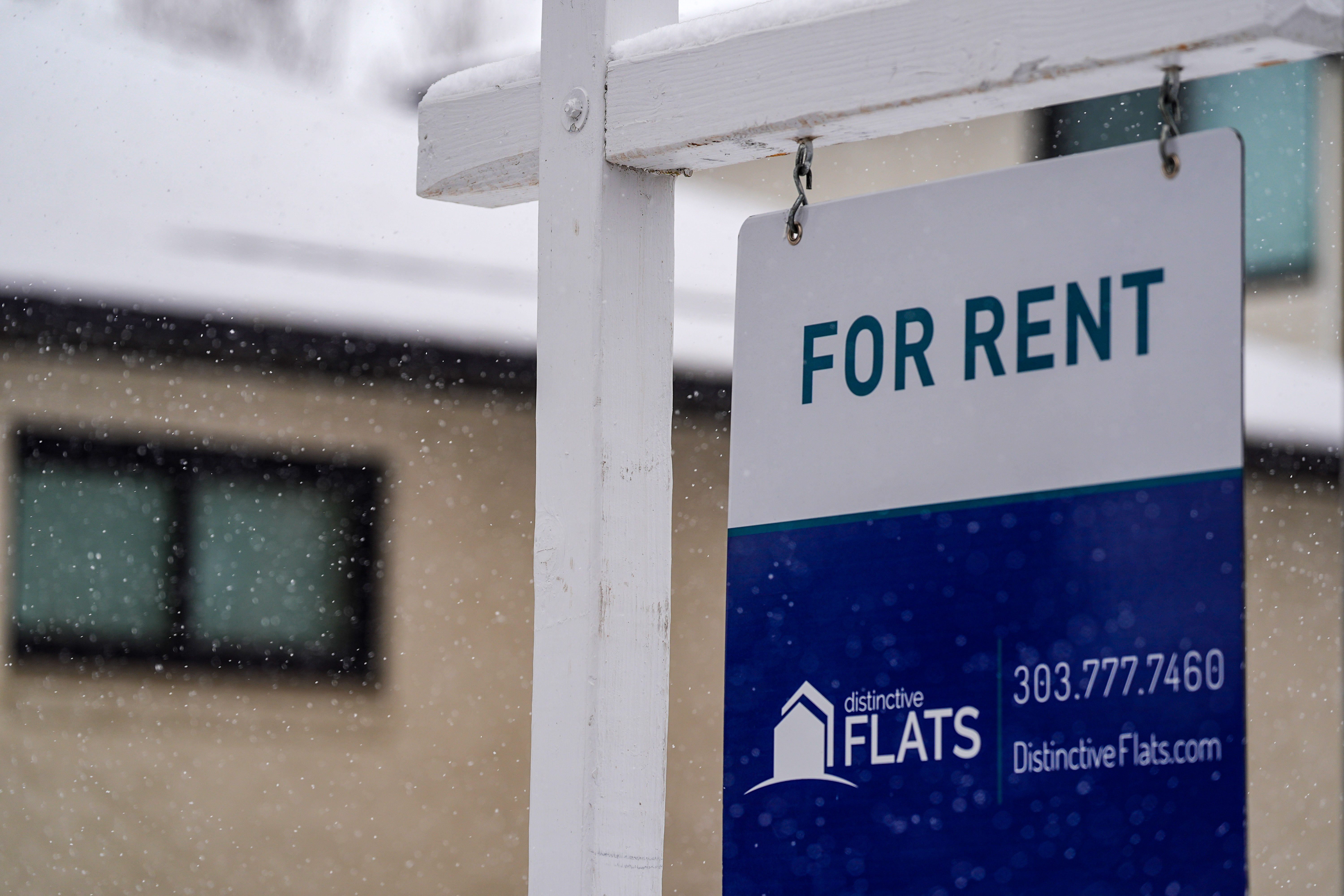

While homeownership remains a top goal for many Americans, an April 16 report from Realtor.com indicates renting is the more affordable option now in all 50 largest U.S. metros.
“A person moving into the typical rental spends less each month than someone buying a starter home today,” Realtor.com chief economist Danielle Hale said in a statement.
“As buying costs have eased in many markets, renters who are intentional about saving have a real opportunity to build toward a down payment faster than they might think.”
According to Hale, renters can save an average of $920 per month compared to the cost of buying, and those savings can be earmarked for a down payment when they are ready to purchase. She noted that savings can be substantial in markets with the widest percentage gaps between renting and buying.
Nationally, the median rent in March stood at $1,699—a 1.5 percent year-over-year decline and the 32nd consecutive month of annual declines for studio to two-bedroom apartments. While the median rent is still 17.5 percent, or $249, above pre–pandemic levels, it is still $95, or 5.4 percent, lower than its peak reached in August 2022.
Last month, the Austin, Texas, metro region offered the largest gap between renting and buying at 126.3 percent. In this scenario, renters could save about $1,719 per month, as the median monthly rent is $1,361 compared to the median monthly mortgage payment of $3,080.
The Seattle, Washington, metro region also offers a wide gap of 108.5 percent between the cost of renting and buying. There, renters will pay a median of $1,862 per month for an apartment, while buyers will spend a median of $3,882 per month on mortgage payments. As a result, Seattle renters can save more than $2,000 a month.
Other metros with significant savings for renters include: Phoenix, Arizona; San Francisco and Los Angeles, California; Dallas, Texas, and Columbus, Ohio.
“The decision to rent or buy is deeply personal, and every family will need to weigh their own circumstances, including closing costs, equity built over time, and the opportunity cost of a down payment,” the report reads.
It also indicates that households that purchase their first home by age 30 are likely to have a net worth 22.5 percent higher by midlife, compared with those who wait until their 40s.
However, the report states that while rental savings can be advantageous, overall, the gaps decreased by an average of $136 over the past year as mortgage rates fell and home prices dropped in some areas.
In some markets, homeownership makes more financial sense than renting, as the costs of each are so close.
In Pittsburgh, Pennsylvania, the median monthly rent was $1,459, while the median mortgage payment was just $64 more at $1,523. In Memphis, Tennessee, renters paid a median of $1,106 per month, compared with $1,296 for a mortgage payment. Baltimore, Maryland, and Orlando, Florida, also had smaller percentage gaps between renting and buying.
“What’s striking is that the crossover in these markets is being driven by two different forces,” Realtor.com economist Jiayi Xu said in a statement. “In Pittsburgh, it’s rising rents that are closing the gap. In markets like Memphis and Baltimore, buying costs are cooling faster than rents.”
In high-priced coastal areas, many potential buyers have no choice but to lease as the cost of owning a home remains out of reach. In San Jose, California, buying a starter home will cost 74 percent more per month than renting. There, the median mortgage payment is $5,701, compared with the median rent of $3,276.
“As we enter the spring season, we expect the median asking rent to tick up monthly—a typical seasonal pattern,” the report reads. “However, given the surge in multifamily construction over the past few years, we anticipate continued year-over-year declines.”