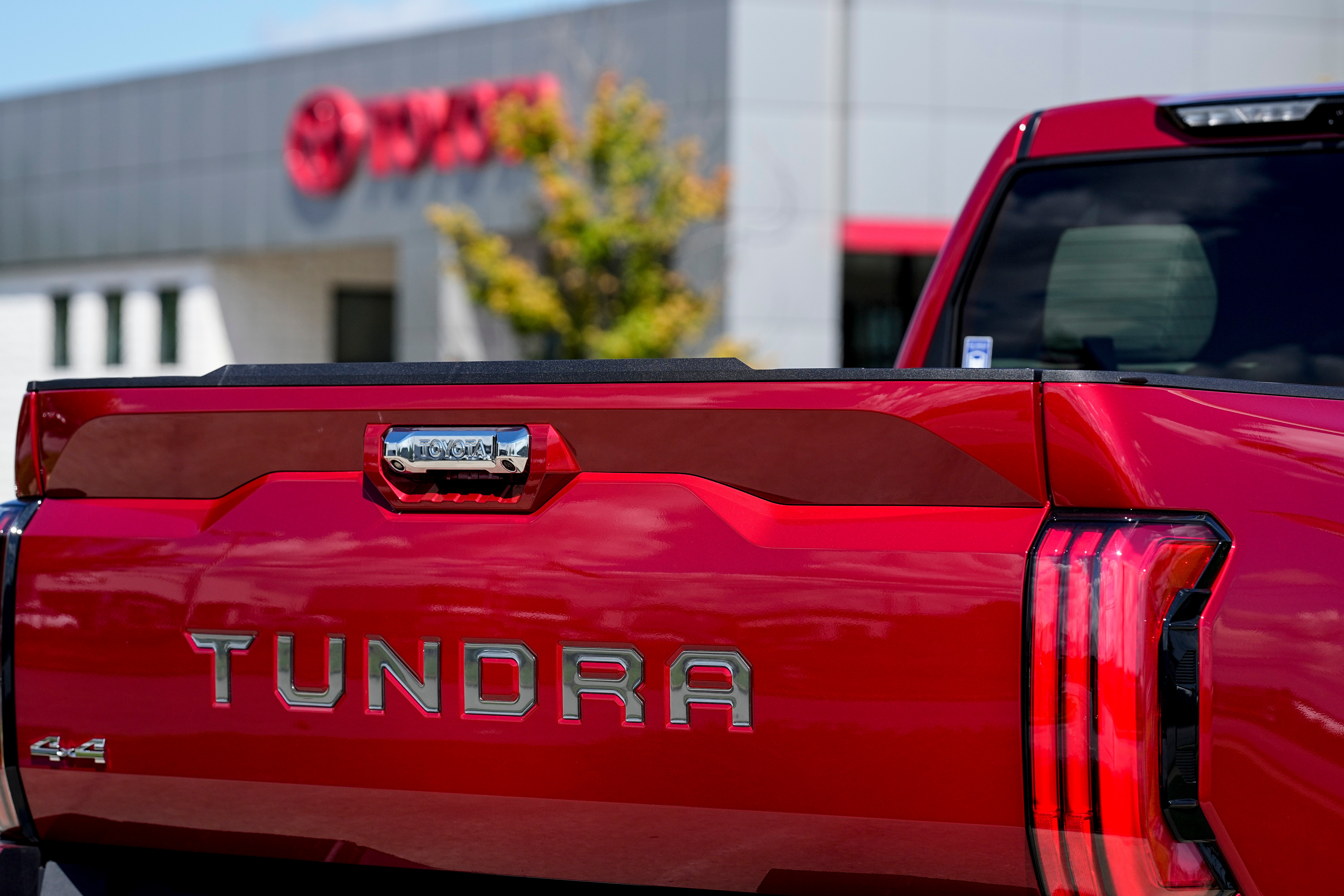

Toyota has issued a recall of 43,566 2024 Tundra vehicles equipped with a V35A engine due to malfunctions that could cause the engine to unexpectedly stall and lose drive power, the National Highway Traffic Safety Administration (NHTSA) reported.
The issue involves debris from the manufacturing process possibly contaminating the engine, causing a main bearing to fail, resulting in an engine stall and loss of drive power, which increases the risk of an accident.
Owner notification letters are expected to be mailed on July 6. While a solution is currently under development, owners may also contact Toyota’s customer service at 1-800-331-4331. The recall numbers are 25TB14 and 25TA14. Once the issue is solved, local dealerships will perform repairs free of charge.
The NHTSA report indicates that the stalling and loss of power can be preceded by engine knocking, a rough running engine, or the engine failing to start.
Toyota began its investigation of the issue between November 2025 and February 2026 by analyzing vehicles produced at an Alabama manufacturing plant.
In March, the company and its supplier tested the main bearings, applying pressure to them to simulate engine load and introducing the same type of debris found in the malfunctioning engines. A month later, testing was completed.
In early May, the results of the bearing analysis showed that bearings produced during the period under study had the same wear patterns in affected vehicles. The analysis concluded that the matching debris may not have cleared the engine during manufacturing and can cause stalling and loss-of-power issues.
As of May 13, the automaker had received 360 warranty claims related to engines but had no reports of accidents resulting from the malfunction.
In April, cars.com, a digital automotive marketplace, reported a similar recall involving more than 170,000 Jaguar Land Rovers with loss-of-drive-power issues. The recall involved a variety of models, including the Range Rover Sport, Discovery Sport, Range Rover Evoque, Defender, and Discovery.
In this case, the malfunction was attributed to a computer glitch in these mild-hybrid vehicles. According to the report, the DC-DC converter, which converts high-voltage DC power into low-voltage DC power, could fail due to an internal fault in the boost-control microchip, resulting in a loss of the 12-volt charging system. A solution to the problem is currently under development.
Toyota’s latest recall before this was in October 2025, when it recalled more than 591,000 vehicles with faulty instrument panels. Kelley Blue Book reported a software glitch had caused the instrument panel to fail to display speed, tire pressure, and other warning lights, increasing the risk of an accident.
The recall involved many different models, including the Toyota Venza, Highlander, Tacoma, Camry, and Crown Signia.