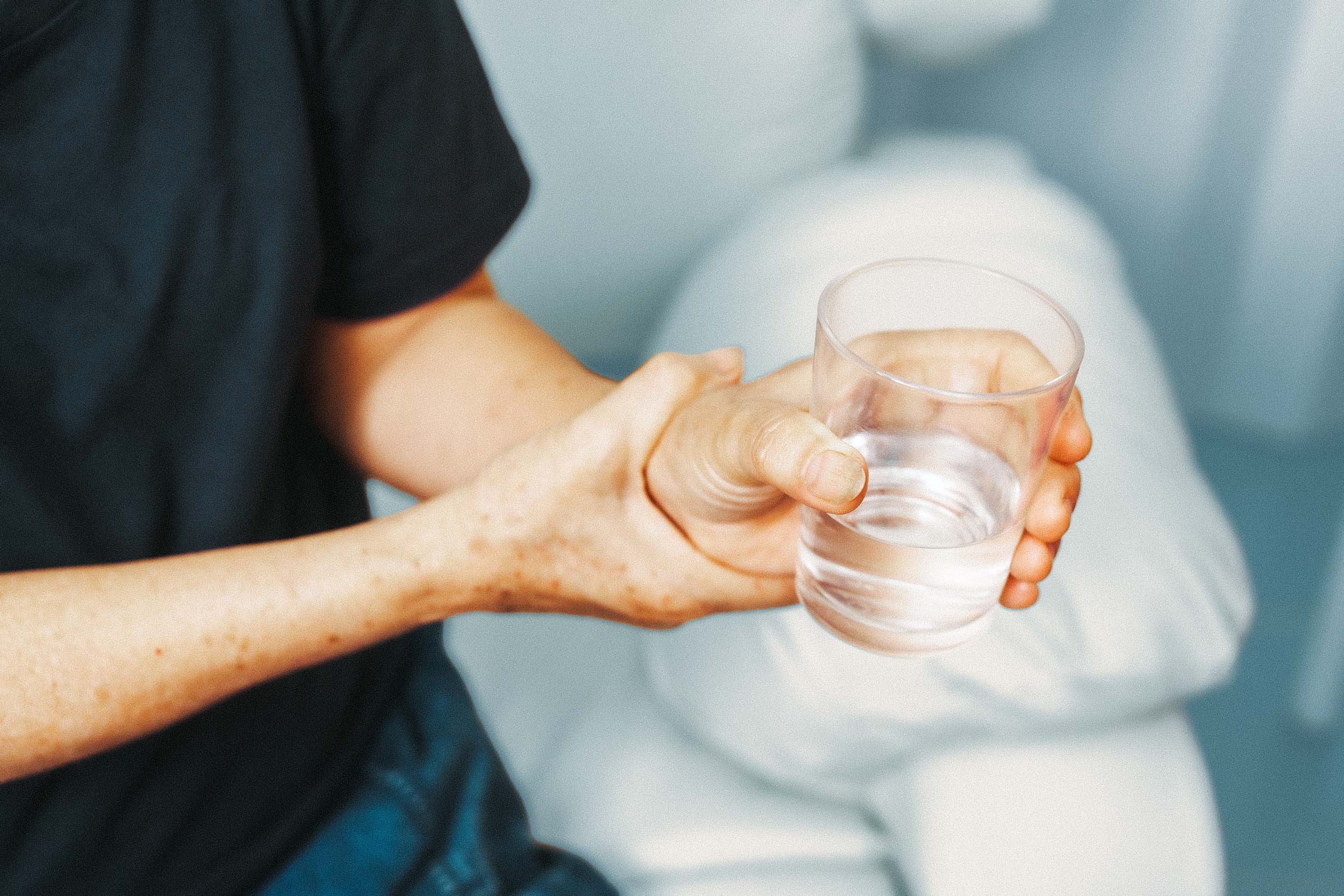
Mr. Xu recently experienced unsteadiness while walking and some “clunking” sound in his movements. He was subsequently diagnosed with Parkinson’s disease. After his doctor prescribed a low-dose medication, his symptoms improved, but he still felt a certain degree of unease in his movements.
Xu’s doctor said one approach was to increase his medication dosage but that Parkinson’s disease requires long-term medication. And once the dosage is increased, it is very difficult to reduce it. As an alternative, the doctor suggested that he try weight training. Xu chose the latter. After three months of regular exercise, especially core training to increase stability, combined with dietary adjustments, his symptoms improved without increasing his medication dosage.
During his follow-up visit, he said, “I can walk without any difficulty now.”
Dr. Chen Hui-hsuan, director of the department of neurology at Chang An Hospital in Taichung, Taiwan, shared this case in an episode of “Health 1+1” on NTD, a sister outlet of The Epoch Times, demonstrating that, in addition to medication, non-pharmacological adjustments such as exercise and nutrition are equally crucial in treating Parkinson’s disease.
Exercise Improves Neuronal Function
Parkinson’s disease is driven by the degeneration of dopamine-producing neurons in the brain, which gradually impairs movement, coordination, and balance. However, growing evidence suggests that exercise may help the brain use its remaining neural circuits more efficiently.
That makes strength training especially relevant. In a 2020 clinical trial, patients with mild to moderate Parkinson’s disease who completed nine weeks of progressive resistance training twice per week showed significant improvements in bradykinesia—the slowness of movement that is one of the disease’s hallmark symptoms—as well as better walking speed, mobility, and chair-stand performance. Researchers noted that gains occurred even though measured muscle strength changed little, suggesting that exercise may improve motor control and neural efficiency, not just muscle power.
Bradykinesia is often one of the most disabling features of Parkinson’s, affecting everything from walking and turning to getting out of a chair and using the hands. Improving those functions can translate directly into greater independence and lower fall risk.
Additional research suggests that exercise may also influence the disease more deeply at the brain level. A 2024 study cited by Chen found that people with early-stage Parkinson’s who completed six months of high-intensity interval training not only avoided motor decline but showed slight improvement, with signs that exercise may help preserve dopamine-related function.
Taken together, these findings suggest that exercise may benefit Parkinson’s patients in more than one way—by improving everyday movement and possibly helping preserve the function of remaining dopamine-producing neurons.
Exercise should be “personalized and always take safety first,” Chen said. Patients do not need to engage in strenuous exercise; a gradual and diversified approach, starting with brisk walking and aerobic exercise, followed by adding core muscle training, can also be helpful for their condition.
Chen shared another case of a patient in mid-stage Parkinson’s disease with symptoms improved after exercising. Mr. Lin had suffered from Parkinson’s disease for many years, had tried different medications, and often felt fatigued. Fatigue is common among Parkinson’s patients and is often difficult to alleviate with medication alone.
Lin consulted a fitness coach and a physical therapist, both of whom specialize in treating seniors, and he was guided through a gradual muscle-training program. Because of his poor digestion and absorption, he received intravenous nutritional supplements in addition to oral nutritional support. After exercise and nutritional conditioning, both his strength and mobility improved.
Beyond Exercise: What Else Can Help?
Exercise may be one of the most powerful tools in Parkinson’s care, but it is not the only one. According to Chen, combining movement with nutrition and lifestyle support may have a twofold benefit.
One nutritional target is dopamine support. Tyrosine, a precursor to dopamine, Chen said, is abundant in chicken, fish, eggs, and dairy products; vegetarians can obtain it from nuts and seeds—such as pumpkin and sesame seeds—legumes, quinoa, and oats.
Supplementing with vitamins and minerals such as vitamin C, the B complex, iron, zinc, and magnesium can support dopamine secretion and transmission.
Diet is crucial for patients with Parkinson’s disease. Studies have found a link between gut health and Parkinson’s disease. The gut affects the central nervous system through the vagus nerve, immune signals, and microbial metabolites. When the gut experiences chronic inflammation or increased permeability, it can trigger a systemic inflammatory response and promote neuronal inflammation and damage in the brain.
There is a close two-way communication system between the gut and the brain, known as the “gut-brain axis,” Chen said. Once the gut becomes inflamed, it alters intestinal permeability, allowing toxins to enter the bloodstream and circulate throughout the body more easily.
The gut may also produce abnormal proteins that are transmitted directly to the brain via the vagus nerve, which connects the gut and brain like a fast track. Therefore, the same abnormal protein accumulation may be found in both the brain and the gut.
To avoid inflammation in the gut and brain, Chen recommends increasing the intake of anti-inflammatory foods such as blueberries, vegetables, curcumin, and omega-3s, while avoiding inflammation-inducing foods such as high-fats and refined starches.
Abnormal function of the body’s “generators,” the mitochondria, can also trigger Parkinson’s disease, Chen said. To protect mitochondria, one should avoid exposure to toxins, manage chronic diseases, reduce unnecessary medication, and maintain a healthy diet, lifestyle, and emotional well-being.
Chen also advises patients to maintain good interpersonal interactions and social activities, which help build social cohesion and promote a positive mood. It is also important to develop a regular lifestyle and get enough sleep. These positive factors can promote brain health and stability, slowing brain degeneration rather than causing rapid decline, allowing patients to maintain quality of life.
Seek Medical Attention Promptly If Symptoms Appear
People need to be aware of the symptoms of Parkinson’s disease and to seek medical attention immediately if any abnormalities occur, Chen said.
Signs and symptoms of Parkinson’s disease include:
- Bradykinesia: Decreased dexterity in the hands, increasingly smaller handwriting, or slower walking with shuffling steps.
- Rigidity: Feeling stiffness in the limbs and a reduced range of motion.
- Restless Tremor: Rhythmic shaking that usually begins in a limb, most commonly in the hand or fingers.
- Postural Instability: Poor balance increases the risk of falls in later stages of the disease.
In secondary Parkinson’s disease, such as that caused by medication, vascular, or brain lesions, prompt treatment gives better results, and in some cases, symptoms can even be reversed, Chen said. For primary Parkinson’s disease, although it cannot be cured, the rate of degeneration can be slowed.