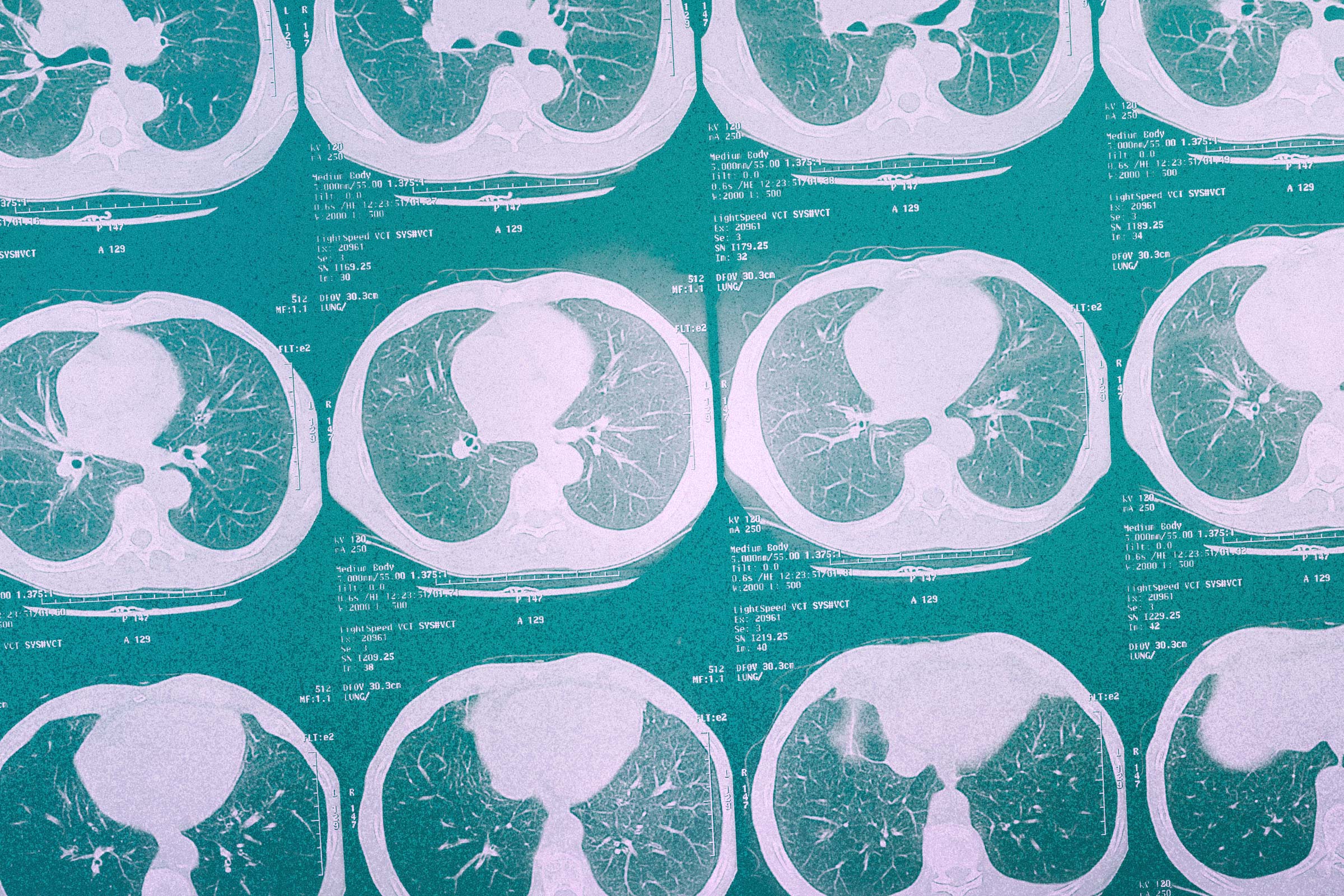
A 58-year-old man with a long history of smoking quit 10 years ago. On the advice of his family doctor, he underwent a low-dose CT scan, which revealed that a lung tumor had metastasized to the mediastinal lymph nodes, classifying it as localized small-cell lung cancer (SCLC). He immediately received chemotherapy, radiotherapy, and the latest immunotherapy. Now, more than a year later, no tumors can be found in his body, and he is in very good health.
Another case involved a 78-year-old man who had a chronic cough that he had ignored. Recently, his cough and breathing difficulties worsened, and he was taken to the emergency room. A CT scan revealed a large tumor in his lung that had metastasized to his liver.
Doctors recommended an immediate biopsy, but his family, concerned about the risks due to his age, delayed it for another week. By the time he was finally diagnosed with SCLC, his liver function had severely deteriorated, making him unable to tolerate any chemotherapy or immunotherapy. He was transferred to a hospice and soon passed away.
Dr. Yiwu Huang, an attending physician in the Department of Medical Oncology at Maimonides Medical Center in New York, recounted these two cases on “Health 1+1” on NTD, a sister outlet of The Epoch Times, highlighting the rapid progression and early metastasis of SCLC, and emphasizing that early screening is crucial for successful treatment.
Early Symptoms of Small-Cell Lung Cancer
There are two main types of lung cancer:
small-cell lung cancer (SCLC) and non-small cell lung cancer (NSCLC). SCLC, formerly known as “oat cell lung cancer,” begins with extremely small cancer cells that grow rapidly and metastasize to other organs. Due to its rapid spread, it is far more aggressive than NSCLC.
SCLC itself does not have a unique set of immediately identifiable symptoms, Huang said. Its early symptoms, including persistent cough, chest tightness, and coughing up blood, are often mistaken for more benign respiratory illnesses such as colds and bronchitis.
SCLC sometimes secretes specific hormones, he added, which can cause hyponatremia—low sodium levels in the blood. In addition, when a tumor in the chest cavity compresses a major blood vessel, it can obstruct blood flow, resulting in swelling of the face and neck.
If you are suspicious of serious lung disease, Huang said, you should seek medical attention immediately. Symptoms include worsening cough, recurrent pneumonia, weight loss, coughing up blood, facial swelling, and neurological symptoms.
Smoking: the Main Culpit
Smoking is the biggest risk factor for SCLC.
Studies indicate that 95 percent of SCLC patients have a history of smoking.
Air pollution also increases the risk of cancer. Long-term exposure to asbestos, silica dust, diesel exhaust, and certain heavy metals, or living in homes with radon, significantly increases the risk of cancer, especially for smokers, who are at higher risk of developing SCLC.
Self-Protection Strategies for High-Risk Groups
Given that early symptoms of SCLC are often subtle, and the disease progresses rapidly, proactive screening is crucial for early detection.
Screening Criteria
Huang outlined the current screening criteria for SCLC:
Age: 50 to 80 years old
Smoking History: A smoking history of 20 pack-years, meaning smoking one pack a day for 20 years, or two packs a day for 10 years, and currently smoking or having quit smoking less than 15 years ago
High-risk people who meet the above criteria should undergo a low-dose CT scan annually, he said. Low-dose CT uses a small amount of radiation, causing minimal damage to the body, but it can detect early-stage lung cancer.
Immunotherapy: Recent Advances in Treatment
Progress in the treatment of SCLC has been limited for many years until the recent introduction of immunotherapy, which has brought new hope to patients, Huang said.
SCLC is divided into two main types: “localized” and “metastatic.” For the former, where cancer cells are still confined to one side of the chest cavity, the standard treatment is chemotherapy combined with radiotherapy, and has a high potential for cure. The latest advancement is the addition of immunotherapy, which can significantly improve the cure rate.
For “metastatic” patients, where cancer cells have spread throughout the body, the current standard treatment is chemotherapy and immunotherapy. This has also significantly improved patient prognosis, extending average survival from approximately 10 months with chemotherapy alone to approximately 13 months.
When first-line treatment fails, new second-line drugs are available, such as lurbinectedin and the latest bispecific monoclonal antibodies. Huang described bispecific monoclonal antibodies as having two hands: one hand grasps the DLL3 protein on the surface of cancer cells, while the other hand directly pulls killer T cells to the side of the cancer cells, thus eliminating tumors more precisely and effectively, with relatively fewer side effects.
Clinical Trials Represent Cutting-Edge Treatment
Treatment for SCLC still requires significant development, and many clinical trials are underway. Dr. Deborah Wong, associate professor of oncology at UCLA, said on “Health 1+1” that existing treatments aim to control the disease, but cancer cells eventually develop drug resistance. Therefore, participating in clinical trials increases treatment options and provides an opportunity to use new drugs not yet on the market.
Regarding concerns from some patients about being assigned to the control group and not receiving optimal treatment, Wong noted that pure placebo groups are rarely used in lung cancer clinical trials. Patients are usually assigned to receive either experimental therapies or the best current standard of care to ensure that all participants receive similarly aggressive treatment. Clinical trials have many safeguards, she added, such as more frequent examinations, CT scans, and blood tests, to ensure safety and timely assessment of efficacy.
Dr. Stephen Liu, an associate professor and lung cancer specialist at Georgetown University, said on the “Health 1+1” program that while adjuvant therapies or traditional Chinese medicine (TCM) herbs may be effective, they should not be used to delay standard treatment, as doing so could lead to missed treatment opportunities.
Patients should discuss the use of medicinal herbs or supplements with their doctor to avoid interactions with chemotherapy drugs, he said, adding that “detoxifying” TCM herbs or antioxidants may counteract the cancer-killing effects of chemotherapy drugs, adversely affecting treatment.
We are not helpless against the formidable enemy of SCLC, Huang said. Quitting smoking, regular screening, and seeking medical attention promptly when lung symptoms appear are key to prevention and treatment.