
California Gov. Gavin Newsom criticized a Republican state leader for seeking to split up California in the wake of the governor’s redistricting effort to shrink conservative representation.
Assembly Republican Leader James Gallagher of Yuba City in Northern California introduced a resolution in the state Legislature on Aug. 27 to break off 35 inland counties. California has 58 counties.
Newsom’s office said Gallagher’s legislation is unlikely to succeed.
“A person who seeks to split California does not deserve to hold office in the Golden State,” Newsom spokesman Brandon Richards told The Epoch Times in an email. “This is a stunt that will go nowhere.”
The Republican lawmaker says the plan to redistrict the state—a move spearheaded by Newsom in response to Texas’s redistricting plan—would further silence rural voices and rig the political system against the state’s rural counties.
“For too long, our communities have been ignored—it’s time we had a voice of our own,” Gallagher said on social media Aug. 27.
Assembly Joint Resolution 23 would “finally give these areas a voice,” he said in a statement.
“California is run by politicians who don’t care because they don’t have to,” Gallagher said.
California’s Democrats currently hold every major state office and have supermajorities in both chambers of the Legislature.
Only nine of the state’s 52 congressional representatives are Republicans. Newsom’s new map, if passed by voters in November, would threaten five Republican seats.
Gallagher’s measure, if passed, would express the consent of the Legislature for specified counties to form a new state within the boundaries of California and would urge Congress to accept and embrace that consent.
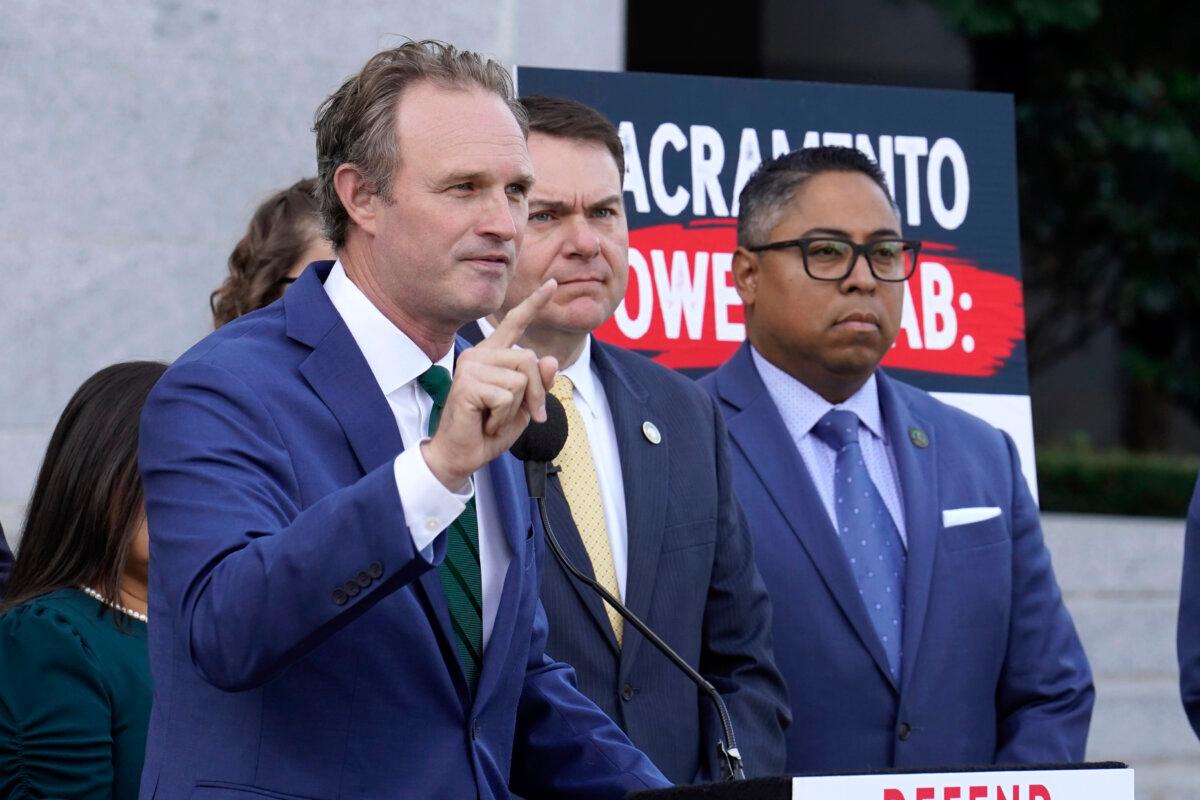
California Assembly Republican Leader James Gallagher of Yuba City speaks in opposition to a package of measures to redraw the state's congressional districts and put new maps before voters in a special election during a press conference in Sacramento on Aug. 21, 2025. (Rich Pedroncelli/AP Photo)
The counties targeted to secede from California are: Alpine, Amador, Butte, Calaveras, Colusa, Del Norte, El Dorado, Fresno, Glenn, Imperial, Inyo, Kern, Kings, Lassen, Madera, Mariposa, Merced, Modoc, Mono, Nevada, Placer, Plumas, Riverside, San Bernardino. San Joaquin, Shasta, Sierra, Siskiyou, Stanislaus, Sutter, Tehama, Trinity, Tulare, Tuolumne, Yuba, and any others that vote to join the effort.
The counties represent about one-fourth—nearly 10.5 million—of California’s nearly 40 million residents.
The new state would be among the top 10 most populous in the nation. The area covers most of Northern California, the Sierra Nevada, the Central Valley, and the Inland Empire.
“I have come to see that the only way we can obtain proper attention is by pursuing our own statehood,” Gallagher said. “We will not be subject to a state that deprives us of a fair voice. Gavin, let my people go.”
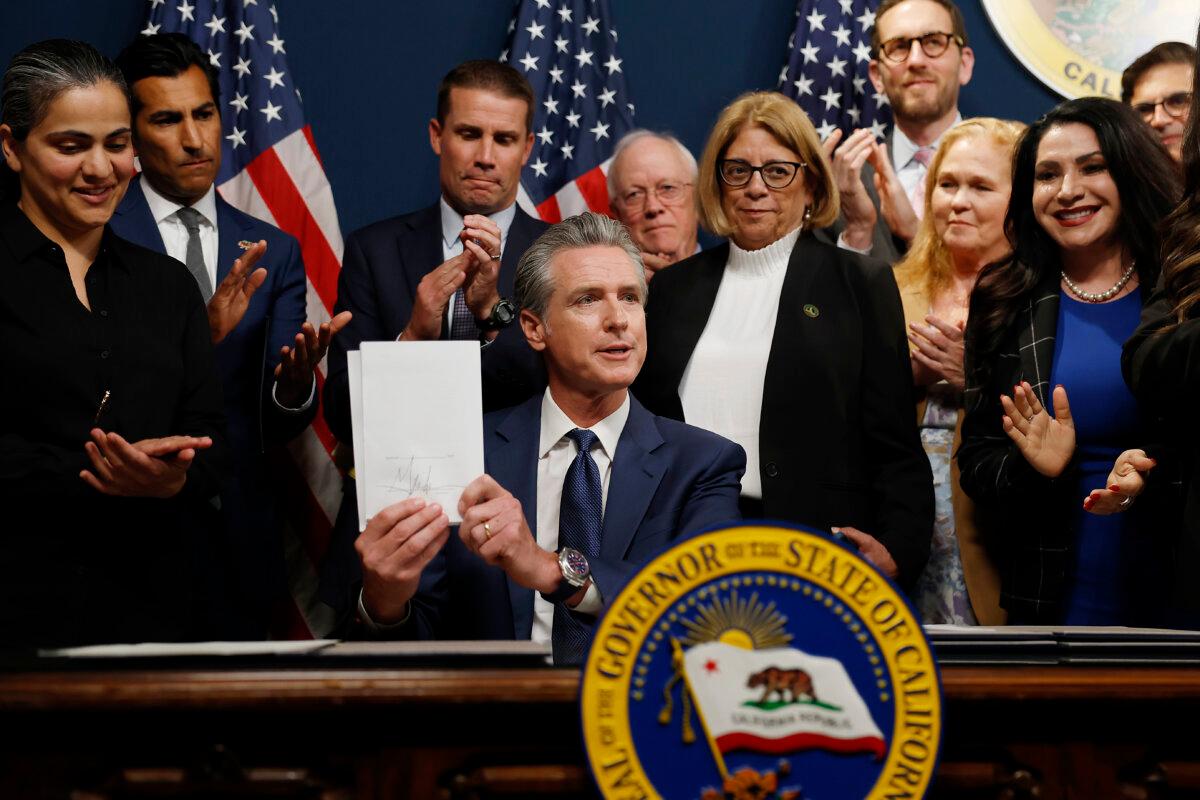
California Gov. Gavin Newsom signs bills that would lead to new California congressional maps in Sacramento on Aug. 21, 2025. (Justin Sullivan/Getty Images)
The population in the new state would be 45 percent Hispanic and 35 percent white, with other smaller percentages of Asian, black, American Indian, Pacific Islander, multiracial, and other groups.
Gallagher’s proposal to secede from California is one of many attempts through the years. At least 220 attempts have been made since 1850, when California was born, according to the California State Library.
Most recently, a group of citizens in El Dorado County, east of Sacramento, decided to explore a plan to form their own state in 2023.
The Republic for El Dorado State members said a lack of representation was a major reason for their efforts.
“The residents of El Dorado County have no local, state, or congressional representation,” the group posted on its website. “None of the state or federal representatives that serve El Dorado County live in El Dorado County.”
In 2022, voters further south in San Bernardino County passed a measure to hire an outside consultant to study whether the county had enough resources to secede. Some county residents sought to start a new state called “Empire” or join either Arizona or Nevada.
However, the study found the county would be better off staying in California. The secession faced significant challenges and would likely result in a significant reduction in the level of government services for county residents, according to the study.
Any proposed secession hinges on the U.S. Constitution, which declares no state can be formed within the jurisdiction of any other state without the consent of the legislatures of the states and Congress.