
Concrete work toward humanity’s first moon base will begin around the lunar south pole this year, NASA leadership announced on May 26.
Beginning this fall and continuing through the end of the year, three unmanned missions will venture to Shackleton Crater, the area of the moon targeted for the first human landing since 1972.
These are the first of more than two dozen missions planned across the next three years, representing hundreds of millions of dollars in contracts awarded to private companies.
Using a variety of landers, rovers, scientific payloads, and cutting-edge robotic technologies, NASA is set to commence serious scouting of the place it picked to host humanity’s first home beyond Earth.
Here is what to know.
Moon Base Missions
Moon Base I will launch this fall. Blue Origin’s uncrewed Blue Moon MK-1 lunar lander, Endurance, will land at a strategic location near Shackleton Crater, paving the way for human landings, NASA Administrator Jared Isaacman said.
Endurance will be equipped with special cameras to study how much dust is kicked up by the thrusters, as well as a laser array to help orbiting spacecraft more accurately locate spacecraft on the surface.
This will be the first mission for Blue Origin’s lander, which is already relatively far along in its development, completing a series of tests at Johnson Space Center in Houston this year.
A successful unmanned mission of the lander technology is a crucial prerequisite for any lander to be chosen by NASA to return humans to the surface of the moon.

Moon Base II will launch in late 2026 and deliver the largest payload to date to the lunar surface. A lander built by the company Astrobotic will deliver more than 1,100 pounds of cargo, including a lunar rover built by the company Astrolab, marking the first test of year-round rover technology that must do much more than simply carry astronauts across the surface.
“We need them to be on the surface, doing things that basically prospect the surface, scope around to potential landing sites, or go to areas of deep scientific objectives,” Moon Base Program Executive Carlos García-Galán said.
Moon Base III is also slated to launch before the end of 2026 and serve as the first international mission. A lander built by Intuitive Machines will carry a NASA payload designed to study how the lunar surface changes in the harsh environment of space. It will also carry payloads from the European Space Agency and the Korea Astronomy and Space Science Institute.
25 Moon Base Missions
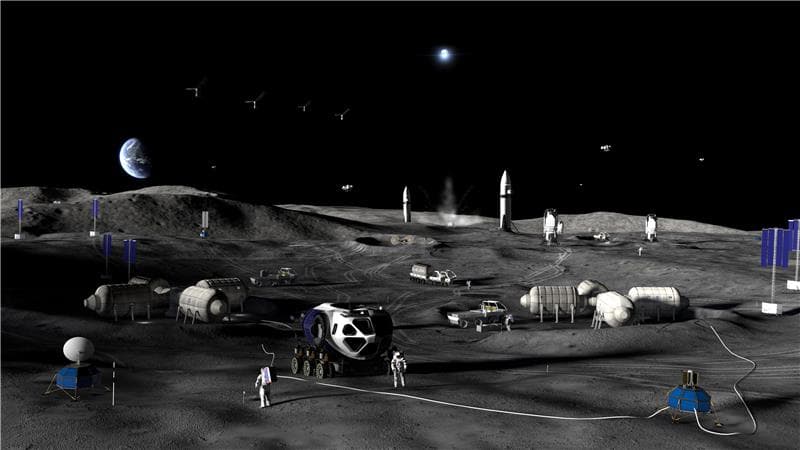
These are only the first three of 25 missions planned between 2026 and 2029 as part of NASA’s first phase of Moon Base development—21 of which will land and deploy assets on the lunar surface.
One of those later missions will feature a second unmanned lunar rover variant in fall 2027. That robot will embark on a 100-day mission to search for ice and other usable resources.
Another will deploy a network of drones. Developed by NASA’s Jet Propulsion Laboratory, the drones will capture readings and high-quality imagery of the lunar south pole’s hard-to-reach terrain. They will also test so-called survive the night technology, continuing the mission despite the two-week-long lunar night.
Blue Origin is also expected to deliver two astronaut-rated lunar rovers to the surface by 2028. Both will be able to hold two astronauts and operate autonomously or remotely.
Those vehicles will come from Astrolab and Lunar Outpost; feature work from Axiom Space, General Motors, and Goodyear, among other companies; and cost about $200 million each.
These rovers are expected to travel 200 kilometers (124 miles)—four times the distance any rover has ever traveled on the moon or Mars—reach speeds exceeding 10 kilometers per hour (six miles per hour), and conquer slopes of 20 degrees.
A lunar rover is expected to be staged on the surface ahead of Artemis IV.
NASA leaders confirmed that each Blue Origin MK-1 lander mission would cost $234 million.
NASA plans to announce another dozen missions later this year.
Artemis III Crew Coming Soon
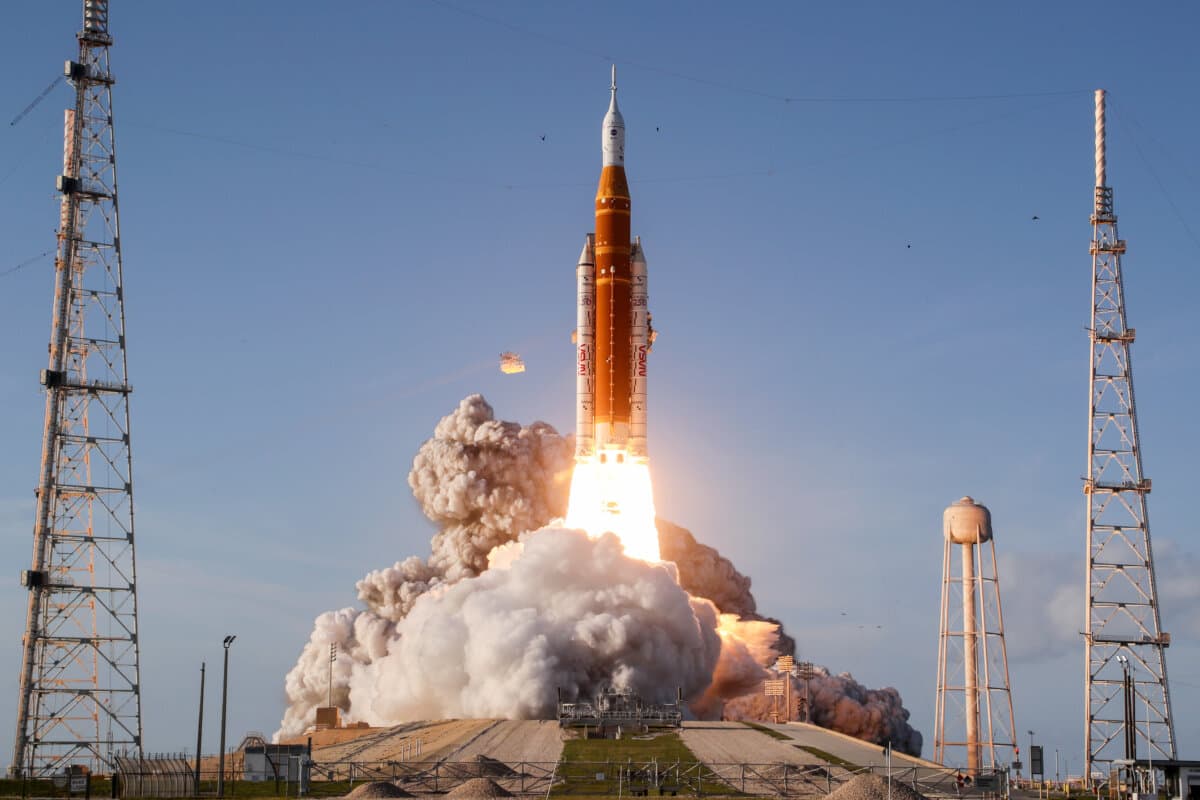
The crewed missions of NASA’s Artemis program continue to progress toward their respective launches.
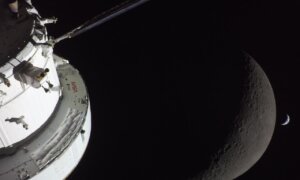
Following Artemis II’s historic flight around the moon in April, Artemis III will link up with the human-rated lunar landing spacecraft in low Earth orbit. Those landers will be Blue Origin’s crew-carrying Blue Moon MK-2 lander and a variant of SpaceX’s Starship called the Human Landing System. Artemis III is also expected to test the new spacesuits currently in development for moon walks.
NASA announced that it will unveil the Artemis III crew on June 9, along with a detailed update on the mission’s progress.