
HOUSTON—After more than half a century of abandonment, humanity’s first pathway to another world has been rediscovered, and a traffic jam of dreams and ambitions has begun to pile up awaiting its full reopening.
From April 1 to April 10, NASA’s Artemis II mission took NASA’s Reid Wiseman, Victor Glover, and Christina Koch, as well as Jeremy Hansen of the Canadian Space Agency, around the moon and back for the first time since December 1972.
They traveled farther from Earth than anyone else in human history, and they saw things no human eyes had seen. Aside from a few nuances, their flight plan arguably appeared less ambitious than the Apollo missions in many ways. The crew spent a couple of days in the lunar sphere of influence, but they did not park in lunar orbit or attempt to land.
It was just a flyby. That flyby laid the foundation for a NASA-led effort to return to the lunar surface and establish a permanent human presence there, with international partners, before the Chinese communist regime.
Test Flight
Before more boots could be placed on the lunar surface, NASA needed to prove that its moon ship could get astronauts there safely. Enter Artemis II.
Wiseman, Glover, Koch, and Hansen became the first astronauts to launch into space atop NASA’s moon rocket, the Space Launch System, and aboard the Orion spacecraft.
These vehicles will be essential for at least the next three Artemis missions. The first manned flight showed how a four-person crew will live and work inside the new capsule—everything from executing mission objectives, while another crew member conducts daily exercises, to stowing cargo.
They also exposed a fully loaded crew capsule to the extremes of deep space, specifically radiation exposure, and tested deep-space communication systems. They also tested out the service module, which housed the crew’s propulsion, life support, and power systems. Those tests included seeing how the solar-powered service module handled being in darkness for nearly an hour.
This mission also met other objectives specifically applicable to future missions.
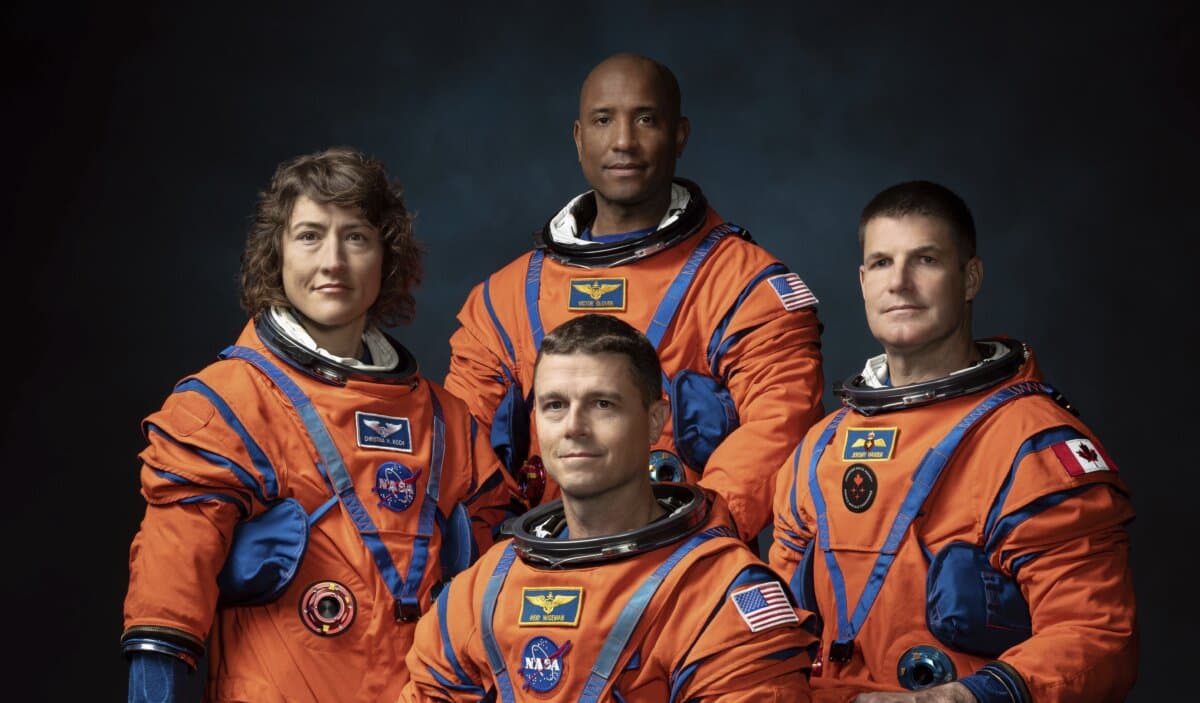
NASA astronauts Christina Koch (L), Victor Glover (rear C), Reid Wiseman (C), and Canadian Space Agency Astronaut Jeremy Hansen (R) at the Johnson Space Center in Houston, on March 29, 2023. (Josh Valcarcel/NASA via AP)
Artemis III is scheduled to fly in mid-2027. Its mission will focus on demonstrating rendezvous and docking capabilities with human-rated lunar landing spacecraft currently under development by Blue Origin and SpaceX.
Before that mission could go ahead, Artemis II had to demonstrate Orion’s maneuverability, specifically the manual flight capabilities that would be essential for docking. With Glover at the controls, the entire crew participated in a proximity operations test while in high Earth orbit, using the rocket’s upper stage as a target. Other manual flight tests were performed at other points throughout the mission, including testing how the Orion spacecraft compensates when thrusters are disabled.
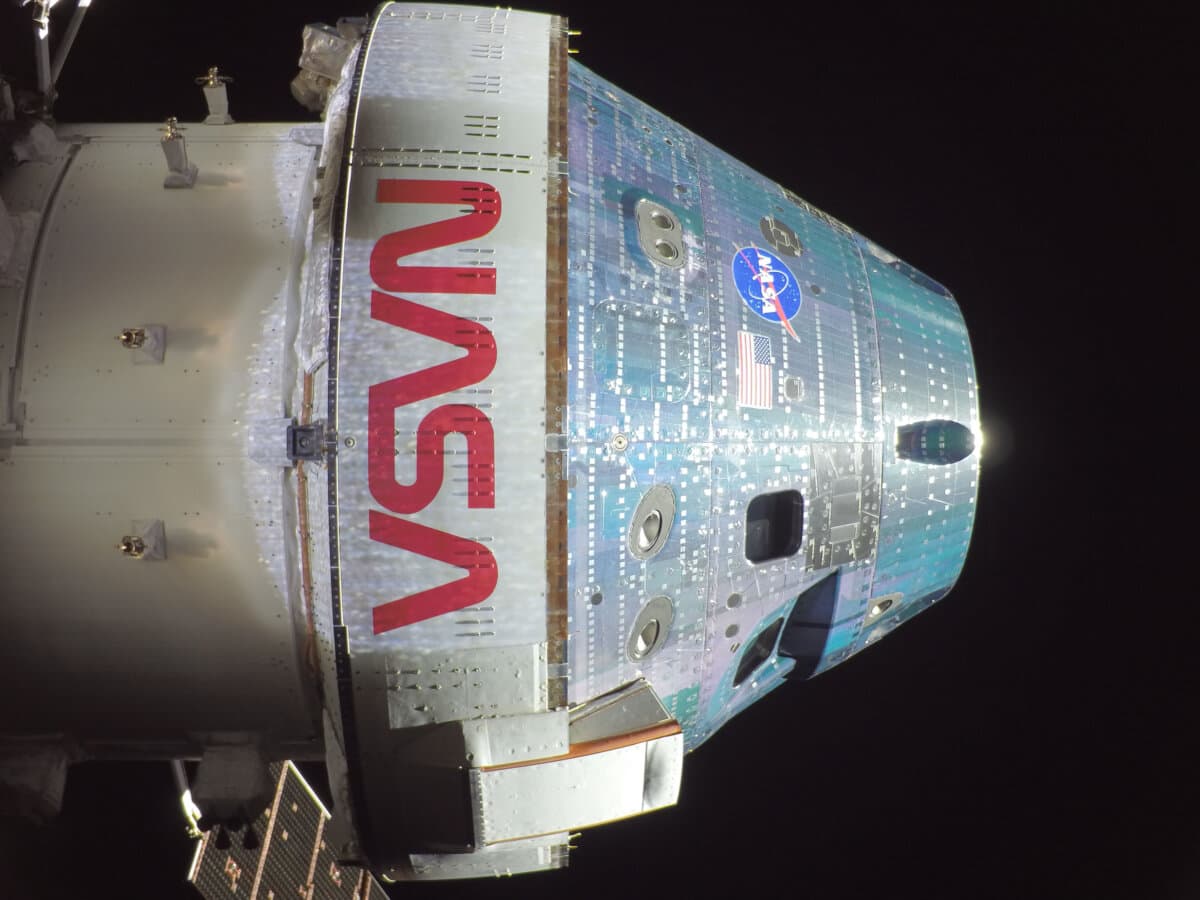
Orion snapped this high-resolution selfie in space with a camera mounted on one of its solar array wings during a routine external inspection of the spacecraft on the second day of the Artemis II mission. (Courtesy of NASA)
NASA Administrator Jared Isaacman said in an April 13 post on X that with the Artemis II mission complete, the space agency is preparing “to roll Artemis III into the [Vehicle Assembly Building].”
“Artemis III will rendezvous with our partners in earth orbit as we continue building toward the @NASAMoonBase,” Isaacman added.
In a video accompanying the post, he said, “We’re going to roll that into 2027 with Artemis III, and then Artemis IV in 2028 ... we are going to take what we learned from III and bring those astronauts to the surface of the moon.”
Artemis missions will launch every year, with Artemis IV landing on the Moon in 2028.
Artemis IV is currently scheduled for early 2028.
Expanding Access, Cosmic Reach
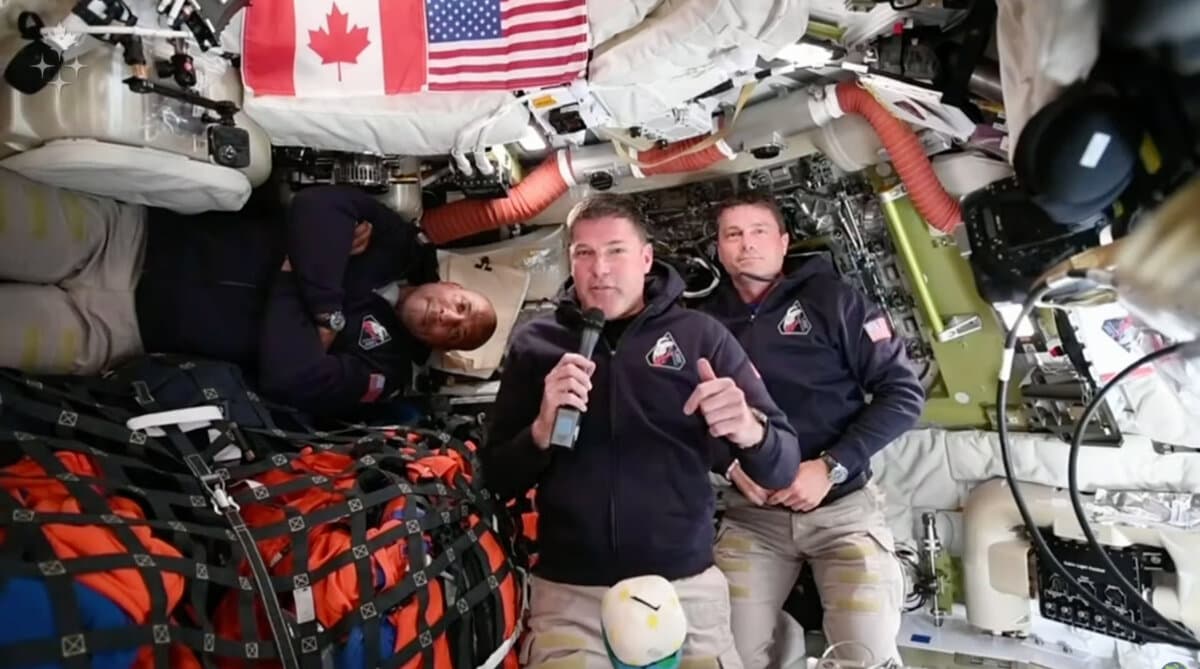
Artemis II astronaut Jeremy Hansen, of Canada, connects live from the Orion spacecraft and speaks with Canadian media along with NASA astronauts Victor Glover (L) and Reid Wiseman on April 4, 2026. (The Canadian Press/AP/Canadian Space Agency)
Artemis II’s crew and service module also demonstrated the United States’ intention to return to the moon not alone, but with a consortium of international and commercial partners.
Hansen became the first non-American to travel beyond low Earth orbit and around the moon, and the service module was provided by Airbus and the European Space Agency.
Just over a week before launch, Isaacman announced that NASA was expediting plans to build a permanent base on the lunar surface over the next decade, and he said that it would be an endeavor shared by other nations that have already aligned with the United States through cooperation in the International Space Station and the Artemis Accords.
Some members of that alliance are the Canadian Space Agency, the European Space Agency, and Japan’s Aerospace and Exploration Agency. Industry partners such as SpaceX and Blue Origin will also play a crucial role in the base’s development.
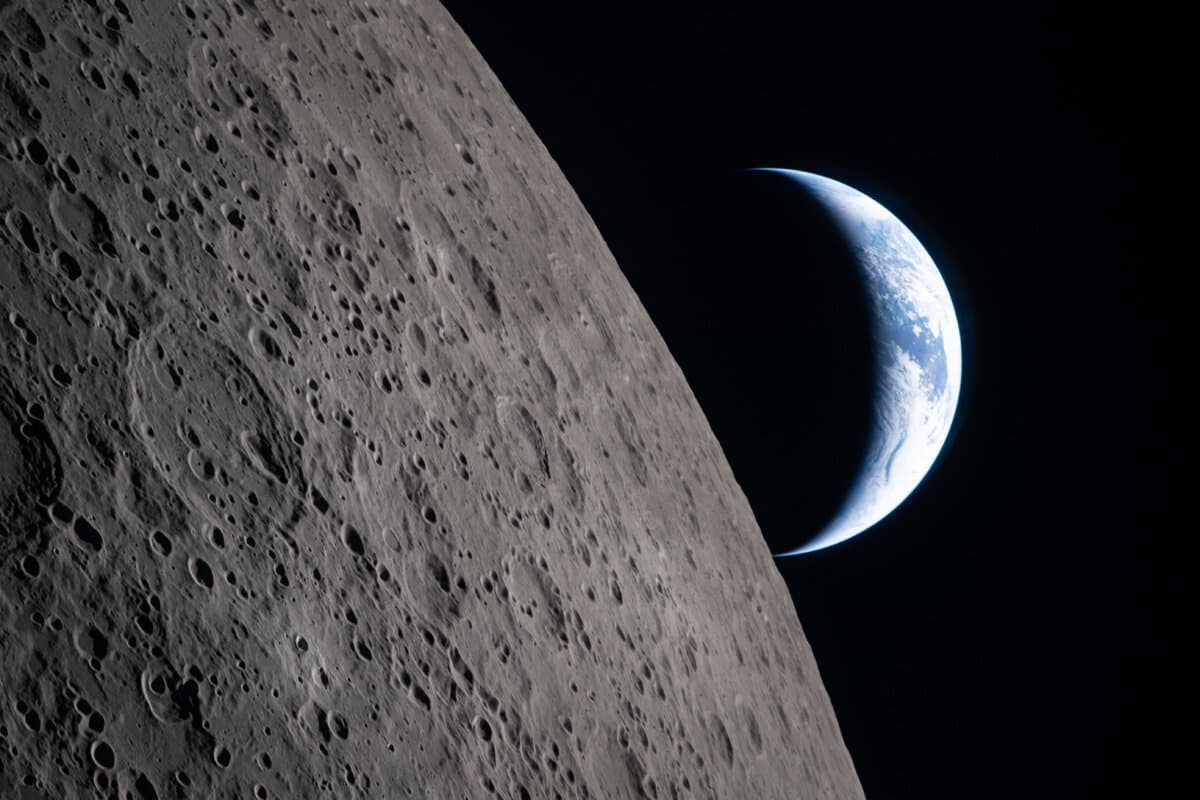
The Artemis II crew came close to passing behind the Moon and experiencing a planned loss of signal; they captured this image of a crescent Earth setting on the Moon’s limb on April 6, 2026. (NASA via Getty Images)
NASA officials said that the base will be located near the South Pole around the Shackleton crater. At that latitude, crater bowls remain permanently dark, and it is in those dark corners of the lunar surface that NASA suspects frozen water could be found. If found, it could be the key to establishing a sustainable human presence on the moon. It could also be used as a fuel source.
Ultimately, the moon base would be a stepping stone to manned missions to Mars. But none of those plans could move forward until Artemis II made the first step and proved the new moon rocket and Orion spacecraft could deliver astronauts safely around the moon and back.
“I hope we’re forgotten,” Wiseman said during a news conference last September. “If we are forgotten, then Artemis has been successful. We have humans on Mars. We have humans out on the moons of Saturn. We are expanding into the solar system.”
Inspiring a New Generation

People gather to watch the launch of Artemis II from the A. Max Brewer Bridge in Titusville, Fla., on April 1, 2026. (Gerardo Mora/Getty Images)
Artemis II’s purpose went beyond functional demonstrations. It also carried a duty to inspire the world. NASA will need to rally a new generation of engineers, scientists, pilots, and explorers behind it to make its lunar dreams come true, and Artemis II became a call to action.
The crew captured images of the moon, Earth, and a solar eclipse that appeared to have as much romantic purpose as scientific. A near-constant live stream from inside their Orion spacecraft allowed the world to share in the crew’s laughs, messages of unity and love, and mission updates.
“Artemis II will always be remembered,” Isaacman told Wiseman after the mission. “It was the moment we all saw the moon again, where childhood dreams became missions. You helped the world start believing again, and this is something no one’s ever going to forget.”
“On behalf of NASA and the space-loving community from around the world, thank you for showing us your courage, your professionalism, your unity, and your humanity,” he said. “Thank you for showing us the moon again. Thank you for showing us planet Earth again, and thank you for contributing to the greatest adventure in human history.”
Across social media platforms, parents shared footage of their sons and daughters playing astronaut as they watched three men and one woman fly to the moon as representatives of the entire world, and an example of how merit trumps all demographics of race, nationality, and sex.
“I also hope we are pushing the other direction, that one day we don’t have to talk about these firsts,” Glover said in a pre-launch press conference. “That one day ... this is human history. It’s about human history. It’s the story, not black history, not women’s history, but that it becomes human history.”
Beating the CCP
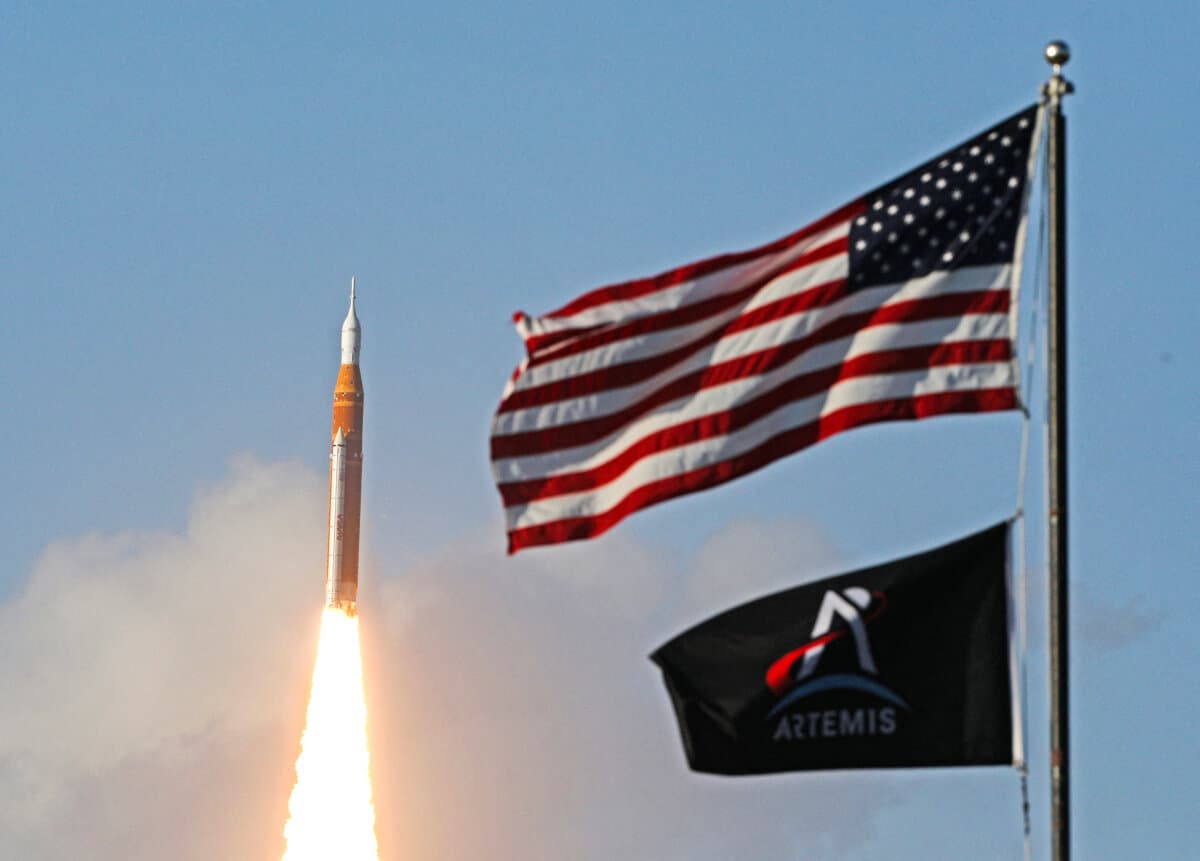
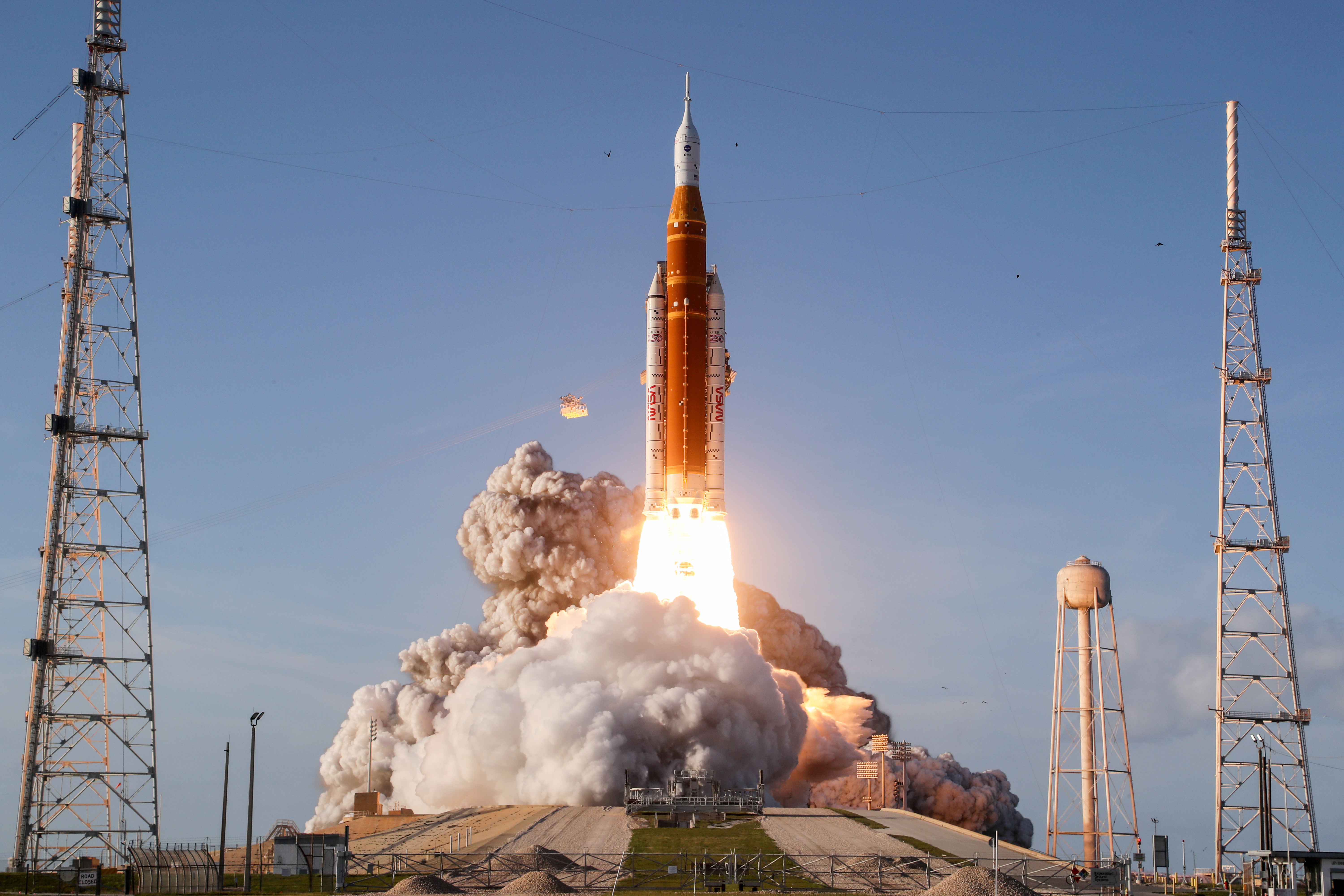
The Artemis II crewed lunar mission launches at Kennedy Space Center in Cape Canaveral, Fla., on April 1, 2026. (Gregg Newton/AFP via Getty Images)
What group of humanity will win the race to be that representation of all of humanity?
U.S. President Donald Trump issued an executive order in December, directing his administration to return astronauts to the lunar surface by 2028 through the Artemis program, and to begin establishing a permanent lunar outpost by 2030.
The Chinese Communist Party announced plans in 2023 to put its “taikonauts” on the moon by 2030.
It is a new space race that the United States and its partners hope to win, and it is a race not just to put boots on the ground for the first time in this millennium, but also to stake a claim to the South Pole and establish an outpost for the entire free world.
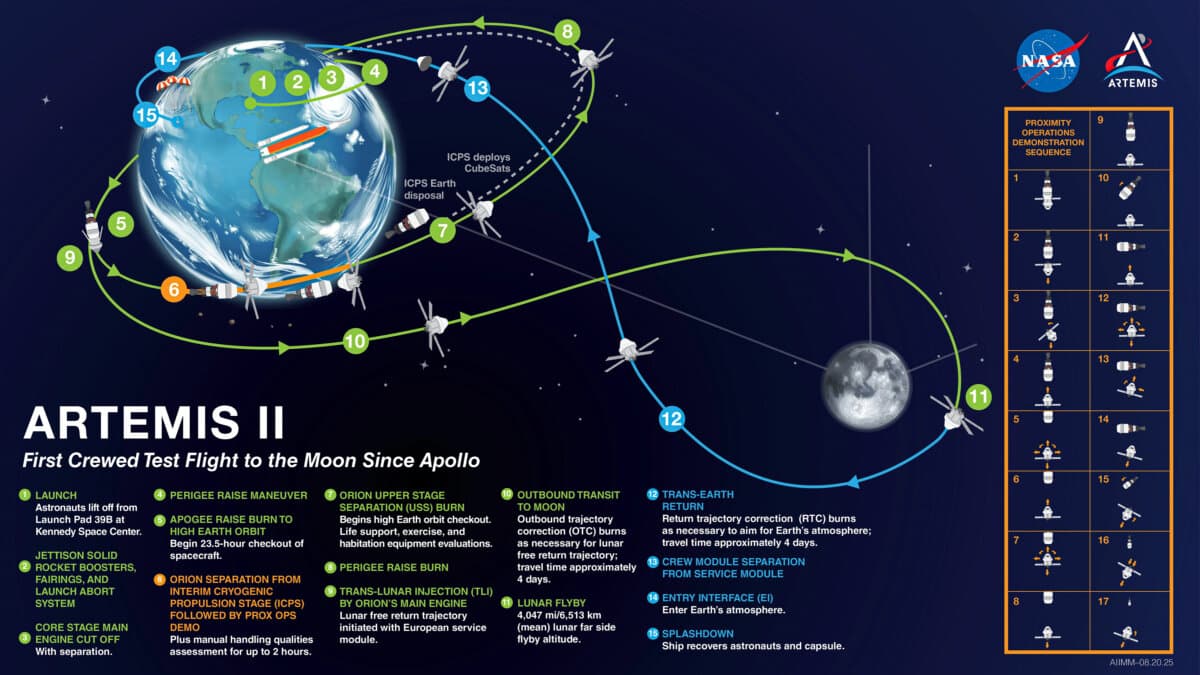
The Artemis II mission paves the way for Artemis III, which aims to return Americans to the lunar surface. (Courtesy of NASA)
Isaacman and lawmakers on both sides of the aisle have continued to emphasize that it is imperative that the United States beat China in the race to the moon for economic and national security reasons.
“We have to be first,” Rep. Mike Haridopolos (R-Fla.), chairman of the House Space subcommittee, said in an interview with Fox News before the launch of Artemis II. ”The Chinese do not share our values. Who knows what they do to the moon should they get there first? You can’t be number one on Earth if you’re number two in space.”