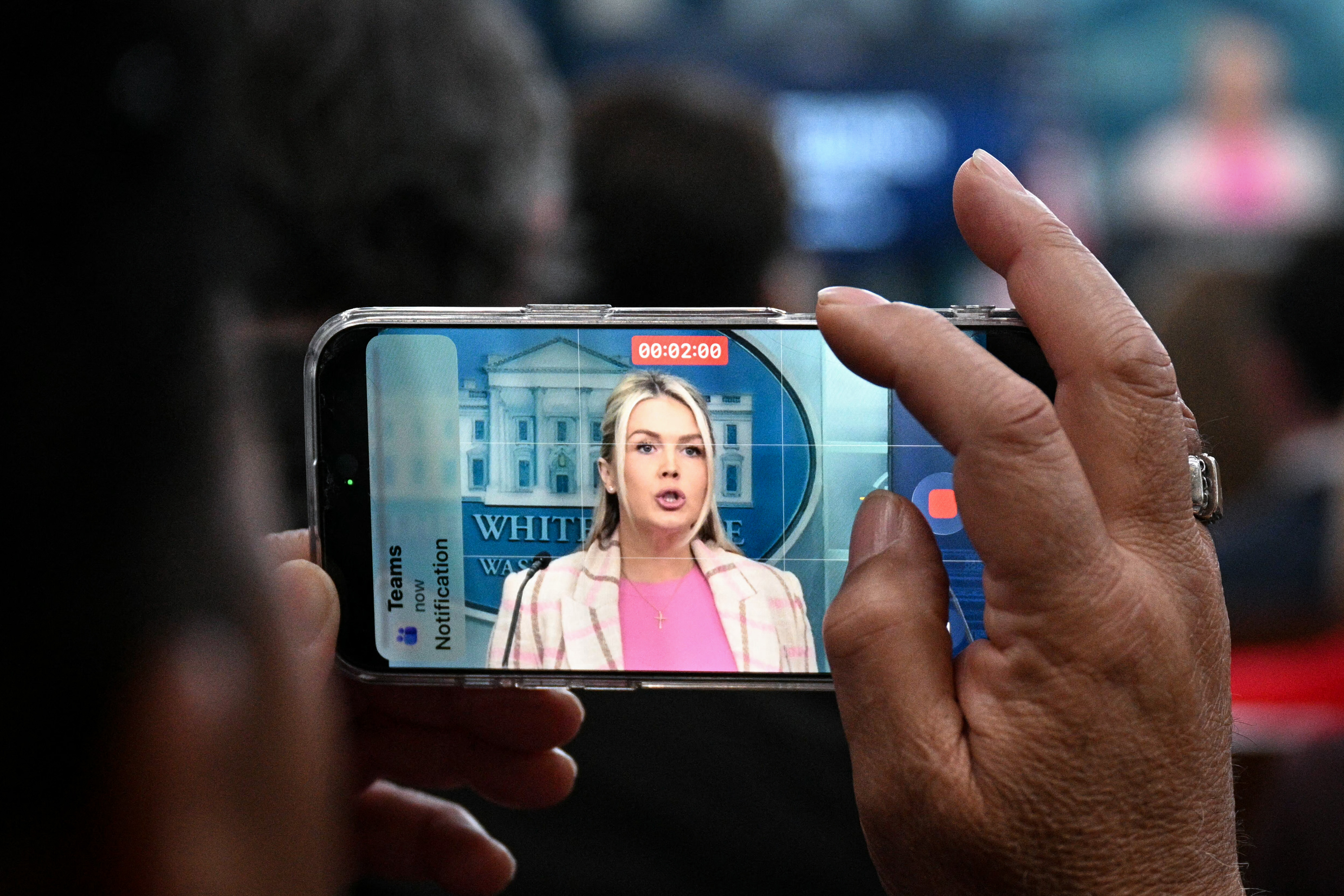

White House press secretary Karoline Leavitt said Tuesday that President Donald Trump will determine when the Iranian regime has surrendered unconditionally, a prerequisite to the termination of Operation Epic Fury.
“Ultimately, the operations will end when the commander-in-chief determines the military objectives have been met, fully realized, and that Iran is in a position of complete and unconditional surrender, whether they say it or not,” Leavitt said during a briefing at the Executive Mansion, adding that the hardline regime might not admit defeat.
“When President Trump says that Iran is in a place of unconditional surrender, he’s not claiming the Iranian regime is going to come out and say that themselves.”
She further defined the surrender as a situation where Iran’s missile stockpile is destroyed and its capacity to develop nuclear weaponry is eliminated.
“What the president means is that Iran’s threats will no longer be backed by a ballistic missile arsenal that protects them from building a nuclear bomb in their country,” Leavitt said.
“So, President Trump will determine when Iran is in a place of unconditional surrender when they no longer pose a credible and direct threat to the United States of America and our allies.”
Israeli and U.S. forces struck Iran on Feb. 28, with the president and Department of War estimating a timeline of four to five weeks to destroy Iran’s navy and military infrastructure, and complete the mission to prevent the nation from obtaining nuclear weapons.
Trump and administration officials made remarks in recent days signaling a potentially quicker end to the operation.
“We know that the U.S. military and our brave war fighters are quickly and expeditiously executing these objectives well ahead of schedule,” Leavitt said.
“Ten days in, this campaign has been a resounding success thus far, and America’s warriors are winning this important fight at an even faster pace than we anticipated.”
The joint military operation struck more than 5,000 targets, reducing Iran’s missile and drone attacks by more than 90 percent and approximately 85 percent, respectively, according to the press secretary.
Iran’s navy has lost a drone carrier ship and more than 50 vessels since the war began.
“The trend is clear,” Leavitt said. “U.S. combat capabilities are increasing and growing more lethal and dominant by the day, while the Iranian terrorist regime’s ability to respond has rapidly declined.”
Airstrikes led by B-2 bombers are now targeting Iran’s missile production facilities with clusters of 2,000-pound bunker-penetrating munitions, she said.
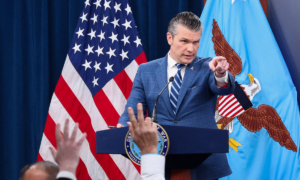
Secretary of War Pete Hegseth told reporters at a briefing on March 10 that the “most intense day” of the war was underway.
“The most fighters, the most bombers, the most strikes,” Hegseth said. “Intelligence [is] more refined and better than ever.”
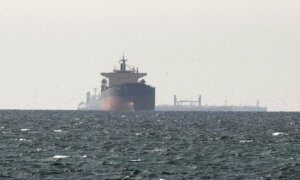
Operations are prioritizing the free flow of oil through the Strait of Hormuz. Trump vowed to retaliate if Iran blocks the strait.
“If Iran does anything that stops the flow of Oil within the Strait of Hormuz, they will be hit by the United States of America TWENTY TIMES HARDER than they have been hit thus far,” he posted on his Truth Social platform.