
WASHINGTON—Congressional Democrats will try to place guardrails on the Iran war when the floor is briefly open during a two-week break for Easter.
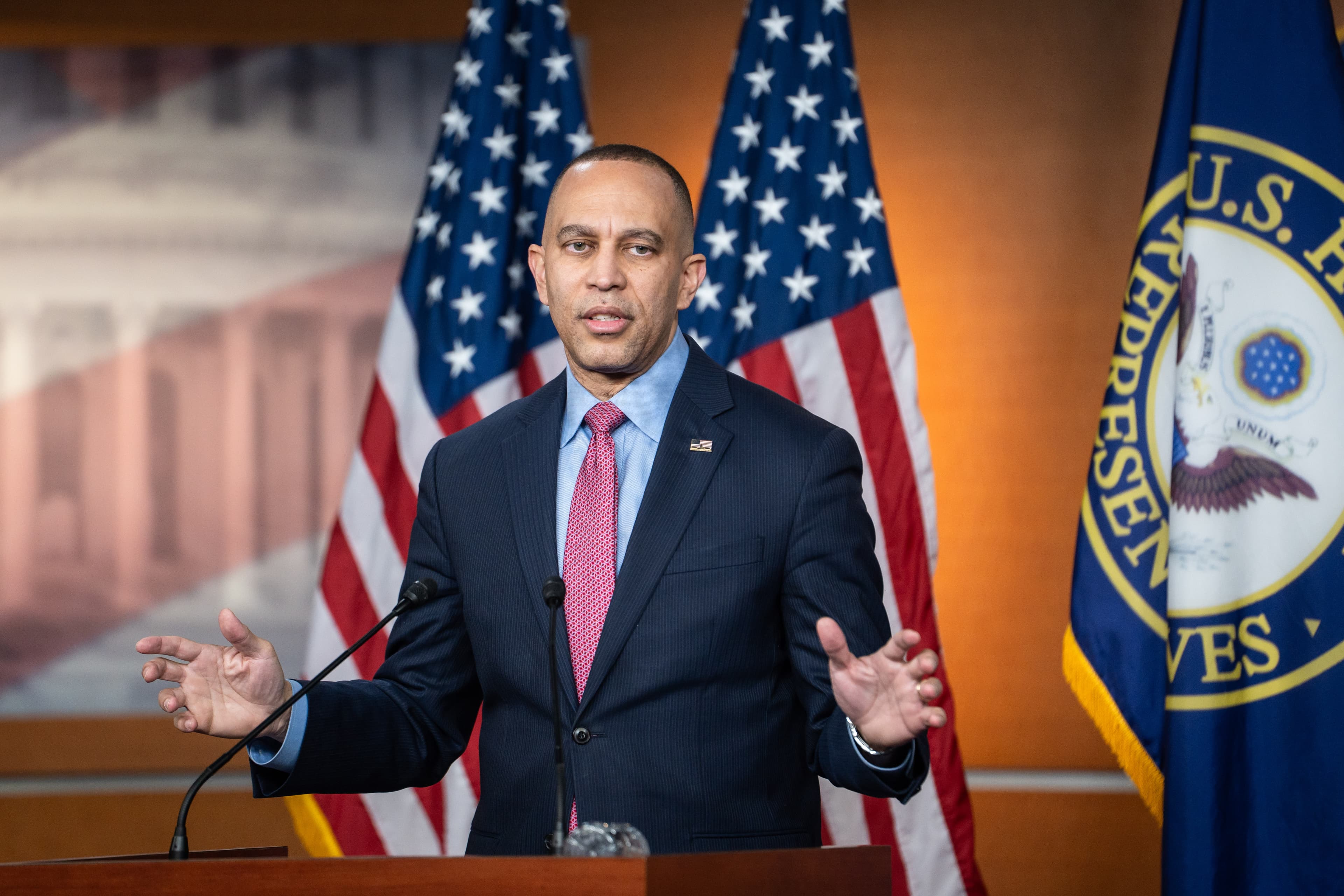
House Minority Leader Hakeem Jeffries (D-N.Y.) detailed his intentions in an April 8 letter to colleagues.
During an April 9 session that would normally be a formality, Democrats will seek to advance a War Powers Resolution on Iran through unanimous consent. It’s a maneuver that House Republicans can easily block.
Senate Minority Leader Chuck Schumer (D-N.Y.) also announced that the Senate would take a vote on a War Powers Resolution related to Iran.
“The War Powers Act will cease hostilities and require the administration to get an AUMF before going to war after the hostilities cease,” Schumer said of the proposal.
The Democrats’ calls to pursue votes for restricting the president’s war powers come a day after President Donald Trump announced he was suspending attacks in Operation Epic Fury, on the condition that Iran reopens the Hormuz Strait to unimpeded maritime traffic.
Multiple parties have accused one another of violating the two-week ceasefire. Pakistani Prime Minister Shehbaz Sharif, whose country helped mediate the brief interruption in fighting, has called on the combatant nations “to exercise restraint and respect the ceasefire for two weeks.”
In his April 8 letter, Jeffries described the present ceasefire as “woefully insufficient.”
“We have demanded that the House come back into session immediately in order to vote on our resolution to permanently end the war in the Middle East,” he wrote.
A War Powers Resolution would mandate congressional authorization of U.S. involvement in the war.
A previous attempt to constrain the president’s actions failed in the House on March 5.
Almost all Republicans opposed that resolution, which drew the support of all but four Democrats in the lower chamber.
The Senate equivalent was shot down on March 4. That vote also mostly fell along party lines. Sen. Rand Paul (R-Ky.) broke with his party to support the measure, while Sen. John Fetterman (D-Pa.) crossed the aisle to oppose it.
Ongoing two-week breaks in the House and Senate have been punctuated by pro-forma sessions. Those brief assemblies of only a few members are held as a formality so the chambers technically remain in session.
On the Senate side, the meetings keep the individual breaks short enough that the president cannot make recess appointments.
The sessions are also how lawmakers avoid adjourning for longer than three days. Under Article I of the Constitution, anything longer would take an agreement between the House and Senate.
The Easter break of 2026 has already witnessed some minor drama during sessions where little is typically expected to happen.
Earlier in April, the House did not take up a Senate-passed bill that would partly fund the Department of Homeland Security (DHS).
Some Republicans have resisted the DHS deal, which excludes immigration enforcement and border funding.
House and Senate Republican leaders have vowed to fund those areas for multiple years through a separate, party-line budget vote.
Joseph Lord contributed to this report.

In a post on X on Wednesday, Iranian Parliament Speaker Mohammad Bagher Ghalibaf claimed that the United States had failed to halt strikes on Lebanon, violated Iran’s airspace, and denied its right to enrich uranium.
Vance, who has said that an end to operations in Lebanon wasn’t part of the deal, told reporters that Ghalibaf’s claims “didn’t make sense.”
“I actually wonder how good he is at understanding English, because there are things that he said that, frankly, didn’t make sense in the context of the negotiations that we’ve had,” Vance said as he was leaving Hungary.
Despite the claims, and allowing that “cease-fires are always messy,” Vance said negotiations are moving forward between the involved powers.
“We don’t really concern ourselves with what they claim they have the right to do,” Vance said. “We concern ourselves with what they actually do.”
Vance downplayed the scale of any lingering disagreements.
“He said that there are a few points of disagreement,” Vance said. “Well, that must mean that there’s a lot of points of agreement because there’s a 15-point plan floating around, there’s a 10-point plan floating around.”
These different proposals have contributed to the confusion that saw Iran again close down the Strait of Hormuz on Wednesday, Vance said.
“The first 10-point proposal was something that was submitted, and we think, frankly, was probably written by ChatGPT, that was submitted to Steve Witkoff and Jared Kushner. That immediately went in the garbage and was rejected,” Vance told reporters as he departed Hungary on Wednesday.
He said that later, a second proposal was presented that was “much more reasonable” and had emerged “based on some back and forth between us, between the Pakistanis and between the Iranians.”
This second proposal is the one President Donald Trump was referring to when he spoke about the deal yesterday in a social media post.
A third and final proposal was described by Vance as “even more maximalist” than the original one that the U.S. administration rejected. This third proposal, according to Vance, came from someone who is “little more than a random yahoo in Iran.”

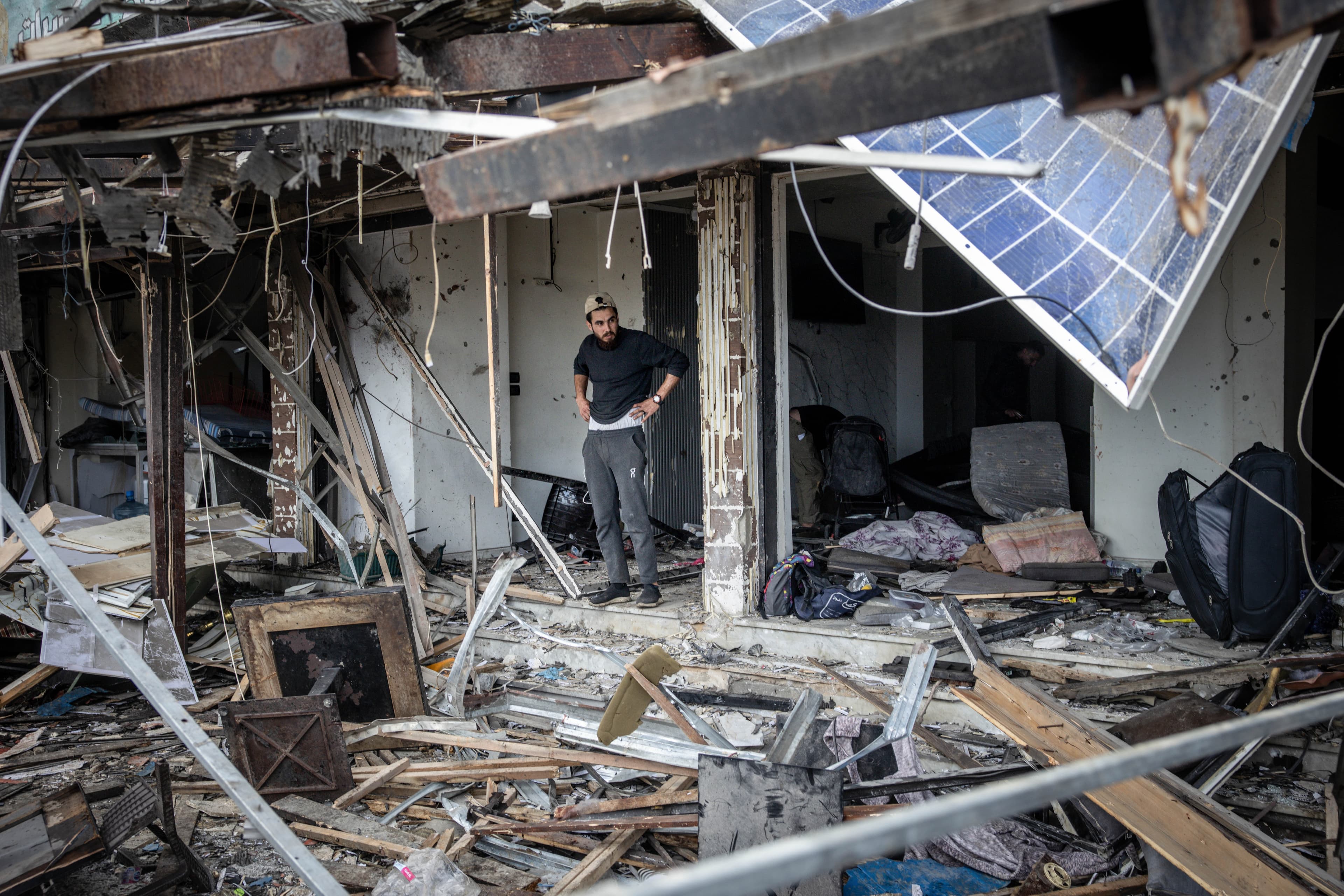
Strikes on April 8 killed 254 and injured 890 across Lebanon.
Lebanese officials said that in total, 1,739 people have been killed and 5,873 have been injured by Israeli attacks over the span of five weeks.
The Israeli military also struck a key bridge on April 8 that crossed Lebanon’s Litani River to the coastal city of Tyre.
A spokesman for the Israeli military said the area south of the Litani River is “disconnected from Lebanon” and operations continue to keep it demilitarized.
Israel has issued evacuation orders for roughly 15 percent of Lebanese territory, mostly in the south.
Lebanese officials said 1.2 million people have been displaced.
His comment comes after Iran on Wednesday moved to again shut down the Strait of Hormuz, according to state media reports.
A day earlier, Pakistani Prime Minister Shebhaz Sharif announced a broad proposal for a cease-fire to end U.S. and Israeli hostilities with Israel. In a post announcing the agreement, Sharif indicated that as part of the deal, Israel would end hostilities in Lebanon.
Israel later denied that plank of the agreement, saying that the conflict against Hezbollah would continue. In response, Iran again closed the Strait of Hormuz.
Vance on Wednesday said that the original proposal did not include an end to hostilities in Lebanon.
“I think this comes from a legitimate misunderstanding,” Vance said from Budapest, Hungary. “I think the Iranians thought that the cease-fire included Lebanon, and it just didn't. We never made that promise. We never indicated that was going to be the case.”

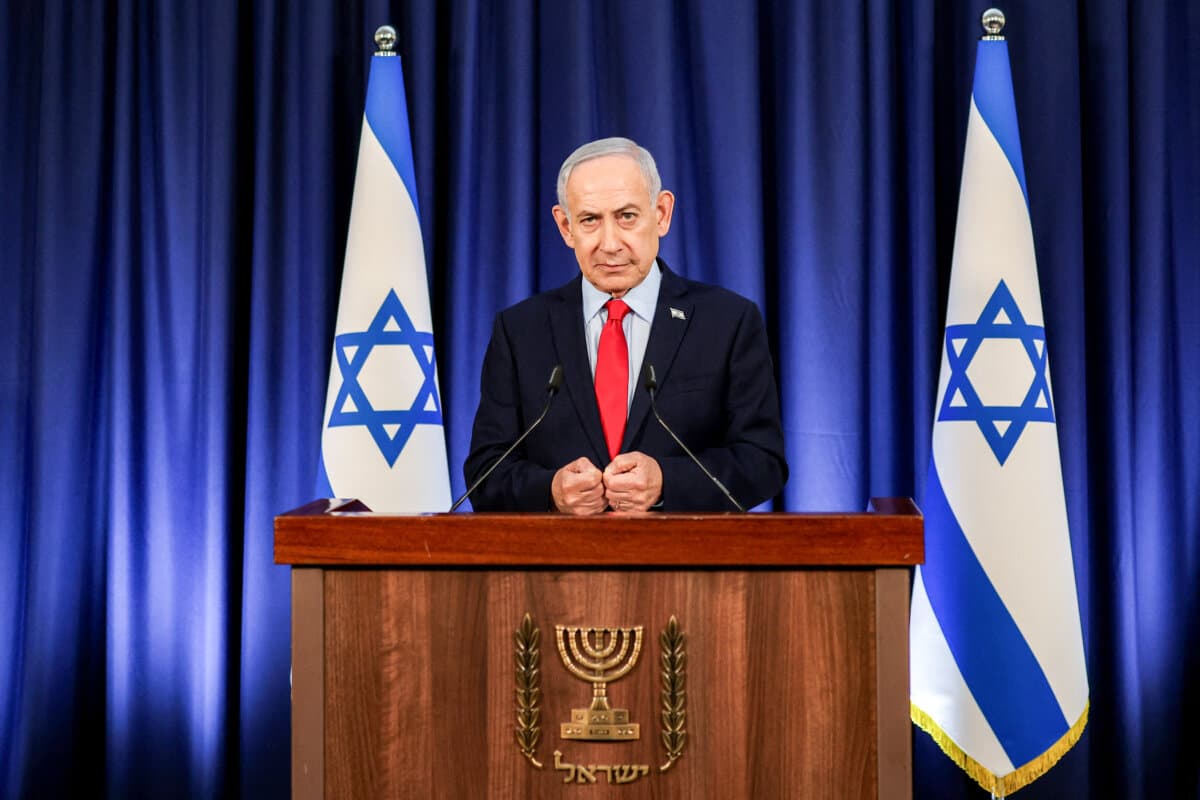
“We are ready to return to fighting at any time, our finger is on the trigger,” he said in his first address since the announcement of the cease-fire. Netanyahu has also said the recent agreement does not include its war against Hezbollah.
Israel’s military is also lifting many restrictions on civilians, including fully reopening its main airport and restarting regular school sessions. Some restrictions will remain in place in areas under threat from Hezbollah.
The Iranian regime has made similar requests in the past, none of which have materialized.
China’s Foreign Ministry spokesman, Mao Ning, when asked if the communist regime would support such a guarantee as part of the two-week cease-fire between Iran and the United States, said, “We hope that all parties will resolve their disputes through dialogue and negotiation.”
Leavitt’s comments came during a press briefing on April 8, when she was also asked whether NATO’s pledge to support freedom of navigation in the Strait of Hormuz will smooth tensions between Trump and the alliance.
“President Trump will be meeting with Secretary Rutte in a couple of hours here at the White House, and I know he looks forward to having a very frank and candid conversation with him,” Leavitt said.
Leavitt also shared a direct quote from Trump saying, “They were tested, and they failed,” with regard to NATO member-nations’ lack of support in the war against the Iranian regime.

Ghalibaf said Israel violated the first clause of Iran’s proposal by striking Lebanon on Wednesday. He also claimed that a drone breached Iran’s airspace near the city of Lar in Fars Province.
He pointed to the United States denying “Iran’s right to [uranium] enrichment,” which was the sixth clause in Tehran’s proposal.
“Now, the very ‘workable basis on which to negotiate’ has been openly and clearly violated, even before the negotiations began,” Ghalibaf said. “In such [a] situation, a bilateral ceasefire or negotiations is unreasonable.”
White House press secretary Karoline Leavitt denied Wednesday that Iran’s initial 10-point proposal was ever a serious consideration for Trump, and instead claimed he had literally thrown it “in the garbage.”
She said the Iranians then “put forward a more reasonable and entirely different and condensed plan,” which she claimed was what Trump was referring to as a “workable basis on which to negotiate.”
Other world leaders, including French President Emmanuel Macron and Pakistani Prime Minister Shehbaz Sharif—who brokered the cease-fire in the first place—have said Lebanon was always supposed to be included in the cease-fire.

Lebanese Parliament Speaker Nabih Berr said that Lebanon was included in the ceasefire deal between the United States and Iran on April 8.
He told London-based international news outlet Asharq Al-Awsat that the deal covers the fighting in his country, and that Israel is violating the agreement.
Berri said he had contacted Pakistan, a key mediator, to inform it of the Jewish state’s failure to comply, and asked it to talk to Washington to pressure Israel to end its strikes inside Lebanon.
He said he had been contacted by more than one party and received confirmation that Lebanon was included in the ceasefire.
Pakistan, too, has said Lebanon is covered by the deal, with Pakistani Prime Minister Shehbaz Sharif, whose government helped broker the deal, saying it was effective immediately “everywhere including Lebanon and elsewhere.” He invited both sides to Islamabad for further negotiations aimed at a comprehensive agreement.
“Both parties have displayed remarkable wisdom and understanding,” Sharif said in a post on X, expressing hope that the upcoming “Islamabad Talks” would deliver “sustainable peace.”
Lebanese Prime Minister Nawaf Salam, however, told Asharq Al-Awsat on April 8 that “no one negotiates for Lebanon except for the Lebanese state,” in his first comments since the two-week ceasefire was reached.
Salam declined to go into details about ongoing contacts, but stressed that Lebanon is mobilizing all efforts to help the country out of the crisis that he says it was dragged into against its will.
Lebanese President Joseph Aoun’s office released an April 8 statement on X, saying he “stressed the continuation of the Lebanese state’s efforts so that regional peace may extend to Lebanon in a firm and lasting way, in accordance with the principles on which the Lebanese have agreed: namely, the full sovereignty of their state over all its territory, its liberation from any occupying presence, and the restriction of the right to decide on war and peace and to use legitimate force to its constitutional institutions alone, and to no one else.”
Israel, however, has said that the deal doesn’t apply to its neighbor to the north and stepped up its assaults after the deal was announced by Washington.
The office of Prime Minister Benjamin Netanyahu said on April 8 posts on X that it supports American efforts to ensure that Tehran no longer poses a terror, nuclear, or missile threat to the United States, Israel, the region, or the world.
“The United States has told Israel that it is committed to achieving these goals, shared by the US, Israel and Israel’s regional allies, in the upcoming negotiations,” the prime minister’s office said. “The two-weeks ceasefire does not include Lebanon.”
The Israel Defense Forces (IDF) reiterated the comment from Netanyahu’s office about Lebanon, saying it will continue “to conduct targeted ground operations against Hezbollah.”
“The IDF will continue to operate across all fronts to defend Israel,” it said.
The Israeli offensive against the Iran-backed terror group in Lebanon began days after the start of the war, after Hezbollah fired rockets at Israel to avenge Iranian leader Ayatollah Ali Khamenei’s killing in an air strike on Feb. 28.
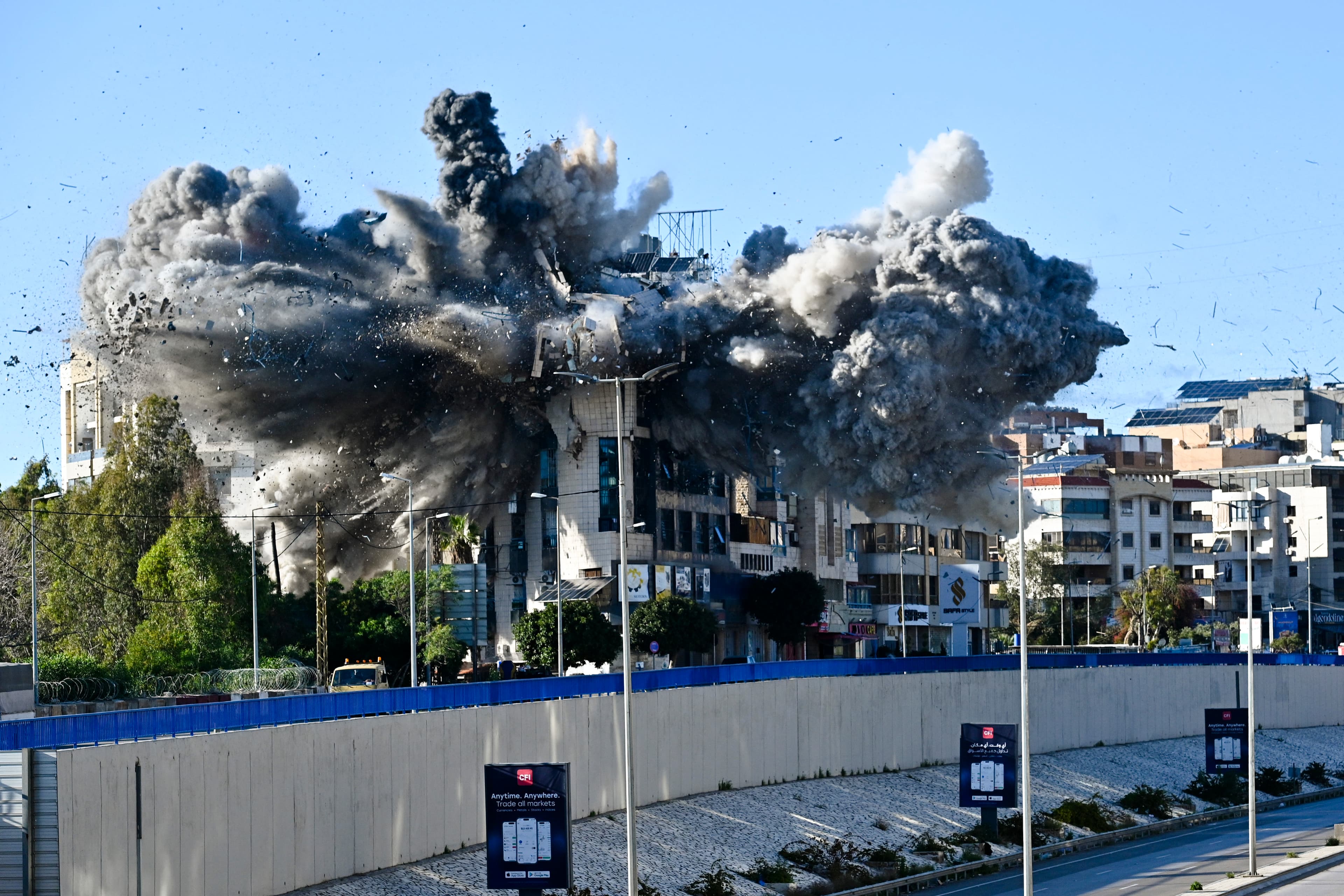
On April 8, Israel carried out its heaviest strikes on Lebanon since the conflict with Hezbollah began, as the Iran-aligned group paused attacks on northern Israel and Israeli troops in the country, Reuters reported.
Explosions hit Beirut, with more than 100 Hezbollah command centers and military sites targeted in the capital, the Bekaa Valley, and southern Lebanon, the IDF said in an April 8 post on X.
Meanwhile, in the United States, PBS White House correspondent Liz Landers said in an April 8 post on X that President Donald Trump had told her that the deal did not apply to Lebanon, labeling it a “separate skirmish.”
U.S. Vice President JD Vance also told reporters on April 8, while on a state visit to Budapest, Hungary, that Lebanon wasn’t included in the deal.
“I think this comes from a legitimate misunderstanding. I think the Iranians thought that the ceasefire included Lebanon, and it just didn’t. We never made that promise. We never indicated that was going to be the case,” Vance said.
“What we said is that the ceasefire would be focused on Iran, and the ceasefire would be focused on America’s allies, both Israel and the Gulf Arab states. Now, that said, the Israelis, as I understand it—again, I’m supposed to get a full report when I get on the plane—have actually offered to, frankly, check themselves a little bit in Lebanon because they want to make sure that our negotiation is successful. That’s not because that is part of the ceasefire.”
White House press secretary Karoline Leavitt also told an April 8 press briefing that “Lebanon is not part of the ceasefire; that has been relayed to all parties involved in the ceasefire.”
The Iranian regime-backed Islamic Republic News Agency (IRNA), however, reported in a Telegram post on April 8 that the country’s Supreme National Security Council had said that the agreement included “the cessation of war on all fronts, including against the heroic Islamic resistance in Lebanon,” and that Leavitt’s comment “clearly violates the ceasefire.”
This feeling was later echoed by Iranian Parliamentary Speaker Mohammad Bagher Ghalibaf, who said in an April 8 statement posted to X that there had been a “violation of 3 key clauses of the 10-point proposal,” giving most prominence to the situation in Lebanon.
Ghalibaf said that what had been agreed was “an immediate ceasefire everywhere, including Lebanon and other regions, effective immediately.”
He further added that the entry of a drone into Iranian airspace and the “denial of Iran’s right to enrichment (of uranium)” made the prospect of a bilateral ceasefire or negotiations unreasonable.
French President Emmanuel Macron also stated on April 8 that the ceasefire agreement “fully includes Lebanon” and described the inclusion of Beirut in the two-week truce as “a good and even essential thing.”
“What we are witnessing today, both from what we have seen with the [Israeli] strikes and the occupation of southern Lebanon, cannot be a long-term solution, we know that,” Macron said during a defense council meeting on April 8.
Victoria Friedman and Reuters contributed to this report.
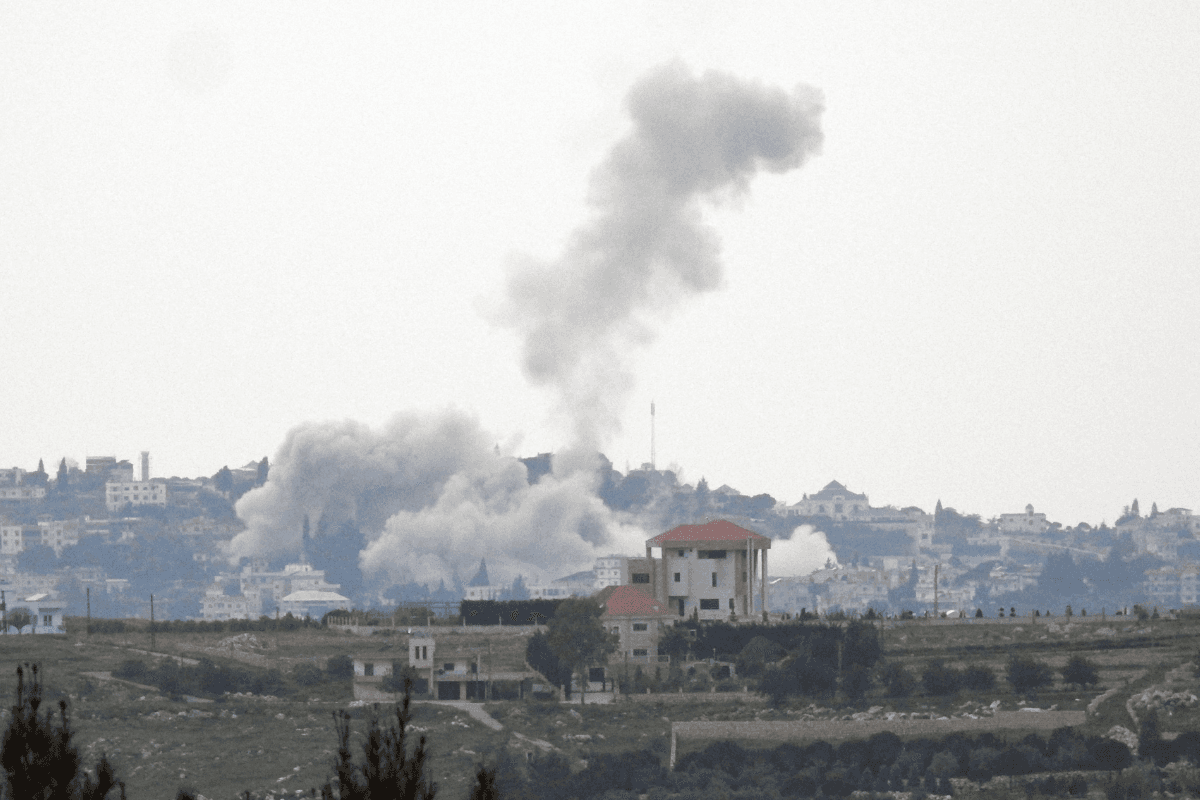

Israel has carried out strikes on Lebanon since the conflict with the Hezbollah terrorist group and Iran broke out last month, coming after Washington and Tehran agreed to a two-week cease-fire.
The Israel Defense Forces (IDF) said on April 8 that it had launched its largest coordinated strike in Lebanon and that more than 100 Hezbollah command centers and military sites were targeted in Beirut, the Beqaa Valley, and southern Lebanon.
“In 10 minutes, the IDF completed the largest coordinated strike across Lebanon since the start of Operation Roaring Lion,” the IDF wrote in a post on X. “The strike targeted 100+ Hezbollah headquarters, military arrays, & command-and-control centers in Beirut, Beqaa and southern Lebanon.”
The strikes targeted Hezbollah’s infrastructure of firepower and naval array, facilities used to launch missiles, and its aerial force, according to the IDF.
Confirming more strikes are coming against the Lebanese terrorist organization, an IDF official, Eyal Zamir, said in a statement that the IDF “will continue striking the Hezbollah terror organization and will utilize every operational opportunity.”
“We will not compromise the security of the residents of northern Israel,” the statement reads. “We will continue to strike with determination.”
Israeli military spokesperson Lt. Col. Nadav Shoshani said Israel’s largest strike on Lebanon since March 1 came as the terrorist group attempts to “scatter” its operations to populated civilian areas.
“We are seeing them move in a more dispersed way and try to embed their operations behind civilians more and more,” Shoshani said on April 8.
He also said that Hezbollah was moving away from its traditional areas of influence, including southern Lebanon and the Dahiyeh suburb of Beirut, and into areas deeper within civilian populations, including downtown Beirut.
The military said the operation on April 8 included 50 fighter jets, which launched 160 munitions at 100 targets in 10 minutes, causing widespread panic across the Lebanese capital during rush hour.
It came as U.S. President Donald Trump announced on the evening of April 7 a two-week-long cease-fire in the conflict involving the United States, Israel, and Iran in a bid to reopen the Strait of Hormuz, which has remained effectively closed since the conflict started on Feb. 28.
In the aftermath of the announcement, stock markets surged worldwide, and oil prices plunged back toward $90 per barrel.
Earlier in the week, Trump warned on social media that the “whole civilization” of Iran would end in the conflict if the country did not agree to his administration’s proposal, saying that bridges and power plants would be struck.
War Secretary Pete Hegseth declared victory over Iran early on April 8 as the U.S. military confirmed that more than 13,000 targets were hit by U.S. strikes in the five-week-long operation.
Iran must now hand over any enriched uranium that was buried, Hegseth said, warning that more strikes could be launched against the country.
“We reserve that opportunity,” he said.
At the same time, Iran declared victory over the United States and claimed that Washington was forced to accept its proposal to reopen the strait, according to state-run PressTV.
“Iran has achieved a great victory and has forced criminal America to accept its own 10-point proposal,” Iran’s Supreme National Security Council said in a statement.
The Associated Press contributed to this report.

White House press secretary Karoline Leavitt responded to a question from The Epoch Times about the administration’s message for the American people regarding Cuba.
According to Leavitt, the president believes Cuba is in a “very weak position, economically, [and] obviously financially.”
“The Cuban people are fed up with their government, as they should be,” the press secretary said, before confirming that discussions about the island nation’s position continue at “the highest level of our government.”
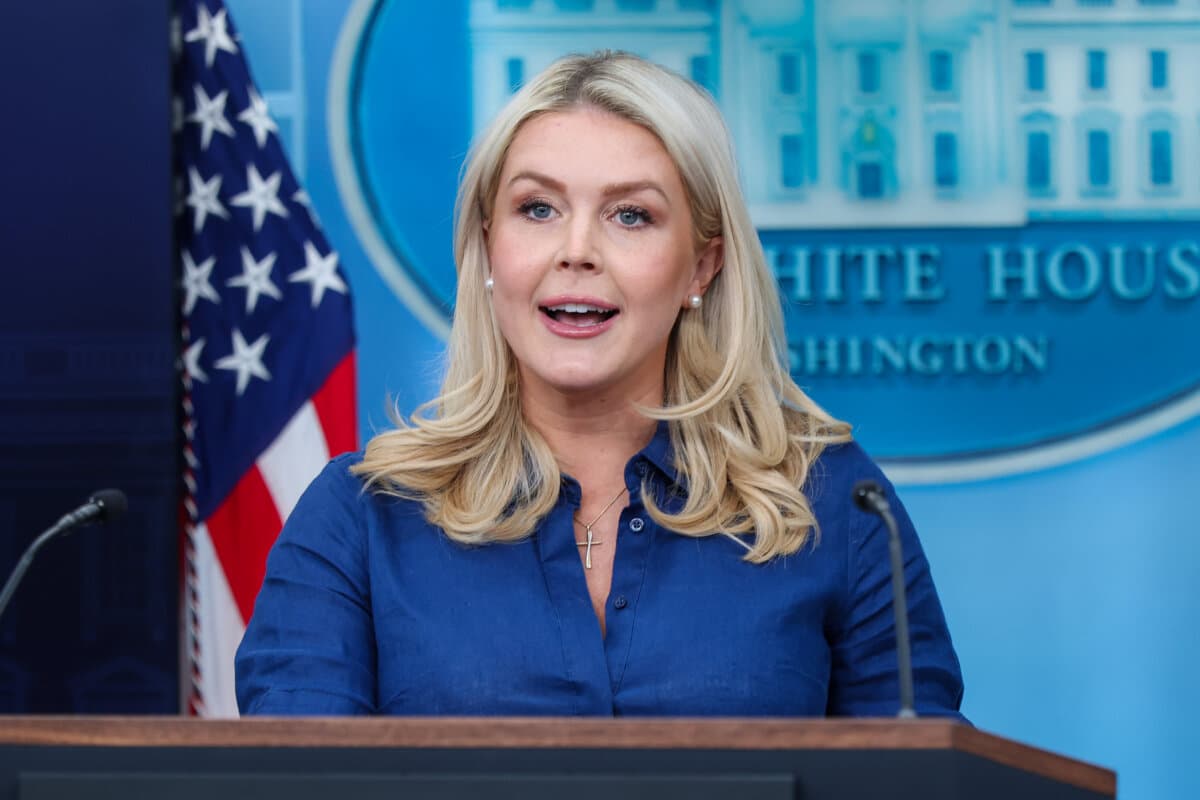
“The Iran–U.S. Ceasefire terms are clear and explicit: the U.S. must choose—ceasefire or continued war via Israel. It cannot have both,” Araghchi said.
White House press secretary Karoline Leavitt contradicted this announcement by Araghchi in an April 8 briefing.
“Lebanon is not part of the cease-fire that has been related to all parties involved in the cease-fire,” Leavitt said.
As part of the announcement of the cease-fire on April 7, Pakistani Prime Minister Shehbaz Sharif said Iran and the United States “agreed to an immediate cease-fire everywhere including in Lebanon and elsewhere.”
“The world sees the massacres in Lebanon. The ball is in the U.S. court, and the world is watching whether it will act on its commitments,” Araghchi said.
“There were conversations that took place between top levels of our government and China's government,” Leavitt said.
Leavitt noted President Donald Trump’s relationship with China, saying “The President has great respect for President Xi and a great working relationship with him and with that country.”
China is heavily invested in Gulf State energy.
“This is on the top of the priority list for the president and his negotiating team as they head into this next round of discussions. And as I said in my opener, that is a red line that the president is not going to back away from, and he's committed to ensuring that takes place,” she said.
“We hope it will be through diplomacy.”
“The president was made aware of those reports before I came to the podium; that is completely unacceptable,” Leavitt told reporters at the White House.
She accused Iran of making public statements that don’t reflect what the Trump administration is seeing behind the scenes.
“Privately, we have seen an uptick of traffic in the strait today, and I will reiterate the president's expectation and demand that the Strait of Hormuz is reopened immediately, quickly, and safely,” Leavitt said.
“That is his expectation, and it has been relayed to him privately, that that is what's taking place, and these reports publicly are false.”

The team will also include U.S. special envoy to the Middle East Steve Witkoff and Jared Kushner, Trump’s son-in-law and senior adviser.
Leavitt said it was “falsely reported” that the plan was acceptable to the United States. The Iranian regime subsequently put forward a “more reasonable and entirely different and condensed plan” which was considered “a workable basis on which to negotiate,” paving the way for the two-week ceasefire.
“The President's red lines, namely, the end of Iranian enrichment in Iran, have not changed, and the idea that President Trump would ever accept an Iranian wish list as a deal is completely absurd,” Leavitt said.
The press secretary reiterated that “the president will only make a deal that serves in the best interests of the United States of America.
“This is a victory for the United States of America that the President and our incredible military made happen from the very beginning of Operation Epic Fury,” Leavitt said.
She noted that Trump’s four-to-six-week timeframe to dismantle the radical Islamic regime had been achieved and exceeded.
“In just 38 days, the U.S. military destroyed Iran's defense industrial base, crushing the regime's ability to manufacture weapons that they and their proxies use to maim and kill Americans and terrorize the world,” Leavitt said.
Iran’s ability to build and stockpile ballistic missiles and long-range drones has been set back by years, according to the press secretary.
“Meanwhile, the Iranian Navy was completely annihilated,” Leavitt said.

The widespread strikes happened across the central part of the country’s capital city.
“We are fighting Hezbollah, not the people of Lebanon,” a spokesperson for the Israel Defense Forces (IDF) said in an X post on Wednesday.
More than 1,500 people have been killed and over 1 million others have been displaced in Lebanon since the United States and Israel launched Operation Epic Fury against the Iranian regime on Feb. 28, according to Lebanese authorities.
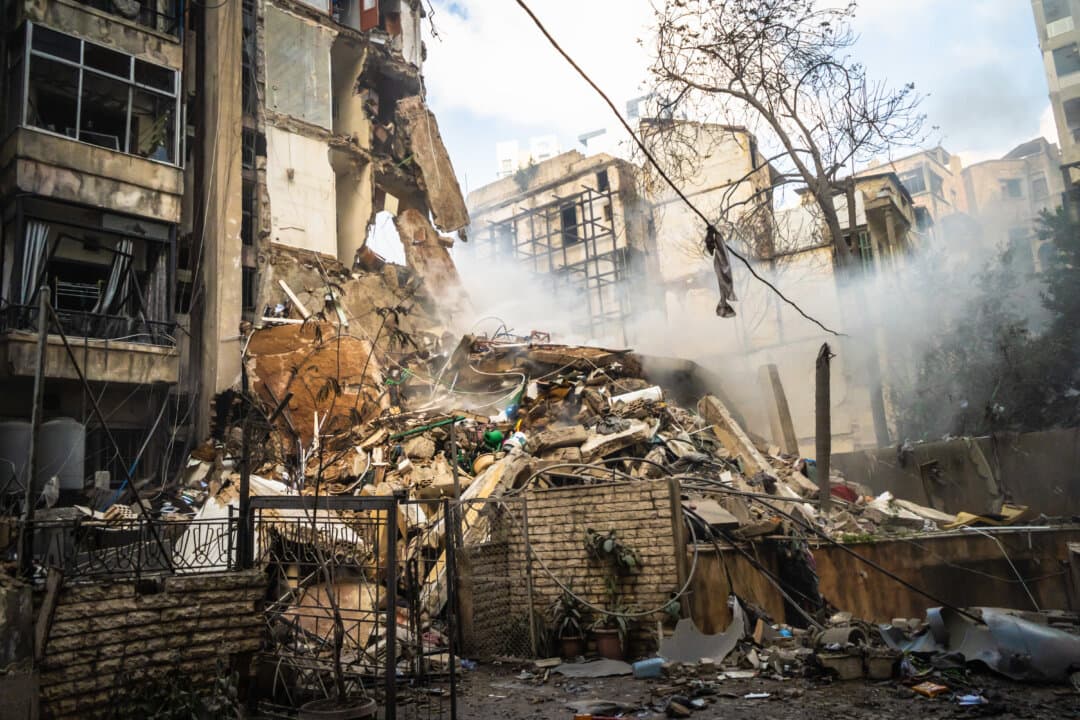
According to a statement from the Arab League chief posted to X, the attack was “unprecedented and barbaric,” and injured or claimed the lives of hundreds of civilians.
Al-Gheit said the attack constituted a flagrant violation of all international laws, accusing Israel of actively working to sabotage the cease-fire agreement between the United States and Iran.
The spokesperson said the Arab League stands in solidarity with Lebanon and its people.
American citizens should not try to approach the embassy or the Consulate General in Erbil, Iraq, because of the ongoing risks, the alert, posted to X, said.
“These militias may intend to launch additional terrorist attacks against U.S. citizens and U.S.-associated targets throughout Iraq, including in the Iraqi Kurdistan Region,” the alert said.
Iraqi authorities announced plans to reopen the Baghdad airport to commercial flights, but American citizens in the area are advised against air travel due to the continued risk of missiles, drones, and mortars in Iraqi airspace.
U.S. citizens in Iraq are urged to leave the country immediately over land.
U.S. citizens in need of help should contact the U.S. Embassy in Baghdad or the Consulate General in Erbil via email, BaghdadACS@state.gov and ErbilACS@state.gov, respectively.
Iraq remains at a Level 4: Do Not Travel status.
Qatar is located south of Iran, across the Persian Gulf.
The official made his comments in reference to Israel’s interference with an Italian convoy of U.N. peacekeepers traveling to Beirut.
Tajani said of the incident: “Italian soldiers in Lebanon must not be touched; the Israeli Armed Forces possess no authority whatsoever to interfere with Italian military personnel.”
The average price for a gallon of regular gas went up two cents, making the national average $4.16 on April 8, according to the American Automobile Association.
GasBuddy Head of Petroleum Analysis Patrick De Haan suggested American consumers may not see relief from pain at the pump until the evening.
“These big drops today don't get locked in until this evening—some increases could still happen today,” De Haan wrote in a post on X.
“I earnestly and sincerely urge all parties to exercise restraint and respect the ceasefire for two weeks, as agreed upon, so that diplomacy can take a lead role towards peaceful settlement of the conflict,” Sharif said.
The prime minister did not specify where the alleged violations occurred, but Kuwait’s military reported an “extensive wave” of drone attacks hitting its oil and power facilities earlier Wednesday. The United Arab Emirates also reported missile and drone attacks.
Three people sustained minor injuries and no deaths were reported.
The UAE is located south of Iran, on the other side of the Strait of Hormuz.
Since the conflict started, the UAE said its air defenses have engaged a total of 537 ballistic missiles, 26 cruise missiles, and 2,256 drones.
“The ceasefire may create transit opportunities, but it does not yet provide full maritime certainty, and we need to understand all potential conditions attached,” the company said. “The safety of our seafarers, vessels, and cargo remains Maersk’s highest priority.”
Maersk added that any decision to travel through the critical waterway will be based on “continuous risk assessments, close monitoring of the security situation, and available guidance from relevant authorities and partners.”
The company said it is taking a cautious approach and will not make any changes to specific services while the “situation in the region remains volatile.”
The strike targeted more than 100 Hezbollah headquarters, military arrays, and command-and-control centers throughout Beirut, Beqaa, and southern Lebanon, the IDF said.
The buildings included intelligence command centers, military infrastructure, and Radwan Force assets.
The price of crude oil sat at $93.87 as of 10:32 a.m. ET, down by more than $18 from yesterday’s closing bell.
The S&P 500 surged 2.7 percent as the Dow jumped by more than 1,200 points on Wednesday morning.
Travel-related stocks for major airlines, cruises, and hotels were also up.
Coming after the cease-fire agreement yesterday, the attacks reflect “clear determination to persist in targeting the country’s security and vital capabilities,” said Col. Saud Al-Atwan, the ministry spokesman.
The war secretary added that the U.S. military “will be hanging around."
"We're not going anywhere. We're going to make sure Iran complies with this cease-fire, and then, ultimately, comes to the table and makes a deal.”
According to the secretary, Iran has agreed to give the uranium to the United States “voluntarily,” but he said the military could also take it by force.
“If we have to do something else ourselves, like we did Midnight Hammer … we reserve that opportunity,” he said.
Hegseth said the new Iranian regime knows that it will “never have a nuclear weapon or the capability to get a path to one.”
Joint Chiefs Chairman Gen. Dan Caine said the military hopes "Iran chooses a lasting peace,” adding “a cease fire is a pause, and the joint force remains ready, if ordered or called upon to resume combat operations with the same speed and precision, as we've demonstrated over the last 38 days."
“America's military achieved every single objective on plan,” Hegseth said during an April 8 Pentagon press briefing. “In less than 40 days, one of our combatant commands … using less than 10 percent of America's total combat power, dismantled one of the world's largest militaries, the world's leading state sponsor of terrorism."
Hegseth added that Iran's command system is decimated.
“They can no longer build missiles, build rockets, build launchers or build [unmanned aerial vehicles],” Hegseth said. “Their factories have been razed to the ground, set back in historic fashion.”

The two-week truce, brokered by Pakistan, halts a cycle of strikes and includes the reopening of the Strait of Hormuz, a vital oil route, helping calm energy markets.
Governments across Europe and the Asia-Pacific endorsed the agreement, urging rapid progress in upcoming talks, expected to take place in Islamabad.
Israel supported the pause with conditions while continuing operations in Lebanon, and Iran signaled that talks would proceed amid deep distrust, highlighting the truce’s fragility.
The council issued a statement following the announcement of the suspension of hostilities, saying that although it would meet with U.S. representatives in Pakistan on April 11, “this does not mean an end to the war and Iran will accept an end to the war only when, in view of Iran's acceptance of the principles envisaged in the 10-point plan, its details are also finalized in the negotiations,” according to Iran's semi-official Tasnim News Agency.
It said that the negotiations will begin “with complete distrust about the US side, and Iran will allocate two weeks for these negotiations.”
It added that the negotiation period "can be extended by agreement of the parties.”

“There will be lots of positive action! Big money will be made. Iran can start the reconstruction process. We’ll be loading up with supplies of all kinds, and just ‘hangin’ around’ in order to make sure that everything goes well,” Trump wrote on Truth Social. “I feel confident that it will. Just like we are experiencing in the U.S., this could be the Golden Age of the Middle East.”
“The two-weeks ceasefire does not include Lebanon,” the Prime Minister’s office said.
Netanyahu’s office said their agreement to a cease-fire with the Persian state is contingent on Iran immediately opening the Strait of Hormuz and ending all attacks on the United States, Israel, and countries in the region.
The statement also said Israel also supports U.S. efforts to ensure Iran no longer poses a nuclear or missile threat. Netanyahu has long described a nuclear-armed Iran as Israel’s greatest security risk.
In a post on X, the Pentagon announced the briefing would be held at 8 a.m. ET on April 8.
White House Press Secretary Karoline Leavitt had previously announced the briefing in a post on X.
In that post, Leavitt said, “The success of our military created maximum leverage, allowing President Trump and the team to engage in tough negotiations that have now created an opening for a diplomatic solution and long-term peace.”
She said that the United States had “achieved and exceeded our core military objectives.”
“From the very beginning of Operation Epic Fury, President Trump estimated this would be a 4-6 week operation,” Leavitt said in a post on X. “Thanks to the unbelievable capabilities of our warriors, we have achieved and exceeded our core military objectives in 38 days.”
She said that Secretary of War Pete Hegseth would provide more information on Wednesday morning. Gen. Dan Caine, chairman of the Joint Chiefs of Staff, will also attend the briefing, both Leavitt and the Pentagon announced.
Earlier Tuesday, Trump announced that he had agreed to a cease-fire with Iran at the urging of neighboring Pakistan. The same morning, the president had warned that “a whole civilization will die tonight” if Iran does not reopen shipping in the Strait of Hormuz.
“President Trump got the Strait of Hormuz reopened,” Leavitt said in the post.
Sharif, who mediated the deal, made the announcement in a statement about the cease-fire agreement between the United States and Iran that wraps in Iranian proxy group Hezbollah as it fights Israel from Lebanon.
“With the greatest humility, I am pleased to announce that the Islamic Republic of Iran and the United States of America, along with their allies, have agreed to an immediate ceasefire everywhere including Lebanon and elsewhere, EFFECTIVE IMMEDIATELY,” Sharif wrote in a post on X.
He said he “warmly welcomes the sagacious gesture” and invited delegations from both the United States and Iran to an April 10 summit in Islamabad “to further negotiate for a conclusive agreement to settle all disputes.”
“We earnestly hope, [sic] that the ‘Islamabad Talks’ succeed in achieving sustainable peace and wish to share more good news in coming days!” Sharif added.
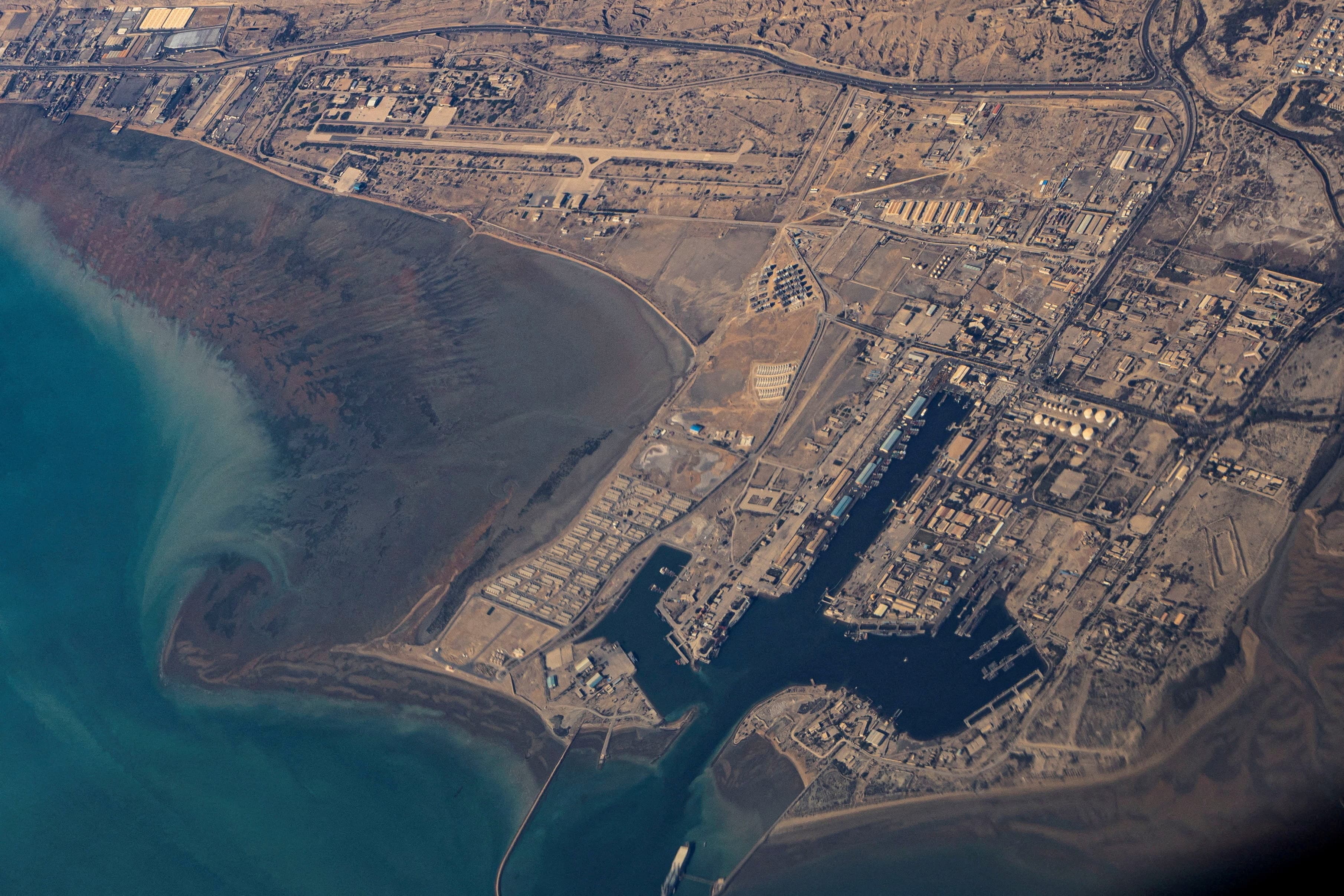

U.S. crude oil prices fell below $100 a barrel and stocks rallied in futures trading after President Donald Trump conditionally agreed to suspend attacks on Iran for two weeks if Iran allows safe passage to ships through the Strait of Hormuz.
A barrel of West Texas Intermediate—the U.S. benchmark for oil prices—declined almost 16 percent to around $95 on the New York Mercantile Exchange.
Crude prices had plunged as much as 19 percent before paring their losses.
The president said in a social media post that the two-week ceasefire was contingent on Iran agreeing to safe passage through the Strait of Hormuz, a vital and narrow artery for the transportation of oil and natural gas.
“Based on conversations with Prime Minister Shehbaz Sharif and Field Marshal Asim Munir, of Pakistan, and wherein they requested that I hold off the destructive force being sent tonight to Iran, and subject to the Islamic Republic of Iran agreeing to the complete, immediate, and safe opening of the Strait of Hormuz, I agree to suspend the bombing and attack of Iran for a period of two weeks,” Trump said in a Truth Social post more than an hour before his 8 p.m. EST deadline.
Iranian Foreign Minister Seyed Abbas Araghchi also agreed to the temporary ceasefire.
“If attacks against Iran are halted, our Powerful Armed Forces will cease their defensive operations,” Araghchi said in a statement posted to social media.
“For a period of two weeks, safe passage through the Strait of Hormuz will be possible via coordination with Iran’s Armed Forces and with due consideration of technical limitations.”
Equities also cheered the two-week pause, with leading benchmark indexes rallying in after-hours trading.
The blue-chip Dow Jones Industrial Average soared as much as 1,000 points. The tech-driven Nasdaq Composite Index surged nearly 700 points, while the broader S&P 500 added more than 100 points.
Stocks wobbled throughout the trading session as traders were unsure if Washington and Iran would reach a deal.
At the closing bell, the indexes were little changed. The Dow Jones slipped 0.2 percent, the S&P 500 gained 0.1 percent, and the Nasdaq ticked up 0.1 percent.
What Lies Ahead
This, market watchers say, does not mean stocks or energy markets will return to normal.
The largest factor in the coming months will remain the Strait of Hormuz, which handles approximately 20 million barrels of oil and petroleum products a day.
“Presumably at the end of the war, the strait will open back up, and you’ll see oil and gas prices, non-U.S. gas prices, come down,” Simon Lack, portfolio manager at Catalyst Funds, said in a note emailed to The Epoch Times.
“You’re going to see energy security playing a much bigger role for buyers because of the disruption we’ve gone through. That’ll be a bias toward U.S. suppliers.”
Heating oil futures also tanked 17 percent to below $3.72 a gallon.
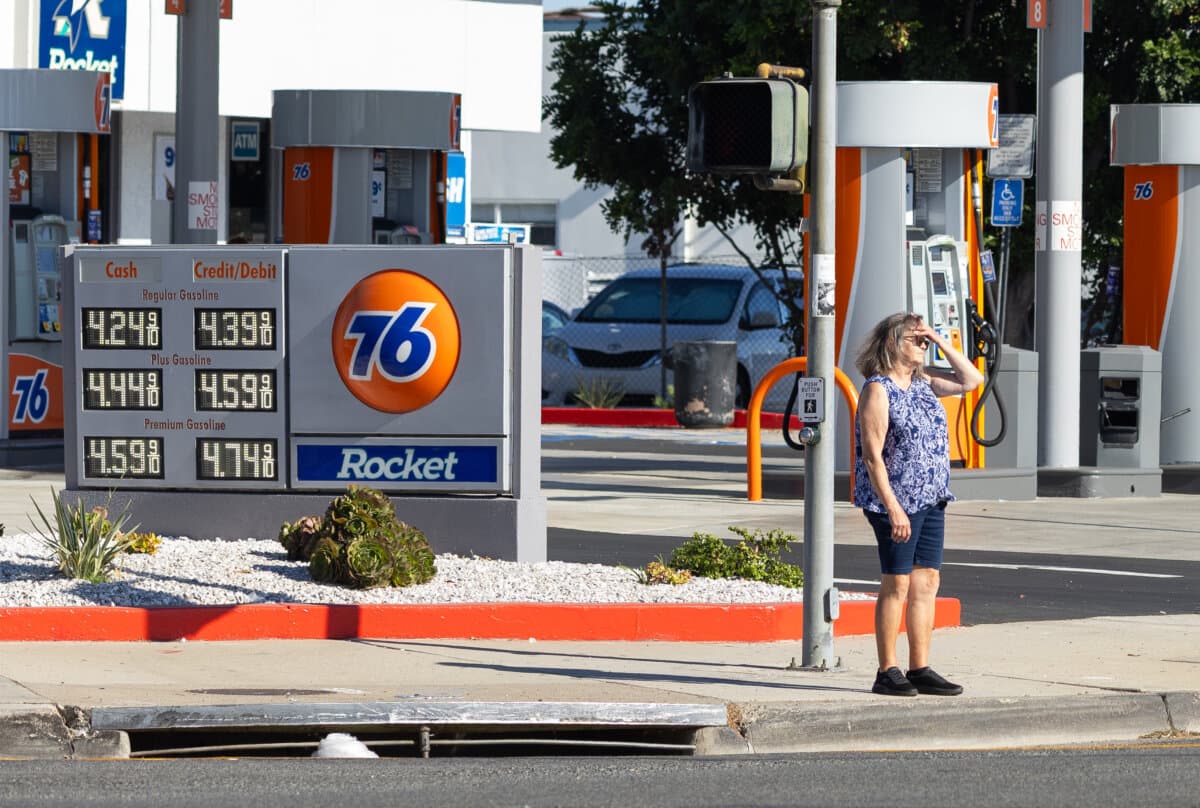
Gas prices continue to climb in Garden Grove, Calif., on July 10, 2025. (John Fredricks/The Epoch Times)
Despite the sizable drop, motorists are still likely to face higher gasoline prices due to the “rockets and feathers” asymmetrical price transmission.
When crude oil prices soar, gas stations are quick to raise pump prices to cover the higher cost of their next shipment. Conversely, when oil prices fall, a gallon of gasoline will decline more gradually to protect margins and clear out older, more expensive inventory.
As of April 7, the national average price for a gallon of gas is firmly above $4.
Lack noted that if oil prices continued to edge higher from their earlier levels, recession risks would intensify across the global economy.
“Energy prices being higher at this level is good, but if we see oil go up above, for example, $200, that will probably cause a recession in most of the world. That would be a bad outcome,” he said.
“Energy consumption is amazingly stable in the United States—prices vary so much more than volumes. We wouldn’t want to see a situation where the economy slows down and goes into recession because of high energy prices.”
Gold, Bitcoin, and Dollars
Other assets welcomed the U.S.-Iran de-escalation.
Gold and silver futures climbed 4 percent and 6 percent, respectively. Bitcoin rose 3 percent to nearly $72,000.
Long-term Treasury yields eased, with the benchmark 10-year sliding to 4.27 percent. The 20- and 30-year yields slowed to around 4.85 percent.
The greenback’s risk premium faded.
The U.S. Dollar Index—a measure of the buck against a weighted basket of currencies—fell about 0.9 percent. The dollar had been one of the world’s top-performing assets as investors sought shelter in the conventional safe-haven vehicle during the six-week-old conflict.
Sam Dorman contributed to this report.
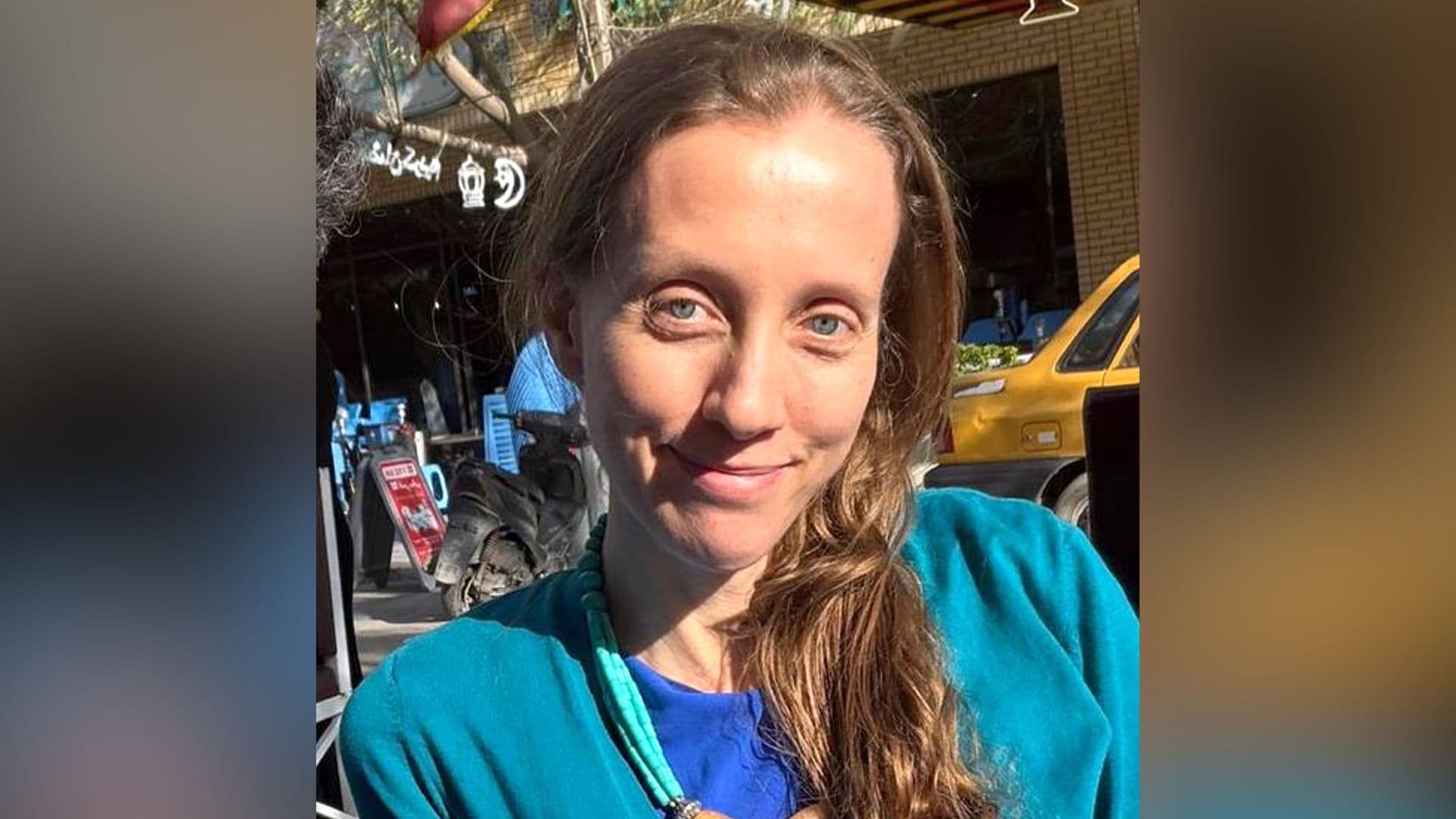

American journalist Shelly Kittleson, who was abducted in Iraq last week, has been released, U.S. Secretary of State Marco Rubio confirmed in a statement on April 7.
Kittleson, a freelance journalist who contributes to Al-Monitor, was abducted by the Iranian-backed terrorist group Kataib Hezbollah in Iraq’s capital, Baghdad, last week.
Rubio said in a post on X that Kittleson has been freed and U.S. officials are working to facilitate her safe departure from Iraq.
“Under President Trump, the wrongful detention or kidnapping of U.S. nationals will not be tolerated. We will continue to use every tool to bring Americans home and to hold accountable those responsible,” he said.
Rubio said the FBI, the Department of War, and U.S. personnel from multiple agencies, along with the Iraqi Supreme Judicial Council and Iraqi partners, have assisted in securing her release.
Kataib Hezbollah was listed as a terrorist organization by the U.S. government in 2009.
The State Department on March 2 ordered non-emergency U.S. government employees to leave Iraq due to security concerns, citing terrorism, armed conflict, and kidnapping in the country.
Abu Muhajid al-Assaf, a security official with the Iranian-backed group, said the decision was made “in recognition of the national stances” of outgoing Iraqi Prime Minister Mohammed Shia' al-Sudani.
Kataib Hezbollah agreed to release the journalist on the condition that she “leave the country immediately,” al-Assaf said in a statement, according to local news outlet Iraqi News.
In a post on X, National Press Club President Mark Schoeff Jr. said that journalists should not be targeted for their work.
“While we welcome news of her freedom, Ms. Kittleson’s kidnapping should not have occurred in the first place. It happened at a time when traditional protections for the media are under continual attack,” Schoeff said.
Kittleson was abducted on March 31. The Iraqi ministry said at the time that security forces tracked the kidnappers and chased their vehicle, which overturned as they attempted to flee. One of them was arrested, and authorities seized the vehicle.
No details about the suspect were provided. The Iraqi Interior Ministry said efforts were ongoing to track down the remaining perpetrators and vowed to “take due legal action against all those involved in this criminal act.”
On April 3, press rights groups, including the Committee to Protect Journalists, Reporters Without Borders, and the Foley Foundation, wrote a joint letter to Rubio urging him to designate Kittleson as a hostage. They said this would indicate that the U.S. government would mobilize all available resources and diplomatic channels to secure her release.
Kataib Hezbollah was listed as a terrorist organization by the U.S. government in 2009. The State Department on March 2 ordered non-emergency U.S. government employees to leave Iraq due to security concerns, citing terrorism, armed conflict, and kidnapping in the country.
In another incident, Elizabeth Tsurkov, a dual citizen of Israel and Russia, was kidnapped in March 2023 while carrying out research in Baghdad. President Donald Trump said in September 2025 that Tsurkov was released “after being tortured for many months” by Kataib Hezbollah.
“If attacks against Iran are halted, our Powerful Armed Forces will cease their defensive operations,” Araghchi said in a statement posted to social media.
“For a period of two weeks, safe passage through the Strait of Hormuz will be possible via coordination with Iran’s Armed Forces and with due consideration of technical limitations.”
Araghchi said the decision was in response to a 15-point peace proposal from Pakistan and Trump’s comments on Iran’s 10-point proposal.
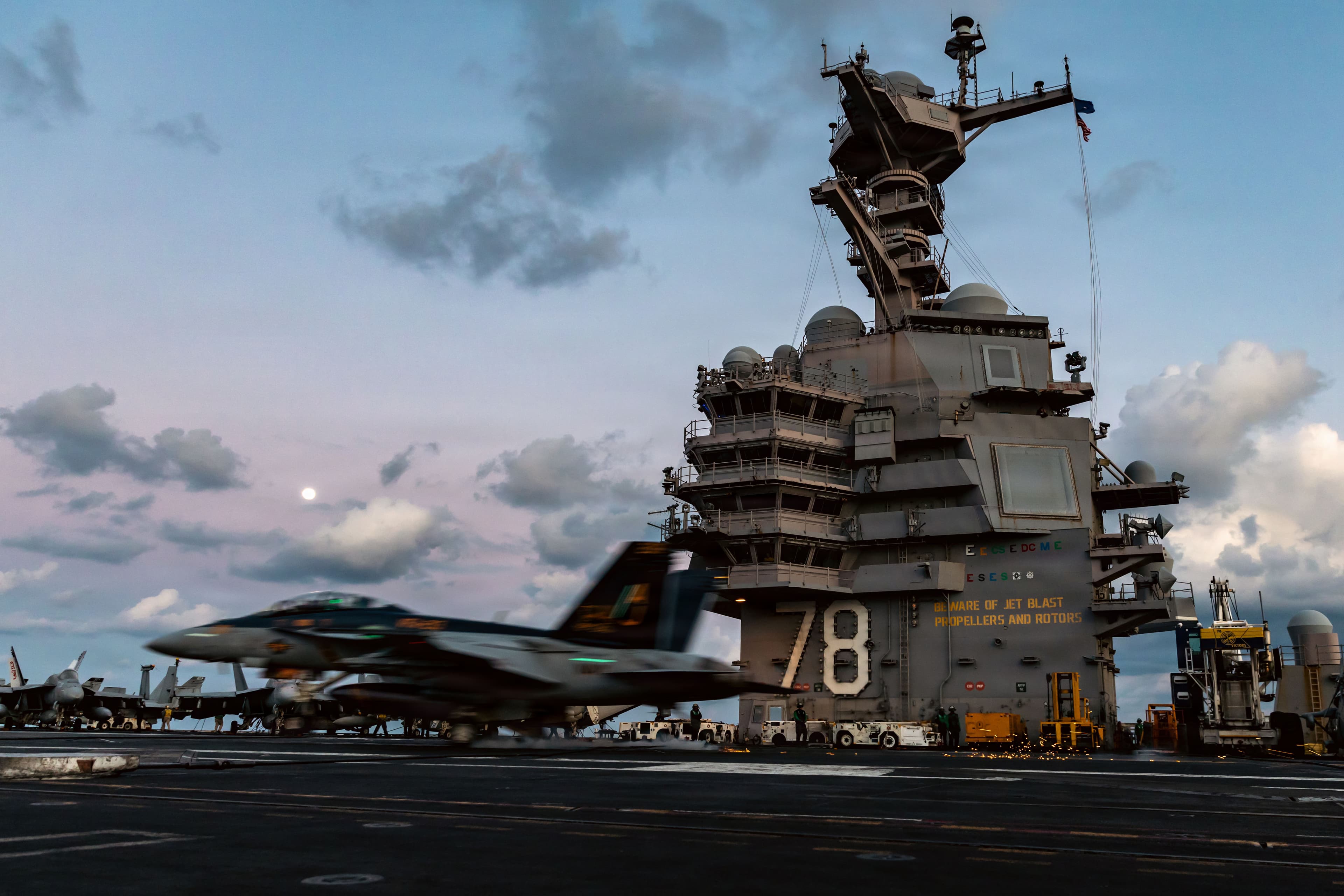
President Donald Trump said on April 7 that he would suspend pending attacks on Iran.
“Based on conversations with Prime Minister Shehbaz Sharif and Field Marshal Asim Munir, of Pakistan, and wherein they requested that I hold off the destructive force being sent tonight to Iran, and subject to the Islamic Republic of Iran agreeing to the COMPLETE, IMMEDIATE, and SAFE OPENING of the Strait of Hormuz, I agree to suspend the bombing and attack of Iran for a period of two weeks,” Trump said on Truth Social.
His announcement came about an hour and a half before his 8 p.m. ET deadline and after Pakistan’s request that he halt the attack.
The president added that Iran’s 10-point peace plan proposal is a “workable basis” to continue negotiations.
“This will be a double sided CEASEFIRE! The reason for doing so is that we have already met and exceeded all Military objectives, and are very far along with a definitive Agreement concerning Longterm PEACE with Iran, and PEACE in the Middle East,” Trump wrote.
Almost all the various points of previous proposals have been agreed to, and the two-week cease-fire will allow an agreement to be finalized, Trump said.
“On behalf of the United States of America, as President, and also representing the Countries of the Middle East, it is an Honor to have this Longterm problem close to resolution,” Trump said.
Iranian Foreign Minister Seyed Abbas Araghchi followed up Trump’s announcement with a statement on behalf of the Supreme National Council of the Islamic Republic of Iran, expressing gratitude to the Pakistani officials for their work to reach a cease-fire.
“If attacks against Iran are halted, our Powerful Armed Forces will cease their defensive operations,” the statement said. “For a period of two weeks, safe passage through the Strait of Hormuz will be possible via coordination with Iran’s Armed Forces and with due consideration of technical limitations.”
Araghchi said the decision was in response to a 15-point peace proposal from Pakistan and Trump’s comments on Iran’s 10-point proposal.
American and Israeli forces ramped up strikes against Iran earlier on Tuesday before the announcement of the cease-fire by both sides.
“A whole civilization will die tonight, never to be brought back again. I don’t want that to happen, but it probably will,” Trump had said on Truth Social.
Trump had been threatening to obliterate Iran’s energy sector and infrastructure for weeks as a retaliatory measure on the Islamic regime’s targeting of shipping in the Strait of Hormuz.
In response, Iran threatened to intensify its attacks and target Gulf state neighbors.
Trump offered multiple extensions to his promise of destruction of Iran, with the latest deadline being April 7 at 8 p.m. ET.
Hours before that, U.S. Central Command announced it launched exploding attack drones overnight against Iranian targets.
The Israeli military said it had also attacked eight bridge segments across Iran on Tuesday.
Within five hours of Trump’s final 8 p.m. ET deadline, multiple Gulf states reported Iran launched missile and drone attacks against their territories.
Pakistan, neighboring Iran, has served as a mediator amid the conflict.
Pakistani Prime Minister Shehbaz Sharif requested Trump to again extend his deadline earlier Tuesday, citing progress on negotiations.
“To allow diplomacy to run its course, I earnestly request President Trump to extend the deadline for two weeks. Pakistan, in all sincerity, requests the Iranian brothers to open the Strait of Hormuz for a corresponding period of two weeks as a goodwill gesture,” Sharif said in a post on X.
White House Press Secretary Karoline Leavitt told The Epoch Times before the announcement of the cease-fire that the White House received the Pakistani proposal and was considering it.

Kuwait condemned the protesters’ actions.
“The State of Kuwait expresses its strong condemnation and denunciation, in the strongest terms, of the acts of intrusion and sabotage that targeted the Consulate General of the State of Kuwait in the city of Basra, along with the flagrant assaults on the sanctity of the consular mission, constituting an unacceptable and dangerous violation of diplomatic norms and conventions,” the country’s ministry of foreign affairs said on X.
Kuwait blamed Iraq for the attack.
Organizations across multiple U.S. critical infrastructure sectors experienced disruptions from “malicious interactions,” the warning said, which was released by the FBI, the Cybersecurity and Infrastructure Security Agency, the National Security Agency, the Environmental Protection Agency, the Department of Energy, and U.S. Cyber Command’s Cyber National Mission Force.
“In a few cases, this activity has resulted in operational disruption and financial loss,” the agencies said.
The hackers exploited vulnerabilities in internet-connected devices that are used to control machinery in several key sectors, including government services and facilities, local municipalities, water and waste systems, and energy infrastructure.
U.S. organizations that use the affected products are advised to check their cyber defenses and apply protective measures listed in the warning to avoid the risk of further breaches.
Sirens signaled another Iranian attack in Bahrain on April 7, hours before the 8 p.m. ET deadline put forward by President Donald Trump. In the United Arab Emirates (UAE), defense systems also responded to a missile threat. Similarly, Qatari officials reported the interception of an incoming missile.
In Kuwait, authorities ordered shops to close and commercial activity to cease from midnight to 6 a.m. local time as a precautionary measure, due to the possibility of increased conflict.
Iranian media published a warning for citizens crossing bridges and roads in Saudi Arabia, the UAE, and Bahrain, saying they will soon be closed military zones, according to Iranian media.
In Qatar, the National Alert System has elevated the security threat level in the capital city of Doha after explosions were heard around 10:30 pm local time on Tuesday.
The U.S. Embassy in Saudi Arabia said it is monitoring the situation and urged Americans in the area to “remain vigilant, follow local authorities’ instructions, and review the latest guidance from the U.S. Embassy or Consulate.”
“President Trump, Secretary of State Rubio, and the Department of State have no higher priority than the safety and security of American citizens,” the State Department said.
“The UAE's air defenses are currently engaging with missile attacks and incoming drones from Iran, and the Ministry of Defense confirms that the sounds heard in scattered areas of the country are the result of the UAE air defense systems intercepting ballistic missiles, cruise missiles, and drones,” the Emirati Ministry of Defense said on X.
In a separate statement, the UAE said it is disappointed that a U.N. Security Council Resolution calling for the Strait of Hormuz to be opened was blocked.
“The Strait of Hormuz must remain open to all, and the freedom of navigation must be preserved. No country should have the power to shut down the arteries of global commerce and drive the world to the brink of economic calamity,” the Emirati Mission to the U.N. said on X.
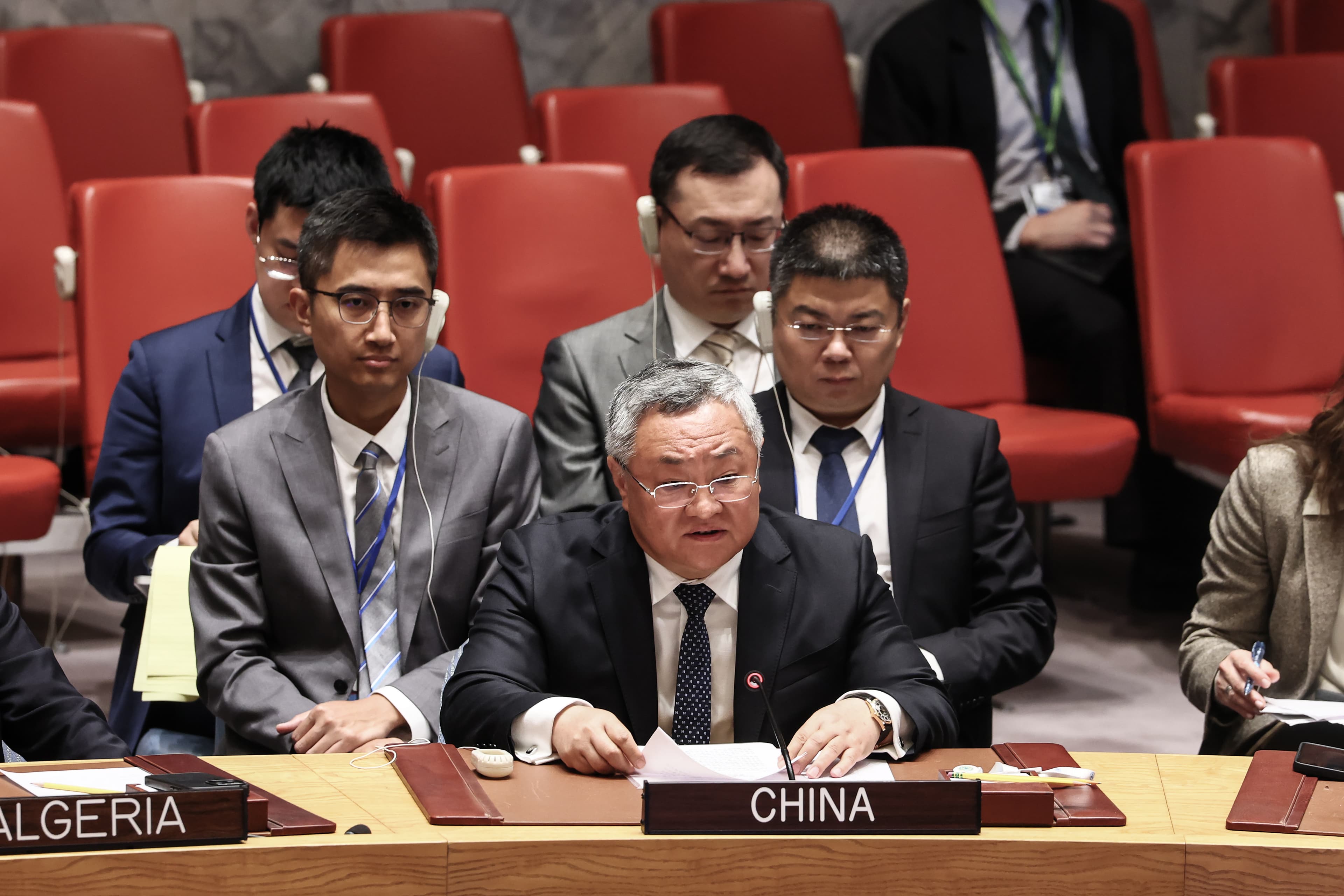

China and Russia used their veto power on April 7 to block a United Nations Security Council resolution to coordinate efforts to protect maritime trade routes along the Strait of Hormuz.
The narrow waterway has come under Iranian attack in recent weeks.
As permanent members of the U.N. Security Council, Russia and China both possess veto power to block measures before the international body.
They both exercised their vetoes on Tuesday.
The proposed resolution was the latest pitch to protect maritime traffic in the Strait of Hormuz, which forms a chokepoint along a major artery for the export of petrochemicals and other global commodities.
Iranian forces began targeting ships in the strait after U.S. and Israeli forces launched attacks on Iran on Feb. 28.
These attacks have damaged several tankers and caused commercial ships to hesitate, slowing overall traffic through the waterway, constraining global fuel supplies, and driving up costs.
Eleven members of the Security Council voted in favor of the U.N. Security Council resolution on Tuesday. Colombia and Pakistan abstained.
Pakistan has acted as a mediator in negotiations between Washington and Tehran.
“Our objective is clear: a permanent end to hostilities, containing the expansion of this conflict and preventing any further loss of civilian life or destruction of critical infrastructure,” Pakistani ambassador Asim Iftikhar Ahmad said following the failed vote on Tuesday.
The U.N. Security Council vote came hours ahead of a deadline, set by U.S. President Donald Trump, for Tehran to accept terms to end the fighting.
Trump has threatened extensive attacks on Iran’s energy sector and other critical infrastructure if no deal is reached by 8 p.m. (EST) on April 7.
The resolution before the Security Council had undergone multiple revisions before the vote, in an effort to win over holdouts.
An earlier draft of the resolution, submitted by Bahrain, would have authorized countries to use “all necessary means” to protect the strait.
Subsequent drafts of the proposed resolution called for the authorization of “all defensive means necessary” to protect traffic in the waterway, and limited the authorization to the Strait of Hormuz rather than adjoining waterways like the Persian Gulf and Gulf of Oman.
Bahrain’s Foreign Minister Abdullatif bin Rashid Al Zayani said the outcome of the Tuesday vote sends a signal “that threats to international waterways can pass without any decisive action by the international community.”
U.S. Ambassador to the U.N. Mike Waltz joined in the condemnation, saying Beijing and Moscow have “sided with a regime that seeks to intimidate the Gulf into submission, even as it brutalizes its own people during a national internet blackout for daring to imagine dignity or freedom.”
Waltz also called on the international community to join the United States in working to secure the Strait of Hormuz.
U.S. forces have already reported damaging or destroying more than 155 Iranian naval vessels, including dozens of minelaying ships that could be used to obstruct the strait.
Explaining their “no” votes, Beijing and Moscow’s representatives at the U.N. both said the resolution Bahrain had submitted did not address the root causes of the current standoff in the Strait of Hormuz.
They both blamed the standoff on what they described as illegal attacks by the United States and Israel on Iran.
The Trump administration has said that the military operation against Iran was a preemptive attack to prevent a terrorism-backing regime from obtaining a nuclear weapon.
Iranian Ambassador to the U.N. Amir-Saeid Iravani said Iran’s attacks in the Strait of Hormuz have targeted ships associated with countries that have been aggressive toward Tehran, and its allies and partners.
Iravani also denounced a threat Trump made that “a whole civilization will die tonight, never to be brought back again” if Tehran doesn’t meet the peace deal deadline.
The Associated Press contributed to this report.
Trump wrote in a post on Truth Social that “a whole civilization will die tonight” if Iran persists in its refusal to open the Strait of Hormuz to oil traffic.
Addressing the United Nations Security Council, Iravani described the comment as “rhetoric … unfitting of any political leader.”
Iravani further stated that the comments “constitute incitement to war crimes and potentially genocide.”
Separately, a spokesperson for the international body said that U.N. Secretary-General António Guterres was "very troubled" by Trump’s statement.
"There is no military objective that justifies the wholesale destruction of a society's infrastructure or the deliberate infliction of suffering on civilian populations," the spokesperson, Stéphane Dujarric, said at a press briefing.
“The President has been made aware of the proposal, and a response will come,” White House press secretary Karoline Leavitt said in a statement to The Epoch Times.
House Minority Leader Hakeem Jeffries (D-N.Y.), Democratic Whip Katherine Clark (D-Mass.), Democratic Caucus Chair Pete Aguilar (D-Calif.), Democratic Caucus Vice Chair Ted Lieu (D-Calif.), Assistant Democratic Leader Joe Neguse (D-Colo.), and Democratic Congressional Campaign Committee Chair Suzan DelBene (D-Wash.) criticized President Donald Trump in a joint statement.
“[Trump’s] statement threatening to eradicate an entire civilization shocks the conscience and requires a decisive congressional response,” the statement reads, adding that the president is plunging the United States into World War III.
House Democrats accused their Republican counterparts of enabling and excusing Trump’s actions.
Gas prices have skyrocketed, billions in taxpayer dollars have been wasted, over a dozen U.S. troops have been killed, and hundreds more injured, the Democrat lawmakers said, adding, “It’s time for House Republicans to put patriotic duty over party loyalty and join Democrats in stopping this madness.”
Madagascar and several other African nations have implemented sharp fuel price increases, electricity rationing, and other energy-saving measures in response to the global surge in oil prices.
"This decision was taken following the observation that the country is facing a deep crisis due to disruptions in energy supply across the island, linked to the conflict in the Middle East," the cabinet said in a statement.
"The declaration of a state of energy emergency allows authorities to take exceptional and urgent measures to restore energy supply and ensure the continuity of public services."
“Today as we all know there was this threat against all the people of Iran. This is truly unacceptable,” he told reporters.
“Diplomatic efforts for peaceful settlement of the ongoing war in the Middle East are progressing steadily, strongly and powerfully with the potential to lead to substantive results in near future,” wrote Pakistani Prime Minister Shehbaz Sharif on X.
Pakistan called for Iran to open the Strait of Hormuz for two weeks “as a goodwill gesture.”
“Such actions could lead to a severe radiological accident, with serious and long-term health consequences for people now and for generations to come, while also harming the environment across Iran, the region, and beyond,” WHO Director-General Tedros Adhanom Ghebreyesus posted on X.
He reiterated his call for “all parties to rapidly choose a peaceful path out of this escalating conflict to protect public health and prevent a human and environmental catastrophe.”
The agency’s forecast assumes the war with Iran will not persist past April and bases its prediction on the future of fuel prices on three factors.
"First, to even run our model we have to make an assumption about the duration of the Strait of Hormuz closure,” EIA Administrator Tristan Abbey said. “Second, we know that the closure is forcing production to shut in, but we can only estimate these outages.”
The third factor hinges on the strait’s closure and its eventual reopening, which has never been seen before.
“What exactly that looks like remains to be seen,” Abbey said. “Full restoration of flows will take months.”
The EIA emphasized it can only make estimates on these factors, but its modeling indicates that fuel prices will keep rising until the conflict is resolved.
As part of its forecast, the EIA predicted the Brent crude oil price will fall below $90 per barrel in the fourth quarter of fiscal year 2026 and average $76 per barrel in 2027.
On gasoline and diesel prices, the report forecasts an average of about $3.70 and $4.80 this year, respectively.
The deal was reported by Iran’s state-run IRNA news, which said the former prisoners were exchanged for an Iranian woman, Mahdieh Esfandiari, who was detained over social media content. The French government will also drop its case against Iran.
The two French women were detained for three-and-a-half years and had been confined to France's embassy in Tehran since their release from prison in November 2025.
France maintains that the espionage charges are unfounded.
The decision came “in appreciation of the patriotic stances of the outgoing prime minister” Mohammed Shia al-Sudani, the group said, without offering additional details.
While both the U.S. and Iraqi officials had blamed Kataib Hezbollah for kidnapping Kittleson, the group had not previously claimed responsibility.
Working as a freelance journalist, Kittleson, 49, had lived abroad for years before she was kidnapped. She had used Rome as a home base while reporting throughout the Middle East, including in Iraq and Syria.
Kittleson entered Iraq not long before her abduction. U.S. officials said they had warned her of threats against her life, but she decided to stay.
“This conduct by the Commander-in-Chief is dangerous and disgraceful,” Rep. Donald Norcross (D-N.J.) said on X on April 7. “Congress has a duty to hold the President accountable for his actions, and it’s about time we took action.”
On Tuesday, Rep. Dwight Evans (D-Pa.) said in a post on X that Trump’s threat “is a direct call for war crimes.”
A few Democrats even called for the 25th Amendment of the Constitution to be invoked.
“The President is threatening genocide and possible use of nuclear weapons against Iran,” Rep. Joaquin Castro (D-Texas) said on X in an April 7 post.
“It’s clear the President has continued to decline and is not fit to lead. The members of his Cabinet must invoke the 25th Amendment immediately.”
“This is beyond unacceptable. This shows that the president is unfit to serve,” Rep. Rob Menendez (D-N.J.) said in an X post on Tuesday.
“The whole world has been impacted, unfortunately, because Iran is violating every law known by striking commercial vessels in the Straits of Hormuz,” Rubio told reporters at the State Department on April 7.
“It’s a big problem for the world.
“I mean, this is a regime that doesn’t believe in laws and rules or anything like that. It’s a state sponsor of terrorism so it is not surprising that they’re now conducting terrorist operations against commercial vessels.”
Rubio declined to answer a question about what President Donald Trump meant when he said that “a whole civilization will end tonight” if Iran does not meet U.S. demands to reopen the strait.
The U.S. Embassy in Cairo advised Americans to “closely monitor the news for regional developments related to military operations in Iran” and “exercise caution” as the conflict intensifies.
“Iran and its aligned terrorist militias may intend to target universities in the Middle East,” the Department of State Consular Affairs said in the warning.
“Extremists and Iranian-aligned actors have expressed interest in planning and carrying out attacks in the region.
“Iran has specifically threatened American universities across the Middle East.”
Other potential targets include religious and tourist sites, transportation centers, and foreign and U.S.-affiliated organizations, the department said.
This comes ahead of President Donald Trump’s Tuesday 8 p.m. ET deadline for Iran to open the strait or else face attacks on its bridges and power plants.
Lebanon’s health ministry said in a statement on Tuesday that 1,530 people have been killed between March 2 and April 7, including 102 women, 130 children, and 57 people in the health sector.
Another 4,812 have been wounded during the war, it said.
It’s not clear how many of the casualties include members of Hezbollah.
Eleven Israeli soldiers have also died amid the fighting.
The Israeli military said on March 10 that rockets fired from Lebanon toward central Israel lightly injured several civilians, but that most of the rockets were intercepted.
A drone dive-bombed into a home in the village of Zargazawi, in Irbil province, early Tuesday, killing a couple as they slept, authorities said. The strike, part of a broader wave of Iranian attacks on Iraqi Kurdistan, highlighted the growing risks to civilians as Tehran retaliates against the United States and Israel by targeting their allies in neighboring countries.
The couple’s children, who were sleeping in another room, were not injured. Aladdin Jabbar, a relative, said the victims’ bodies were torn beyond recognition as he surveyed the damage.
“It was a huge injustice,” he said.
Regional officials condemned the attack and called on the Iraqi government to take stronger measures to protect the Kurdish population.
This comes ahead of President Donald Trump’s Tuesday 8 p.m. ET deadline for Iran to open the Strait of Hormuz or else face the bombing of infrastructure and power plants.
“To the extent possible, remain in a secure structure, and stay away from windows,” the embassy said in a statement on April 7. “We recommend all Americans in Bahrain do the same until further notice.”
The statement provided details explaining the warning, saying: “Iran and its aligned terrorist militias may intend to target American universities in Bahrain. Iran has specifically threatened American universities across the Middle East.”
The Israel Defence Forces (IDF) struck eight bridge segments, which it said were used by Iran to transport weapons and military equipment across Iran, including around Tehran, Karaj, Tabriz, Kashan, and Qom.
The IDF said it took steps to mitigate harm to civilians during the attack.
“This is no longer the same Iran, nor is it the same Israel. We are changing the balance of power from one end to the other,” Israeli Prime Minister Benjamin Netanyahu said in a video released by his office.
The military also warned that recent Iranian strikes on Saudi Arabia could derail attempts at diplomacy.
The comments came from a meeting of top commanders led by Army Chief Field Marshal Asim Munir, according to a statement from the Pakistani military.
“The [Pakistan] military strongly condemned the strikes on Saudi Arabia’s petrochemical and industrial facilities,” the statement said, calling it an “unnecessary escalation.”
Those strikes could undermine “sincere efforts to resolve the conflict through peaceful means,” the statement said.
“Despite grave provocations,” Saudi Arabia’s restraint has allowed mediation and diplomacy to move forward, but subsequent attacks risk destroying the “conducive environment” required to negotiate, the meeting of commanders noted.
Macron thanked Oman for its mediation efforts.
“I hope they’re smart,” he said during a press conference in Hungary.
Vance said the United States had already defeated Iran militarily and that the Middle Eastern country was now “trying to exact as much economic pain on the world as possible” by keeping the Strait of Hormuz closed.
He said the United States “has the ability to extract much greater economic cost on Iran than Iran has an ability to extract cost on us or on our friends in the world.”
“We feel confident that we can get a response, whether it is positive or negative, by 8 o’clock tonight,” he said.
The IRGC said the attacks were "in response to the enemy's crimes in the aggression against (Iran's) Asaluyeh petrochemical plants."
Oil giant Saudi Aramco and its petrochemical subsidiary SABIC, as well as some Western energy producers, are all located in the area.
The Iranian military said it had "effectively targeted [the Sadara complex] with medium-range missiles and several suicide drones.”
This comes on the heels of claims by Iran that similar strikes were carried out on petrochemical facilities in Israel, and U.S. military bases in the United Arab Emirates and Kuwait.
Iran’s Mehr news agency said the United States and Israel had carried out several attacks on the island and that a number of explosions had been heard.
On March 13, U.S. President Donald Trump said military targets on the island had been “obliterated,” but he had previously promised not to damage the oil and gas infrastructure because if there was regime change in Tehran, it would take years for the new government to rebuild.
Trump has said April 7 would be “Power Plant Day, and Bridge Day” if the Iranian regime did not agree to a deal and reopen the Strait of Hormuz by 8 p.m. ET.
Trump said he does not want that outcome, adding that Iran’s new leadership could still deliver a “revolutionarily wonderful” shift if “different, smarter, and less radicalized minds prevail,” suggesting the moment could mark a historic turning point.
The remarks came a day after Trump said that the United States could “take out” Iran in one night if Tehran refuses terms that include reopening the Strait of Hormuz.
Diplomatic efforts intensified in parallel, with the Iranian ambassador to Pakistan signaling talks had reached a “critical” stage, even as Tehran rejected a temporary cease-fire in favor of a permanent settlement with guarantees.
Inside Iran, officials urged citizens to form human chains around power plants amid fears of U.S. strikes.
At the same time, the IDF said it hit a large ballistic missile array site in northwestern Iran, expanding a campaign aimed at degrading Tehran’s weapons production and delivery capabilities.
The latest strikes follow Israel’s April 6 attack on the South Pars petrochemical complex in Asaluyeh, a core energy hub responsible for roughly half of Iran’s petrochemical output.
Israeli officials have said the strikes are aimed at weakening Iran’s military capabilities and disrupting industries that support its weapons programs.
The escalation comes as cease-fire efforts intensify ahead of a deadline set by U.S. President Donald Trump for Iran to reopen the Strait of Hormuz, with Tehran so far rejecting key demands despite mounting pressure.
Istanbul Governor Davut Gul told reporters in Istanbul that the clash erupted near the building housing the consulate, which he noted has been unstaffed for about two-and-a-half years.
The exchange of fire lasted several minutes, with footage circulating on social media showing police taking cover and returning fire as shots rang out in the area.
The motive behind the attack and the identities of the assailants were not immediately known.

“Power plants that are our national assets and capital, regardless of any taste or political viewpoint, belong to the future of Iran and to the Iranian youth,” Alireza Rahimi, identified by Iranian state television as the secretary of the Supreme Council of Youth and Adolescents, said on April 7.
Trump on April 5 threatened to target Iran’s power plants and bridges if the Strait of Hormuz is not reopened.
“Tuesday will be Power Plant Day, and Bridge Day, all wrapped up in one, in Iran,” the U.S. president wrote in a Truth Social post.
Iranian Gen. Hossein Yekta, previously identified as leading plainclothes units of the all-volunteer Basij force, urged parents on April 7 to send their children to man checkpoints, which are also repeatedly targeted in airstrikes.
Moghadam added that people should “Stay Tuned for more” in the brief social media post, which didn’t reveal any specifics about what Pakistan had been doing to secure a cease-fire deal.
Pakistan has been attempting to bring the conflict to a close since it began, trying to leverage its ties with both the United States and Iran to defuse the situation.
Pakistan, along with China, on March 31 called for an immediate cease-fire in the Middle East and put forward a five-point peace plan. Though that plan has not been formally rejected by the United States or Iran, hostilities continue.
Pakistani Foreign Minister Ishaq Dar and Egyptian Foreign Minister Badr Abdelatty spoke on the telephone, according to an April 7 post on X by Pakistan’s Ministry of Foreign Affairs, which said the ministers “underscored the need for deescalation and dialogue; and agreed to stay closely engaged as the situation evolves.”
Abdelatty also spoke with U.S. special envoy Steve Witkoff, Iraqi Foreign Minister Fouad Hussein, and Jean Arnault, personal envoy of the secretary-general of the United Nations to the Middle East.
Those discussions, which took place on April 6, included “an assessment of the rapidly evolving situation and the efforts being made to reach understandings between the United States and Iran,” the Egyptian Foreign Ministry said in a statement.
“Dear Citizens, for the sake of your security, we kindly request that from this moment until 21:00 Iran time, you refrain from using and traveling by train,” the IDF warned on its Farsi language account on X on April 7.
“Your presence on trains and near railway lines endangers your life.”
The warning is likely a signal that rail lines will be a target for airstrikes throughout the day.
Tuesday is also the White House’s deadline for the Iranian regime to reopen the Strait of Hormuz to all vessels or face the wrath of the U.S. military.
Air New Zealand is the latest to join the trend, as the airline plans to cut flights and raise ticket prices.
The company tied the change directly to the Iran war, saying that jet fuel costs have doubled since the conflict began. It said the planned cuts would affect around 4 percent of flights.
In the United States, Delta Airlines has stated that its jet fuel costs increased by as much as $400 million in March—an added expense the company plans to recoup by raising ticket prices.
American Airlines announced similar price increases in the first quarter of the year due to the war.
Air France–KLM also announced that its long-haul ticket prices would increase.
Aside from labor, fuel is the airline industry’s largest expense, and the conflict has led to the sector’s biggest crisis since COVID-19.
Spokesperson Stéphane Dujarric said that even if certain civilian infrastructure could be considered a military objective, an attack would still be unlawful if it poses a risk of “excessive incidental civilian harm.”
Dujarric added that it would ultimately be up to a court to determine whether such strikes constitute war crimes.
President Donald Trump threatened to strike power plants and bridges in Iran if the regime does not open the Strait of Hormuz by 8 p.m. ET Tuesday.
“We have a plan … where every bridge in Iran will be decimated by 12 o'clock tomorrow night,” Trump said from the White House.
“It'll happen over a period of four hours, if we wanted to,” the president said, before clarifying that “we don't want that to happen.”
Trump declined to say if any civilian targets would be off limits to the United States.
“I said to Steve [Witkoff], ‘What are they saying? Sir, they can't communicate,’” Trump said. “They have no method of communication.”
The United States and Iran are communicating like they used to “2,000 years ago, with children bringing a note back and forth,” the president said.
He spoke in response to a question about whether he supports Iran charging tolls for boats to pass through the strait.
“I'd rather do that than let them. Why shouldn't we?” he said. “We're the winner. We won, OK? They are militarily defeated. The only thing they have is a psychology of, ‘Oh, we're to drop a couple of mines in the water.’”
Rather, he said, the focus is on taking out Iran’s nuclear capabilities.
“I think they're sharper and far less radical,” he said, referring to Iran’s new leadership. “We have regime change. But we didn't do this for the regime change.”
Hegseth told Iran to choose wisely in response to President Donald Trump’s Tuesday deadline to reopen the Strait of Hormuz to shipping.
“This president does not play around,” Hegseth said. “You can ask [Qasem] Soleimani, you can ask [Nicolás] Maduro.”
“They just don’t want to say ‘uncle,’” Trump told reporters.
“They don’t want to cry, as the expression goes, ‘uncle,’ but they will. And if they don’t, they’ll have no bridges. They’ll have no power plants. They’ll have no anything.
“I won’t go further because there are other things that are worse than those two.”