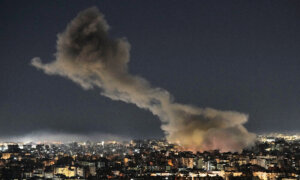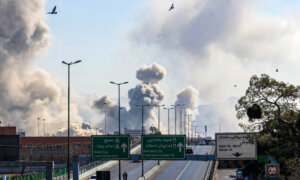

The U.S. military will remain in the Strait of Hormuz to ensure Tehran complies with the cease-fire and allows all ships to pass through.
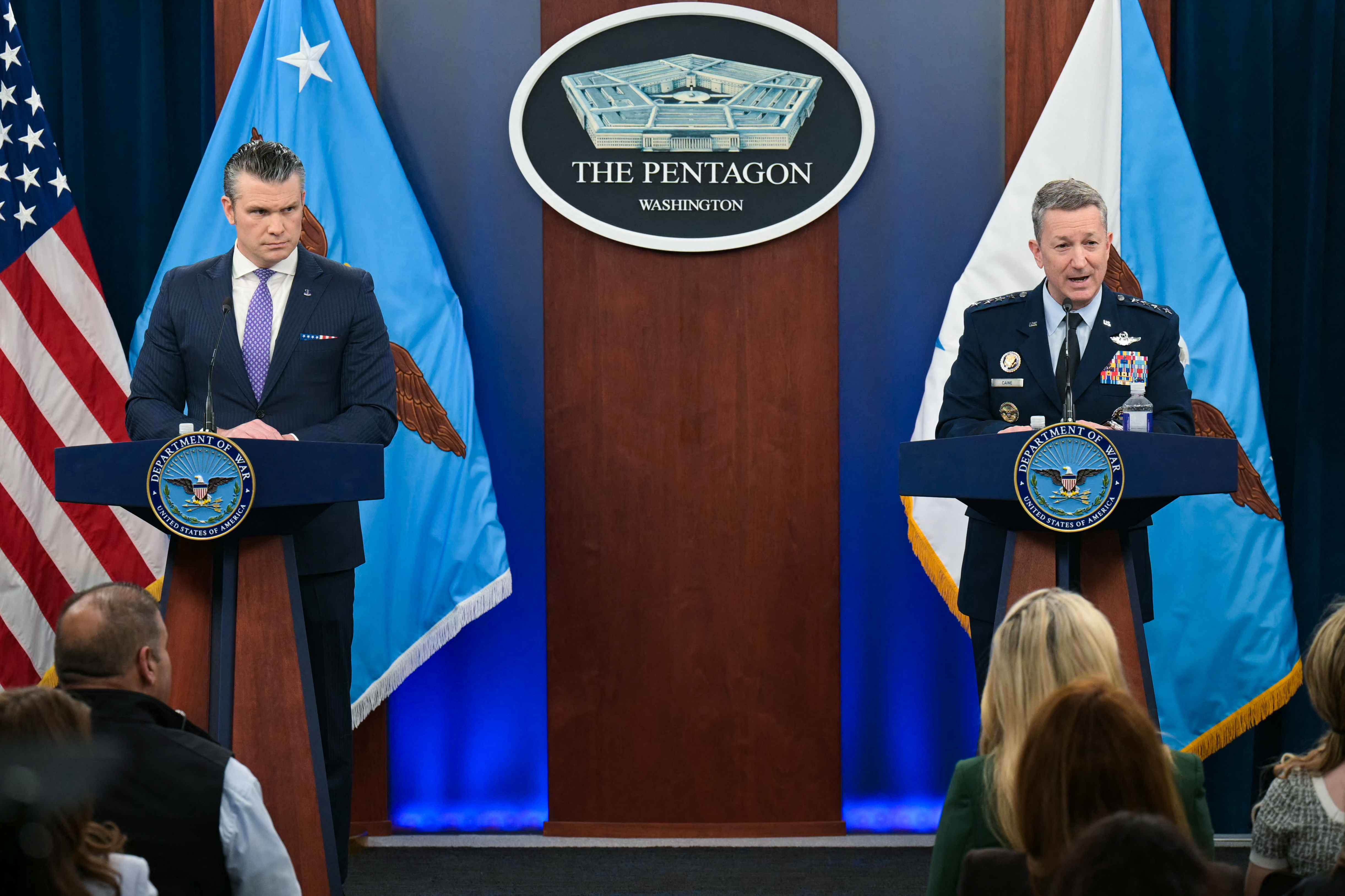
U.S. Secretary of War Pete Hegseth told reporters at the Pentagon on April 8 that the United States will continue to maintain a military presence in Iran.
The war secretary added that the U.S. military “will be hanging around.”
“We’re not going anywhere. We’re going to make sure Iran complies with this cease-fire, and then, ultimately, comes to the table and makes a deal,” he said.
This comes the morning after President Donald Trump announced a two-week cease-fire with Iran as negotiations between the two nations continue.
In a statement posted on X, Iranian Foreign Minister Abbas Araghchi said, “For a period of two weeks, safe passage through the Strait of Hormuz will be possible via coordination with Iran’s Armed Forces.”
At the Pentagon briefing, Joint Chiefs Chairman Gen. Dan Caine said the United States welcomes the ceasefire agreement with Iran, but remains ready to “resume combat operations” if needed.
Caine said the military hopes “Iran chooses a lasting peace.”
“Let us be clear: A cease-fire is a pause, and the joint force remains ready—if ordered or called upon—to resume combat operations with the same speed and precision as we’ve demonstrated over the last 38 days,” he added.
Hegseth also said the nation has agreed to work with the United States on extracting enriched uranium.
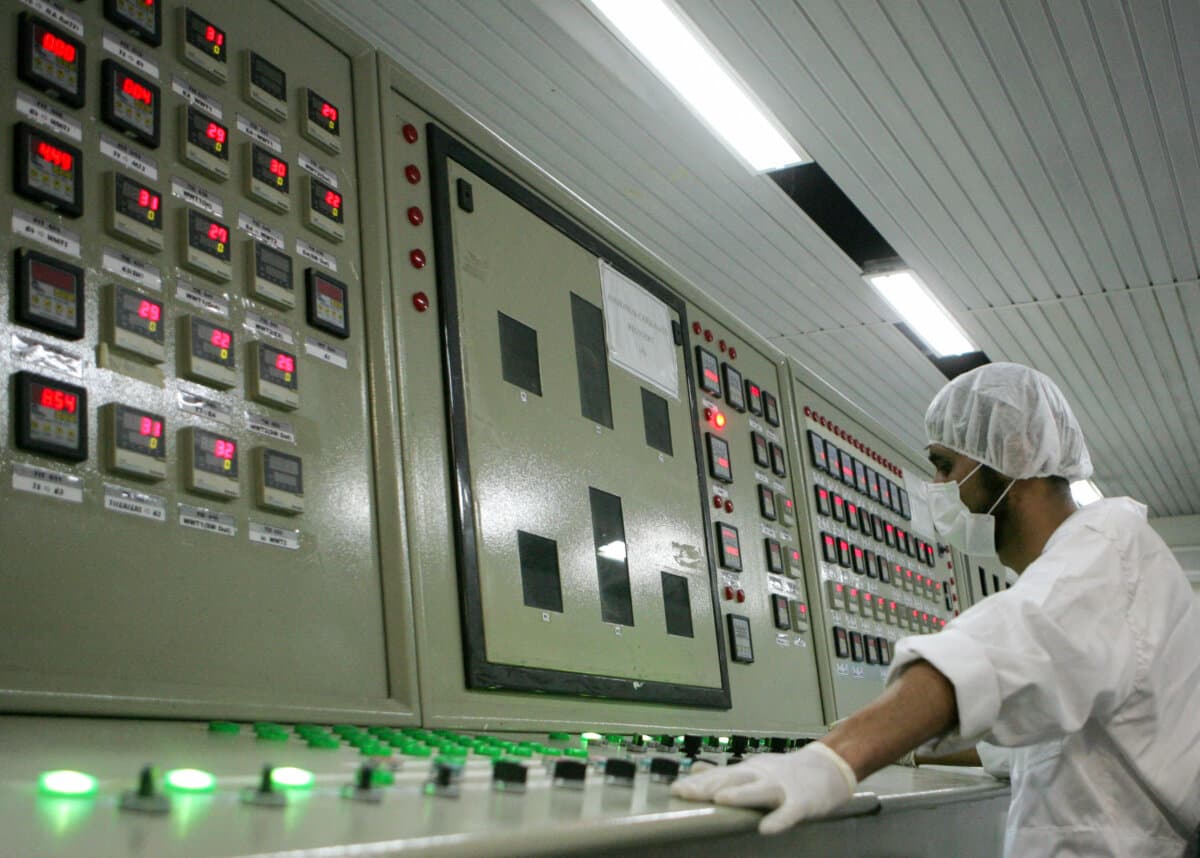
An Iranian technician works at the control room of the Isfahan Uranium Conversion Facilities in Iran on Feb. 3, 2007. (Behrouz Mehri /AFP via Getty Images)
According to Hegseth, Iran will give the uranium to the United States “voluntarily,” but he said the military would also take it by force.
“If we have to do something else ourselves, like we did Midnight Hammer ... we reserve that opportunity,” he said.
Hegseth said the new Iranian regime knows that it will “never have a nuclear weapon or the capability to get a path to one.”
The military has currently achieved every goal in the war with Iran, according to the Pentagon chief.
“In less than 40 days, one of our combatant commands ... using less than 10 percent of America’s total combat power, dismantled one of the world’s largest militaries, the world’s leading state sponsor of terrorism,” Hegseth said.
The secretary of war also said that while Iran could attempt to take aim at Americans, its command system is decimated and coordination would be almost impossible.
“They can no longer build missiles, build rockets, build launchers, or build [unmanned aerial vehicles],” Hegseth said. “Their factories have been razed to the ground, set back in historic fashion.”
According to Caine, in just 38 days, the United States has “devastated the regime’s ability to harm Americans and our interests for years to come.”
In his rundown of accomplishments, the chairman of the Joint Chiefs said that U.S. forces struck more than 13,000 targets, about 80 percent of Iran’s air defense systems, and took out more than 450 ballistic missile storage facilities.
Caine also reiterated a comment from earlier briefings, saying, “We succeeded because the joint force is always at the ready ... and they remember, first, foremost, and always that we do these things so that others may live.”