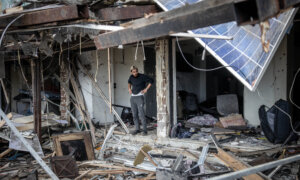

“I will be going to Dover Air Force Base tomorrow, with the First Lady and Members of my Cabinet, to pay our Highest Respect to our Great Warriors, who are returning home for the last time,” Trump wrote in a Truth Social post on March 6. “GOD BLESS THEM ALL!”
The servicemembers killed on March 1 are identified as Capt. Cody Khork, Sgt. 1st Class Nicole Amor, Sgt. 1st Class Noah Tietjens, Sgt. Declan Coady, Maj. Jeffrey R. O'Brien, and Chief Warrant Officer 3 Robert M. Marzan.

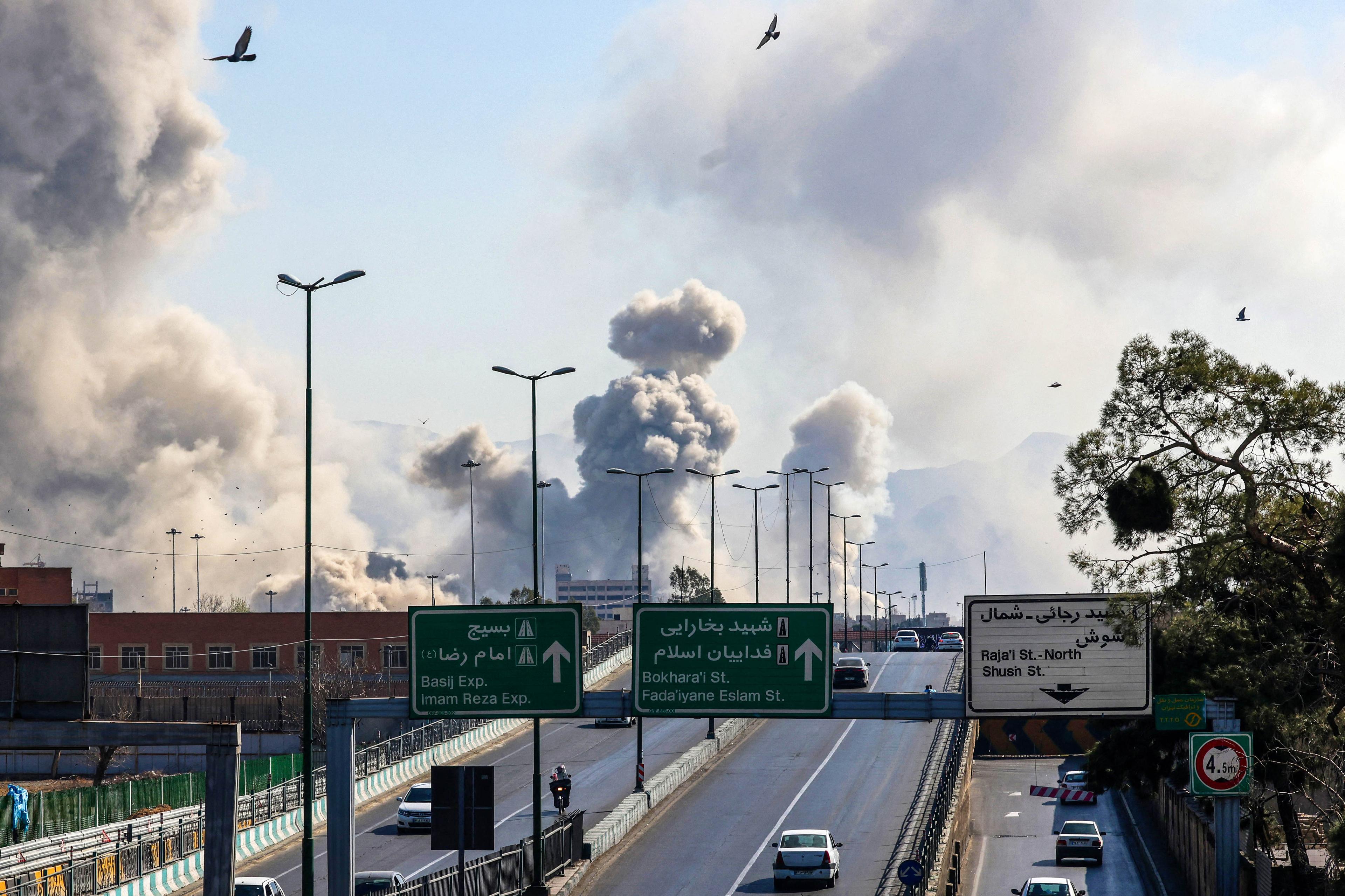
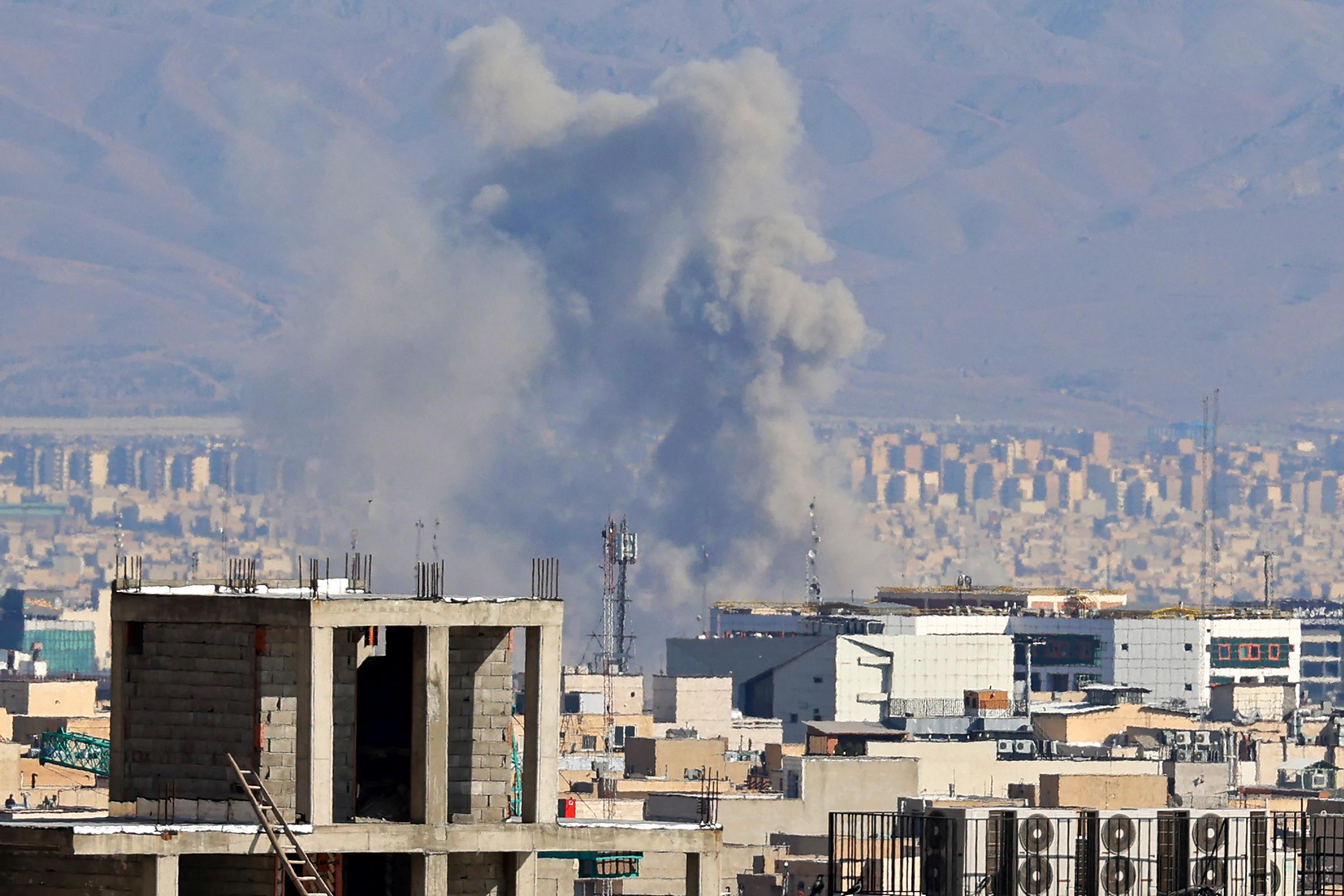
Meanwhile, Iranian state media reported explosions from a fresh wave of Israeli strikes early Saturday, with targets including an area near Mehrabad Airport in western Tehran.
Sirens also sounded in Bahrain in the early morning hours, as its Ministry of Defense urged citizens to remain calm and head for shelter.
Iran continued its strikes on Israel, with an Associated Press video showing what appeared to be ballistic missiles dropping cluster bombs on the West Bank.
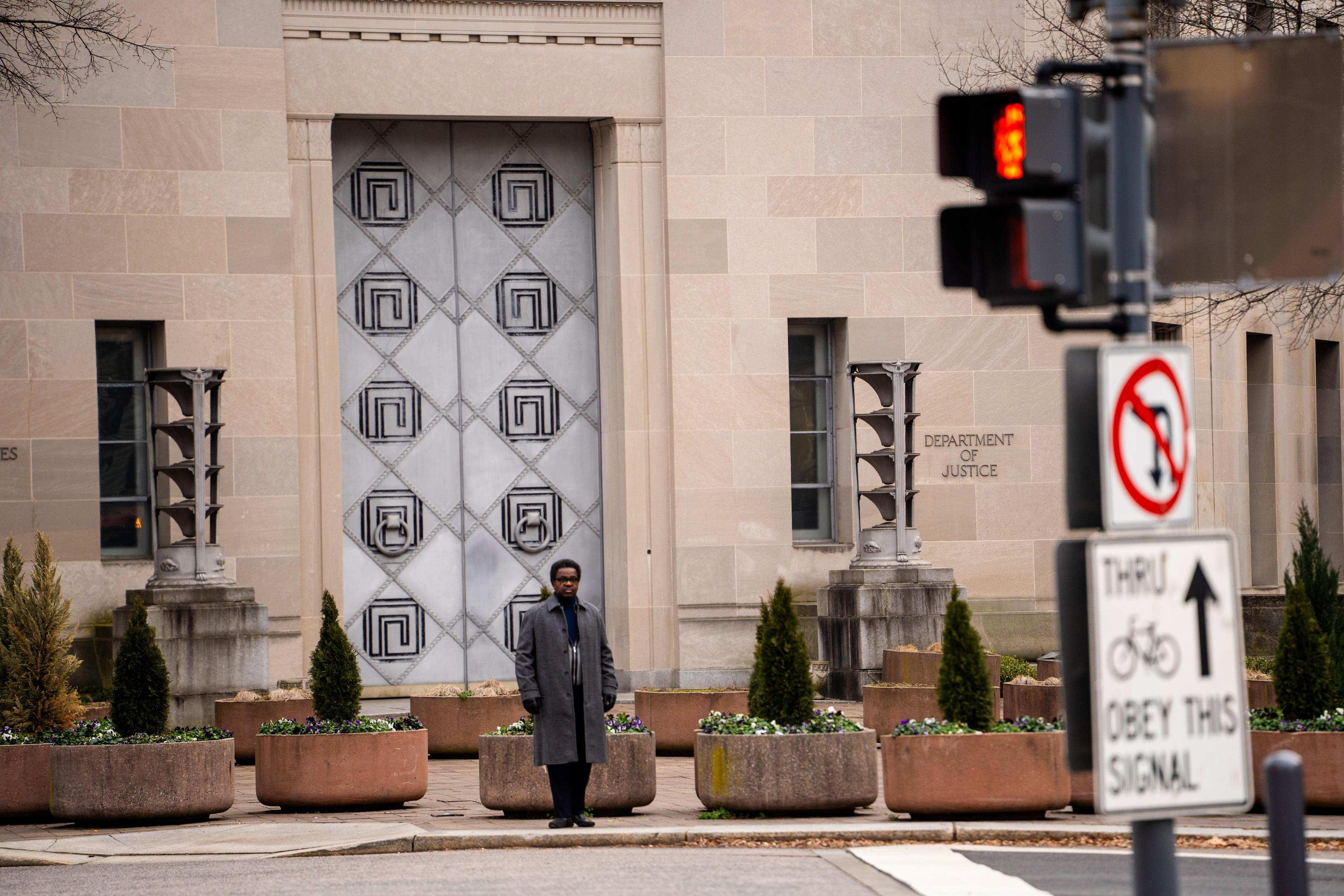

The Department of Justice (DOJ) filed two lawsuits on March 6 in federal court, seeking forfeiture of more than $15.3 million that was allegedly used to finance the illicit distribution of sanctioned Iranian oil.
The lawsuits come after the United States and Israel launched coordinated airstrikes against Iran on Feb. 28 that led to the death of Iran’s supreme leader, Ayatollah Ali Khamenei. The military effort is ongoing.
The new legal complaints filed in federal court in the nation’s capital allege that Iranian oil magnate Mohammad Hossein Shamkhani has run a network of companies and individuals that has sold and shipped Iranian oil and other commodities in violation of U.S. sanctions.
The federal government said last summer that Shamkhani uses a complex system of intermediaries to control a network of container ships and tankers that sell Iranian and Russian oil, as well as other goods, across the world.
The government also said at the time that Shamkhani takes advantage of personal connections and corruption in Tehran to produce tens of billions of dollars in profits, a large portion of which is used to support the Iranian regime.
The complaints say Shamkhani hid the source of the oil and the role that Iranian persons and entities played in the transactions, and used the funds at issue to run several distribution companies in his network.
The complaints also say Shamkhani is the son of Ali Shamkhani, “a top political advisor to the Supreme Leader of Iran.” Ali Shamkhani is the former head of Iran’s National Defense Council, according to the Treasury Department’s Office of Foreign Assets Control (OFAC), which sanctioned the younger Shamkhani on July 30, 2025.
Assistant U.S. Attorney General A. Tysen Duva of the DOJ’s criminal division said the new lawsuits demonstrate that the department is working “to prevent Iranian-backed shadow companies from using the U.S. financial system to support terrorist organizations, in violation of U.S. sanctions against Iran.”
“Shamkhani and the Shamkhani Network allegedly attempted to clandestinely use U.S. financial institutions to enrich themselves by evading sanctions on Iran and benefit Iran’s terrorist networks,” he said in a statement.
In these forfeiture actions, the federal government is suing the property itself, as opposed to any specific individuals or entities, on the theory that the property was involved in illicit conduct.
If the government prevails in the lawsuits, it will acquire ownership of the property without having to compensate its current owner.
The first lawsuit, which targets $12,973,529 on deposit with the U.S. Treasury in New York, states that the government is investigating Shamkhani’s “distribution and sale of petroleum products and other commodities using a network of individuals, front companies, shipping companies, and financial institutions.”
The complaint says Shamkhani’s property was intended “to promote ongoing violations of U.S. sanctions laws,” and gives his network “a source of influence over entities that have engaged in federal crimes of terrorism,” including the National Iranian Oil Company, and the Islamic Revolutionary Guard Corps (IRGC), including the IRGC Quds Force.
The IRGC and the IRGC Quds Force have been formally designated in the United States as foreign terrorist organizations.
Citing the OFAC, the complaint says Shamkhani’s network consists of a large fleet of vessels, ship management companies, and front companies that “launder billions in profits from global sales of Iranian and Russian crude oil and other petroleum products, most often to buyers in China.”
The second lawsuit, which targets $2.4 million on deposit with the U.S. Treasury in New York, largely repeats the allegations against Shamkhani from the first lawsuit.
Both sets of funds that are allegedly linked to Shamkhani should be forfeited to the U.S. government because “they afford a person a source of influence” over the National Iranian Oil Company, the IRGC, and the IRGC Quds Force, and are intended to promote violations of U.S. sanctions issued under the International Economic Emergency Powers Act, the DOJ said.
The Epoch Times was unable to reach Shamkhani for comment.
The new lawsuits regarding Shamkhani’s assets came a week after the DOJ sued for forfeiture of the seized motor tanker Skipper, which allegedly violated U.S. sanctions by carrying Venezuelan and Iranian oil.
The United States seized the vessel in the Caribbean Sea in December 2025, along with its cargo of 1.8 million barrels of crude oil, under a judicially authorized seizure warrant.
The United States began seizing ships in December 2025 to target the so-called shadow fleet evading U.S. sanctions on Venezuela and sanctions related to Iranian and Russian oil.
Reuters contributed to this report.
"Iran strongly welcomes the escort of oil tankers and that U.S. forces will be there for the crossing of the Strait of Hormuz,” Iran’s Revolutionary Guards spokesperson Alimohammad Naini said on Friday. “And we are, by the way, awaiting their presence.”
Naini added a recommendation that, before the United States makes any decisions, it “remember the fire on the American supertanker Bridgeton in 1987 and the oil tankers that were recently targeted.”
The Bridgeton incident happened when an explosion of an Iranian mine crippled a tanker that the Navy was supposed to escort.
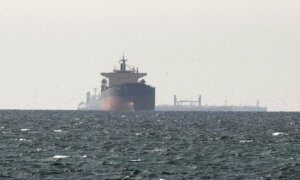
Around a fifth of the world’s crude oil and petroleum products pass through the Strait of Hormuz.
The Trump administration has been trying to stabilize energy markets since the war against the Iranian regime started on Feb. 28.
Trump proposed on March 3 that the U.S. Navy could escort the tankers, if needed.
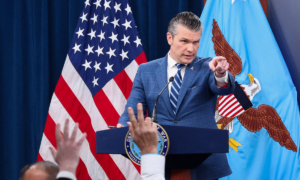
President Donald Trump “is well aware of who’s talking to who,” Hegseth said.
“Anything that shouldn’t be happening, whether it’s in public or back-channeled, is being confronted and confronted strongly,” he said.
He dismissed the suggestion that Russian intelligence could be jeopardizing Americans’ safety.
“No one’s putting us in danger. We’re putting the other guys in danger, and that’s our job. So we’re not concerned about that,” he said.
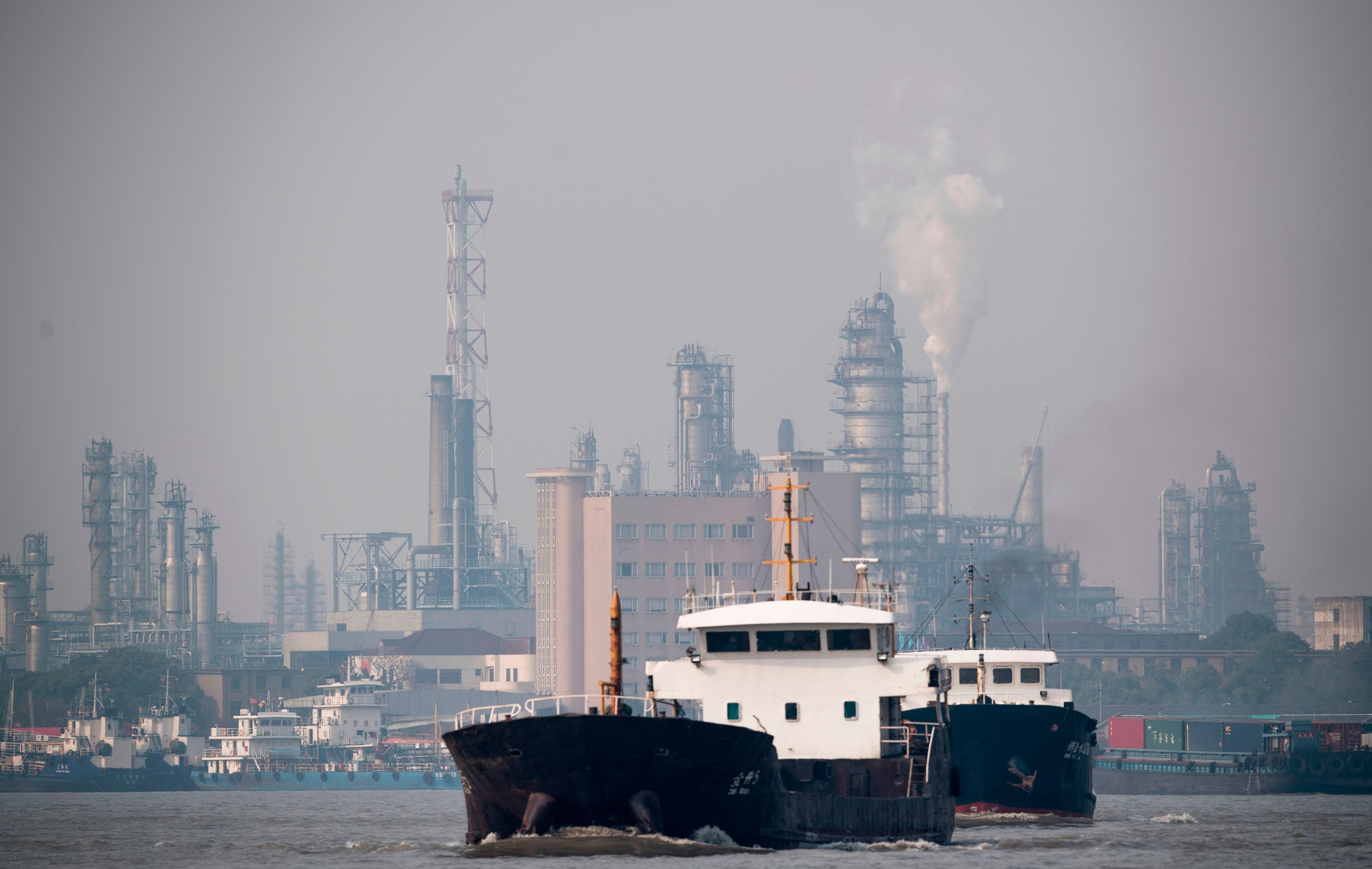

The Chinese Communist Party is slashing exports of oil products and other materials in what insiders describe as akin to “wartime measures” and potentially providing indirect support to Iran.
A source in China’s foreign trade sector familiar with import-export policy told the Chinese edition of The Epoch Times on March 6, using the pseudonym Huang Juguang out of fear of reprisal, that amid rising tensions in the Middle East, Beijing has ordered relevant domestic enterprises to tighten export controls on strategic materials, including tactical drones, rare-earth minerals, and refined petroleum products.
According to Huang, some technology companies and trading firms have already received verbal notices requiring additional reviews of export contracts and stricter approval procedures for the ones involving “sensitive regions.”
The directives come as joint U.S. and Israeli strikes on Iran have severely degraded the country’s military infrastructure and killed many senior leaders of the Islamic republic.
Beijing and Tehran have maintained friendly relations for years. Under a 25-year “comprehensive strategic partnership” agreement that Beijing and Tehran signed in 2021, China committed to invest $400 billion in telecom, banking, ports, and other infrastructure in Iran. In return, Iran agreed to keep the oil flowing.
China imported an average of 1.5 million barrels of Iranian crude per day in 2025, according to commodity analytics firm Kpler, which tracks global shipments. That accounted for about 12 percent of China’s total crude imports and about 90 percent of Iran’s oil exports. Much of that heavily sanctioned crude is believed to have been falsely relabeled to obscure its origin.
Beijing has so far neither confirmed nor denied reports that it has halted or restricted exports of refined petroleum products. At a press briefing on March 5, a spokesperson for China’s Foreign Ministry said it was “not aware” of such measures.
Measures of this kind will typically not be made public, Huang said, but are instead conveyed through industry regulators or state-owned enterprise channels.
“Companies are being required to reclassify and recount the export countries and destinations for drone equipment, rare-earth materials, and some energy products,” Huang said. “But in the end, customs will be the final gatekeeper.”
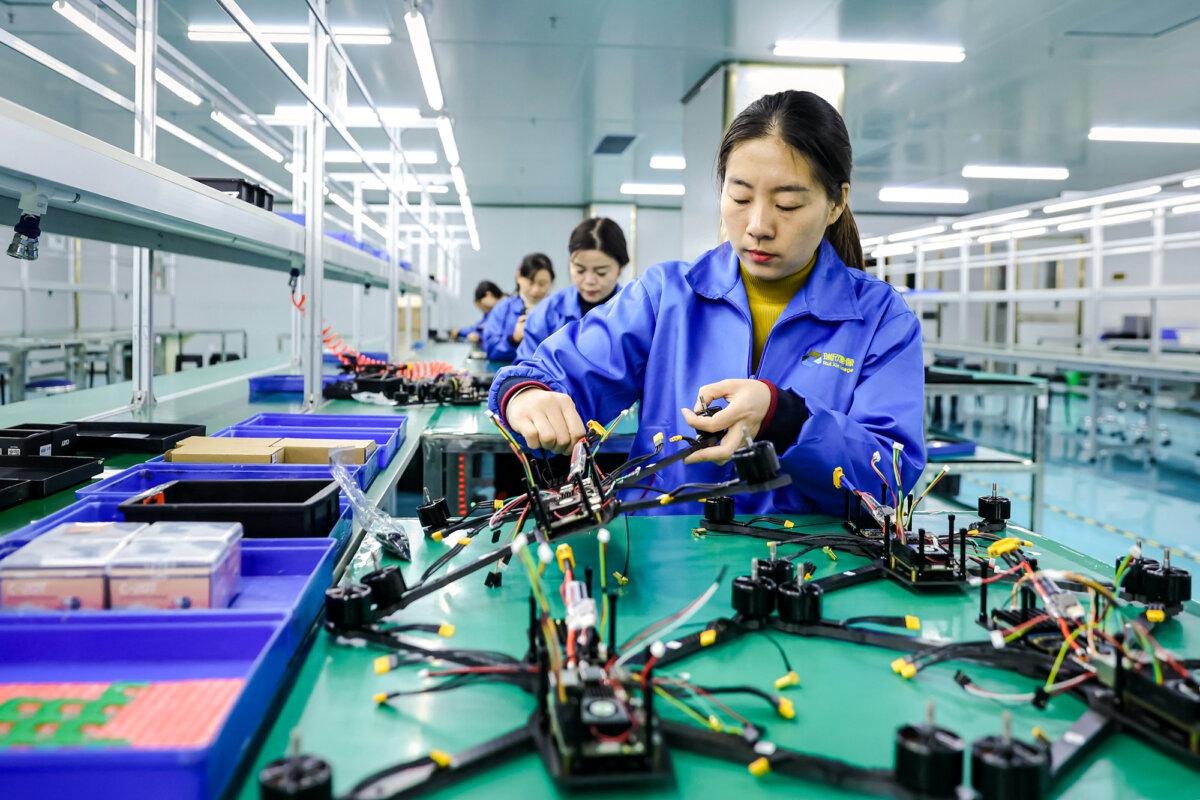
Employees work on a production line of drones intended for export at a factory in Ruichang, Jiangxi Province, China, on Nov. 27, 2024. (STR/AFP via Getty Images)
Tactical drones and their core components have grown increasingly sought-after amid their expanding use in conflicts from Ukraine to Iran and Yemen, and rare earths and rare minerals are critical inputs for missiles, radar systems, electronic equipment, and precision-guided weapons.
“Once these resources are brought under export controls, it could affect the military equipment supply chain in the relevant regions,” Huang said.
Another insider in China’s foreign trade industry, using only the surname Mou out of fear of reprisal, said the directive reflects Beijing’s inclination to favor Tehran in its ongoing conflict with the United States and Israel.
China’s reduction in refined petroleum exports could make it easier for Iran to sell its crude oil, Mou said. That, in turn, might complicate U.S. and Israeli efforts to enforce energy sanctions on Iran.
“Before this latest U.S.–Iran conflict broke out, China had already been importing large volumes of Iranian crude oil,” Mou said. “Now that it has suddenly restricted refined petroleum exports, I believe it is very likely that the Iranian side has made a request, hoping China would leave more room [for Iranian crude] in the [regional energy] market.”
On the other hand, he said, if the situation in the Middle East continues to escalate, China will have to prioritize domestic supply security.
Wu Kegang, a Beijing-based trade researcher, told The Epoch Times that China occupies a crucial position in the global supply chain for critical minerals and that any tightening of export restrictions by the government could have a major effect on international markets.
“These materials are treated in China as strategic resources and are indispensable to both the high-tech industry and the defense sector,” Wu said. “Judging from the current policy, it is already tantamount to activating wartime export restrictions.”
Wu also said that if the Middle East conflict drags on, Beijing may further tighten export measures or even suspend exports of related materials altogether.
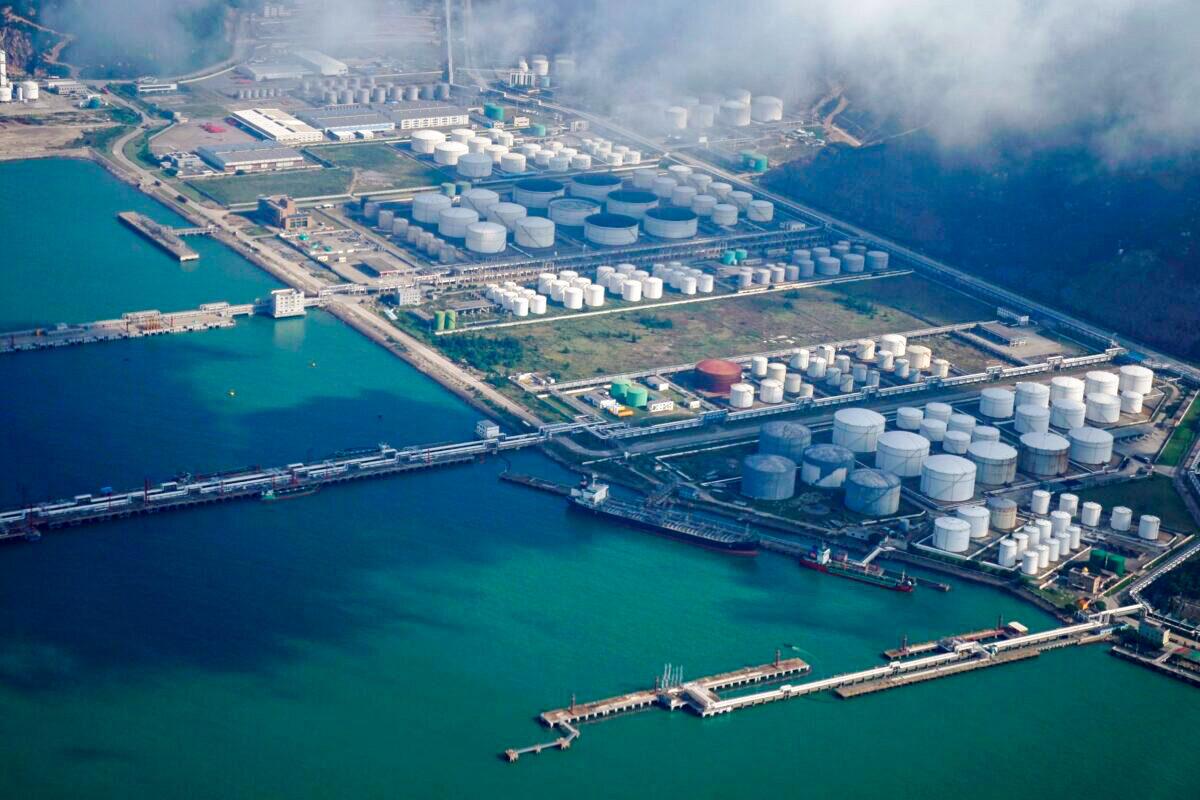
Oil and gas tanks are seen at an oil warehouse at a port in Zhuhai, China, on Oct. 22, 2018. (Aly Song/Reuters)
Publicly, Beijing has issued routine denouncements and called for a cease-fire, echoing language it used in January in response to the U.S. military operation in Venezuela.
Chinese Foreign Minister Wang Yi called the U.S. and Israeli military operations in Iran “unacceptable” after the initial strikes, and he condemned the killing of Iranian leader Ali Khamenei.
It’s the second time in two months that the United States has taken military action against a leader friendly to the Chinese Communist Party, after its surprise capture of Venezuelan leader Nicolás Maduro.
The strikes in Iran also come just weeks before President Donald Trump’s high-stakes meeting with Chinese leader Xi Jinping, where they are expected to extend a truce that would prevent the world’s two largest economies from imposing tariffs of as much as 125 percent on each other’s goods.
Hu Ying of the Chinese edition of The Epoch Times contributed to this report.
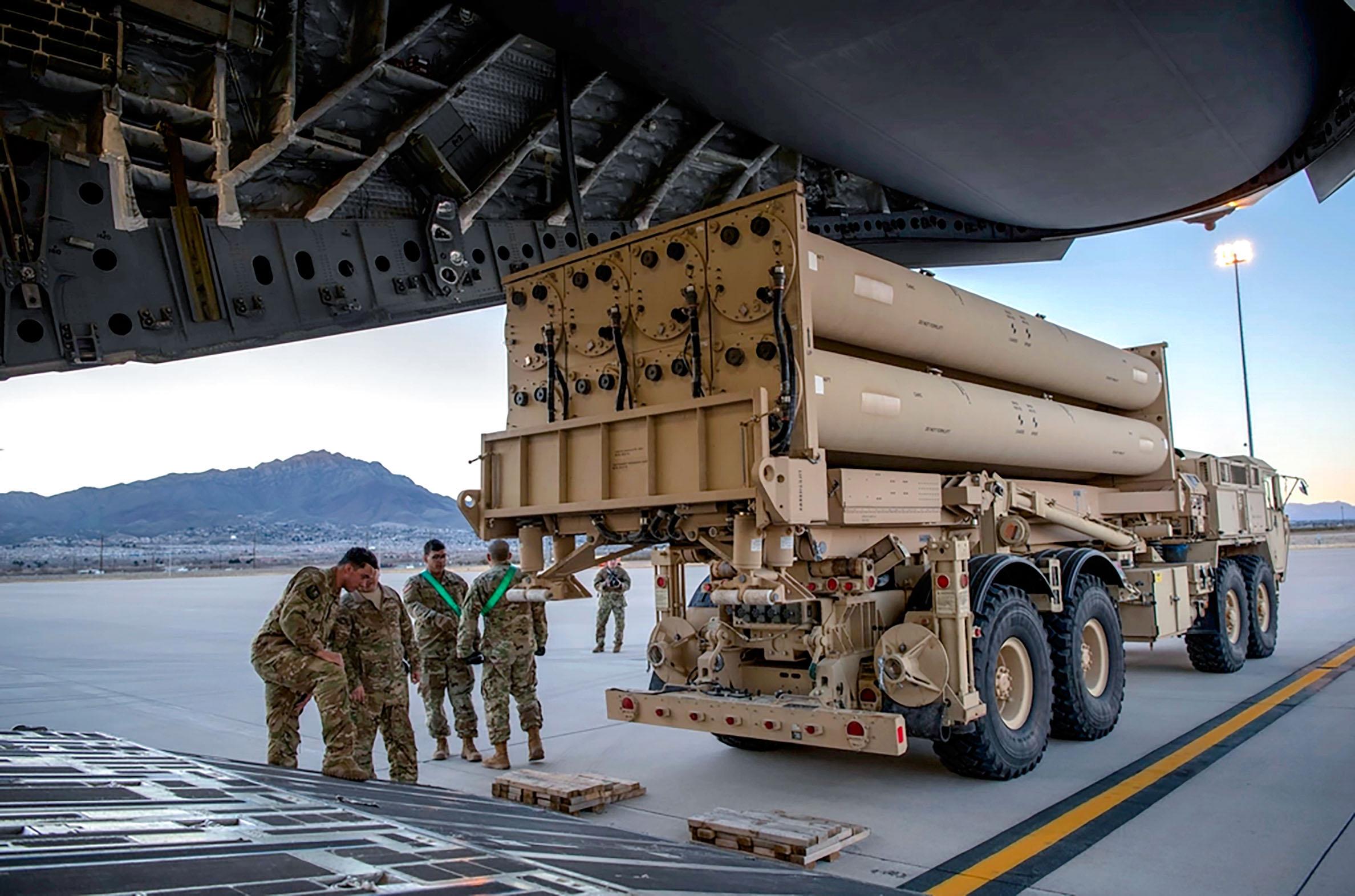
President Donald Trump met with executives of the nation’s largest defense contractors on Friday in the White House and said they agreed to quadruple production of “exquisite weaponry … as rapidly as possible.”
The president said in a Truth Social post that he and Secretary of War Pete Hegseth sat down with the CEOs of BAE Systems, Lockheed Martin, Northrop Grumman, Raytheon parent RTX Corp., Boeing, Honeywell, and L3Harris Technologies to appraise how swiftly munitions stockpiles can be expanded under an accelerated program implemented last fall.
“Expansion began three months prior to the meeting, and plants and production of many of these weapons are already under way,” Trump said.
The president did not elaborate on what he meant by “exquisite weaponry” but there have been concerns raised this week in congressional hearings and elsewhere about stressed inventories of air-defense systems and interceptor missiles, most notably for Terminal High Altitude Area Defense (THAAD), Patriot, and Aegis systems that have knocked down more than 500 Iranian missiles and 2,000 drones since the conflict kicked off on Feb. 28.
During a March 4 Senate Armed Services Committee Readiness and Management Support Subcommittee hearing, readiness and logistics chiefs from five branches of the military would not discuss munitions stockpiles in public.
“The Joint Forces is burning through costly inventories of precision-guided munitions when they are already in short supply,” Sen. Mazie Hirono (D-Hawaii) said. “Moreover, these munitions take a long time to replenish and risk being unavailable for the unforeseen contingencies elsewhere, particularly in the Indo-Pacific, where we face a peer adversary.”
The five officers agreed to send Hirono “via classified email, a snapshot of … current munitions inventory, projected ‘burn rates,’ and any magazine-shifting you’re doing to meet the demands” of the massive U.S.-Israel campaign against Iran.
Trump and administration officials say they have more than enough munitions to handle any and all threats.
“We have a virtually unlimited supply of medium- and upper-medium grade munitions, which we are using, as an example, in Iran, and recently used in Venezuela,” the president said. “Regardless, however, we have also increased orders at these levels.”
Trump said he will meet with defense contractors again in two months to assess progress.
Pentagon officials referred The Epoch Times to the White House for comment on the meeting. The White House has not responded to the query.
The Trump administration will soon ask Congress to approve a supplemental $50 billion request from the Department of War to boost munitions production, Reuters first reported on March 3.
That prospective $50 billion request follows $150 billion in supplemental defense funding Congress approved after adopting a $900 billion Fiscal Year 2026 defense budget in late 2025.
The Israeli military revealed it started a “broad-scale” wave of strikes in Tehran in the overnight hours, which marked one week since the conflict started.
Bessent’s preview echoes President Donald Trump’s warnings earlier in the week when he told CNN that the “big wave is yet to come.” At the time, he didn’t provide details on when the big wave of strikes was going to happen.
Trump praised the U.S. military for doing “phenomenally” in Iran during an event at the White House on Friday.

According to the United Nations, “whole suburbs of Beirut have emptied.” In a press release on March 6, the intergovernmental organization accused Israel of placing further pressure on the population with its displacement orders and air strikes.
“Nearly 25 million people in the affected areas are already refugees, internally displaced or recent returnees, placing additional strain on fragile host countries,” the organization said. It also said that it has delivered over 65,000 relief items.
Meanwhile, Lebanon’s health ministry reported that more than 200 people have been killed in Israeli strikes.
Israel carried out strikes in Lebanon this week to target members of Hezbollah, a terror-group tied to Iran. Israel’s military said it hit dozens of targets. “Hezbollah is operating on behalf of the Iranian regime, opening fire against the Israeli civilians, and bringing ruin to Lebanon,” Israel Defense Forces said on March 1.
Iravani accused the United States and Israel of deliberately targeting civilians and civilian infrastructure in heavily populated areas.
“These acts constitute clear war crimes and crimes against humanity,” Iravani told reporters on March 6.
Iravani separately dismissed President Donald Trump’s statement that the U.S. president should be involved in picking the country’s next leader.
“Command centers? Gone. [Islamic Revolutionary Guard Corps] headquarters? Rubble. Ballistic missile sites? Craters. Navy ships? Reefs. Submarines? Silent. The target list was long. It's getting shorter by the hour,” War Secretary Pete Hegseth replied under the X post.
The U.S.-Israeli operation against Iran launched on Feb. 28, killing dozens of senior officials including Supreme Leader Ali Khamenei and destroying or damaging 43 Iranian ships.

Those companies include BAE Systems, Boeing, Lockheed Martin, Raytheon, Northrop Grumman, Honeywell Aerospace, and L3Harris Missile Solutions. The CEOs of the defense firms met with the president on March 6 to discuss production and production schedules, with another meeting scheduled in two months.
“We want to reach, as rapidly as possible, the highest levels of quantity,” Trump said in a Truth Social post. “Expansion began three months prior to the meeting, and Plants and Production of many of these Weapons are already under way.”
He reiterated that the United States has “a virtually unlimited supply” of the medium-grade and upper-medium-grade munitions currently being used in Iran. Still, orders for those kinds of munitions have been increased, he said.
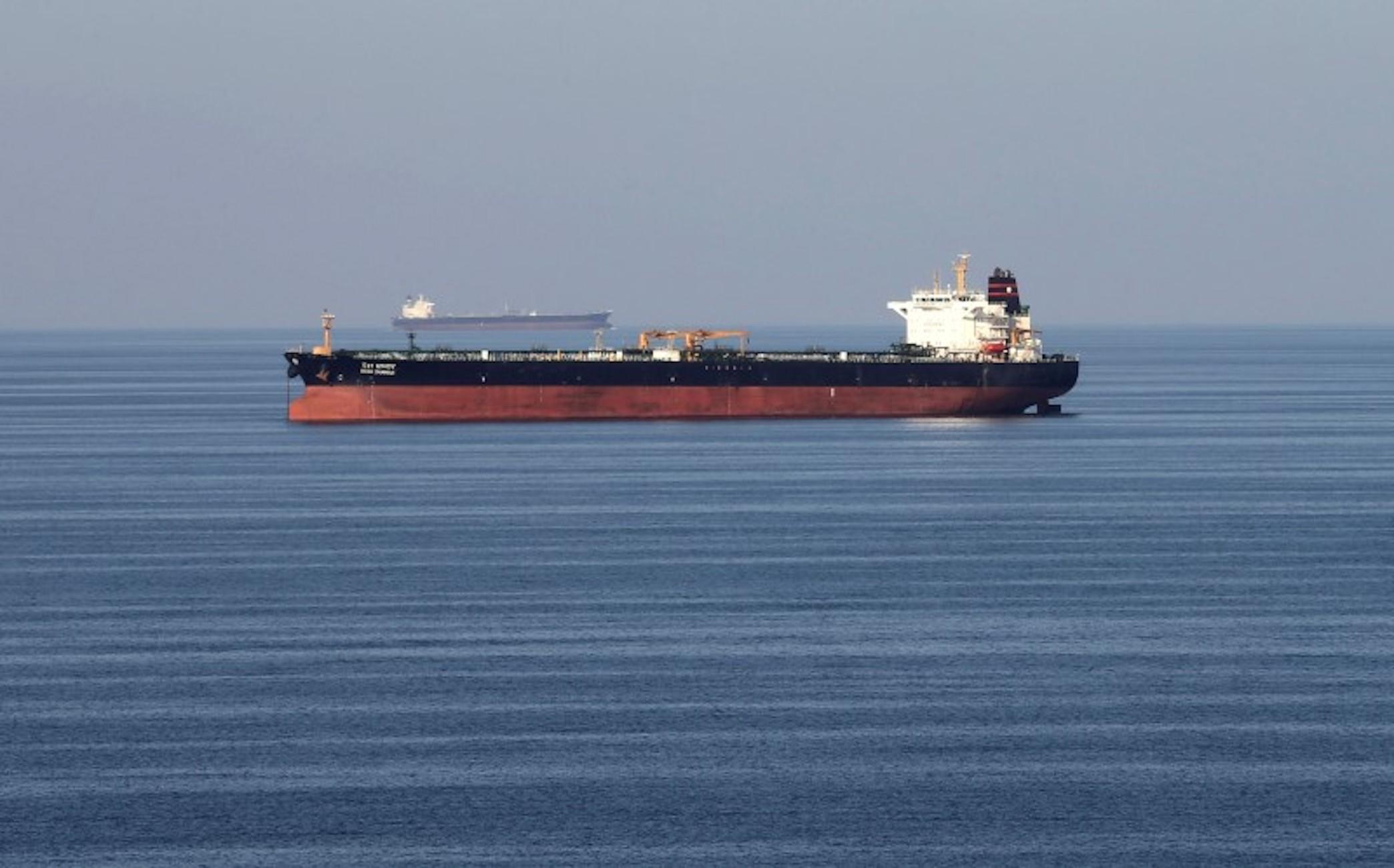

The Trump administration created a $20 billion federal reinsurance program for commercial oil and gas vessels to restore tanker traffic in the Strait of Hormuz.
White House officials have been employing various measures to stabilize global energy markets as oil prices broke $90 per barrel at the end of the trading week amid the conflict in Iran.
President Donald Trump announced earlier this week that his administration would provide guaranteed political risk insurance and, if needed, naval escorts to ensure the global flow of oil.
The latest measure would see the International Development Finance Corporation—also known as the DFC—insure losses up to $20 billion on a rolling basis, according to a March 6 news release.
Maritime reinsurance will initially focus on Hull & Machinery and cargo. This is industry jargon that means the shipowner’s assets and the goods being transported.
Only vessels that meet these criteria will be eligible for insurance.
“DFC coverage will offer a level of security no other policy can provide,” DFC CEO Ben Black said in a statement.
“We are confident that our reinsurance plan will get oil, gasoline, LNG, jet fuel, and fertilizer through the Strait of Hormuz and flowing again to the world.”
DFC officials and the Treasury Department will coordinate with the U.S. Central Command to implement the plan to stabilize global commerce during the war in Iran.
The Strait is a narrow waterway that serves as a vital artery for the transport of oil and gas. Approximately 20 million barrels of crude oil and petroleum products—accounting for one-fifth of global consumption—pass through the chokepoint. Additionally, 20 percent of global liquefied natural gas (LNG) exports traverse the area.
The primary challenge for international energy markets is that insurance companies have either canceled coverage or substantially raised premiums. As a result, traffic has come to a standstill, prompting vessels to detour around Africa’s Cape of Good Hope, which adds several days and extra cost to these trips.
Other ships are worried about their safety, and it could take more than insurance to restore commerce, says Simon Wong, portfolio manager at Gabelli Funds.
“Even with this guarantee, there’s risk that the ships will still be attacked by Iranian drones or missiles, and shipowners may not want to risk of losing their ships as well as the lives of their crews,” Wong said in a note emailed to The Epoch Times.
In the meantime, several Gulf countries have halted production or slowed output due to a shortage of storage space. This could add further pressure to international energy markets.
U.S. oil prices—West Texas Intermediate—posted their best weekly performance in trading history, soaring 35 percent.
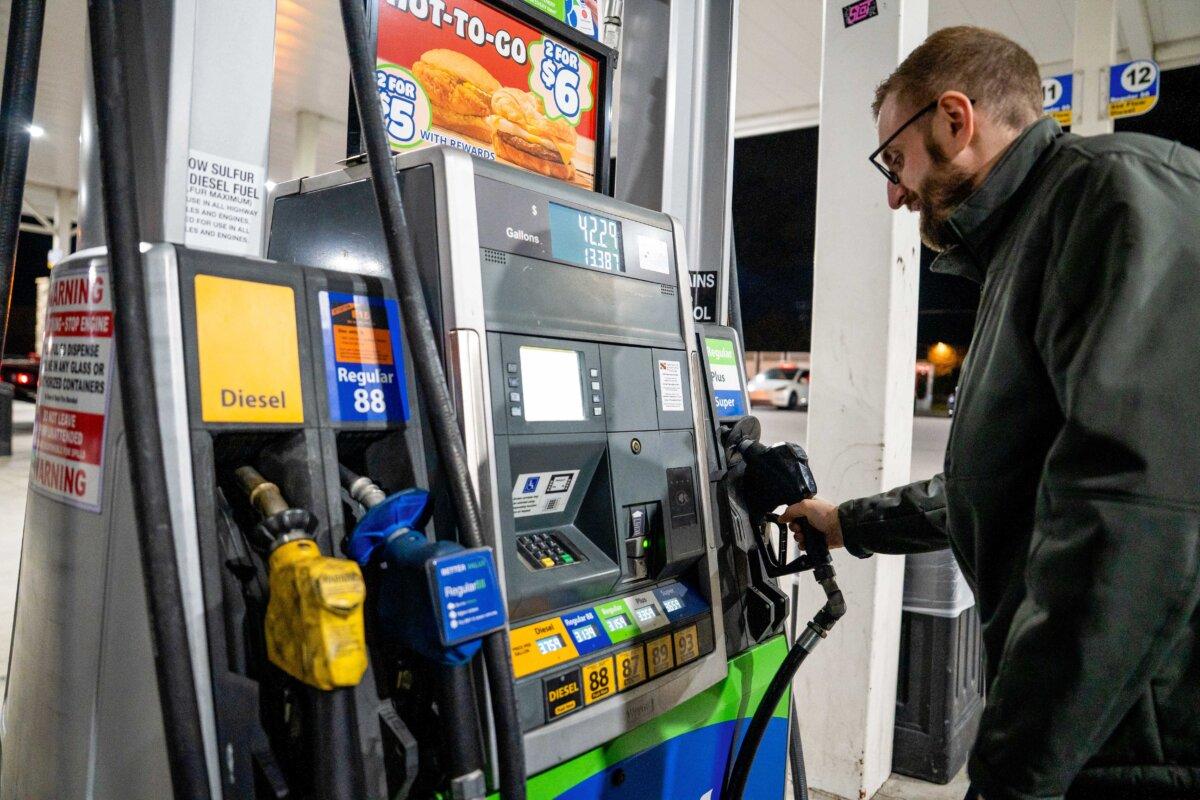
A man fills up his vehicle at a gas station in Elkridge, Md., on Nov. 12, 2025. (Madalina Kilroy/The Epoch Times)
The conflict in the Middle East is affecting more than just crude oil.
Since half of the cost of gasoline is attributed to oil prices, motorists could experience some pain at the pump over the coming days.
The national average for a gallon of gas has risen 34 cents in the last week to $3.32, according to the tracking website American Automobile Association.
Natural gas prices advanced more than 5 percent to close out the trading week, topping $3 per million British thermal units.
Heating oil ticked up 0.3 percent to $3.62 per gallon, posting a weekly gain of 40 percent.
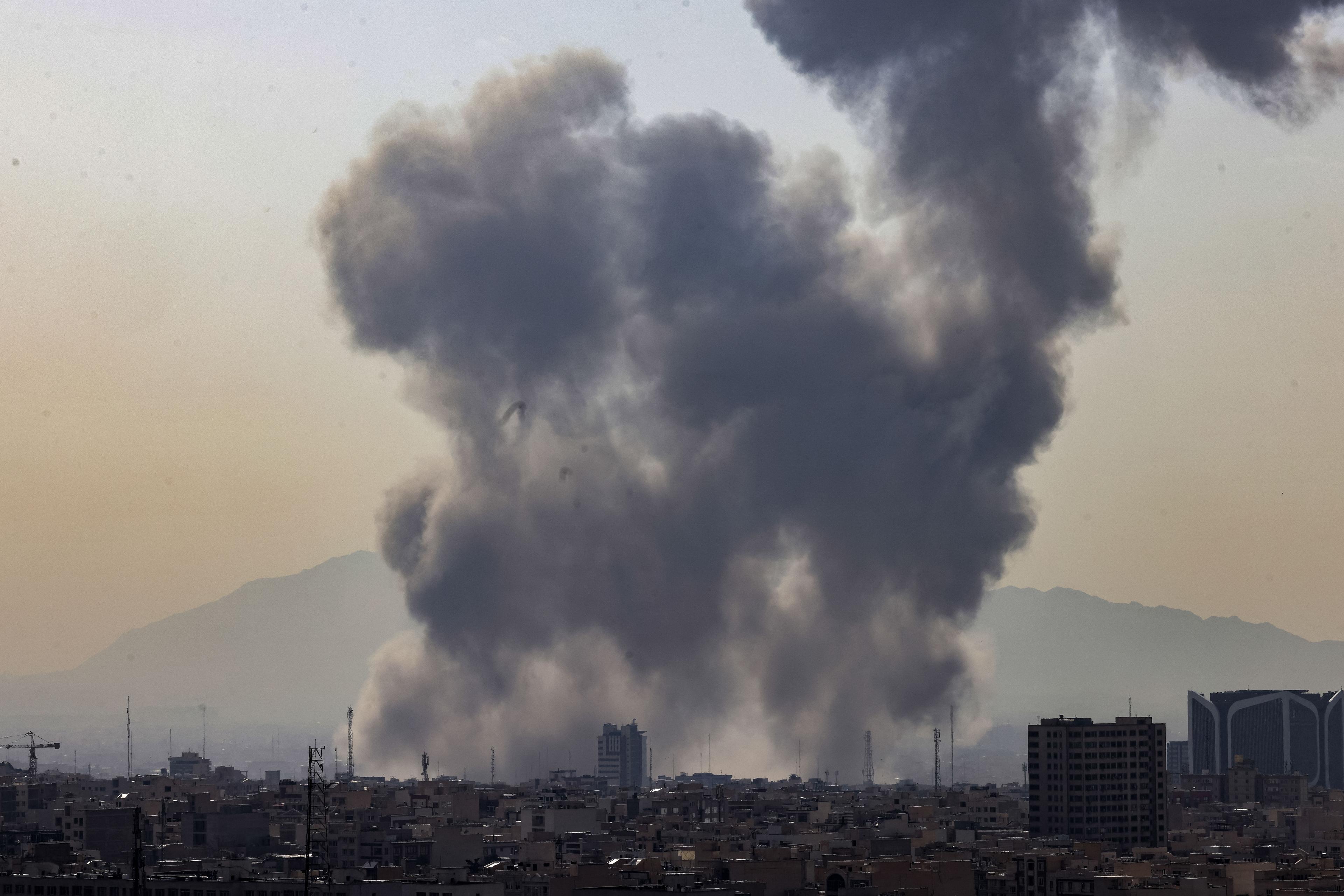
Israel has said that after the destruction of three Iranian nuclear sites by the United States and Israel during the Twelve Day War in June 2025, Iran continued clandestine efforts to restore its nuclear weapons program.
On March 3, the Israel Defense Forces (IDF) said that it “struck and destroyed the secret nuclear headquarters in Minzadehei, located partly underground in the city of Tehran. A team of nuclear scientists was operating covertly at this headquarters.”
The Israeli military added that during the June 2025 strikes, “the Iranian regime transferred some of its capabilities to secret bunkers and attempted to restore its efforts and conceal them.”
Senior Israeli security officials told Epoch Magazine in Israel that at the Minzadehei site that was struck, a team of nuclear scientists—reassembled by Iran from among those who had survived the bombing last year—was working to accelerate the country’s “Weapon Group” project. The purpose of the project is to develop the nuclear bomb’s fusing system–the component responsible for triggering the detonation mechanism—and adapt the weapon for delivery by ballistic missile.
The officials spoke on condition of anonymity because they were not authorized to publicly discuss the details.
The Weapon Group is the body responsible for developing the nuclear detonation mechanism within Iran’s nuclear program. In the process of developing a nuclear bomb intended for mounting on a ballistic missile, the bomb’s components are developed and built separately until the weapon’s final assembly. The scientists operating at the site were working on the fuse.
The same sources said the Iranian leadership recovered from the blow that it suffered to its nuclear sites from the United States and Israel in June 2025, and that Supreme Leader Ali Khamenei ordered an accelerated push to produce a nuclear bomb.
In 2024, Kamal Kharrazi, an adviser to Khamenei, said in an interview with Al Jazeera: “We have no decision to build a nuclear bomb but should Iran’s existence be threatened, there will be no choice but to change our military doctrine.”
In 2025, Ali Shamkhani, a former defense minister and then an adviser to Khamenei, said if he returned to the defense portfolio, he would “move toward building an atomic bomb.” Shamkhani was among the Iranian leaders killed in the U.S.–Israeli strikes on the first day of the latest military operation on Iran.
Israeli security officials say those remarks reflected growing recognition at the top of the Iranian leadership that the absence of nuclear capability was a strategic disadvantage—one that weakens the Iranian regime’s ability to deter its enemies and defend against military strikes or attempts at regime change. For that reason, achieving the ability to produce a nuclear bomb quickly became a top priority for Tehran.
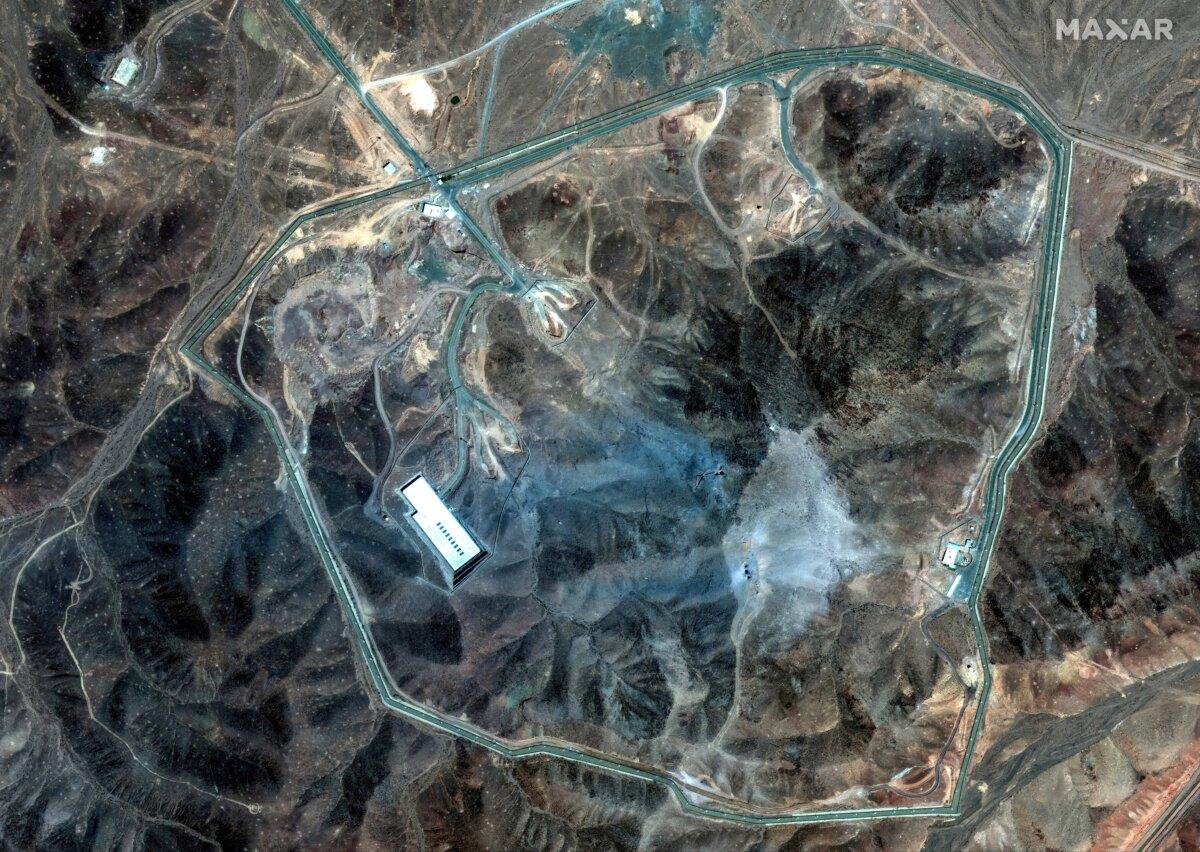
A satellite view shows an overview of Fordow underground complex, after the United States struck the nuclear facility, near Qom, Iran, on June 22, 2025. (Maxar Technologies/Handout via Reuters)
Iran’s Nuclear Program
For decades, Iran pursued a policy of nuclear ambiguity, combining the development of civilian nuclear technology with an official commitment to refrain from producing nuclear weapons, in accordance with the 1968 Non-Proliferation of Nuclear Weapons Treaty.
In 2002, in response to U.S. congressional reports that the Iranian regime had built nuclear-related facilities that it had not disclosed, the International Atomic Energy Agency (IAEA) demanded access to certain sites, key personnel, and relevant documents to investigate.
“About three years later, the Americans began to understand that Iran had an active nuclear weapons development program, but they became convinced that the program had been halted,” David Albright, a leading expert on nuclear proliferation and founder and president of the Institute for Science and International Security, told Epoch Magazine Israel.
In November 2011, the IAEA published findings that outlined “possible military dimensions” to Iran’s nuclear program. The agency said that based on information that it received from member states, this was pursued under Iran’s initiative dubbed the AMAD Plan headed by Mohsen Fakhrizadeh. The program began to take shape in the late 1990s or early 2000s, according to the report.
Additionally, based on intelligence provided by member states, the plan included work on explosives, uranium enrichment, and the development of a warhead that could be fitted onto a Shahab-3 missile, according to the report.
The IAEA reported that based on intelligence that it has reviewed and its own investigation, Iran had worked on the development of a nuclear explosive device and tested advanced systems for initiating explosives from multiple points simultaneously in order to create a uniform blast, something required for an effective nuclear explosion.
It added that based on intelligence provided by member states, Iran conducted a test involving the detonation of a powerful hemispherical high-explosive charge. It noted that the materials and dimensions used in the test resembled what would be required to develop a nuclear warhead for the Shahab-3 missile.
“You can produce a nuclear explosive device with a mock core, which can be uranium, but not enriched uranium,” Ephraim Asculai, who worked at the Israel Atomic Energy Commission for more than 40 years, told Epoch Magazine.
“I’m not even sure the term ’mock core' is good enough, because it is a full-fledged nuclear explosive device in every respect, except that the uranium inside is not enriched to weapons grade,” Asculai said.
“What is called a ‘cold test’ is carried out with this device—you measure all the parameters and examine them in order to confirm that it will work one day. Then, one day, you simply remove the non-enriched uranium core and insert an enriched uranium core, and the device will work.”
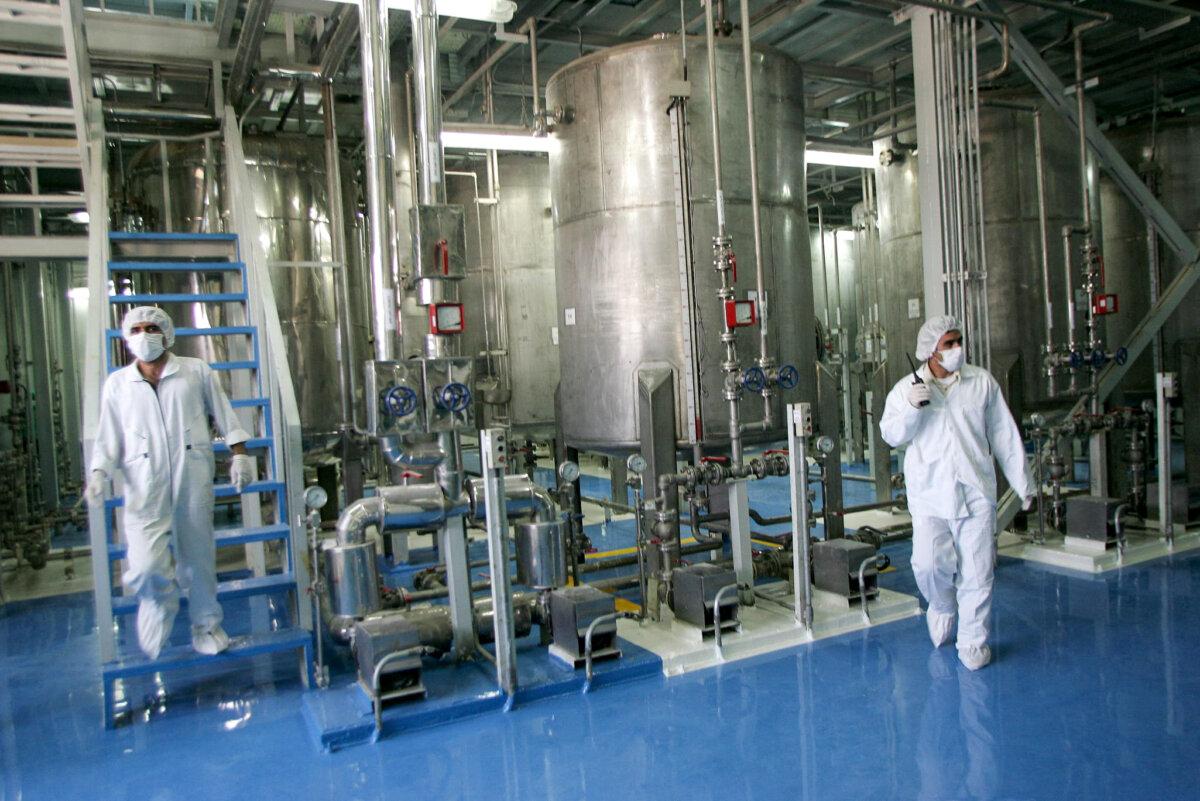
Iranian technicians at at the Isfahan Uranium Conversion Facilities, about 261 miles south of Tehran, on Aug. 8, 2005. (Behrouz Mehri/AFP via Getty Images)
Documents from the Iran Nuclear Archive—a collection of documents, photos, and videos obtained during a Mossad operation inside Iran and made public in April 2018 by Israeli Prime Minister Benjamin Netanyahu—showed that under the AMAD Plan, extensive planning had been conducted for the construction of an underground test site where nuclear explosions would be carried out.
According to the documents, Iran referred to it as Project Midan. As part of the project, five potential sites were examined, and methods were developed for measuring the power of a nuclear explosion, including the use of seismic and other technologies. One of the documents deals with the depth of the shaft required for an explosion of a certain yield, the behavior of the ground during the explosion, methods for refilling the shaft after placement of the nuclear device, and the development of software to monitor the entire process.
The IAEA report stated that based on intelligence from member states, Iran ultimately halted the AMAD Plan and began cleaning equipment and work areas in order to conceal the activities that had taken place there. However, the report added that based on the same intelligence sources, some of those activities continued under different organizations.
According to Albright, the Iranians continued to advance the AMAD Plan, but in a different format.
“They shifted from trying to build a nuclear weapon to trying to solve bottlenecks in the various parts of the program, so that when the time came, they could connect all the components quickly and efficiently and assemble the weapon,” he said.
A former senior Mossad official who was involved in bringing the Iran Nuclear Archive to Israel told Epoch Magazine Israel, “To illustrate, think about the structure of a newspaper.”
“You have reporters covering different beats, and you have an editor who integrates all the content that comes in and creates a complete product,” said the former official, whose name is being withheld because he is not authorized to speak publicly. “Now imagine that you decide not to publish the newspaper for the next three years for various reasons. You don’t shut it down. Instead, you decide that each reporter will sit at home, at his university, or at the research institute where he works, and continue researching and developing his area of expertise.
“You pay the reporters so they keep their skills sharp and continue writing drafts until the day the newspaper resumes operations and calls them back to assemble a finished product. The same thing happened in Iran—the nuclear program was operational, people met together to develop, produce, and assemble weapons, but then they were dispersed.”
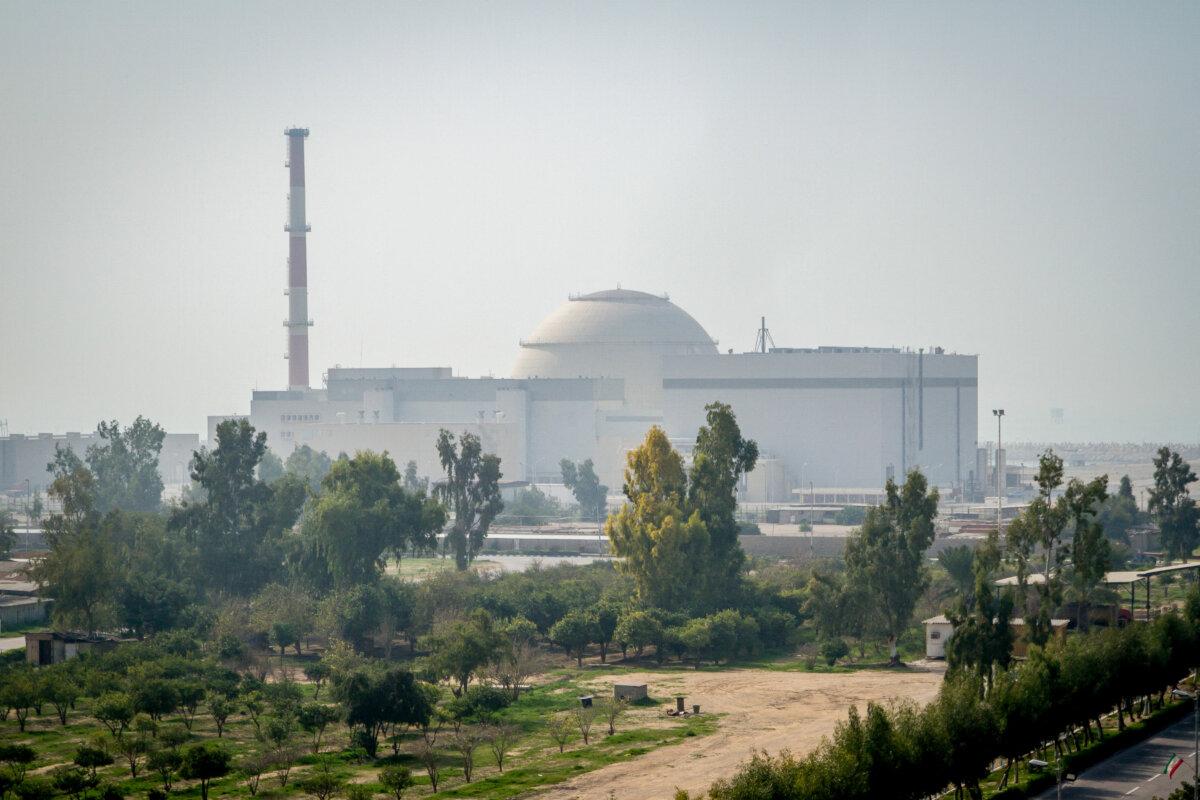
The Bushehr Nuclear Power Plant, located on the Persian Gulf about 746 miles south of Tehran, in Iran on Jan. 26, 2014. (Mohamad Ali Najib/Middle East Images/AFP via Getty Images)
The AMAD Plan was initially run under a body called SADAT, but moved under the management of the Organization of Defensive Innovation and Research (SPND), which began operations in 2011, according to the IAEA report.
“The work in the SADAT Centres drew on resources at Iranian universities which had laboratories available to them and students to do the research,” the IAEA stated in its report.
Fakhrizadeh, who headed the AMAD Plan and then SADAT, also led SPND until he was assassinated in late 2020.
“As a successor body, SPND inherited a substantial portion of the manpower that had been involved in the nuclear program in the early 2000s,” Albright said. “It has a network of subordinate groups, as well as front companies, through which it conducts research and procurement related to nuclear weapons and their delivery systems. The structure of the network makes it possible to incorporate many of the employees who worked in the AMAD Plan and who today work in private companies and universities in Iran.”
During the Twelve Day War in June 2025, the Israeli military said that SPND headquarters in Tehran had also been struck, along with attacks on nuclear sites and other critical infrastructure.
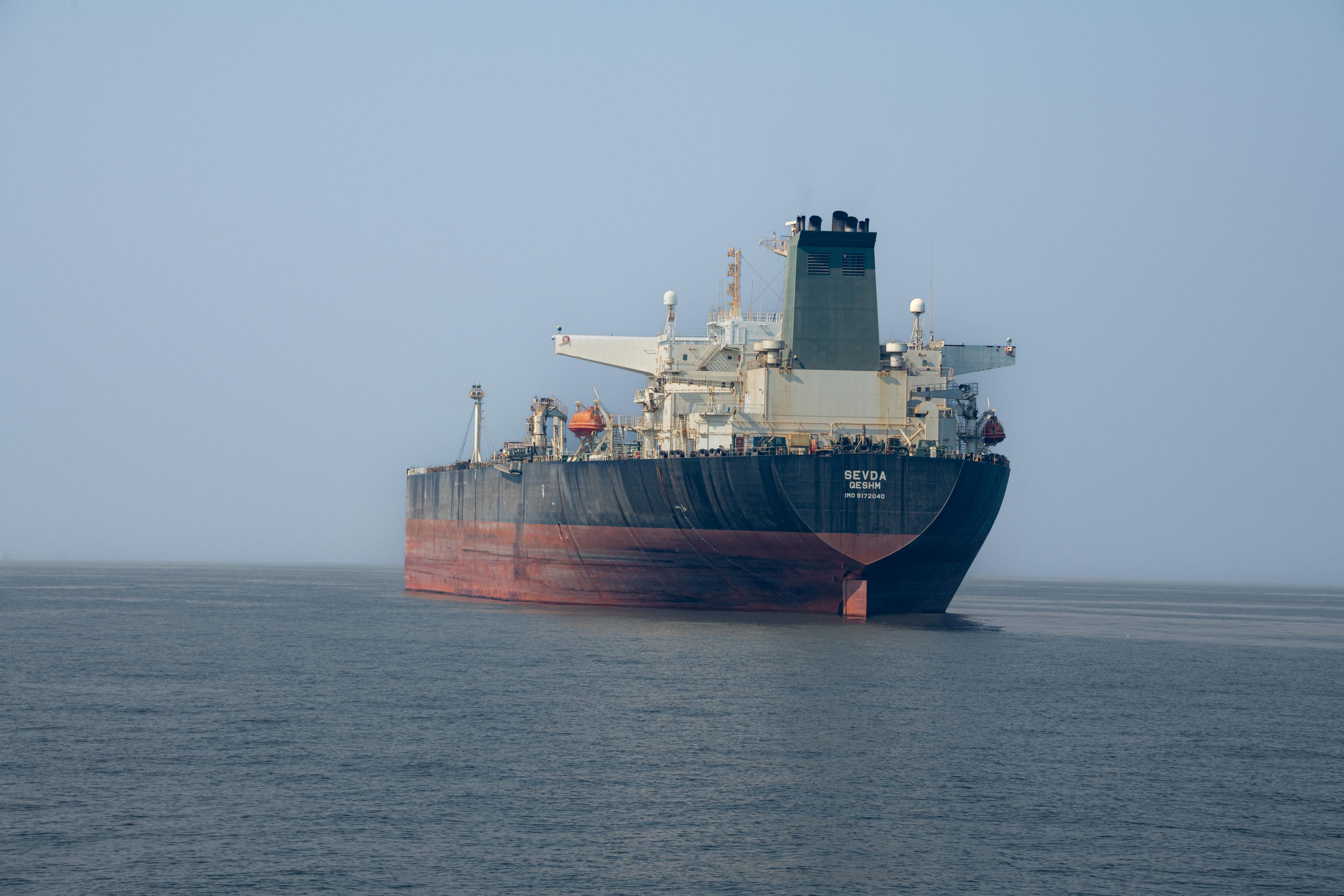
U.S. crude oil prices broke $90 per barrel on March 6 as President Donald Trump demanded an “unconditional surrender” from Iran.
A barrel of West Texas Intermediate—the U.S. benchmark for oil prices—rocketed 14 percent above $92 on the New York Mercantile Exchange.
The U.S. front-month contract is on track for a record weekly gain of about 37 percent, adding to its year-to-date gain of 60 percent.
Brent, the international benchmark for crude prices, advanced almost 10 percent, to around $93 a barrel on London’s ICE Futures exchange.
The global gauge is poised for a 27 percent weekly increase, lifting this year’s rally to 53 percent.
In a March 6 Truth Social post, the president stated that the United States would not end the war in Iran without an “unconditional surrender” by the regime.
Once this happens, Trump says, the United States and its allies will work to resurrect Iran and make its economy “bigger, better, and stronger than ever before.”
“Iran will have a great future,” he added. “Make Iran Great Again (MIGA!).”
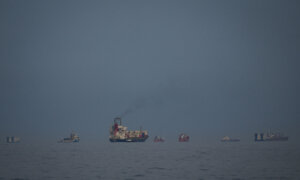
The Iran War has disrupted energy production and halted traffic in the Strait of Hormuz, a vital global chokepoint for oil and gas shipments.
Twenty million barrels of oil and petroleum products and 20 percent of the world’s liquefied natural gas transit through the area.
Scores of countries in the region have shut down oil output.
Iraq suspended operations that will remove 1.5 million barrels per day from global energy markets. Kuwait has started winding down production due to a lack of storage space. Market watchers anticipate other markets in the Middle East, such as the United Arab Emirates, to slow output until the narrow waterway reopens.
While Iran has not closed the shipping route, traffic has come to a standstill because insurance firms are no longer providing coverage to oil and gas tankers, or premiums have spiked.
The administration has attempted to mitigate this by offering guaranteed political risk insurance and naval escorts to restart trade. The White House has not offered a timeline.
Some market watchers are skeptical that this could stabilize transportation in the region.
“While the ballistic missile threat can be taken out, drones could represent a more long-term threat that, while not militarily significant, could discourage commercial tanker traffic for some time,” Simon Lack, portfolio manager at Catalyst Energy Infrastructure Fund, said in a note emailed to The Epoch Times.
“Drones are cheap, easily launched and need only a very low hit rate (probably <1 percent) to make the area look unsafe even with insurance.”
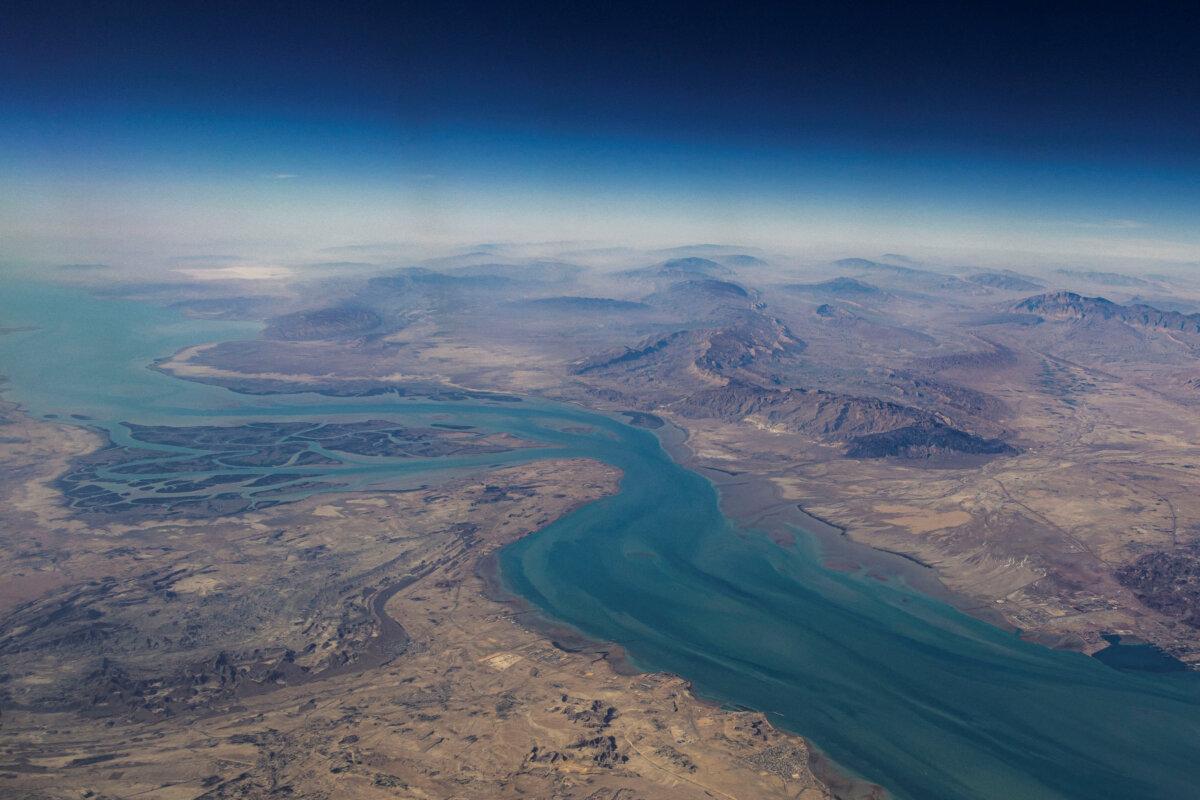
An aerial view of the Iranian shores and the island of Qeshm in the Strait of Hormuz. (STR/Reuters)
Still, the longer the war in Iran drags on, the worse it could get for energy markets, say ING commodity strategists.
“The market remains well supported with few signs of de-escalation in the Middle East and a resumption of energy flows in the region,” they said in a March 6 note. “Clearly, with every day that goes by without flows resuming, the oil market will reprice the amount of supply lost, leaving room for prices to move higher.”
The Treasury Department also authorized a 30-day waiver allowing India to purchase Russian oil again to ensure the flow of global crude.
While officials—at home and abroad—are considering different measures to stabilize oil markets, the International Energy Agency said its members have no plans to tap into emergency crude reserves.
“Based on my discussions with IEA member governments and looking at current market conditions, there are no plans for a collective action at this stage. We are facing a temporary disruption—a logistical disruption,” IEA Executive Director Fatih Birol told reporters in Brussels.
Other Energy Markets
The situation has already seeped into other corners of the energy sector.
The average price for a gallon of regular gasoline has increased by about $0.27 in the past week, to $3.25, according to the American Automobile Association.
Heating oil prices spiked 40 percent this week, to about $3.61 per gallon.
Natural gas has also picked up steam, rising 6 percent during the March 6 trading session and climbing 12 percent for the week. But prices remain mostly stable, according to Phil Flynn, energy strategist at The PRICE Futures Group.
“Obviously, in Europe, that’s not going to be the case in the short term, but here in the United States, because of record production, we are producing more than we can use right now, and that is keeping our prices fairly stable,” Flynn said in a March 6 note.
In addition, weather forecasts suggest temperatures could be warming, which could weigh on home-heating demand and bolster domestic inventories.
Daily U.S. production is firmly above 100 billion cubic feet.
Global natural gas markets are being impacted primarily by Qatar, which accounts for a fifth of global LNG exports. It serves mostly Asian markets, including China, Japan, and India.
QatarEnergy declared force majeure on LNG shipments this week due to disruptions at its facilities caused by the Iran War. This allows the company to walk away from its contractual obligations because of circumstances beyond its control. It could take weeks for the major producer to restart operations.
Guy Birchall and Reuters contributed to this report.

"When he as commander in chief of the U.S. armed forces determines that Iran no longer poses a threat to the United States of America and the [goal] of Operation Epic Fury has been fully realized, then Iran will essentially be in a place of unconditional surrender," she told reporters at the White House on Friday.
“The purpose of it is to talk about the president's aggressive and fierce support for rapidly increasing the ability of U.S. manufacturers to produce American made weapons, which we know are the best in the world,” she told reporters at the White House.
Leavitt reiterated the administration’s position that the United States has “more than enough ammunitions, weapons stockpiles to achieve the objectives of Operation Epic Fury and beyond.”

President Donald Trump said on March 6 that he would be open to Iran being ruled by another religious leader and said he wants Iran to undergo a process similar to what occurred in Venezuela in January.
When asked by CNN on Friday in a phone interview about whether he'd be open to another religious leader heading the country, Trump responded, “I may be, yeah.”
Iran has been ruled by a theocratic regime since 1979, encompassing Ayatollah Ali Khamenei’s reign since 1989. Khamenei was killed in U.S.–Israeli strikes on Feb. 28, and no replacement leader has been named.
“I mean, it depends on who the person is,” Trump also said. “I don’t mind religious leaders. I deal with a lot of religious leaders, and they are fantastic.”
Trump also said he would want Iran’s situation to play out in a manner similar to what happened in Venezuela after the U.S. military captured the country’s leader, Nicolás Maduro, and extradited him back to the United States to face federal drug charges. His vice president, Delcy Rodríguez, was named as the acting president after Maduro was removed.
“It’s going to work very easily. It’s going to work like it did in Venezuela. We have a wonderful leader there. She’s doing a fantastic job. And it’s going to work like in Venezuela,” the president said, referring to Rodríguez.
Trump also dismissed suggestions that Iran must have a democratically run government.
“No, I’m saying there has to be a leader that’s going to be fair and just. Do a great job. Treat the United States and Israel well, and treat [well] the other countries in the Middle East—they’re all our partners,” he told the outlet on Friday.
“And I became very friendly with all those countries. That’s why they’re all fighting for us. Before I got involved, we didn’t even speak to UAE and Saudi Arabia. They were all going to go to China.”
He said that in a short period of time, they became friends with him.
His comments to CNN build on previous ones a day earlier, when he said he wanted to be involved in picking the head of Iran’s government.
Iranian state television said on Friday that a leadership council had started discussing how to convene the country’s Assembly of Experts, which will select the new supreme leader.
In the airstrikes targeting Iran’s regime, dozens of leaders other than Khamenei were killed, and much of the country’s military and navy have been degraded. Israeli warplanes pounded Beirut and Tehran earlier on Friday as Iran launched another wave of retaliatory strikes against Israel and Gulf countries that host U.S. forces.
Iranian President Masoud Pezeshkian wrote on social media that “some countries” had begun mediation efforts in the conflict, which was also carried by state media. He did not elaborate on those countries.
In a social media post on Friday, Trump said that he wants Iran’s unconditional surrender “and the selection of a great & acceptable Leader(s)” before the United States and its allies would help rebuild Iran, making it “economically bigger, better, and stronger than ever before.”
The Associated Press contributed to this report.
“This is unacceptable and will not go unanswered,” he said in a statement. “We will continue working with regional partners to address this threat to innocent people across the region."

The State Department said on March 6 that the majority of those were able to find their way home via commercial travel, but that the department had arranged charter flights for those seeking assistance.
The operations in Iran sparked retaliation against nations throughout the region, and the State Department is continuing to assist those who hope to make their way back to the United States.
“Several flights have safely returned hundreds of Americans to the United States with additional flights scheduled to take place over the coming days, as security conditions allow,” the department said in a statement.
U.S. citizens in Bahrain, Israel, Kuwait, Oman, Qatar, Saudi Arabia, and the United Arab Emirates have been encouraged to fill out a Crisis Intake Form or call 202-501-4444 to receive information about repatriation assistance.

“After the Iranian crisis, if we can call it so, it became even more urgent for us in Europe to ramp up production of air‑defense and anti-ballistic missiles,” European Commissioner for Defense Andrius Kubilius said during a joint news conference with Polish Deputy Prime Minister Wladyslaw Kosiniak‑Kamysz.
Kubilius said the United States would struggle to meet demand for such weapons.
“Americans really will not be able to provide enough of those missiles, both for the Gulf countries, for the American army itself, and also for Ukraine's needs,” he added.

The International Energy Agency (IEA) said on March 6 its members had no plans to release emergency oil reserves amid the ongoing conflict in the Middle East.
IEA Executive Director Fatih Birol told reporters in Brussels that “there is plenty of oil in the market,” saying the problem was about logistics, not a lack of supply.
When asked about releasing emergency reserves, Birol said member governments were keeping “all options on the table” but currently saw no need for coordinated action.
“Based on my discussions with IEA member governments and looking at current market conditions, there are no plans for a collective action at this stage. We are facing a temporary disruption—a logistical disruption,” he said.
Though Iran has so far not officially closed off the Strait of Hormuz, the fighting in the region has virtually brought all movement through the vital shipping lane to a halt.
About one-fifth of the world’s seaborne oil trade flows and 20 percent of liquefied natural gas travel through the strait, according to the U.S. Energy Information Administration.
Since the fighting broke out on Feb. 28, the price of Brent crude has rocketed from $72 a barrel to more than $89 as of March 6, the largest spike since 2022.
That price could rise significantly higher, with Qatari Energy Minister Saad Sherida al-Kaabi telling the Financial Times he expects all energy producers in the Gulf to shut down exports, a move he said could drive oil to $150 a barrel, according to an interview published on March 6.
Liquefied Natural Gas
The situation regarding liquefied natural gas (LNG), however, was different, according to Birol, who said the conflict could lead to competition between Europe and Asia for LNG in the short term.
“The bulk of the gas going from the Middle East is destined for Asia, and the implication for Europe would be, if the crisis continues in this way, the Asian buyers and the European buyers will need to compete for the LNG, which will get scarcer and scarcer,” Birol said, adding that this could be challenging for European countries.
Despite this, however, Birol warned Europe against pivoting back to Russia for its LNG supplies.
“One of Europe’s historical mistakes was the over-reliance of its energy sources on one single country, Russia,” he said, according to Reuters.
“Given the bitter experience Europeans had with Russia, given the very fact that there will be a lot of LNG anyways coming to markets, and the gas markets turning from the markets of sellers to buyers, I think looking at Russia as an alternative option for getting gas will be economically and, in my view, politically wrong.”
After Russia went to war against Ukraine in February 2022, the West moved quickly to cut its reliance on Russian oil and gas, in a bid to cripple the country’s economy.
Birol added that the IEA expects a large volume of LNG to reach the market over the next 5 years, which will put downward pressure on prices.
“We expect in the next five years a huge amount of LNG wave, about 300 BCM [billion cubic meters] of new LNG coming,” he said.
He added that the LNG industry had only been going for three or four decades, and that half of what the industry had built would hit the markets in the coming five years.
“This would mean there will be a downward pressure on the prices and most importantly, 75 percent of this LNG will be flexible,” he added.
“Flexible” in this context refers to LNG sold under contracts that do not specify fixed destinations.
This means suppliers can redirect shipments to different buyers or markets based on demand, pricing, or other factors, rather than being locked into long-term commitments to particular importers.
Reuters contributed to this report.
The president also said that, when it comes to a new leader in Iran, "it's going to work like it did in Venezuela."
In Venezuela, Delcy Rodríguez was appointed interim leader after former Venezuelan leader Nicolás Maduro was captured by the United States in January. He is currently facing federal drug charges in the United States.
Rodríguez previously served as Maduro’s deputy.
When asked by CNN whether he's fine with having another religious leader in Iran, Trump said, "I may be, yeah.”
Iranian leader Ali Khamenei was killed in the first moments of the conflict on Feb. 28.
Trump added that the next Iranian leader needs to "treat the United States and Israel well.”
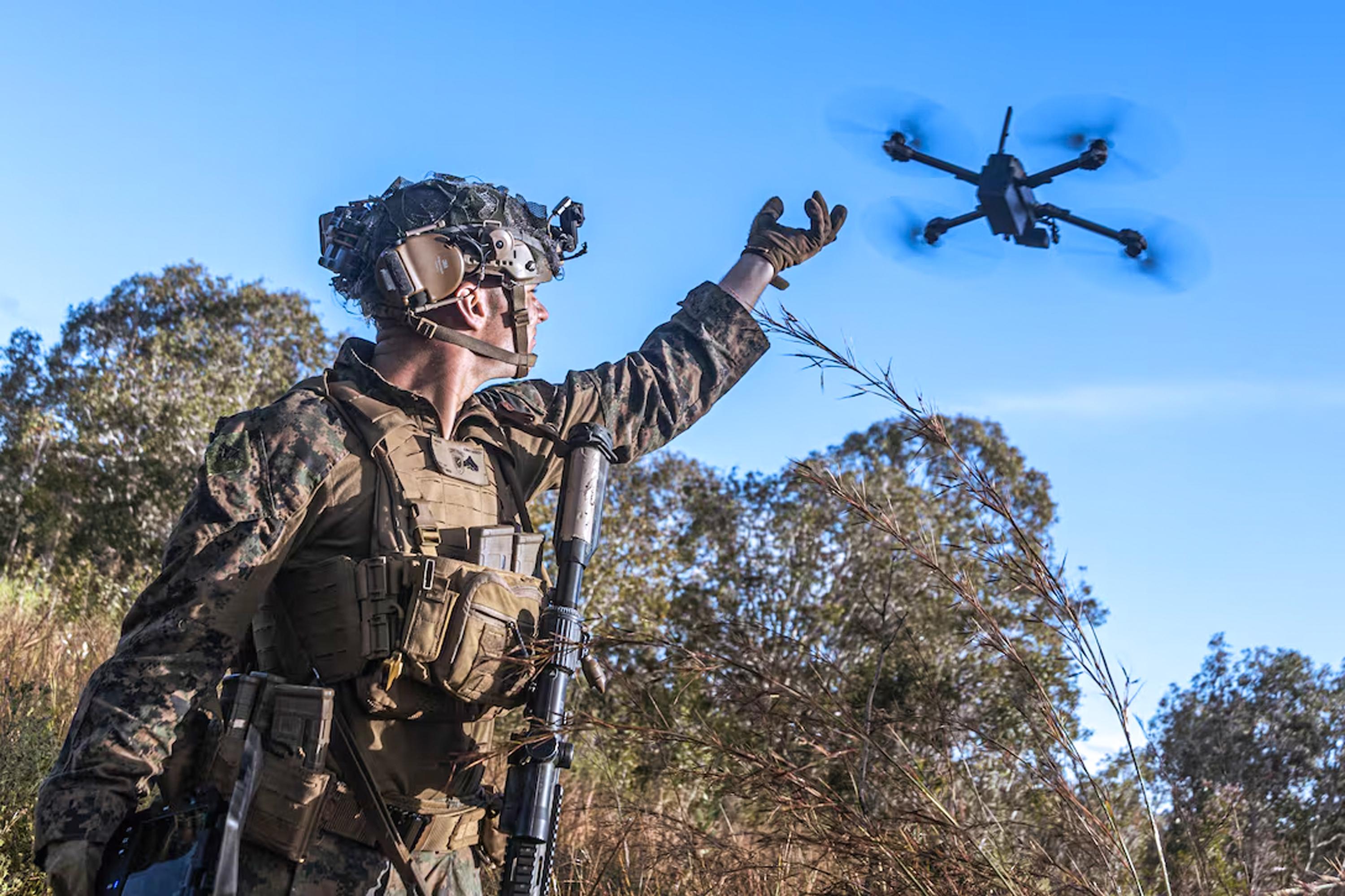

Just days after the United States fired a one-way attack drone for the first time in combat, a Senate committee on March 5 highlighted an urgent need to increase military unmanned vehicle production, training, and use.
“This issue has profound implications for both our warfighting readiness and our future prosperity,“ said Sen. Roger Wicker (R-Miss.), chairman of the Senate Committee on Armed Services. ”I’m not really sure Americans understand that fully yet.”
During the hearing, Wicker acknowledged the U.S. combat debut of the low-cost unmanned combat attack system (LUCAS) drone during Operation Epic Fury against Iran.
Adm. Brad Cooper, the leader of the U.S. Central Command, said the military had launched “countless one-way attack drones, achieving massive effects.”
“[Those drones were] originally an Iranian design,” Cooper said in a March 3 video. “We took them back to America, made them better—and fired them right back at Iran.”
Cooper told reporters on March 5 that the military “captured [the drone], pulled the guts out of it ... put a little bit of ’made in America' on it,” then made it an “indispensable” part of U.S. strikes against Iran.
Arizona-based defense contractor SpektreWorks developed the LUCAS drone, basing it on the Iranian Shahed-136 model, according to an independent defense research website, GlobalSecurity.org.
The website states that Iran has supplied that weapon to Russia ever since the Russia–Ukraine war began in 2022.
Test-fired for the first time in December 2025, the suicide-mission LUCAS drone costs about $35,000 each—far less than reusable, more sophisticated models that can cost up to $40 million each.
“[The Russia–Ukraine war] has forever changed the character of modern warfare and demonstrated the growing importance of small unmanned systems—what we colloquially call drones,” Wicker said.
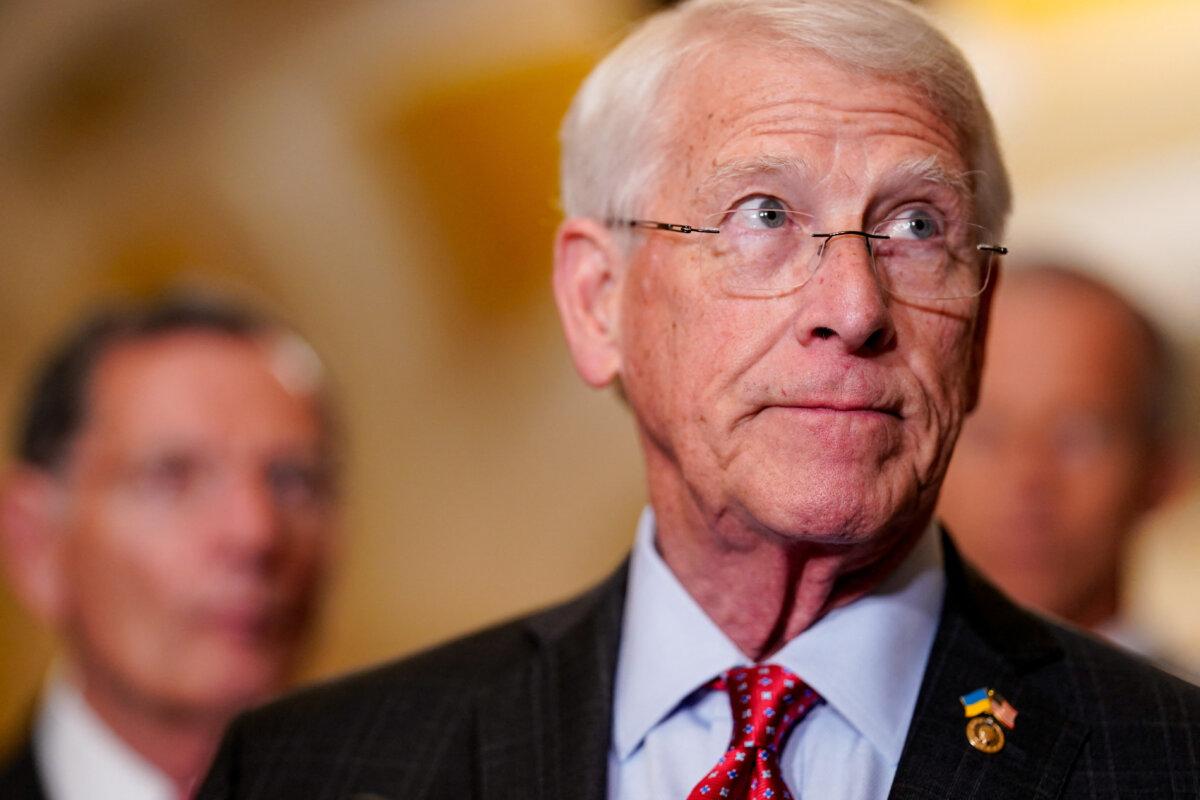
Sen. Roger Wicker (R-Miss.) attends a news conference following the Senate Republicans' weekly policy luncheon on Capitol Hill in Washington, on June 10, 2025. (Kent Nishimura/Reuters)
U.S. drone development has lagged, largely because the Chinese Communist Party has heavily subsidized its drone makers.
That strategy has rendered drone companies in the United States and other nations unable to compete with lower-priced and more advanced Chinese drones, according to Wicker.
But now, he said, the United States is “finally on the cusp of charting a future for American drone dominance.”
President Donald Trump issued an executive order in June 2025 intended to remove obstacles so that the United States could “unleash” drone capabilities.
Sen. Rick Scott (R-Fla.), a committee member, championed the American Security Drone Act of 2023.
That law banned federal agencies from purchasing or operating drones tied to foreign adversaries such as China; it took full effect in December 2025.
“We have to keep fighting to ensure Communist China has absolutely zero role in our drone supply or anywhere in our military, which is critical to American safety,” Scott said during the hearing.
Sen. Jack Reed (D-R.I.), the committee’s ranking member, said, “For too long, the United States was hindered by self-imposed restrictions and bureaucratic red tape.”
China continues to dominate the manufacture of “critical components” of drones such as motors and batteries, he said.
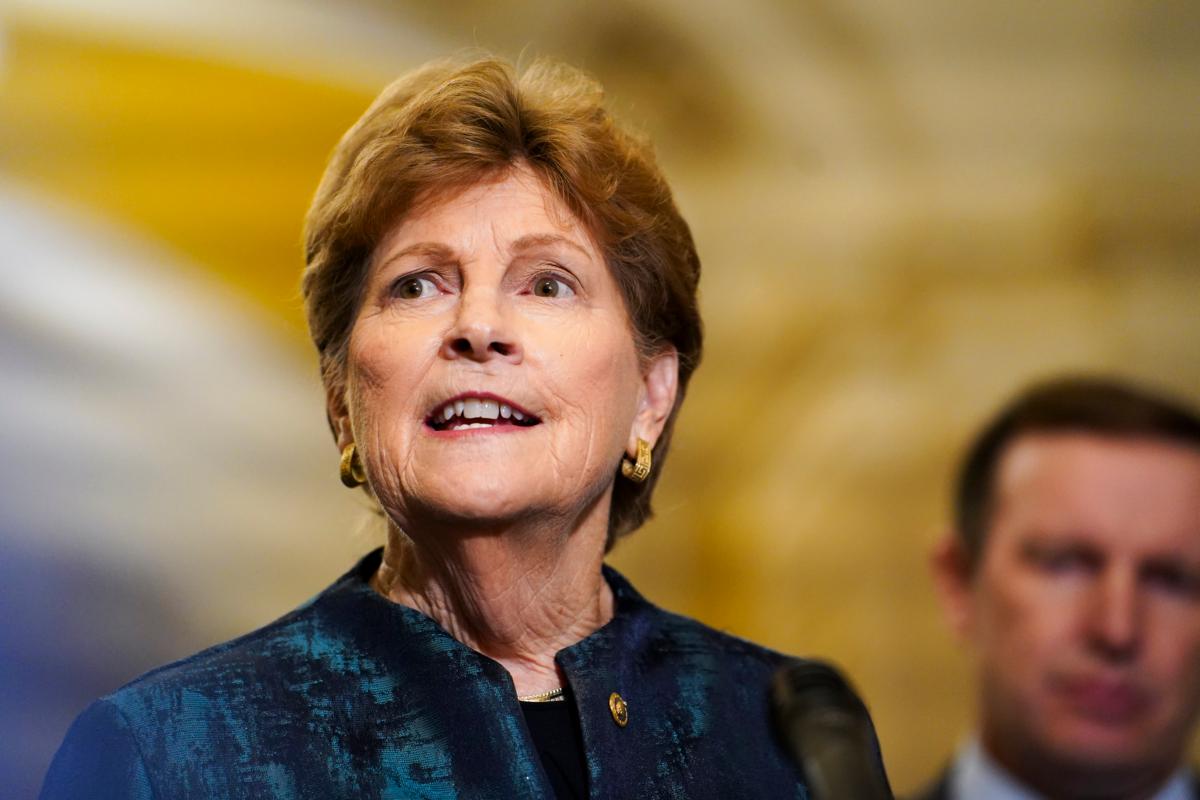
Sen. Jeanne Shaheen (D-N.H.) speaks during a news conference in Congress in Washington on Sept. 19, 2023. (Madalina Vasiliu/The Epoch Times)
Sen. Jeanne Shaheen (D-N.H.) said a company in her state, ePropelled, is the nation’s sole producer of drone-propulsion motors.
“It’s one of the most glaring deficits in our domestic market,” she said, asking whether leaders are working to assist American businesses such as ePropelled.
A hearing witness, Owen West, senior adviser to the War Department’s drone dominance efforts, said ePropelled supplies several drone makers that have won defense contracts.
He called drones “the most significant battlefield innovation in generations.”
That is why the military must arm its troops with “lethal drone technology” as quickly as possible, he said.
These drones can also be used for counterstrikes or defense.
Another witness, Maj. Gen. Steven Marks, said the organization he directs—the Defense Autonomous Warfare Group—aims to pull together innovation and production to meet operational needs.
The group is tasked with “cutting across the traditional boundaries that have often slowed [the] process.”
Marks said he is confident in the group’s success because it has “collapsed the distance between the warfighter and the developer.”
“Operators and engineers are now working side by side at the tactical edge, solving operational problems in real time,” he said.
“This ensures capability is informed directly by battlefield needs and refined through immediate, real-world feedback.”
A third witness, Travis Metz, manager of the War Department’s Drone Dominance Program, said $1.1 billion is to be spent over the next 18 months to buy drone systems for U.S. forces.
Winners of a recent contest will be given orders for a total of 30,000 small, one-way attack drones, Metz said. Those weapons will be delivered to U.S. forces over the next five months.
The world’s best drones are now made in Ukraine, Metz said, and the United States is trying to lure Ukrainian makers to manufacture their products in America.
Shaheen said she and fellow committee member Sen. Richard Blumenthal (D-Conn.) have visited Ukraine repeatedly and learned that Ukrainians are updating their drones every two weeks.
Lately, the United States has been conducting drone contract contests every six months.
Shaheen said that although she appreciates the work that is being done, she believes that U.S. efforts must accelerate.
“I don’t know how we think we’re going to compete [otherwise],” she said.
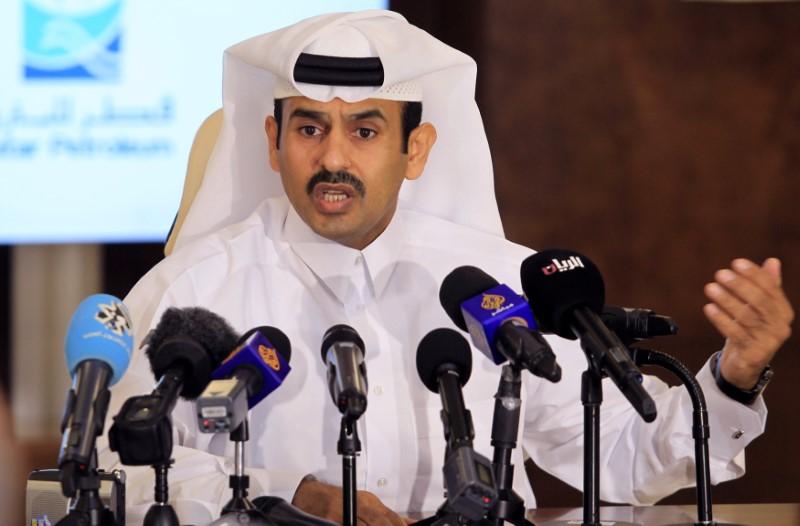
Qatari Energy Minister Saad Al-Kaabi has said that the conflict in the Middle East could “bring down the economies of the world.”
Al-Kaabi, who is also the CEO of QatarEnergy, told the Financial Times on March 6 that oil prices could soar to $150 a barrel within two to three weeks if tankers and other merchant vessels are unable to pass through the Strait of Hormuz.
“Everybody that has not called for force majeure we expect will do so in the next few days that this continues. All exporters in the Gulf region will have to call force majeure,” Al-Kaabi said.
“If they don’t, they are at some point going to pay the liability for that legally, and that’s their choice.
“This will bring down the economies of the world.”
He said that everybody’s energy prices will go up.
“There will be shortages of some products, and there will be a chain reaction of factories that cannot supply,” he said.
QatarEnergy, the state-owned energy company and the world’s largest single liquefied natural gas (LNG) producer, said in a March 4 post on X that it had declared “Force Majeure,” meaning it can’t guarantee deliveries amid the Iran War.
Force Majeure is a legal term meaning an unexpected event beyond someone’s control, such as war, natural disaster, or government action, that prevents them from fulfilling a contract.
If the halt applies across its 14 LNG trains, the shutdown could affect close to 20 percent of global LNG supply.
“We don’t think anybody would dare to come to us and say we are not reliable because you were being bombed and you did not deliver,” Al-Kaabi said.
“Let’s assume you want to buy 77 million and deliver it to customers; there is no 77 million tonnes lying around for you to buy.”
Vessel-tracking platform MarineTraffic said tanker traffic had fallen by about 90 percent, according to a March 4 post on X.
The Atlantic Council said in a March 5 report that while China would suffer from oil disruptions, a crisis resulting in major LNG outages would not cause significant harm to Beijing because natural gas plays a smaller role in its energy mix.
They said that the Chinese Communist Party (CCP) has “the largest onshore crude stockpiles in the world, with inventory levels estimated at 1.2 billion barrels as of January 2026, with builds amounting to 100 million barrels over the previous year, per Kpler data.”
The European Union, Japan, South Korea, and Taiwan rely far more heavily on LNG imports.
It added that LNG outages in Qatar would benefit the U.S. LNG industry.
On March 4, Russian President Vladimir Putin said that Russia could halt gas supplies to Europe.
When asked on Russian state television about European plans to impose a total ban on Russian pipeline gas imports by late 2027 and to ban new short-term Russian LNG contracts from late April 2026, Putin said it might be more beneficial for Russia to stop selling the gas right now.
“Now other markets are opening up. And perhaps it would be more profitable for us to stop supplying the European market right now. To move into those markets that are opening up and establish ourselves there,” Putin said.
“This is not a decision; it is, in this case, what is called thinking out loud. I will definitely instruct the government to work on this issue together with our companies.”
According to the International Energy Agency, Russia holds the world’s largest proven natural gas reserves and is the world’s second-largest producer of natural gas.
Reuters contributed to this report.
According to Israel’s military, the country used more than 50 fighter jets that deployed 100 munitions at the bunker planned for use during emergencies.
Iran’s underground bunkers were constructed over decades for use during various emergencies, many of which were targeted this week.
Israel has continued to strike the Iranian leadership following the death of Iranian leader Ayatollah Ali Khamenei and other leaders. Military targets included the Supreme National Security Council’s building and a Revolutionary Guard military academy.
President Donald Trump said on March 6 that he wants unconditional surrender from the Iranian regime and would then work to “bring Iran back from the brink.” His comments come in the midst of a week-long U.S. and Israeli military campaign targeting the country.
Detailing what the administration wants from Iran to potentially stop the military operation that took out the Islamic Republic’s top leadership, Trump wrote on social media that “there will be no deal with Iran except UNCONDITIONAL SURRENDER!”
The president then suggested that he wants to select Iranian leaders on his terms. He added that the United States, “and many of our wonderful and very brave allies and partners, will work tirelessly to bring Iran back from the brink of destruction, making it economically bigger, better, and stronger than ever before.”
Trump signed off his Truth Social post with “MAKE IRAN GREAT AGAIN (MIGA!),” a take on his longtime campaign slogan, “Make America Great Again.”
Iranian President Masoud Pezeshkian said Friday that “some countries” had begun mediation efforts, without elaborating. On FridayU.N. High Commissioner for Human Rights Volker Türk called on all countries involved to de-escalate, saying, “The world urgently needs to see steps to contain and extinguish this blaze.”
Those remarks come as Israeli warplanes pounded Beirut and Tehran on Friday, and Iran launched another wave of retaliatory attacks against Israel and Gulf countries that host U.S. military forces.
The U.S. military confirmed early Friday that it struck an Iranian drone carrier.
Meanwhile, three drones hit the United Arab Emirates on Friday, the country’s Defense Ministry said in a post on X. It did not elaborate on where they fell or the damage they caused.
Qatar said early Friday it intercepted a drone attack targeting Al Udeid Air Base, which hosts the forward headquarters of U.S. Central Command.
Saudi Arabia intercepted and destroyed three ballistic missiles fired on Friday toward Prince Sultan Air Base south of Riyadh, which also hosts U.S. forces, said a spokesperson for Saudi Arabia’s Defense Ministry.
On Thursday, drones hit territory inside Azerbaijan, which the country blamed on Iran. Azerbaijani officials said the Iranian regime must answer their questions about the drone strikes or face retaliation, although they did not elaborate on what that could entail.
On Thursday, Trump told media outlet Axios he wants to be involved in selecting Iran’s next leader after the country’s top leader, Ayatollah Ali Khamenei, was killed in airstrikes on Feb. 28. He said that he believes that the son of the late ayatollah, Mojtaba Khamenei, should not be named as his replacement to lead the regime.
“I have to be involved in the appointment, like with Delcy (Rodriguez) in Venezuela,” Trump said, referring to Venezuela’s former vice president, who became the interim leader after Nicolás Maduro was captured by U.S. forces in January.
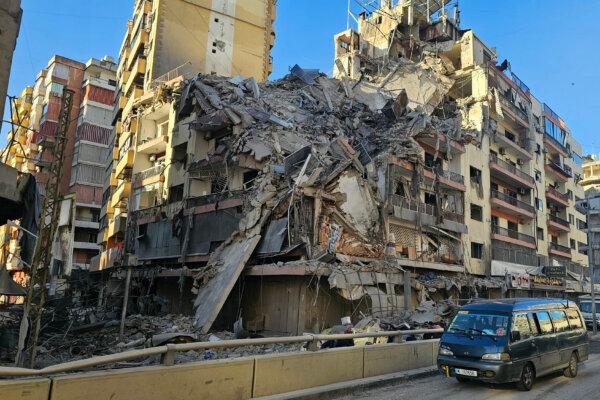
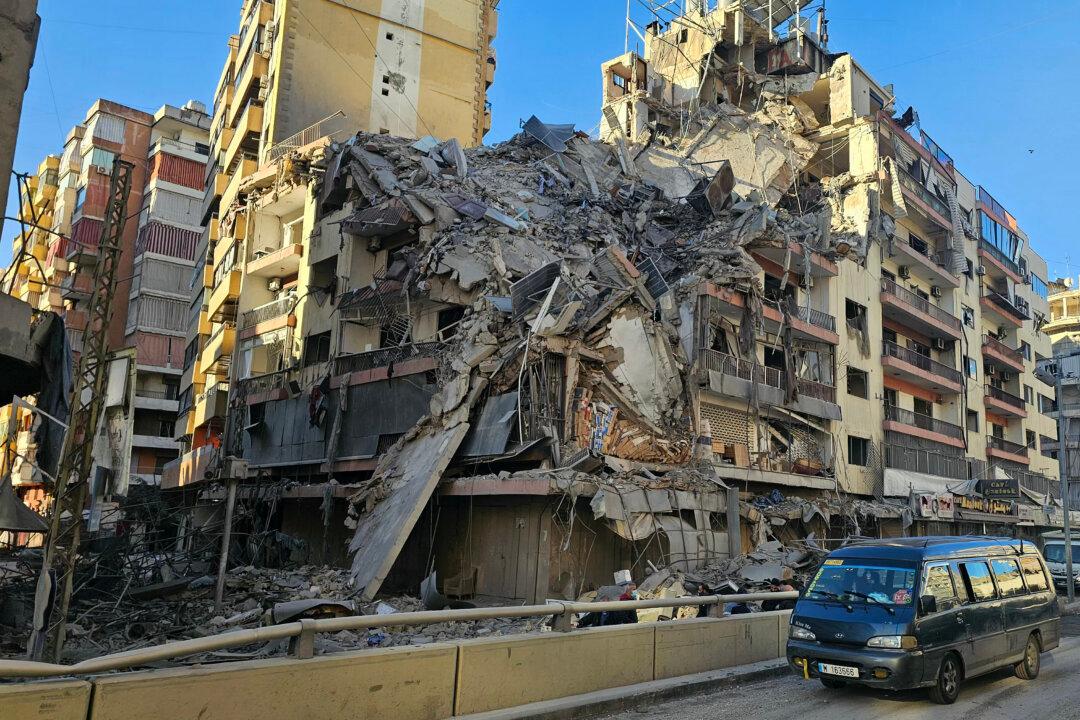
A van drives past a destroyed building following airstrikes in Beirut's southern suburbs of Ghobeiry neighborhood, Lebanon, on March 5, 2026. (AFP via Getty Images)
Trump, in remarks at the White House, once again urged the Iranian people to “help take back your country.” He also promised that the U.S. government would grant them immunity amid ongoing dangers under the current Iranian regime. He said the U.S. military’s objectives are “far ahead of schedule.”
“So you’ll be perfectly safe with total immunity,” he said. “Or you’ll face absolutely guaranteed death.”
Days before that, he said at an Oval Office meeting that he doesn’t believe the son of the late Iranian shah, Reza Pahlavi, would be an acceptable leader. Instead, Iran should be led by an insider or “somebody from within” the regime, Trump suggested.
The Associated Press contributed to this report.
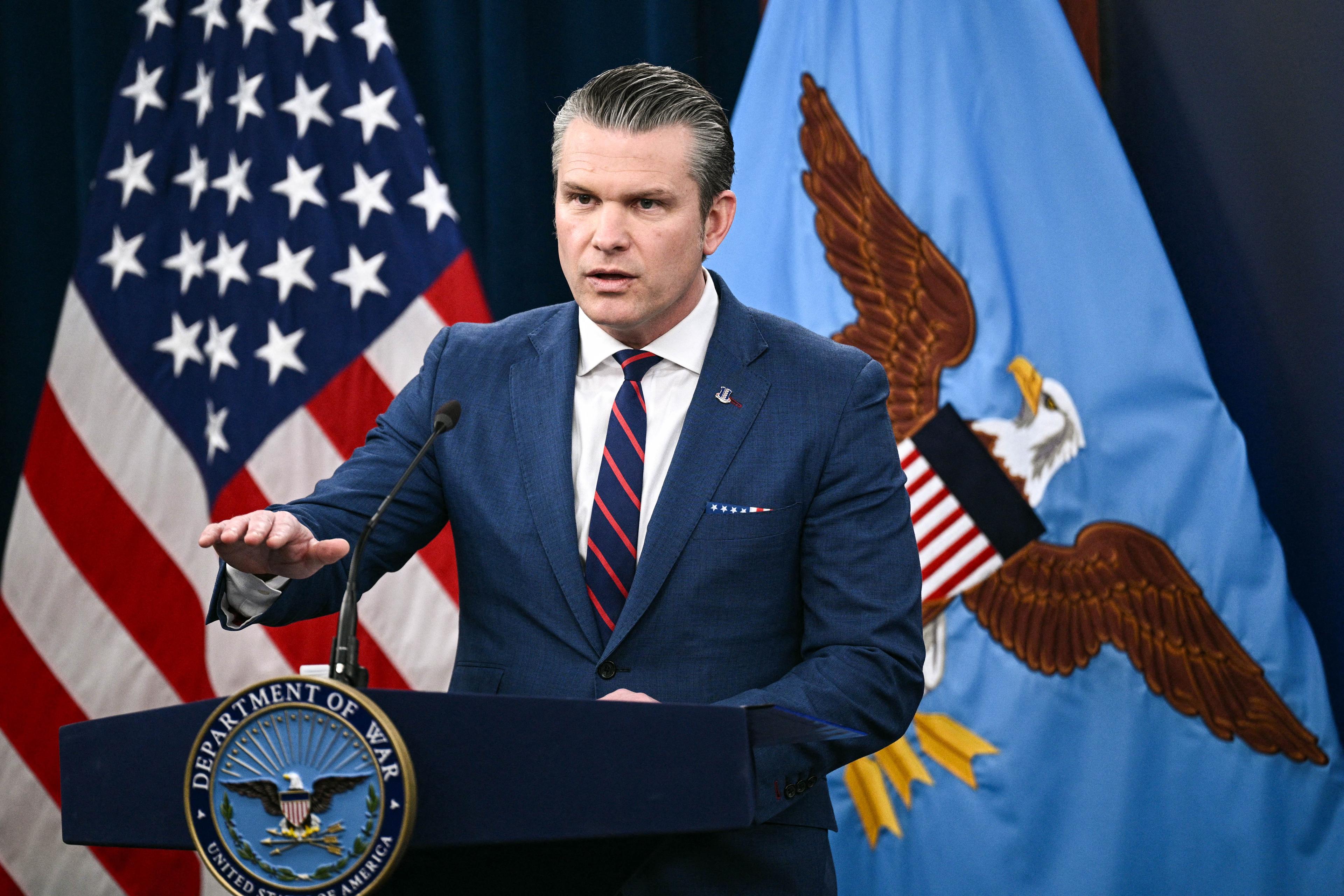

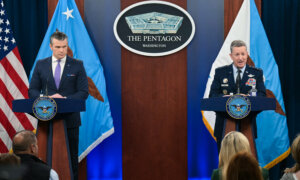
U.S. Secretary of War Pete Hegseth said on March 5 that there is no expansion of objectives in the military operation in Iran.
“We know exactly what we’re trying to achieve,” Hesseth said during a news briefing at U.S. Central Command headquarters in Tampa, Florida.
Hegseth was responding to a question about whether President Donald Trump’s desire to have a say in who will be the next leader of Iran represented an expansion of the objectives of Operation Epic Fury.
Later during the press conference, Hegseth addressed concerns that the operation could expand to other nations in the Middle East.
He said that Tehran’s targeting allied countries in the region that would otherwise stay out of the conflict is actually encouraging those nations to side with the United States and Israel in the war.
“This idea that [the conflict] is expanding—no, it’s actually simplifying, in a number of ways—exactly what we need to achieve and how we'll achieve it,” Hegseth said.
‘Next Phase’ of Operation
Also present at the briefing was Adm. Brad Cooper, the head of U.S. Central Command, who said that the next objective is to destroy Iran’s ballistic missile industrial base.
“So, we’re not just hitting what they have—we’re destroying their ability to rebuild,” Cooper said. “As we transition to the next phase of this operation, we will systemically dismantle Iran’s missile production capability for the future, and that’s absolutely in progress.”
Cooper praised U.S. partners in the region, who he said were, in many cases, “providing the most integrated air defense network in Middle East history.”
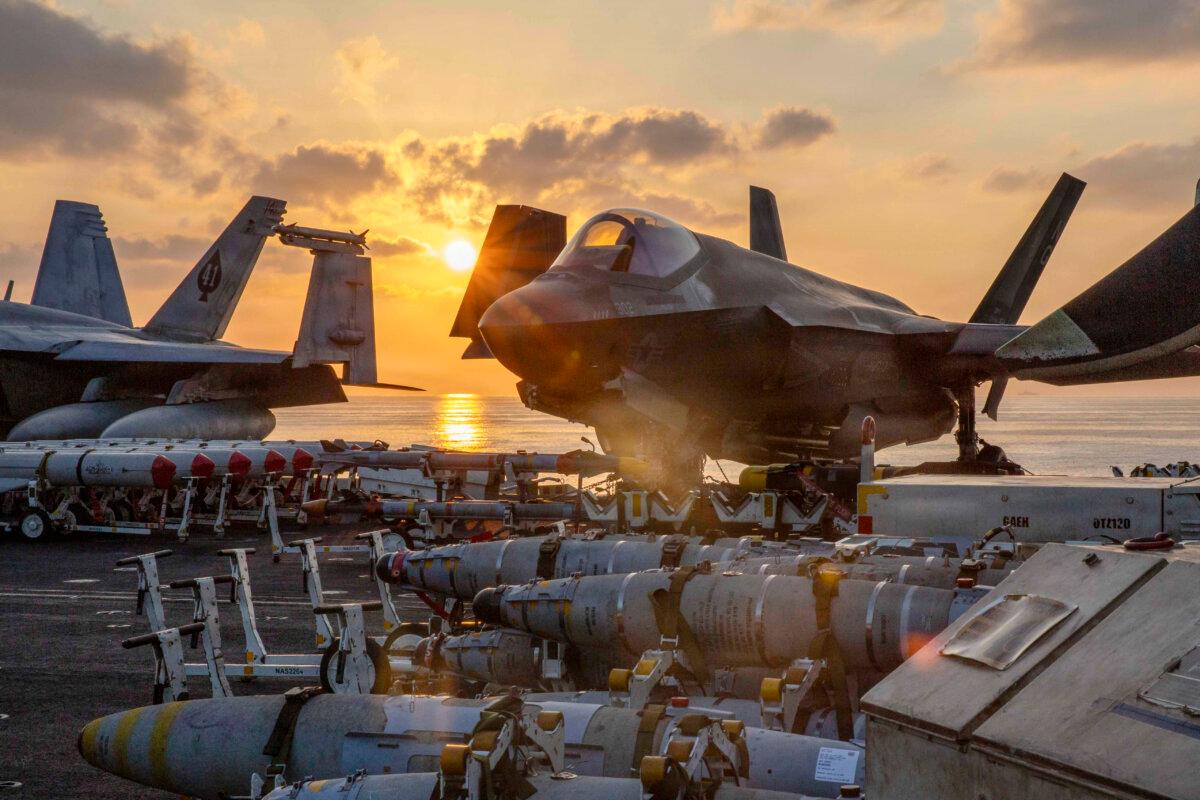
An F-35C Lightning II, attached to Marine Fighter Attack Squadron (VMFA) 314, is staged for flight operations on the flight deck of Nimitz-class aircraft carrier USS Abraham Lincoln (CVN 72) in support of Operation Epic Fury, on Mar. 3, 2026. (U.S. Navy)
“We are fighting to win through combined U.S. and Israeli combat power; we will continue decimating Iran’s ability to project power outside its borders,” he said.
During the briefing, Cooper said that due to the decline in Iran’s combat capability, ballistic missile attacks from the regime have decreased by 90 percent and drone attacks by 83 percent since the start of the war on Feb. 28.
Israel Announces ‘Next Phase’
The same day, Israel announced it was moving into its “next phase” of the Iran campaign after completing the surprise strike phase on the regime.
Israel Defense Forces (IDF) Chief of the General Staff Lt. Gen. Eyal Zamir said in a March 5 statement that since the start of the Iran War, Israeli air force pilots had executed 2,500 strikes, destroying about 80 percent of Iran’s air defense systems and neutralizing and destroying more than 60 percent of ballistic missile launchers.
“After completing the surprise strike phase, in which we established air superiority and suppressed the ballistic missile array, we are now moving to the next phase of the operation,” Zamir said. “In this phase, we will further dismantle the regime and its military capabilities. We have additional surprises ahead which I do not intend to disclose.”
Epic Fury Is ‘Laser-Focused’
Earlier this week, Hegseth said that the U.S. military operation in Iran is “laser-focused.”
“Destroy Iranian offensive missiles, destroy Iranian missile production, destroy their navy and other security infrastructure, and they will never have nuclear weapons,” Hegseth said on March 2 during a press briefing at the Pentagon, according to a statement from the Department of War.
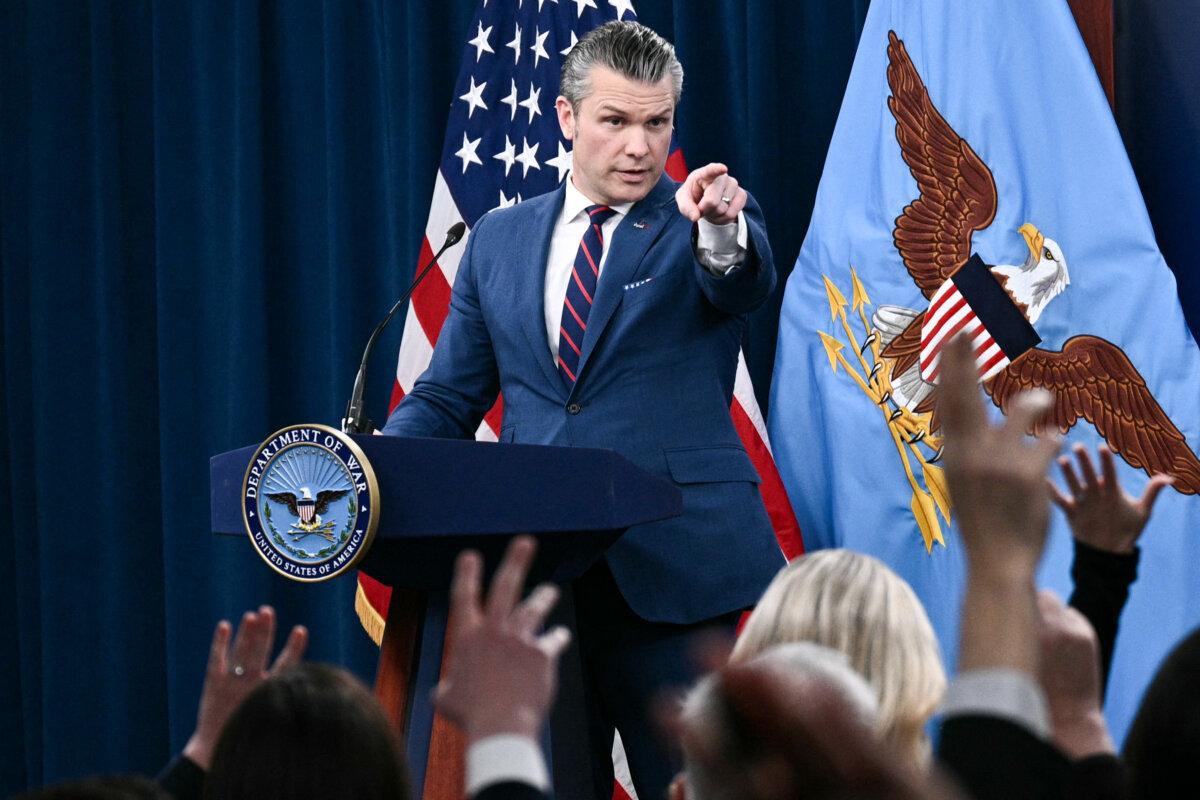
U.S. Secretary of War Pete Hegseth takes questions during a press conference on U.S. military action in Iran, at the Pentagon in Washington on March 2, 2026. (Brendan Smialowski/AFP via Getty Images)
The secretary had said the goals for Operation Epic Fury made it unlike past wars in Afghanistan and Iraq.
“Our ambitions are not utopian; they are realistic, scoped to our interests and the defense of our people and our allies,” Hegseth said. “This is not Iraq. This is not endless. ... This is the opposite. This operation [has] a clear, devastating, decisive mission: Destroy the missile threat, destroy the navy, no nukes.”
Merz said he does not want Iran in a “Syrian scenario” with the potential of a long civil war.
The German leader said he has asked the United States and Israel to “create as quickly as possible the preconditions for this country to be stabilized, for it to get a democratically legitimized government and for it to continue to exist as a state.”
He said that after Iran surrenders, the United States and its allies would “bring Iran back from the brink of destruction, making it economically bigger, better, and stronger than ever before.”
Trump said Iran would have a great future, and added, “Make Iran Great Again.”

“Some countries have begun mediation efforts,” Pezeshkian wrote in a post on X, without naming the governments involved.
He added that Iran was committed to peace but would continue defending against foreign aggression.
“We are committed to lasting peace in the region, but we have not the slightest hesitation in defending the dignity and authority of our country,” Pezeshkian said, adding that mediation should “address those who underestimated the Iranian people and ignited this conflict.”
Since the war began, Iran has launched missile and drone attacks across the Middle East, targeting Israel and the interests of the United States and its allies.
U.S. officials say Iranian strikes have crossed into at least a dozen countries as the war has spread beyond Iran and Israel.
The Israeli military said warplanes carried out at least 26 waves of strikes targeting Hezbollah command centers and weapons depots.
Hezbollah fired on Israel this week to avenge the death of Iranian leader Ali Khamenei, who was killed on the war's first day.
Israel also launched a new wave of attacks on Iran on Friday, saying 50 of its warplanes had struck a bunker beneath the Tehran compound of Khamenei, still being used by Iran's leadership.
Since the beginning of the war, the UAE has intercepted 190 ballistic missiles and 1,110 drones, while two missiles and 74 drones have fallen in the country.
"No, we are waiting for them," he told NBC when asked whether he was afraid of a possible U.S. ground invasion.
"Because we are confident that we can confront them, and that would be a big disaster for them."
Araghchi said that Iran has not asked for a cease-fire.
"There is no winner in this war," he said. "Our win is to be able to resist against the illegal goals, and this is what we have done so far."
The same day, U.S. President Donald Trump told NBC that a U.S. ground invasion would be a “waste of time.”
”They’ve lost everything. They’ve lost their navy. They’ve lost everything they can lose,” he said.
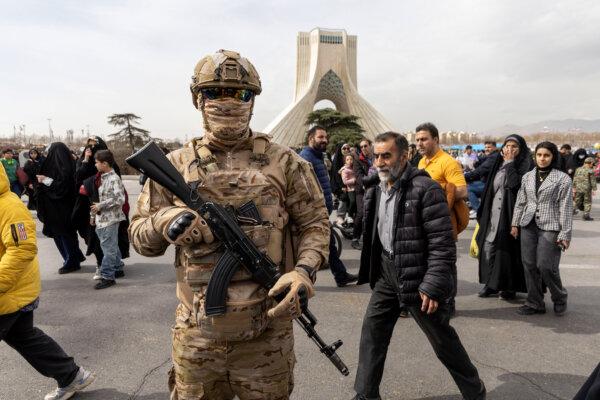
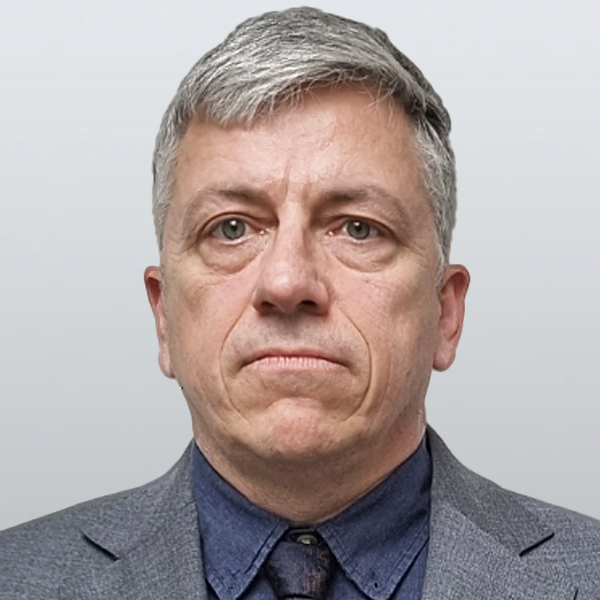
The Metropolitan Police issued a statement saying the suspects—one Iranian citizen and three men with joint British and Iranian nationality—were arrested under the National Security Act.
“The investigation relates to suspected surveillance of locations and individuals linked to the Jewish community in the London area,” the police said in the statement.
They said they searched several premises in Barnet and Harrow in north London and in nearby Watford, and arrested six other men on suspicion of assisting an offender.
One of the men was additionally arrested on suspicion of assaulting an officer.
The IDF said it is working to intercept the projectiles.
IEA Executive Director Fatih Birol told reporters in Brussels that “there is plenty of oil in the market” and that the problem was about logistics, not a lack of supply.
When asked about releasing emergency reserves, Birol said member governments were keeping "all options on the table" but currently saw no need for coordinated action.
"Based on my discussions with IEA member governments and looking at current market conditions, there are no plans for a collective action at this stage. We are facing a temporary disruption—a logistical disruption," he said, according to Argus Media.
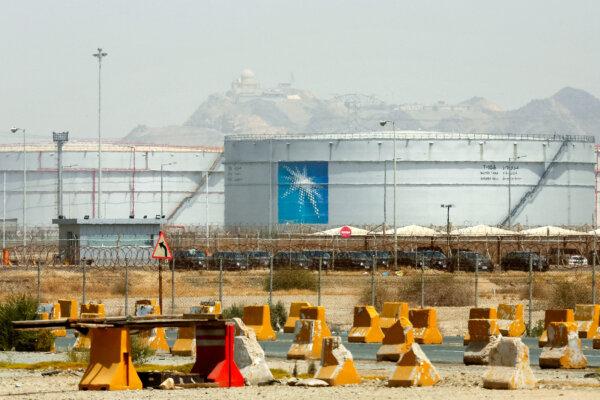
He said that oil prices could soar to $150 a barrel within two to three weeks if tankers and other merchant vessels are unable to pass through the Strait of Hormuz.
“Everybody that has not called for force majeure we expect will do so in the next few days that this continues. All exporters in the Gulf region will have to call force majeure,” Kaabi said.
“If they don’t, they are at some point going to pay the liability for that legally, and that’s their choice.
“This will bring down the economies of the world.”
He said that everybody’s energy price is going to go higher.
“There will be shortages of some products and there will be a chain reaction of factories that cannot supply,” he said.
“We know exactly what we're trying to achieve,” Hesseth said during a press briefing at Centcom headquarters in Tampa, Florida.
The secretary of war made the statement in response to a question on whether President Donald Trump's wanting to have a say in who will be the next leader of Iran represented an expansion of the objectives for Operation Epic Fury.
Later during the press conference, Hegseth addressed concerns that the operation could expand beyond the borders of Iran to other nations in the Middle East.
He said that Tehran's targeting allied countries in the region that would otherwise stay out of the conflict is actually encouraging those nations to side with the United States and Israel in the Iran War.
"This idea that [the conflict] is expanding—no, it's actually simplifying, in a number of ways—exactly what we need to achieve and how we'll achieve it," Hegseth said.
The Permanent Mission of the Islamic Republic of Iran to the United Nations said in a March 5 post on X that reports Iran had closed the strait were “baseless and absurd.”
“Iran remains committed to international law and freedom of navigation,” it said.
Vessel-tracking platform MarineTraffic said tanker traffic had fallen by about 90 percent, according to a March 4 post on X.
Oil prices have climbed about 15 percent since the conflict began on Feb. 28. European gas prices rose by as much as 45 percent.
Analysts at the Atlantic Council said on March 5 that while China would suffer from oil disruptions, a crisis resulting in major LNG outages would not cause significant harm to Beijing because natural gas plays a smaller role in its energy mix.
The European Union, Japan, South Korea, and Taiwan rely far more heavily on LNG imports.
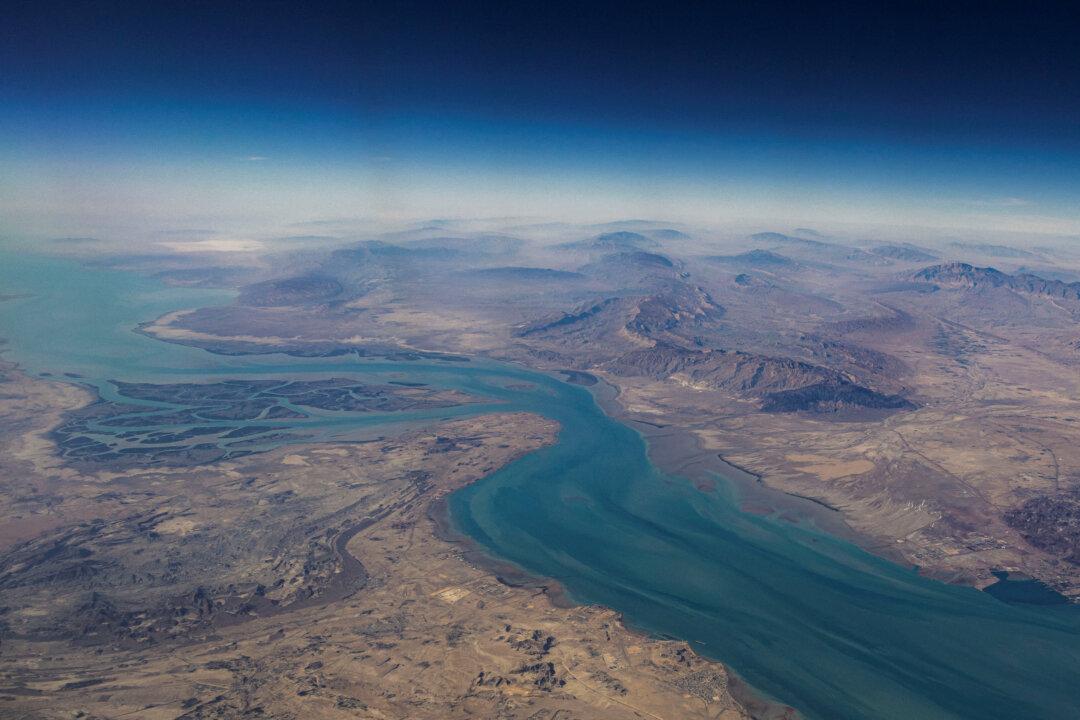
"There are around 50 ships, 52 to be precise, in the Persian Gulf and eight in the Red Sea, and we are also in permanent contact with the crews, as there are French sailors aboard a number of these vessels," Tabarot told French broadcaster CNews/Europe 1, according to Reuters.
Paris is currently looking to build a coalition of countries to help secure shipping traffic in the region amid the ongoing U.S.–Israeli military operation in Iran.
French President Emmanuel Macron announced the move to assemble a coalition in a televised address to the nation on March 3, in which he also announced the redeployment of the Charles de Gaulle aircraft carrier to the Mediterranean, diverting it from a planned North Atlantic deployment.
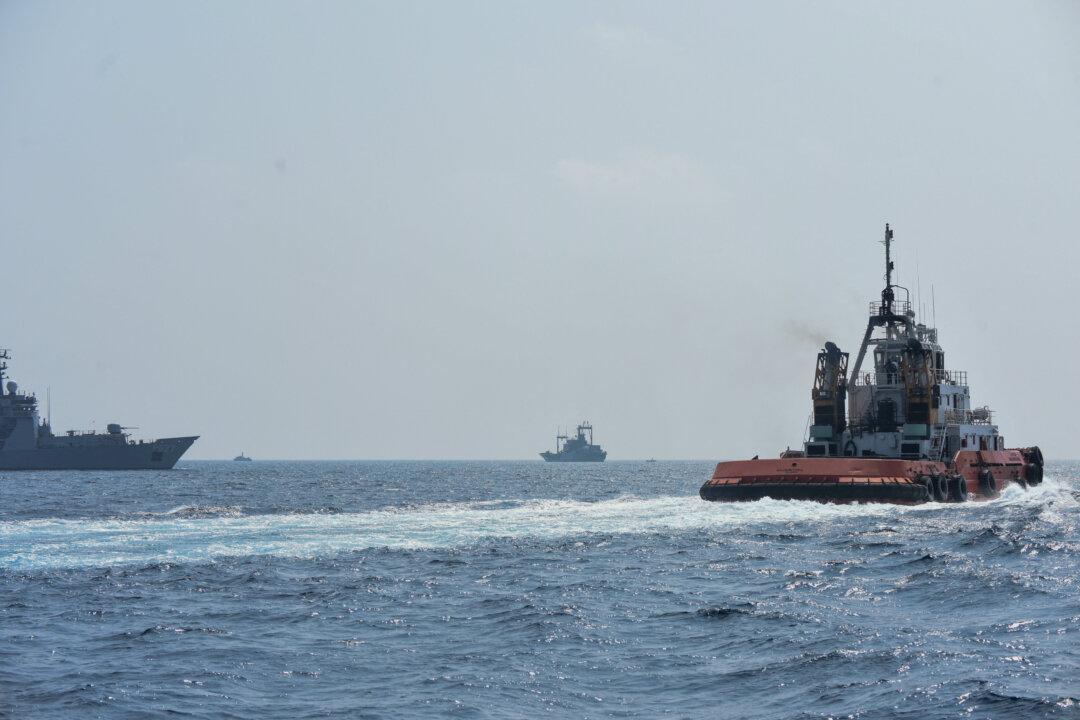
On March 6, Sri Lanka Navy spokesman Cmdr. Buddhika Sampath said more than 200 sailors from the IRIS Bushehr had been taken off the vessel in the capital, Colombo, and the ship will later be moved to Trincomalee, a port on the island’s east coast.
Sri Lankan President Anura Kumara Dissanayake said they had taken control of IRIS Bushehr after one of its engines failed.
“We have to understand that this is not an ordinary situation. It’s a request by a ship belonging to one party to enter into our port. We have to consider that according to the international treaties and conventions,” Dissanayake told journalists on March 5.
On March 4, U.S. Secretary of War Pete Hegseth said the frigate IRIS Dena had been sunk off the southern coast of Sri Lanka, the first to be sunk by a U.S. Navy torpedo since World War II.
Planes from the Qatari air force, the U.S. Air Force, the British air force, and other allied forces all operate out of the base, which is also home to a forward headquarters of U.S. Central Command.
The ministry said in a March 3 statement that an Iranian missile struck the base. No casualties were reported. The ministry added that other missiles launched toward the base were intercepted by Qatar’s air defense systems.
Iran has been launching drones and missiles across the region, including toward U.S. bases, after Israel and the United States struck Iran on Feb. 28.
IDF Chief of the General Staff Lt. Gen. Eyal Zamir said that since the start of the Iran War on Feb. 28, Israeli air force pilots had executed 2,500 strikes, destroying about 80 percent of Iran’s air defense systems, and neutralizing and destroying more than 60 percent of ballistic missile launchers.
“After completing the surprise strike phase, in which we established air superiority and suppressed the ballistic missile array, we are now moving to the next phase of the operation,” Zamir said. "In this phase, we will further dismantle the regime and its military capabilities. We have additional surprises ahead which I do not intend to disclose.”

The ritual honors U.S. service members who die in the theater of operation.
“This Saturday, I will attend the dignified transfer at Dover Air Force Base to honor the brave Americans who were killed in action and stand with their families during this solemn moment,” Nunn said on X.
White House press secretary Karoline Leavitt told a press briefing on March 4 that President Donald Trump also intends to attend the dignified transfer.
The Army Reserve members, assigned to the 103rd Sustainment Command based in Des Moines, Iowa, were killed March 1 in the Iranian attack on Port Shuaiba, Kuwait, amid U.S.-Israel military operations against Iran.
Two of the soldiers—Maj. Jeffrey R. O'Brien, 45, of Indianola, and Sgt. Declan Coady, 20, of Des Moines—are from Iowa.
The other four were identified as Chief Warrant Officer 3 Robert M. Marzan, 54, of Sacramento, California; Capt. Cody Khork, 35, of Winter Haven, Florida; Sgt. 1st Class Nicole Amor, 39, of White Bear Lake, Minnesota; and Sgt. 1st Class Noah Tietjens, 42, of Bellevue, Nebraska.
The IDF said the strikes targeted infrastructure belonging to the Iranian regime but did not provide details.
Prior to the announcement, the IDF said it targeted the headquarters of a special unit of the Iranian regime in Alborz province that oversaw Iran’s internal security forces.
The Israeli military also struck facilities used by Iran’s Islamic Revolutionary Guard Corps, a central command center for Iran’s internal security forces, as well as “dozens of command centers and weapons sites.”