
News
How to Manage Spondylolisthesis Without Surgery
Comments
Link successfully copied
(JitendraJadhav/Shutterstock)
By Shan Lam and JoJo Novaes
7/9/2025Updated: 7/22/2025

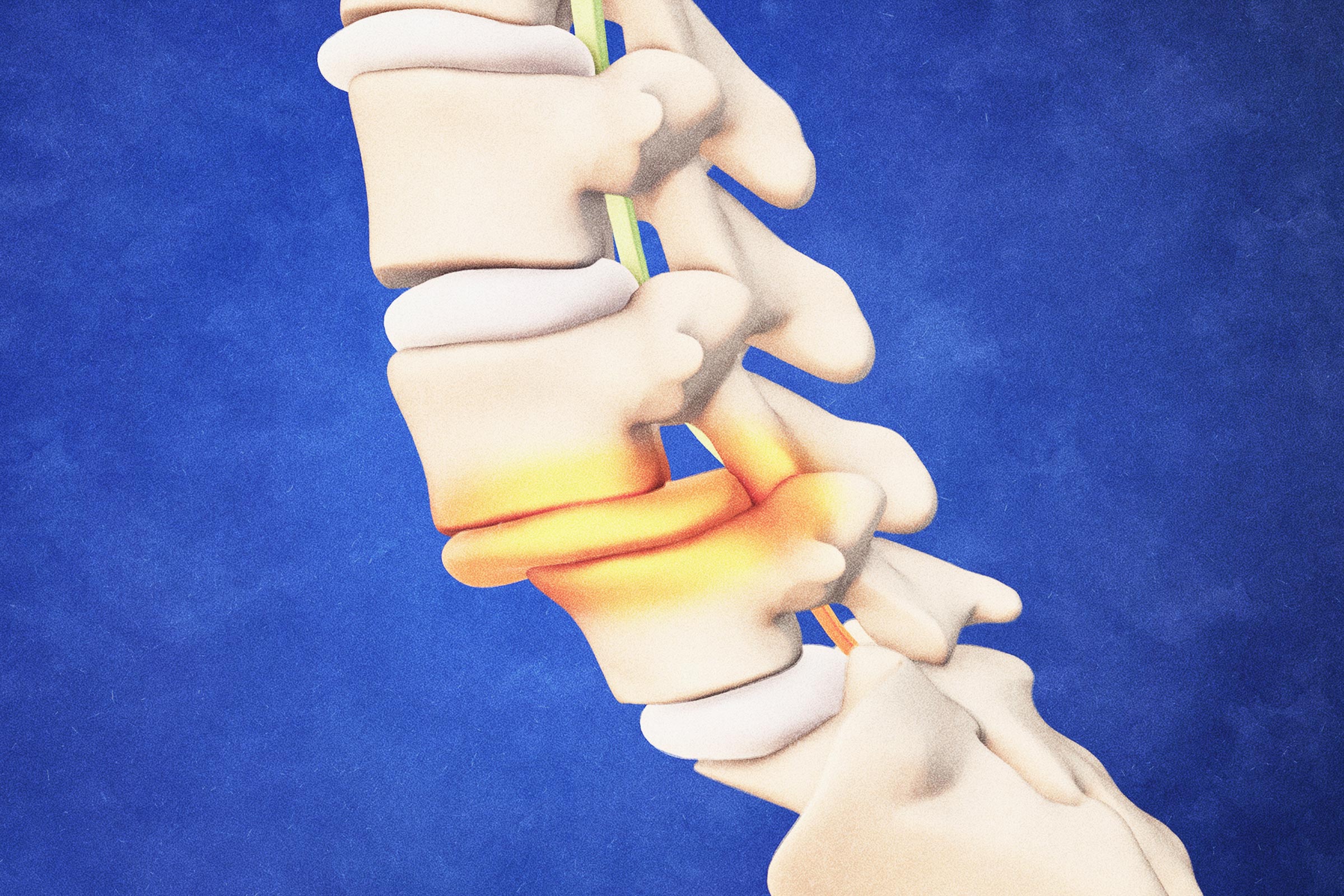
Spondylolisthesis is a condition in which the vertebrae in the lower back become misaligned and displaced, causing them to slip out of position. It is most commonly seen in adults over 50 and is often associated with poor posture and prolonged periods of sitting. Without changes to daily habits, even surgical treatment may fail to deliver lasting results.

In an episode of the “Health 1+1” program, Zheng Yun-Long, an expert in spinal health and CEO of Taiwan’s Body Learning Co., shared targeted exercises to help manage spondylolisthesis, along with practical guidance to prevent further spinal slippage.

What Is Spondylolisthesis?


The spine naturally follows an S-shaped curve. However, poor posture while standing, walking, or bending can cause the intervertebral discs—the soft cartilage between the vertebrae—to flatten or wear down. Over time, if the ligaments that connect and support the spine weaken, the vertebrae may begin to shift out of alignment, resulting in spondylolisthesis.

When slippage occurs, it can compress nearby nerves and, in severe cases, may lead to sciatica and other symptoms.

Symptoms of Spondylolisthesis


Common symptoms of spondylolisthesis include lower back pain related to posture, radiating leg pain, numbness or abnormal sensations in the legs, fatigue or soreness after prolonged standing or walking, and sciatica.

Many patients experience intermittent pain—they may need to stop and rest after walking short distances and often walk with a limp, Zheng said.

Another distinctive symptom is waking up with lower back pain, which may ease after sitting down and bending forward to stretch the spine.

Zheng recommends seeking medical attention if these symptoms occur. A simple X-ray is often sufficient to confirm a diagnosis of spondylolisthesis.

Key Risk Factors for Spondylolisthesis


Spondylolisthesis occurs most often in adults over 50, especially women, due to age-related degeneration and factors like hormonal changes and pelvic ligament laxity during pregnancy.

A 2016 systematic review found that among 4,000 older adults over the age of 65 in Hong Kong, 25 percent of women and 19.1 percent of men were diagnosed with degenerative spondylolisthesis. An earlier prospective cohort study reported a prevalence rate of 31 percent for lumbar spondylolisthesis among 300 elderly American men with an average age of 74.

Age-related spondylolisthesis, also known as degenerative spondylolisthesis, is often associated with poor posture. Less common than age-related spondylolisthesis are other types, such as congenital spinal misalignment or traumatic slippage caused by major accidents or car crashes, Zheng said.

Exercises for Relieving Discomfort


People with spondylolisthesis often have weak abdominal and gluteal muscles, or tightness in the muscles around the hips, commonly due to prolonged sitting, Zheng said. He shared several simple exercises that can help both prevent and relieve symptoms of spondylolisthesis.

Exercise 1: Knee-to-Chest Rocking


Steps:


  1. Lie flat on your back with your lower legs angled at about 45 degrees. Keep your feet and palms resting on the floor.

  2. Gently lift your legs and bring your hands to your knees, holding them lightly.

  3. Using your hands, gently rock your knees toward your chin in a soft, bouncing motion.


Exercise 2: Knee Tuck


This exercise helps strengthen the abdominal muscles, which can reduce tension in the lower back.

Steps:


  1. Lie flat on your back. Raise both legs so your thighs are vertical and your knees are bent at a 90-degree angle.

  2. Gently draw your knees toward your torso while engaging your abdominal muscles.

  3. Hold the position briefly, then return to the starting posture. Repeat as needed.


Exercise 3: Supine Knee Circles


This exercise helps activate the abdominal muscles and ease tension in the lower back.

Steps:


  1. Lie flat on your back. Keep your lower legs at about a 45-degree angle, with both feet and palms resting on the floor. Gently sway your legs slightly from side to side.

  2. Lift both legs, bending your knees so that your thighs and lower legs form a 45-degree angle. Slowly begin drawing circles in a clockwise direction with your knees.

  3. After several rotations, reverse the motion and draw circles in a counterclockwise direction. Start with small circles and gradually increase their size.


Exercise 4: Supine Hip Flexor Stretch


Steps:


  1. Lie flat on your back. Use both hands to gently pull your bent left knee toward your chest.

  2. Keep your right leg relaxed and fully extended on the floor throughout the stretch.

  3. Hold the stretch for 30 seconds to target the right hip flexor, then slowly release.

  4. Switch sides: Hug your right knee to stretch the left hip flexor. Hold for 30 seconds, then release.


Exercise 5: Supine Side Stretch


This gentle stretch creates a warm, calming sensation in the body and is particularly beneficial before bedtime.

Steps:


  1. Lie on your back with your lower legs at about a 45-degree angle, feet resting on the floor.

  2. Place both hands behind your head to gently support your neck.

  3. Slightly lift your upper body and bend toward the right to stretch the left side of your torso.

  4. Hold the position and take deep breaths for 30 seconds to one minute.

  5. Return to the center, then repeat on the opposite side.

  6. Perform several repetitions on each side.


These exercises can help strengthen the abdominal muscles and relieve tension in the lower back and hip flexors, Zheng said. He recommends that patients work with a physical therapist or rehabilitation specialist to create a personalized exercise plan tailored to their individual needs.

Key Principles for Managing Spondylolisthesis


A 2022 review published in JAMA recommends that initial treatment for patients with spondylolisthesis combined with lumbar spinal stenosis generally involves activity modification, pain management, and physical therapy. While spinal fusion surgery may offer benefits for some patients, it also carries a risk of complications and should be carefully considered.

Zheng referenced a local news story from Taiwan involving a woman in her 70s who had undergone four spinal surgeries and later developed failed back surgery syndrome. She required a complex, 11-hour surgery to correct the issue, after which she eventually regained the ability to walk.

Many surgical failures occur because patients do not make the necessary lifestyle changes, Zheng noted. In spinal fusion procedures, for example, screws are used to stabilize the affected vertebrae but if patients continue to bend improperly and place repeated stress on the spine, adjacent lumbar or thoracic segments may slip, leading to further surgeries involving more screws or bone cement.

Even routine activities can strain the spine if performed incorrectly. For example, when washing your face, it is recommended to bend at the hips rather than the waist, using the hip joints to reduce pressure on the lumbar spine.

Zheng emphasized that patients with lumbar spondylolisthesis should follow proper movement principles to protect the spine and prevent further injury, regardless of whether they have surgery.

Develop Postural Awareness


Maintaining active muscle engagement is important for proper posture, Zheng said. “You have to correct a collapsed posture and learn to actively support your body.”

He recommends a simple exercise: Stand upright and extend both arms forward. Rotate your torso gently to the left and right. Then, elongate your spine by pressing your head upward as if reaching for the ceiling, and repeat the rotation. This upright posture typically allows a greater range of motion.

Next, relax your muscles and let your posture collapse by slumping and rounding your back. Try the same torso rotation again. You will likely find that your range of motion is significantly reduced. This demonstrates how poor posture compresses the spine and restricts movement.

Engage the Lower Abdomen


Many people tend to unknowingly tilt or sway their pelvis while standing. To correct this and improve stability, gently engage the lower abdominal muscles by slightly tucking the pubic bone upward.

This technique is particularly important when lifting heavy objects—avoid pushing the abdomen outward during the movement.

Incorporate Stretching Exercises


Some patients with spondylolisthesis avoid exercise altogether, including simple activities like walking or jogging, fearing it could worsen their condition, Zheng noted. However, the key is not to avoid movement, but to learn how to move correctly.


One effective approach is called lengthening-based movement, which focuses on creating extension rather than compression, Zheng said. For example, during a side-bending motion, the goal is not to collapse the torso to one side, but to actively lengthen one side—followed by the other—creating a feeling of dynamic stretch.

With proper technique, everyday tasks like reaching to hang clothes or placing a blanket on a high shelf can be done safely. However, until these movement principles are learned, patients with spondylolisthesis should avoid lifting heavy objects overhead.

Incorporate Functional Movement Training


Patients with lumbar spondylolisthesis often develop rounded shoulders and a hunched posture, which places additional stress on the lower spine. To counteract this, functional movement training is essential.


The goal is to restore proper muscular balance and postural support throughout the body. For the upper body, this includes stretching the chest muscles, activating the muscles beneath the shoulder blades, and gently tucking the chin. For the lower body, the training should emphasize strengthening the glutes and abdominal muscles to support spinal stability.

A 2021 randomized controlled trial published in the Physical Therapy and Rehabilitation Journal found that consistently performing rehabilitation exercises significantly improved outcomes for patients with degenerative spondylolisthesis. After six months of lumbar stabilization training or flexion-based exercises, participants experienced significant reductions in lower back pain and symptoms related to nerve root compression.

Flexion exercises included movements such as bringing the knees to the chest while lying on the back.

Spondylolisthesis doesn’t have to define your life. With proper posture, targeted exercises, and awareness of how you move, long-term relief and spinal stability are within reach, no matter your age.

Share This Article:
Jojo is the host of Health 1+1. Health 1+1 is the most authoritative Chinese medical and health information platform overseas. Every Tuesday to Saturday from 9:00 a.m. to 10:00 a.m. EST on TV and online, the program covers the latest on the coronavirus, prevention, treatment, scientific research and policy, as well as cancer, chronic illness, emotional and spiritual health, immunity, health insurance, and other aspects to provide people with reliable and considerate care and help. Online: EpochTimes.com/Health TV: NTDTV.com/live

©2023-2025 California Insider All Rights Reserved. California Insider is a part of Epoch Media Group.