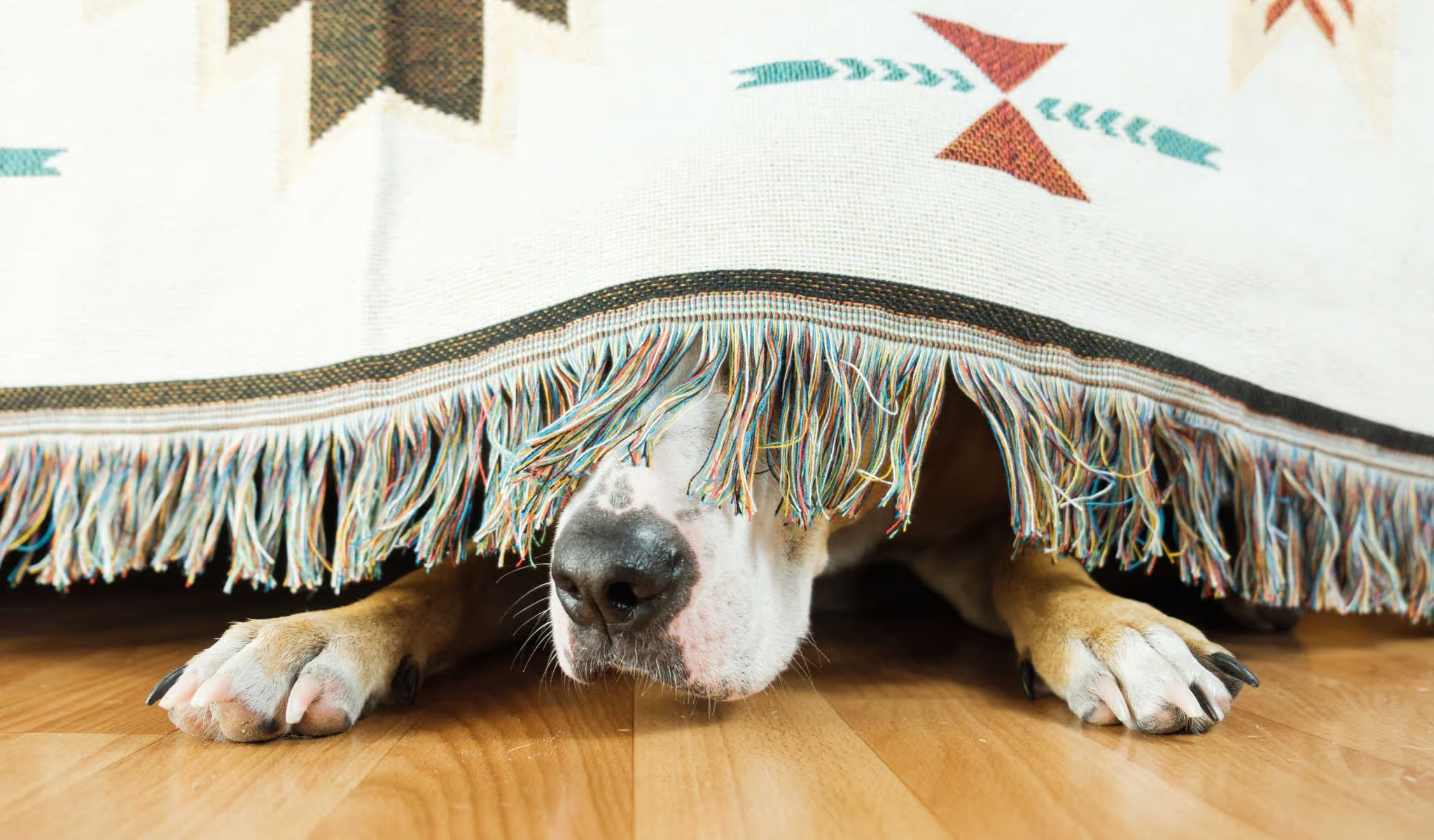

The Fourth of July is a great time to get together with family and friends to barbecue and light some fireworks. But our furry little dog friends might not be as excited about the celebrations as people are.
Fireworks and other loud noises can cause dogs and other animals to get scared and have anxiety. Nearly one in five lost pets goes missing after being scared by the sound of fireworks, according to the American Society for the Prevention of Cruelty to Animals.
“Fear can be normal, and it’s a natural instinct response to a perceived external threat,” veterinarian Dr. Janet Roark said. “It is really important that if your animal is having a fear response, that you do not punish them.”
Roark started working at a veterinarian’s office at 16 years old. At that time, she gained a passion for educating owners and helping pets. She became a veterinarian in 2005 upon graduating from Michigan State University.
In an online class she shared with The Epoch Times, Roark talked about many ways to help keep your pet calm this holiday.
In preparation, she said, be sure your animal gets at least 30 minutes of aerobic activity a day leading up to the stressful event. Keeping your animal busy with an active mind can really help, she said.
If you have a border collie or a husky that is super athletic, you might need to do two hours of exercise that day, she said.
She recommends that if you’re going to be away, you hire a sitter so your dog is not alone during this potentially stressful event.
“I cannot emphasize this enough. You have got to stay calm yourself. I see so many owners ... know their animal is anxious, so they have anxiety themselves,” she said.

Desensitization to the fireworks is an option, but it needs to be worked on leading up to the Fourth. She said you can play a recording of fireworks or a thunderstorm, starting quietly and eventually turning up the volume.
“So you’re going to have attention without tension, is what the goal is,” she said.
Every animal is an individual, and they all progress at different paces based on their comfort level, she said, so using short, frequent sessions, no more than five minutes, is much better than using long, infrequent sessions, which could overwhelm them.
Roark said to turn on the TV or music to drown out the sounds, or play with them with high-value toys that they only get during this time. Also, give them high-value treats such as peanut-butter-filled Kongs to make the experience fun instead of scary.
For some dogs, you can use calming music, pheromones, CBD oil, or thunder shirts that apply constant soothing pressure to the dog, she said. She mentioned that getting some acupuncture leading up to the Fourth can be helpful, along with acupressure techniques that can be found on YouTube.
Another technique is photonic light therapy. She said green light stimulates the parasympathetic nervous system, and she recommends green or red light for calming.
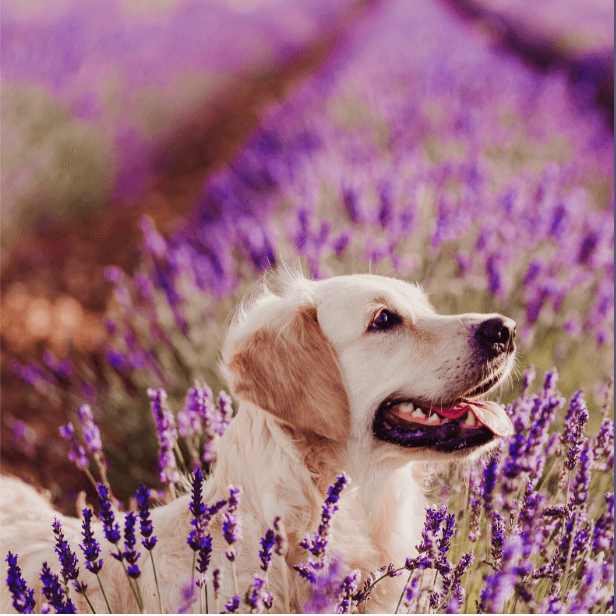
A dog enjoys the natural aroma of a lavender plant. (Courtesy of Janet Roark)
Another option is to use essential oils. When diffused, they travel through the olfactory system and into the brain, and they can help regulate the nervous system response and calm anxiety by affecting the limbic system, which controls emotional responses, she said.
Roark teaches about essential oils in an aromatherapy course on her website, EssentialOilVet.com.
Essential oils are aromatic compounds that are found in different parts of plants, such as seeds, bark, stems, roots, and flowers, Roark said. Pure essential oils are 100 percent natural; there’s nothing added to them.
She said to use a water-based diffuser, make sure the room door is open so the dog can leave if it wishes, and keep the diffuser in an area where the dog can’t knock it over.
Some of the oils she recommends for a stressful event are lavender, magnolia, copaiba, vetiver, Roman chamomile, and spikenard.

A copaiba tree, a native of the Amazon forest. (Courtesy of Janet Roark)
Vetiver can be sedating in general, although it’s not really a sedative, she said. She noted that she reserves it for very high-stress situations, such as fireworks, thunderstorms, noise phobias, and construction. It’s also helpful for restful sleep and can be applied topically or diffused, but dilute it first if you’re going to use it topically, she said.
She added that copaiba eases feelings of tension and promotes a sense of well-being, and it can be used topically, internally, or by diffusing.
She said lavender and magnolia can be used internally as well.

A lavender plant. (Courtesy of Janet Roark)
You can add drops of essential oils to a spray bottle mixed with fractionated coconut oil and use it for topical application to bedding about 15 minutes before a stressful event, she said.
Roark said Roman chamomile calms the mind and body, releases pent-up tension, is very gentle, and is especially helpful in calming the digestive system. It can be used topically, a drop can be given internally, it can be diffused, or you can do a combination of all three.
The oils can be used to keep humans calm through the situation as well, she added.
When using oil topically, dilute it first, and then it can be directly applied to the gums or along the spine. Or you can use massage techniques, ear tipping along the meridians, any acupressure techniques, reflexology points on the bottoms of the paws, hot or cold compresses, or just petting along the spine.
The oils that can be used internally can be mixed with food. One drop is usually enough, she said. Alternatively, a dose can be put in a capsule topped with carrier oil, or it can be placed on a treat.
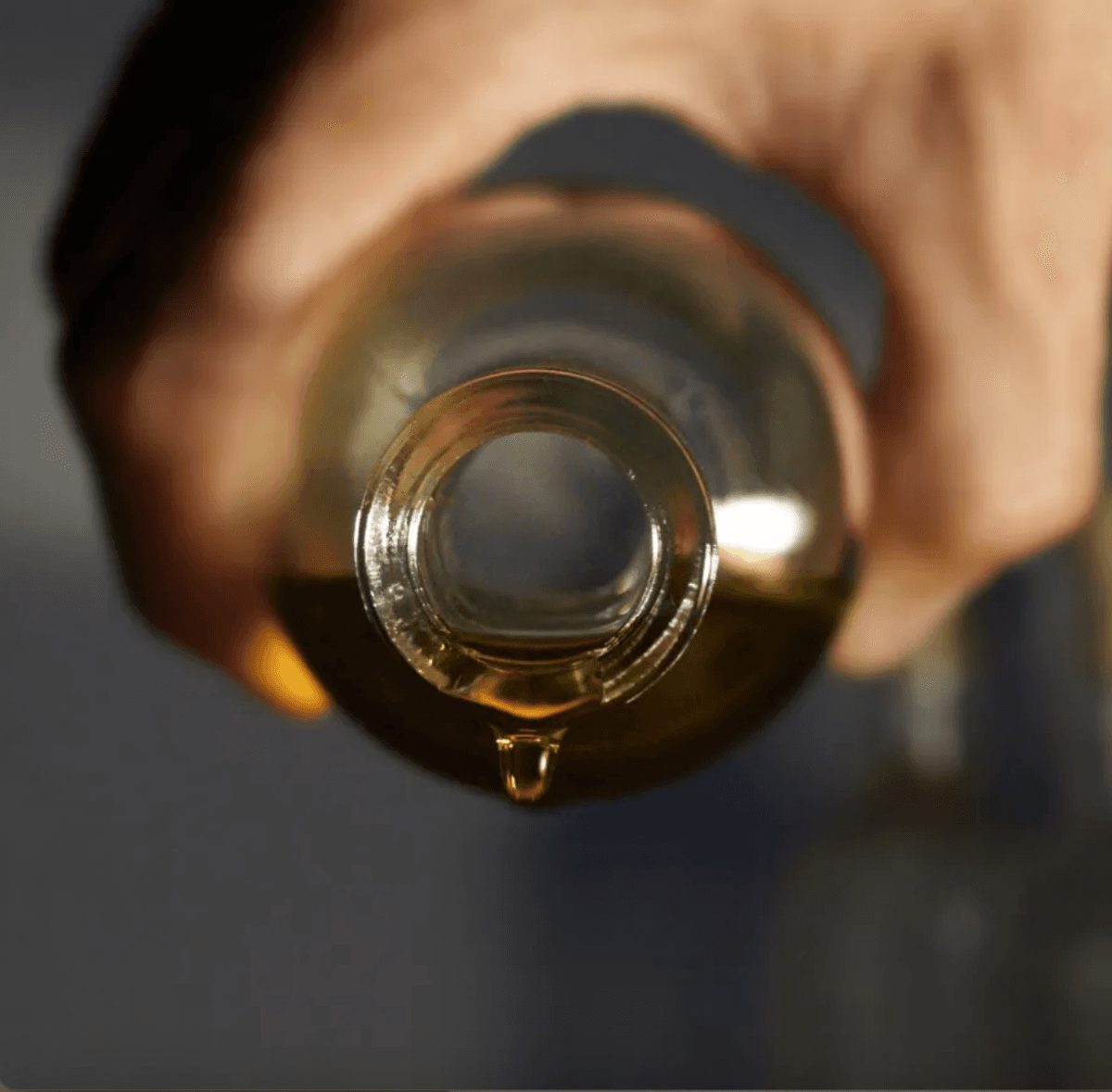
A bottle of carrier oil. (Courtesy of Janet Roark)
She cautioned to not use essential oils in the nose, ear canal, eyes, or genitals. Do not use tea tree, wintergreen, or birch, especially with dogs. Don’t use plain water to remove essential oil; use a carrier oil or some shampoo instead. Don’t apply a large amount of oil at one time.
“Remember, more diluted more frequently is better,” Roark said.
Do not use essential oils at the same time as a topical medication, she said. If using internally, make sure the oil is labeled specifically for that use. Don’t add essential oils to your pet’s water dish, but adding to the food is fine.
She cautioned that some oils cause phototoxicity, which means the dogs can get sunburned if the oils are applied topically and they go into sunlight or UV rays, especially if they’re pink-skinned. The oils that are particularly photosensitizing or phototoxic are bergamot, cumin, grapefruit, kumquat, lemon, lime, tangerine, and wild orange.
If you do want to use a citrus oil topically but you’re worried about phototoxicity, use green mandarin instead, she said.
In addition, for an animal that has seizures, she said to avoid certain oils, not because these oils cause seizures, but because they can decrease the seizure threshold, potentially leading to a breakthrough seizure, although that is very rare. Those oils include rosemary, camphor, eucalyptus, fennel, hyssop, pennyroyal, sage, Spanish sage, wintergreen, and wormwood.
Roark said when it comes to quality, oil brokers will often cut the oils or add synthetics to them, and they’ll use cheaper oils or fillers.
“So the problem with this is that those synthetic oils, those adulterated oils, those fillers are often unsafe or toxic to pets,” she said. “They’re hormone-disrupting, they’re endocrine-disrupting, and they can cause lots of problems, and so I ask that you please don’t buy your essential oils on Amazon or from the grocery store. Get them from a really good quality source.”
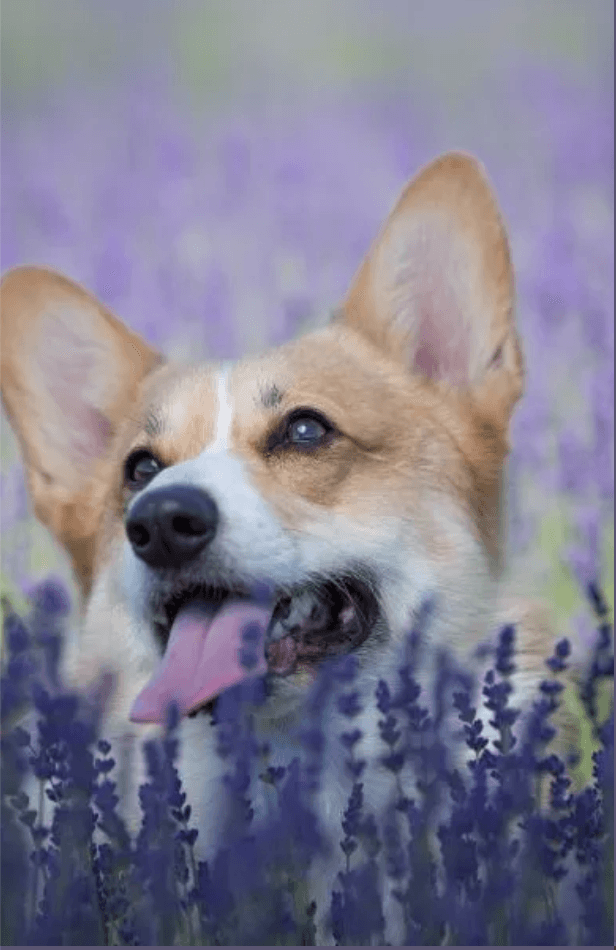
A corgi among lavender plants. (Courtesy of Janet Roark)
Roark also said that some dogs do well if you create a safe place for them, such as a blanket they can lie on or go under where nobody will bother them, so they can stay there until everything is over. She added that spraying some essential oils on their blanket can be helpful.
What might work for some dogs might not work for others.
“It’s very individualized,” she said. “Some animals love essential oils; some are a little bit more suspicious of it. Some animals are more suspicious of everything in general, which is just their personality, but your pet might be more or less sensitive than others.”
She noted that the signs and symptoms of anxiety to look out for are aggression, pacing, restlessness, whining, trembling, excessive vocalization, and destructive behaviors such as chewing or digging. Dogs may even dig around doors or windows like they’re trying to escape, which can harm them.
Other possible symptoms, she said, include excessive salivation, panting, hiding, avoiding interactions, avoiding eye contact, inappropriate elimination, releasing their anal glands, and coprophagia (eating poop). There are also displacement behaviors such as yawning, looking away, air sniffing, and lip licking.