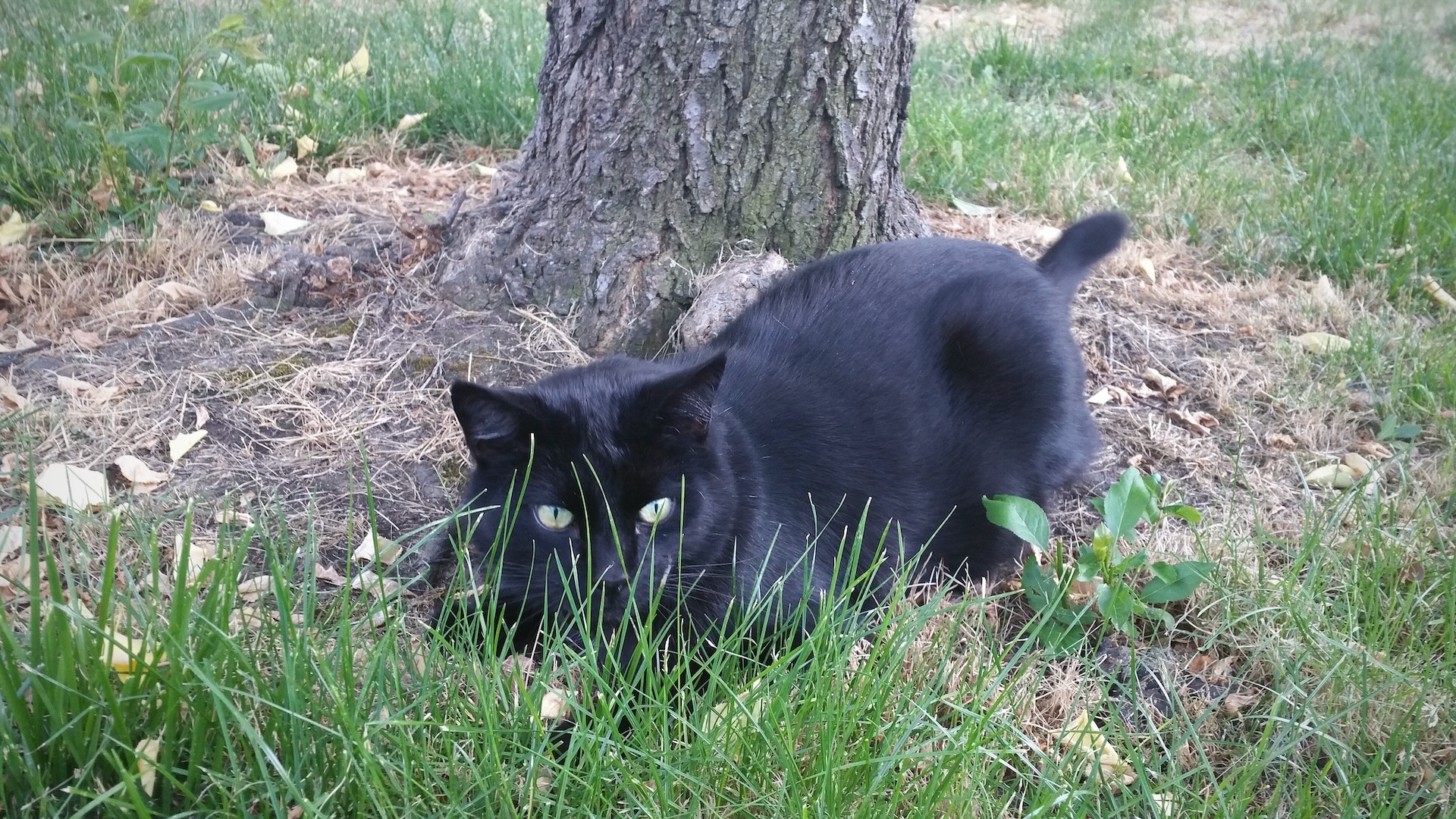

For many people, a pet is considered a companion and a beloved friend. While cleaning up after pets or dealing with damaged furniture might not be fun, nothing compares to the day one has to say goodbye when a pet passes away.
Ordained minister Gary Kowalski knows this situation very well. He is the author of the book “Goodbye, Friend: Healing Wisdom for Anyone Who Has Ever Lost a Pet.”
“In some cases, the death of a pet is even more painful than the loss of a human family member because our relationship with our animals is so visceral and direct,” Kowalski told The Epoch Times in an email. “We feed and groom them daily. Often we share a bed, or they sit on our lap as we read a book or watch TV. They are with us on daily walks. Without words, we intuit each other’s wants and feelings. When it’s time to say farewell, it can feel overwhelming, as if we’ve lost a part of ourselves.”
There is no one template for handling grief, he noted.
When we’re grieving, he said, first there is usually a sense of shock or numbness or even disbelief, and we might tell ourselves, “This can’t really be happening.”
He said anger, depression, and guilt are common elements of bereavement, as are feelings of deep gratitude and a keener determination to make the most of life in whatever days we have remaining.
“I think it’s important to have a memorial, a time and place set aside in the days following a loss to say farewell,” he said. “You may want to write a letter to your pet, to remember everything that made them lovable and special. Perhaps you want to read a psalm, or a prayer, or recite a poem for the occasion (there are lots of suggestions in my book).”
Every lifetime is a story with a beginning, middle, and end; and a memorial can help give closure to the story of that one, unrepeatable life, he added.
Many find it helpful to spend time in nature, Kowalski said. He advised people to pay particular attention to their dreams. While “keeping busy” is a formula some swear by, he believes the soul needs down time also, to restore and repair.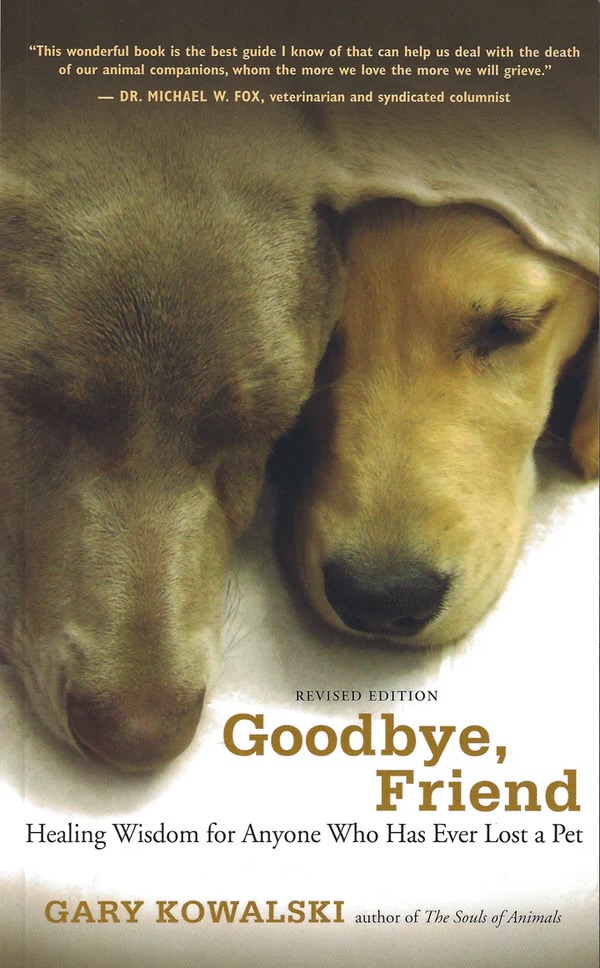
In addition, he noted that there are many pet loss support groups available now, and you can check with your local humane society for suggestions.
A list of pet loss resources, including for the San Francisco Bay Area and other areas of Northern California, can be found here.
“I started writing ‘Goodbye, Friend’ when my own dog Chinook was about eleven. He was walking more slowly and our vet guessed he might have another year to live, which turned out to be about right,” Kowalski shared. “We knew the time had come to euthanize him when he could no longer stand to walk. We spread his ashes near the dog park where he liked to romp in his younger years, but I kept a few. I want to mix them with my own when it’s my time to go.”
He said that Chinook might have been afraid of fireworks and the vacuum cleaner, but he was never afraid for his public image or concerned about what people might think. He was playful and enjoyed whatever each day had to offer, he said.
“My final bit of wisdom? Grief fades but love endures. As [the Apostle] Paul says, the greatest of these is love,” Kowalski said.
Kowalski is a graduate of Harvard College and the Harvard Divinity School, according to his website. His book “Goodbye, Friend” can be found at Barnes & Noble, Amazon, or IndieBound.
A Therapist’s Point of View
If you are having a very hard time with your grief, there’s no downside to talking with a therapist or a counselor, author and family therapist Ken Dolan-Del Vecchio told The Epoch Times. He said if you are beginning to show signs of clinical depression, you should certainly seek help.
He said those signs include being unable to feel any positive feelings at all for two weeks, and being totally down, negative, despairing, very sad, and perhaps irritable.
Dolan-Del Vecchio is also very familiar with pet loss, as he co-hosts the podcast “The Pet Loss Companion,” co-authored a book by the same name, and has led monthly pet loss groups since 2002.
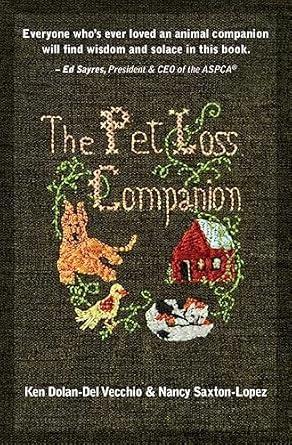
The book “The Pet Loss Companion.” (Courtesy of Ken Dolan-Del Vecchio)
He noted that if your pet is at the end of its life, it’s important to recognize that anticipatory grief is normal.
He said you might have worries and a lot of “shoulda, coulda, wouldas,” but what you can do is love them, pay a lot of attention to them, and celebrate them.
In his experience, he’s seen people take their dog to the seashore for the last time, or take them for a walk in a wagon or a stroller if they can’t walk anymore, or cook them a steak. Also, he said people make collages or videos or put together photo albums to prepare for when they can no longer hold their pet companion in person.
He said these are all beneficial things that can be done while your pet is approaching the end of its life.
Then when your pet actually dies, and the grief is fresh again, the way that people grieve varies greatly, so there’s no right way to do it, he said.
“It’s really good to not layer judgment on yourself or those who are close to you,” he said. “What I think is best to do is to accept the feelings of sadness and loss and confusion and all that grief presents to us, and to just let it happen.”
He suggested not to fight with it, because if you try to push grief away, it just comes at you in other ways.
He said that a lot of times people will have the last image of their animal companion dying, emblazoned on their minds.
“When the sadness comes up … the great feelings of loss and despair and anger or irritability or whatever happens to come up, acknowledge it,” he said. “But don’t cling to it and don’t push it away, just sort of watch it in a meditative way, and let it come and go.”
He said that what happens eventually is that this terrible news becomes older news, and we integrate it into our understanding of how the world is now.
“We grow with it still with us, we always hold the grief, but it becomes less intense over time,” he said.
Another thing he mentioned is to just keep putting one foot in front of the other, do the essentials, and make sure that you take good care of yourself. He added that if your work situation allows you to take some time off, then maybe that’s going to be helpful for some; but people deal with things differently, and it might be best for some people to keep as normal a structure as they can.
If you have dependents who require your care, such as children or elders, do the best you can with taking care of them, but also make allowances for yourself, he said. He said not to expect yourself to be firing on all cylinders all the time when you’re grieving; let yourself feel what you need to feel.
He explained that in general, we don’t get over grief, and there can be times that trigger a re-intensification of it.
“We just carry it with us in a way that gives us a fuller sense of the way the world operates, the meaning of relationships, the importance of cherishing those relationships while we’re present with one another, and realizing that all life ends,” he said.
He thinks this is why it’s very important for children to be involved when an animal companion is nearing the end of its life, because it’s an important lesson for them to learn that all life ends, we get sad, we go through our grieving, and then we go forward, and we carry that with us in our hearts.
Themes
Dolan-Del Vecchio shared several themes in the grieving process that he said are good to acknowledge.
One of the themes is that when people are grieving, they tend to feel very isolated and feel alone.
“Like the world, for them, has stopped, and it’s impossibly painful sometimes to see other people just going on about life in the usual way,” he said. “That’s one of the reasons that support meetings are so valuable for people.”
As a facilitator of support meetings over Zoom once a month, he said many people will come to his meeting and share how this was the most devastating loss they ever experienced, harder than losing a friend or family member. He noted that the only thing he’s never heard is that this feels worse than losing a child.
When people are grieving their pets so much, he said they feel like there’s something wrong with them, and they wonder if they loved the humans they lost as much as they should have.
“What we’ll say to them is, every loss is unique, and the reason that many people feel that way, we believe, is because of the intimacy, the intimate relationship that we have with our animal companions,” he said. “They live in our households for the most part. We touch them with our hands every day. We feed them. When they’re elderly, we care for them in ways that one cares for an elderly loved one.”
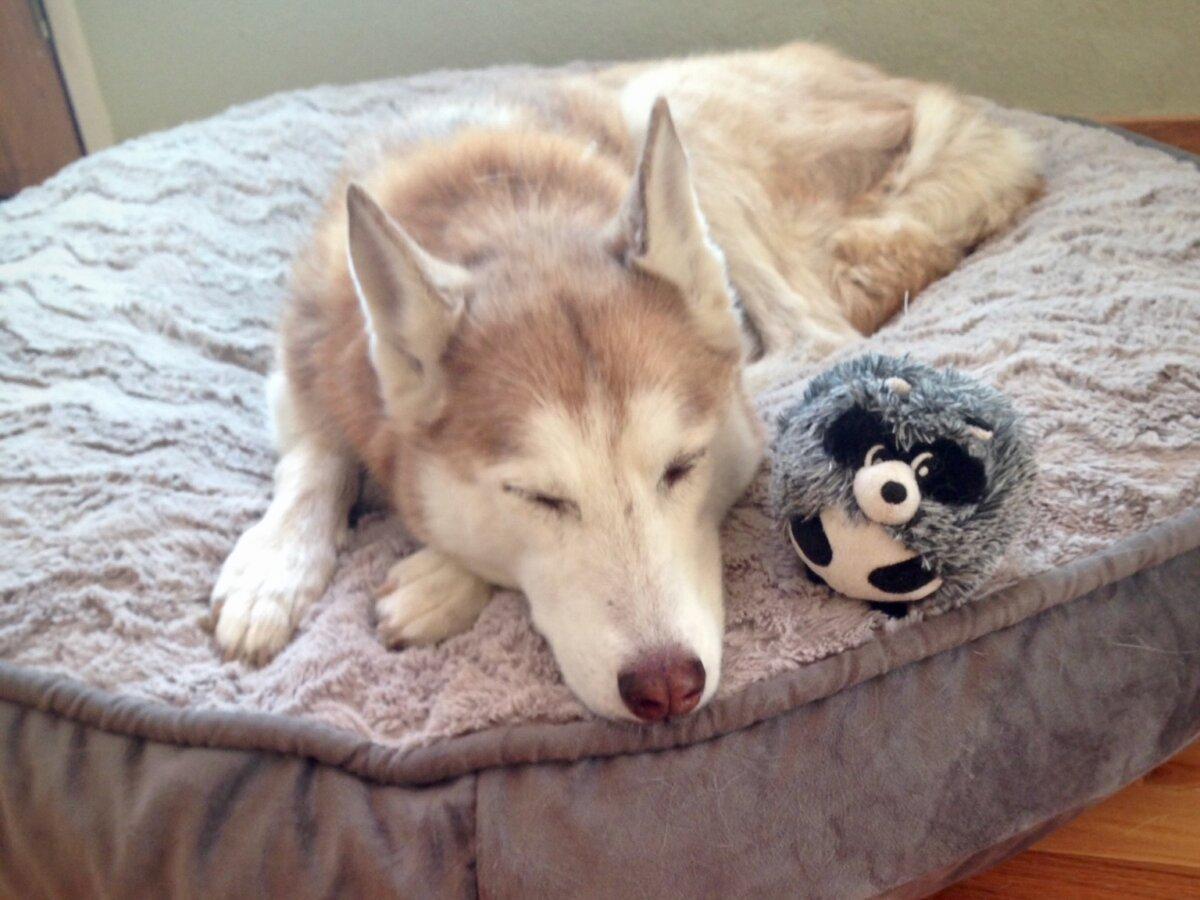
Luna. (Helen Billings/The Epoch Times)
Another theme is that sometimes people make mistakes that actually lead to their animal’s death. He said that self-forgiveness is really important, to recognize and acknowledge that we are not perfect; we are not omniscient; we all make mistakes.
Another theme is that we should be careful who we share our grief with regarding an animal companion, particularly in the workplace, and in some other relationships as well.
He said it’s not something that everybody understands, and you’re likely to hear things like “Why don’t you just get another one?” or that it was only a dog, a cat, et cetera.
“I have heard too many cases of people who go to work, and they talk about the loss of their animal companion, and they’re tearful, and soon they’re told by their supervisor that they’re not going to be given either a promotion or a project that was supposedly coming their way, because the supervisor now feels that they are too delicate or that there’s something wrong with them,” he said.
One more theme he shared is the belief that euthanasia is ending suffering, and a pet companion’s life is ending through forces well beyond our control.
He said he promotes this theme strongly, because in his experience there have been many people who used excellent judgment when they chose euthanasia, but they revisit it and it tortures them.
A Veterinarian’s Point of View
Dr. Cheryl Ramos, a veterinarian whose sole practice is now euthanasia services in Northern California, said she feels that when it’s time to let go of a beloved pet, at-home euthanasia is a much better option.
“For the animal, they can be surrounded by their loving family in a comfortable, stress free place—their home. They do not have to take a stressful car ride to the hospital where ‘nothing fun happens,’” she told The Epoch Times in an email. “The family too while being at home can have privacy cultivating a more peaceful and meaningful experience.”
She said it’s important to express how you feel and do what brings you comfort.
“For some it means having support from friends, while others find solace in solitude to reflect on feelings and memories,” she said. “I would remind people that coping with loss and grief is a fluid experience. What may feel right one day may not feel right the following day. I would also say honor your own process. Take your time and be kind to yourself. Your animal would want you to do so.”
She said most crematoriums offer a variety of mementos including clay paw prints, ink paw and nose prints, and fur clippings to remember your pet.
Ramos shared the story of when her family cat Venus had a terminal illness. As Venus was nearing death, Ramos had an overwhelming surge of emotion and felt helpless. She felt that exposing the cat to distress would cause her added stress, so Ramos thought, “What can I do to prevent her from having to experience my anxiety?”
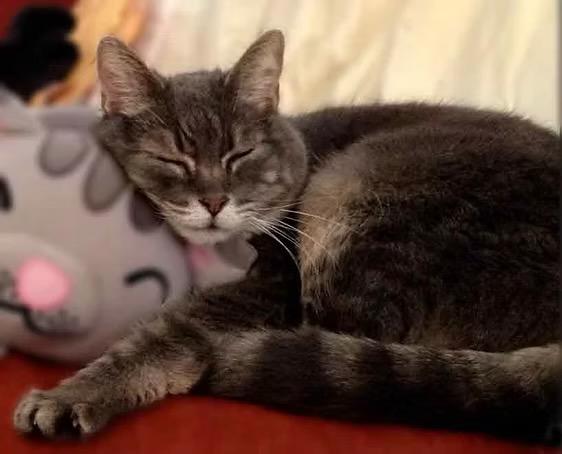
Venus. (Courtesy of Cheryl Ramos)
Ramos felt guilty for not spending more time with her, and also sad because she felt she had failed her. So Ramos sat down beside Venus, and as her mind became quiet and her overwhelmed state began to dissipate, Ramos sensed very strongly that Venus wanted to be left alone. Ramos said the message was very compelling, and once she was out of Venus’s space, she felt a wave of peace and relief.
“I truly felt I honored her wish. At that moment I realized my thought of not spending enough time with her especially in the state she was in was fabricated by me,” Ramos stated. “It was a powerful experience teaching me that sometimes what we think including what we think others want is not accurate and truthful.”
From that time on, Ramos concentrated her energy on trying to honor what Venus wanted. She shared her story with the intent of hopefully helping people experience for themselves a more peaceful, meaningful journey.
Ramos said she feels it is important to be aware of what we are thinking and feeling and also be open to changing our thoughts in order to better support and improve our entire family’s wellbeing.
For those coping with the loss of a pet, some additional podcasts offering support and guidance can be found here.