
[RUSH TRANSCRIPT BELOW]In the remote Pacific, emergency medical transport is not a simple call away. Across hundreds of miles of open ocean separating island communities, sudden illness or severe injury can quickly become fatal without rapid intervention.
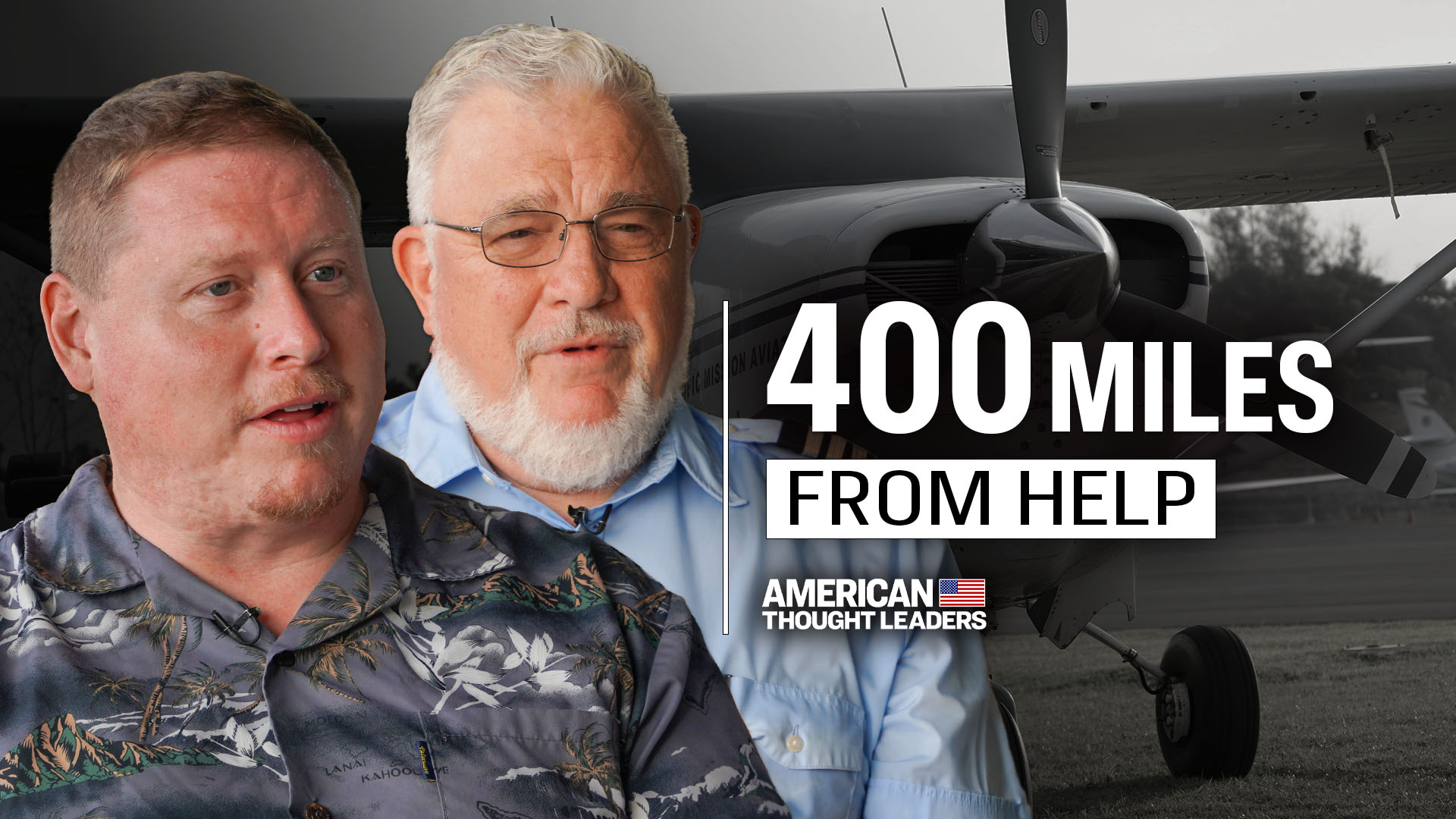
Pacific Mission Aviation pilots Mark Abbott and Brock Welge operate on the front lines of remote search-and-rescue and critical medevac flights, serving remote island peoples.
The Christian nonprofit’s mission is to provide free emergency evacuations, rescue and disaster relief, medical and food supplies, and even educational resources across Micronesia and the Philippines.
In this episode, Abbott and Welge walk me through the unique reality of aviation in the remote Pacific. How do these self-funded aviators execute lifesaving operations? What are the dangers of landing on short, and sometimes neglected, airstrips? And what drew them from working in corporate America to serving remote island communities?
Views expressed in this video are opinions of the host and guests, and do not necessarily reflect the views of The Epoch Times.
RUSH TRANSCRIPT
Jan Jekielek:
Brock Welge, Mark Abbott, it’s such a pleasure to have you on American Thought Leaders.
Brock Welge:
Thank you.
Mark Abbott:
Thank you for having us.
Mr. Jekielek:
So, you guys just celebrated your 50th anniversary of Pacific Mission Aviation [PMA]. We’re here in this beautiful hangar. Tell me about the kind of work that you do and the need that you’re filling here. As a starting point, let’s just talk about what a typical day of operation looks like from the moment that phone call comes in.
Mr. Welge:
So, the kind of work we do here is primarily to support medevacs and air ambulance services with our plane. That’s why we started over 50 years ago. On a typical day, we would have outer island flights scheduled to transport people and cargo back and forth. And we never know what the day is going to bring because it could be a call from the hospital saying we have a sick boy or a pregnant lady that needs air transport. So we’re adapting and adjusting the schedule to accommodate those emergent requests. But our island transportation keeps the planes in good shape, keeps them ready, and keeps our crews well trained and ready to respond to those emergent missions.
Mr. Jekielek:
So you have this commercial aviation system going. It sounds like that is more like a backdrop because you need to keep the planes going for your real mission, which is to do the medevac. But let’s say that phone comes in and someone needs help. What happens?
Mr. Abbott:
Normally we get that call and we‘ll immediately contact the hospital there, for example, in Yap, where I’m based. And normally they’ll send out a doctor and a nurse to go along on the flight. And they usually show up in about 10 or 15 minutes. We call the pilots and usually we’re there.
If it’s during the day, we’re ready at a moment’s notice. Basically, our guys get the aircraft towed out. We'll have to install a stretcher into the aircraft, and maybe two if there are two patients, and then load the doctors and the nurse and head out. For example, on the island of Ulithi, we’ve been able to respond within an hour, get airborne to go out to pick up that patient and then have them back in a little over an hour.
In a lot of situations, within two or three hours of the first call, we have them back in Yap in the hospital. Further islands may take a little bit of time, and that’s just limited by the flight time in the aircraft. But compared to a ship, just to go to Yap State Hospital it would take over 27 or 28 hours on a ship that has no room for sitting, and would not be good for a patient that is bleeding to death.
Mr. Jekielek:
Picture the geography. You talked a little bit about Yap. Let’s talk a little bit about Palau, right? Like, what is the need because of all these little islands and how you’re reaching them?
Mr. Welge:
In Palau, we have the outer island of Angaur and Peleliu, and when the winds are out of the southwest, the Angaur port just becomes unserviceable for a boat. Boats can’t make it in or out. And so, that’s why PMA was invited to come to Palau and help serve the state of Angaur for medevac and also, when the boats can’t come, to help bring supplies and provide relief for the island.
The geographic nature of these Pacific Islands is that they’re remote and isolated. There’s a very deep ocean separating a lot of these islands. Sometimes it’s only 30 or 40 miles, and sometimes it’s almost 400 miles. That is PMA’s range and ability to help service these outer islands and bring people and supplies back and forth, and also to provide these critical medical services.
In addition, we also do search and rescue. If a boat has a distress call at sea, or worse, they don’t come back when they’re supposed to and they’re overdue, we'll take the planes and go out and essentially be the first responder from the air. We can get there much faster than somebody on the ocean. We can also relay back GPS coordinates to help the ocean vessels, the patrol boats.
Mr. Jekielek:
But we say you can get there, you can get there to see where they are, but you’re not actually like engaging them, right? Because they’re in the water.
Mr. Welge:
No, but we’re trying to locate them. It’s a missing person situation. So, they could be anywhere. We’ve got a vantage point.
Mr. Abbott:
And with this aircraft behind us, we can also do airdrops. So, they have a system to drop supplies either onto an island, medical supplies on an island, or drop something near the person that’s stranded in the water.
Mr. Welge:
Yes. We’ve done that many times; dropped relief, provided water, essential food, even locator beacons, until the rescue ship can arrive.
Mr. Abbott:
The key is the personal locator beacon [PLB]. They’re very expensive. They’re $300, $400 each. And we end up giving those out to fishermen on each island, or as many islands as we can get them to. And so, they hit a button and that tells them that there’s an emergency and they need to be located.
One of the things we do is we, the bags of rice are expensive out on the outer islands. It’s a popular food, part of their food menu every day: rice, also with taro, and other items. Rice sometimes will cost $25, $30 a bag, while in Colonia, on the main island of Yap state, the bag costs about $12, $13. So, what we do is when we have extra space on the plane, we load it full of rice and sell people the rice out there at the Yap cost, instead of them having to pay $25.
Most of the people out there are very, very poor, just living paycheck to paycheck in a very simple home. We charge them about $15, and so we make $2 or $3 on each bag. We buy the personal locating beacons that we give out to the fishermen.
Mr. Jekielek:
Wow, fascinating. Brock, what would you say is the most dramatic scenario that you remember in the rescue missions that you’ve been involved in?
Mr. Welge:
Well, there was a boat with fishermen that was out, and they were in Palau here on the western edge of the reef, and they had gone outside the reef to chase a school of fish, and it was late afternoon. Their boat actually capsized, a pretty good size 38-foot boat. It was made to go in the open ocean, but it had capsized and washed up on the reef, and didn’t come back when it was supposed to. So we got contacted to come in and see if we can locate it before sundown.
I was on the way to a Chamber of Commerce function where I was supposed to emcee, and I had to make quick emergency call-ins and have another board member take care of that so I could come get the plane ready. We flew out with another person that was close to the situation. They flew with us and we were searching up and down the coast and we actually located them just before sundown. The boat had overturned on the reef. There were three guys standing on top of the bottom of the hull, upside down. The sun is setting, and we’re circling around.
We’ve got the coordinates back to the boats that were coming out for rescue. They had to go up through a channel and come around the outside because they couldn’t get it, the reef was too shallow. They couldn’t get to them from the inside. They had to go through the main channel and come out, make the rescue. But we’re thankful to be able to locate them before the tide went up and the boat was drifting off or fully sunk and then get the guys recovered before dark.
Mr. Jekielek:
So it’s kind of do or die. If it gets dark, it’s not clear what’s going to happen.
Mr. Welge:
Right. You know, the boat could drift out to sea, and the currents are so strong out here in a matter of 24 hours, you can be almost 20 miles away. And from 20 miles offshore, there’s no land in sight. So, the sooner the better that you find somebody, the better the likelihood of things turning out really well.
Mr. Jekielek:
So, this is one of the things that really strikes me being here, that there’s so much ocean between this place and any other place, right, it’s kind of astonishing. In fact, I’m just remembering the kids’ book about how you actually got some of these planes here. You can’t just like, you know, fly from the United States or wherever, right, to here with one of these planes, it’s a whole project to get it out there in the first place. But before I jump into that, what about your most kind of memorable or dramatic rescue?
Mr. Abbott:
Another one so far, I haven’t been here as long as Brock, but we had a call from Woleai, which is about an hour and 45-minute flight from Yap. The ship that I told you about that slowly goes around the islands that generally needs to be replaced, it’s in very bad condition for the people here. But anyway, a lady had a miscarriage and was bleeding, and they couldn’t stop the bleeding. So obviously, it’s a very critical patient.
We got the call. We launched in less than an hour, took the doctor and a nurse down there, and we were able to get her stabilized and on the aircraft and back. Within five hours of the call, she was back in the upstate hospital. Within a couple weeks, she was discharged and was back to good health. So that’s probably one of the most critical ones.
Brock recently was in a medevac where there was a U.S. Marine that was sick down on Peleliu, an island just near here, not very far away from the U.S. Naval Hospital in Guam, which is an excellent facility there for a serviceman. He was in the latter stages of appendicitis and screaming those two hours of that flight. He was in a lot of pain and down to the last straw. But they got him there in time and he was treated successfully.
Mr. Jekielek:
But that’s kind of astonishing, right? Because you think, you know, this is the U.S. military, they’ve got a few planes, right?
Mr. Abbott:
Not here. You can look at the ramp out there. Right now, there’s a Coast Guard plane out there for this conference, but normally, sometimes you get, there'll be a couple C-17s here and stuff, but nothing full-time and certainly nothing on standby.
Mr. Jekielek:
Yes, that’s truly remarkable. Tell me a little bit about your background, Brock. How is it that you came to be, you know, based in Palau doing this?
Mr. Welge:
I had gone to school for aeronautical engineering technology and ended up in the Boeing flight test. My official job title was flight analyst, and we would fly on the 777 and 787. I flew a little bit on the 477 and 478 in production flight tests and also experimental flight tests. We would work with the pilot, co-pilot, and systems operator to ensure the plane’s either ready for delivery. We also would work with the engineering department to make sure that we’re meeting the objective on those models.
Mr. Jekielek:
Just hold the presses for a second. This is an incredibly unique role you had. Just maybe speak to that a tiny bit before you continue.
Mr. Welge:
In that role as a flight analyst, I would sit in the cockpit with the other crew members and we would test all the systems. We would bring the airplane through its complete operational and flight profile and make sure every emergency, backup, engine shutdown, relight, turn off all the electrical, and make sure the backup systems worked well, stalled the plane. Everything you can imagine you need to ensure an aircraft is safe for passenger service, we would do. These are Boeing’s biggest airplanes, wide bodies, 400-plus passenger configurations.
So it was basically my dream job, coming out of the education and the background that I had. I really enjoyed every minute of my time at Boeing, and made some great relationships. But it was late in 2018, and I had felt kind of a call on my heart to get back into flying the planes because I was more in an engineering or crew chief type of role of the aircraft and interfacing directly with the captain. But now, get back in the left seat, do some more stick and rudder flying, that sort of stuff.
So I joined Mission Aviation Training Academy while I was still at Boeing Flight Test, training on nights and weekends. And learned how to do mission flying. Some people call it bush flying. But we would fly in the Cascade Mountains in Washington, do all kinds of different training in small airports and unimproved strips. That started to stir things in my heart.
Then I met Amos Collins, our chief pilot, who is based over in Yap with Mark. Amos was at an air show, and I was there too. We just got talking, and I asked him, I said, You know, I’m thinking about coming out and visiting, and I might have an opportunity with Boeing to take a six-month leave of absence. Would that be something? He says, that sounds great. How soon can you start? Three months later, I was out here in Palau.
As soon as I got here, the base manager was talking about resigning, so we had a three-week overlap. Basically, we do a handoff, which couldn’t have been planned any better. It was a great amount of time to learn the ropes and the way out here. This hangar was just newly constructed and we had to do all kinds of things like get the electric hooked up, get the water hooked up, make the toilets flush, and get this big door wired properly so it can open and close every day. So I got to be a part of not only the mission flying, but also constructing this facility, which is an oasis for aircraft out here in the middle of the Pacific.
Mr. Jekielek:
Incredible. Mark, tell me about your background. And I understand there’s a plane here that you actually flew 20 years ago, I think in Africa somewhere. Just tell me part of it. Please include that in the story.
Mr. Abbott:
I grew up in Eugene, Oregon, and I ended up getting appointed to the Air Force Academy. I graduated from there in 1983. Actually, the first airplane I was assigned was one just like the one I fly here, a Beechcraft Super King Air. In the Air Force, I flew that in South Korea and in the Philippines. And from that, I flew a big transport jet, a C-141, and flew that during the first Gulf War, based out of McChord Air Force Base.
After I finished my active duty commitment in the Air Force, I decided I wanted to do something totally different, and so I moved to Khartoum, Sudan, when Osama bin Laden lived there. I went with a group called Air Serv International doing humanitarian flying. My brother had told me about this group. He had been involved with World Vision over in West Africa a lot. I served with them altogether for about 24 years, initially as a pilot there, and then also flew out of Nairobi.
But when I was in Nairobi, there was another mission group, a humanitarian group called Mission Aviation Fellowship. The director of their King Air program there had been our chief pilot at Air Serv International. And he went and purchased this aircraft that is similar to this one. It’s up in the app right now. And he was a retired United captain. And they used that aircraft in Kenya.
I flew in it in Kenya, during the Rwanda genocide aftermath and the refugee situation that created. I used a Cessna Caravan, and they used the King Air. And we started kind of a little scheduled service to get all the relief workers around to the different camps. And so that was the history of that plane.
My brother ended up becoming president of PACTEC [Partners in Aviation Communication and Technology], which was what they called Mission Aviation Fellowship in Afghanistan. That plane served for over 10 years in Afghanistan, delivering our relief supplies there during the war efforts at that time. I came back from Africa after about five years and became employed by FedEx. I was a pilot for FedEx for 27 years, mainly on the McDonnell Douglas MD-11.
In 2022, I really wasn’t planning on flying. I love Japan a lot, so my wife and I ended up becoming short-term missionaries about two hours west of Japan in a town called Ome. While we were there, Amos, who I knew through another friend that was at the same academy that Brock had trained at, told me they needed a pilot for King Air out on Yap.
Two years ago, I had no idea where Yap was. I had heard of Palau, but where is Yap? Amos said, well, you’re in Japan. It’s only about a three-hour flight to Guam, and then there’s a one-hour hop down to Yap. So he came out there and visited.
It was not on my radar, but that’s kind of how God works. My wife was pretty apprehensive, and I kind of copied Gabriel and put out some fleeces. I go, I have no idea what this group is, or do they run a good operation? Are the aircraft safe to fly? I’ve seen everything in my career. I’m 65, and have been flying for 50 of them. Is their mission worthy? Are the people there happy? And am I going to get along with the people that are there? You just never know. You have different personalities.
We went there for a week, and it was pretty strange because all those conditions were met. I go, very well, Brock does a really good job maintaining these aircraft, as does Amos, even better than I’ve seen in other organizations. They do a great job. The mission is outstanding, and like I mentioned, it’s a self-sustaining organization, a nonprofit, and I really appreciated that.
My brother has a lot of history of that type of operation, and so I was really familiar with that and how that operates. And just great people up there that work together as a team. You have a medevac, for example. Everybody drops what they’re doing. It doesn’t matter what project you’re on or if you’re home or your kid’s at a graduation, boom, everybody comes to the hangar. We’re going out, and we’re going to get this person to the hospital. So that’s kind of what brought me here and where I am now.
Mr. Jekielek:
I mean, your training and your background are extremely helpful in making sure everything is working well. You have that eye for detail, right? A lot of people might know some of the conditions that you’ve experienced previously in life, but tell me a little bit about how this all works, right? So, as you said, I mentioned it’s a nonprofit; it’s a self-sustaining nonprofit. That’s very important. That’s what we are at Epoch Times as well. Much more than self-sustaining, we try to put a lot into growth, and I would expect you might as well. But so, where do the planes come from? How do the staff here participate? How do they get paid? I mean, just give me a picture of how it all works.
Mr. Welge:
So, kind of a 10,000-foot overview. We are a Christian nonprofit organization. We started 50 years ago as an FAA-approved charter operation with the Air Ambulance Authority. That allows us to fly commercially, but it also allows us to do these medical flights. The first airplanes were bought with donations—donated money from churches, from Christians around the world, in Europe, in Germany, Switzerland, in the States—and flown out here and ferried out here, because it’s such a remote area. You have to put in special fuel tanks, get special flight permits, and have special routing.
But then the everyday kind of operations, when we do our commercial flights, we have kind of a local self-subsidized rate that helps make it affordable for the people out here. And then we have a standard rate, which people who are tourists or on vacation would pay. And that pricing differential allows us to fund, self-fund, a lot of the free things that we offer, like the medical flights from the outer islands and things.
The fact that we are authorized for commercial lets us have an operating budget that we can reinvest back into the organization and hire local staff and train up local people in this aviation industry and help provide a professional career path for locals who are interested in our mission, what we do. So that’s basically the operation kind of in a nutshell.
Mr. Abbott:
We have a fantastic relationship with Samaritan’s Purse and their aviation department. You see the last two letters on our registration are SP for Samaritan’s Purse, and they sold us two King Airs for a dollar each. Franklin Graham has come out to visit us on Yap Island and our operation and really likes what we do here. We have an ongoing relationship with them where they provide things that we can’t afford, especially some high-value items. We appreciate their support.
Mr. Jekielek:
So, yes, how does your faith fit into this, you know, maybe?
Mr. Welge:
Like I said earlier, God stirred my heart. He kind of put out a calling that said, Boeing’s great, but I have something different for you if you want to take a step in faith. And it definitely was a step in faith. When I came out for the six-month internship, it was just a leave of absence from Boeing.I had a safety net behind me, and I came out and I saw the need and I saw the work and the value in the work, like Mark did.
And so, my wife and I had prayed about it, and we knew that God had given us an opportunity and it was our decision to make. And so, we came out full time. And it was a few days after I quit Boeing that we got notification by Franklin from Amos that Franklin was donating to King Airs—the confirmations, the signs that God gives you when you’re going where you need to go.
Mr. Abbott:
For me, I wish I could say that I sought them out and I was dreaming of doing this, but that’s not the case. It was kind of thrown at me at a moment’s notice. But when you feel the Lord’s calling, and you go, I had no desire to fly anymore. I‘d been flying my whole career, and I’d been flying FedEx long international trips, and I was looking for a break. Put something in your face and you go, My wife and I go, There’s no doubt that the Lord’s asking us to do this. They need someone here. I can’t say no.
In my personal life, I’ve kind of positioned my lifestyle after retirement to be able to do anything at a moment’s notice for that reason, but I never dreamed of this. But I’m glad. We were very happy, very satisfied with working with PMA. We have really good leadership, our CEO, Nab Kalau, a very great leader, pastor of a large church in Pompeii as well. It is good leadership, and I can’t imagine doing anything else.
As our CEO says, life is short, eternity is forever, live like it. And so I kind of embody that and try to keep that at the top of my mind as I talk with God every moment of the day, and he’s very reassuring and going, You’re right where I want you. And yes, just like Brock mentioned, things happen here that shouldn’t happen, and they all fall in line very well.
We appreciate the Lord’s support through this, as well as other like-minded people that support this mission. And we’re always looking for more people to help support us. And we also need some like-minded pilots to come out here. We could use another couple pilots on the King Airs. And so we’re looking for experienced pilots to come out here, we also have an internship for young pilots here at the Palau program.
Mr. Jekielek:
Explain to me how it would work for a pilot that might want to come, for example.
Mr. Welge:
So our pilots are self-funded, or we say they get an opportunity to raise their support. And what that means is their salary is covered by donations. And before they come out, they get to go meet with friends, with family, with churches, and explain the mission of PMA, explain what God’s doing out here, and bring people along the journey. Maybe people who couldn’t come out or serve overseas, but they can help be a part of what God’s doing by supporting them. And so once they get their support raised, then they can come out here and start the training program.
Once training is completed, they can start flying on the missions. That allows PMA to be more flexible and to remain debt-free for the 50 years that we’ve been here. Mark has positioned himself on a moment’s notice to take advantage of opportunities and to serve and not have to worry about the finances or where things are coming from or be pressured by loans and leverages and banks.
Mr. Jekielek:
You use the word service and you actually were talking about the mission. And so, you know, just very briefly, right? Obviously, part of the mission is to save physical lives, but then you also have a faith mission. And so, just very briefly, how do these things intersect with each other? How does that mission get accomplished?
Mr. Welge:
PMA stands for Pacific Mission Aviation. We have a ministry branch called Pacific Mission Fellowship and we use that to set up Bible studies on remote islands. After we’ve been out and building the relationships with the community and have become a trusted partner to the island, we usually get an invitation or get offered to provide those opportunities for spiritual care, and then we can do Bible studies. We’ve planted churches on the big islands, and that allows for the whole person care, not just the physical, but also spiritual and emotional care.
Mr. Jekielek:
And that’s really interesting, but you’re saying you’re not coming in with the Bible study. That only comes when someone says, hey, I’m actually interested in that. I’ve gotten to know you. I trust you, that kind of thing.
Mr. Welge:
Yes. Those relationships are important to establish before you share your faith, your background. It’s the hope that we found in Jesus Christ that motivates us to come here and do this. Like Mark said, he wasn’t looking for another flying job. But his relationship with the Lord prompted him to respond to the call that was to come out here.
Mr. Abbott:
It’s a great flying job, though. These aircraft that Samaritan’s Purse gave us are great planes; they’re some of the safest planes I’ve ever flown. It’s a great opportunity, though, for people that are looking to serve God or want to come out and serve the people here. It’s a fantastic job. You’re out and flying around islands. Like you mentioned, everything’s surrounded by water here, but you’re flying around in one of the safest aircraft to do that in.
Yes, it’s been a blessing for me to come out here, even though it upended my life. But then again, would you rather do this, or would you rather just sit at home and play golf and go watch baseball games? And I’ve done plenty of that before. And obviously, this is much more fulfilling, and I’m having a great time doing it. And that’s just a huge blessing from the Lord.
Mr. Jekielek:
I had a conversation recently with someone who got radiation treatment for cancer in Taiwan, for example. I guess, to what extent do islanders actually travel to other countries for this kind of treatment? Or what kind of medical services are found here? Do you often need to take people, like you said, you took a U. S. Marine to Guam and not here, presumably because there were better services? Can you just kind of flesh that out for me a little bit?
Mr. Welge:
I can speak to that. Once we got the King Airs donated, our range increased, and it'll open up the opportunity for us to be able to fly nonstop to Manila or even, of course, to Guam. But we were able to get a LifePort medical interior system for the planes. It’s an approved stretcher system that has advanced life support capabilities, too. And that really allowed us to take those longer trips and move stretcher patients over to Manila or anyhow.
On the island itself, they’re limited. They don’t have the basic things that you would think are common in the States, like dialysis and advanced imaging, cardiac treatments. And so there was a person on a cruise ship that was just transiting the area with indications of a heart attack, and so they got them off the ship, put them in the hospital here, but the hospital couldn’t actually treat them. And so we loaded up our stretcher system and medevaced them to Manila so they could get that advanced treatment there.
That was just one case of somebody being in a remote location and needing critical care. But most of the local people here that have serious medical conditions have to be referred to another island. And the ones that are time-sensitive, we often get involved with to do stretcher transports to another more capable international hospital.
Mr. Jekielek:
I mean, this is astonishing in a sense, right? To someone that’s, you know, in the States or Canada, where I’m from, you’re kind of used to just having all this stuff available. But in many places, it just isn’t. Like, you know, people might be wondering, wait, you have to go to these great lengths to volunteer, to, you know, set up this whole operation. And amazingly, it’s been running for 50 years, and you’re providing a service which is basically just kind of standard on the mainland, right?
Mr. Abbott:
Yes. And it’s not just the medevacs, either. We make regular runs from Yap out to small islands. Ulithi, Fais, and Woleai are the main islands we go to. And there’s a small runway out there, but no one else around here has aircraft that can land at it because the strips they have are short. So even if you just need to go to a doctor’s appointment, maybe it’s not critical, they use our aircraft to get back and forth.
We also provide free transportation to the different missionaries and pastors that are involved with the church out to those different islands. Some of those islands don’t allow any other denominations. There’s been so much infighting in the past that they said, okay, just the Catholic Church and maybe one other here, and that’s it.
But since PMA has such a positive influence on these people out there, they always allow the pastors from PMF, our subsidiary, the fellowship, to come out there and do Bible studies because they know we’re not there to make a bunch of controversy or they’re just there to serve the people and provide a Bible study or a church service for them. But yes, you supply everything to these people. It is their lifeline.
It’s not just an emergency service with medevacs and taking people to doctor’s appointments, but also getting them food, different things that they need. Relatives will mail to Yap, and then we take it out to the islands. We have a contract with the post office; there’s a post office out on Ulithi, there’s a post office in Woleai. We take the mail out there. So it’s a very community-based operation beyond just the medevac service that we provide.
Mr. Jekielek:
What would you say is the biggest challenge here?
Mr. Welge:
I can speak to that as the director of maintenance. Maintenance is the biggest challenge. There’s no parts store just down the street or in the next state over that you can overnight a part. So when something breaks, we have to have many parts on the shelf, way more than the average shop would have because of the length of time it takes to ship things out here.
It’s five or six thousand miles from North America; it’s three thousand miles from Australia. And so it takes weeks to get parts out here, and so that’s one of the biggest challenges that we’ve seen. That’s why we have multiple aircraft of the same model so we can always keep one running really well. And so that’s one of the biggest challenges.
But you mentioned the amazing thing of us going for 50 years, and I wanted to just kind of touch on that a little bit. God has sustained PMA for 50 years, and I want to be really clear about that because there has been time after time after time where we’ve seen miracles happen in order for us to be ready for a flight or for us to be able to meet a need. And the only explanation is God’s at work and He’s using us here with these airplanes to help meet people’s needs and help provide things, whether it’s a transport from the outer island to a doctor or bringing supplies. Or helping a sick patient on a stretcher get to advanced care.
Mr. Jekielek:
And just a quick comment: in order to decide, you have to make a decision to fly. Not everything is 100 per cent all the time. Sometimes something’s 99 or 98, and you have to make that call, right? And you have to decide: is it, you know, because there’s always risk, right? And so that, I think it’s a reality that a lot of people might not understand, given the kind of limited available resources. Like sometimes you might not go out because you feel like there’s too much of a risk for the plane to not make it.
Mr. Abbott:
Yes, weather is always an issue out here. This area is the birthplace of most typhoons that go and strike the Philippines or China or Taiwan or Okinawa. And so you get very good at reading a weather map because weather forecasting out here, they do have weather forecasting, but it’s not always super accurate. And things change so quickly.
We have a special radar weather map that’s an app on my phone, and I am constantly watching the weather. We all do. And you have to make an assessment: should I go out? Should I do that? But you know, most of the time we’re able to do it.
The weather isn’t that bad out here. Probably, once in a while you'll get a storm through, but a lot of that is providential too. I think a lot of times when we do medevac, we’re able to. I don’t know of very many where we had to turn back because of weather. We always get in there and get the patient out. So, thank God for that.
Mr. Jekielek:
Just before we finish up, just very quickly, you’ve been in Palau a while now. You’re living here with your family. That’s a whole, you know, kind of relocating. That’s a whole project in itself, I imagine. But what would you say is the most important thing that people don’t understand about this place? What is the biggest misconception you face when you talk to folks back home?
Mr. Welge:
Probably the biggest misconception people have is how long it takes to build relationships out here. These communities, they’ve been on these islands for thousands of years, and there’s traditional leadership, clan-based traditional leadership. You have to learn the culture of the people you’re serving out here in order to serve them well, in order to integrate with that Western mindset. We’re here to provide a need that isn’t currently being met. I’ve been out here since 2019, and I’m just now starting to feel accepted and integrated into the community, which is amazing.
It’s a huge blessing, but it takes a long time to build those relationships, sometimes lifetimes. Coming from North America and the Seattle area, things move at a fast pace, you know. Tech companies start up, and man, we need it on the desk by tomorrow morning, kind of thing. And that’s just a whole different mindset out here. And so that’s probably the biggest thing—it’s just the cultural differences and being sensitive to that, learning that, slowing down to take the time, you know. And then that is what builds the relationships. It’s amazing, though.
Mr. Jekielek:
Wonderful little kids’ book, and I know this is part of bringing in a little bit of revenue, selling it on Amazon, and sharing the incredible story of how a little plane made it all the way to Micronesia. But if people do want to help and support, or are inspired by this, how do people do that?
Mr. Welge:
We have a website, www.pmapacific.org. You can check it out on the internet. That has ways to connect, ways to serve, or ways to donate and help support the work that we do out here.
Mr. Abbott:
I also want to just put a shout-out for our families here, too. We come out here, and it’s a difficult situation. Brock and Amos Collins, his wife Heidi, they all have kids in high school and junior high, elementary age, and have to adapt to all these different cultures and go through a lot of pressures. And it’s also a good opportunity for them, too. To put a shout-out for my wife, Sherry Abbott, she’s probably one of the biggest Epoch Times fans from the very beginning, so she’s excited that you guys are out here covering PMA.
Mr. Jekielek:
I love hearing that. And a final thought from you, Brock?
Mr. Welge:
I really appreciate you taking the time to come out to the Pacific Island Forum to be a part of the Leaders Meeting out here and taking the time to let us share a little bit about PMA. I really appreciate it.
Mr. Abbott:
Yes, thank you very much.
Mr. Jekielek:
Well, Brock Welge, Mark Abbott, such a pleasure to have you on.
The interview has been partially edited for clarity and brevity.