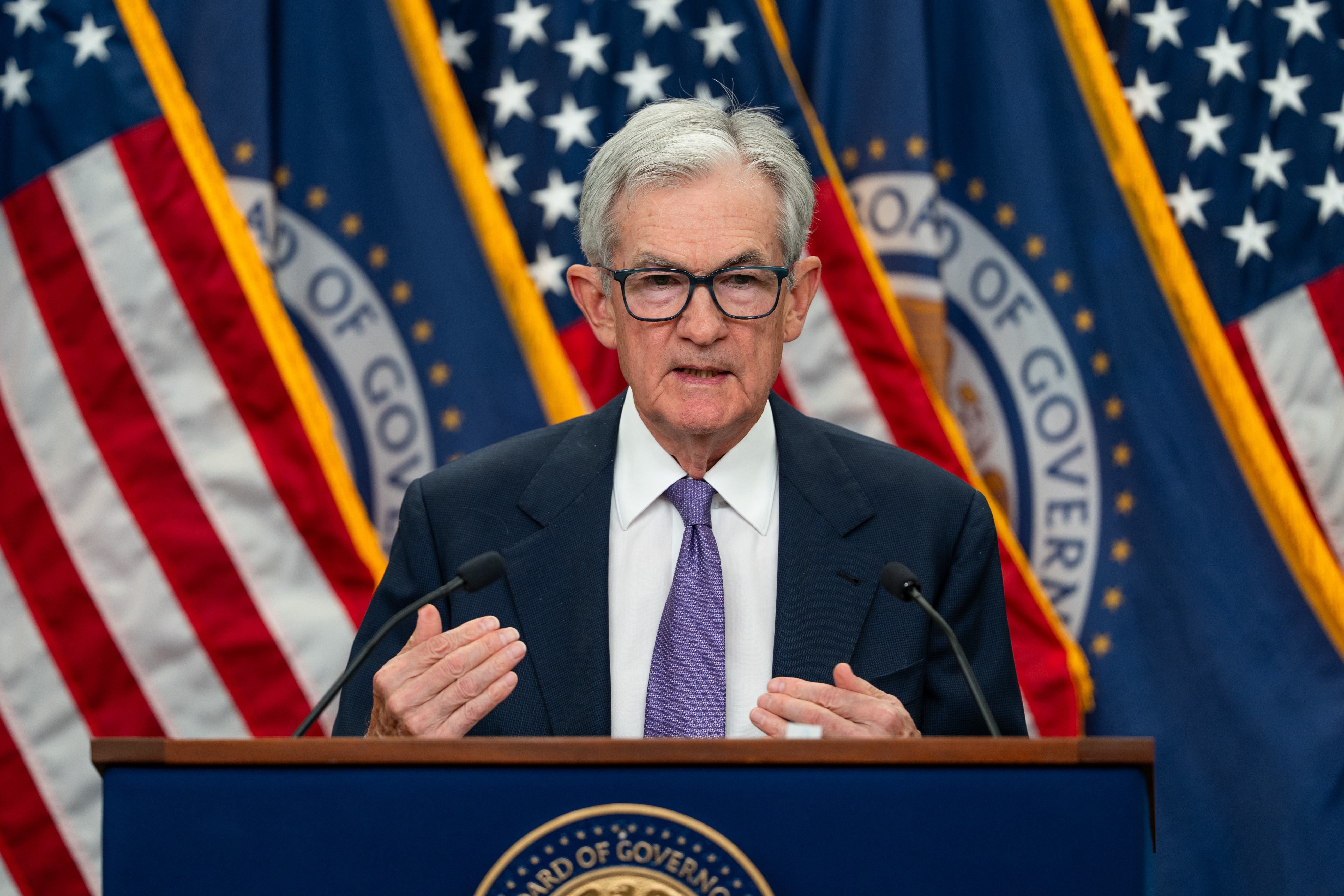

The Federal Reserve is expected to keep interest rates unchanged when officials wrap up their two‑day meeting on April 29, which could mark Jerome Powell’s final session as chair.
Futures market data suggest traders are widely penciling in no change to the benchmark federal funds rate, a key policy rate that influences business and consumer borrowing costs.
So far this year, the Fed has kept the current target range between 3.5 percent and 3.75 percent.
While the central bank has signaled a single quarter-point rate cut this year in its Summary of Economic Projections, Wall Street does not anticipate the next move until late next year.
“I have a working assumption that the Federal Reserve will not cut rates in the near term, even if a leadership change follows Jerome Powell,” Julia Khandoshko, CEO at European broker Mind Money, said in an emailed note to The Epoch Times.
“That said, the timing is decisive.”
The April Federal Open Market Committee could be Powell’s final meeting as head of the U.S. central bank, with his term expiring on May 15.
“There is little incentive for him to approve a rate cut at the very end of his mandate. It would be politically exposed and institutionally inconsistent,” Khandoshko added.
With the conflict-fueled oil price shock lifting inflation, and the U.S. labor market potentially gaining momentum, the institution might have time to assess economic conditions until it has to act.
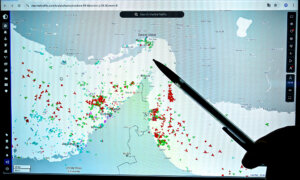
Headline inflation numbers have spiked since the outbreak of war with Iran.
March’s annual consumer inflation rate, for example, surged to 3.3 percent, the highest level since May 2024.
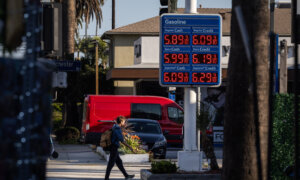
This spike was driven almost entirely by higher gasoline prices.
Underlying inflation trends appear to be tame.
The core Consumer Price Index, which strips out volatile food and energy prices, came in at a lower-than-expected rate of 2.6 percent.
Additionally, last month’s producer inflation and import prices were below market forecasts.
As crude oil and gas prices remain elevated, the April and May data should offer more insights on whether the war in Iran—now in its ninth week—could threaten the Fed’s path to 2 percent.
Leaving interest rates alone for the third consecutive meeting coincides with Powell’s exit.
Eight Years of Jerome Powell
The confirmation of Kevin Warsh, President Donald Trump’s pick to replace Powell, is expected to go ahead after Sen. Thom Tillis (R-N.C.) said he will no longer serve as a roadblock.
Last week, the Department of Justice ended its investigation of Powell regarding renovations to the Fed’s headquarters in Washington.
Tillis had committed to blocking Warsh’s nomination until the probe was dropped or resolved.
This now clears a key hurdle for Warsh and brings Powell’s time as central bank chief to a close.
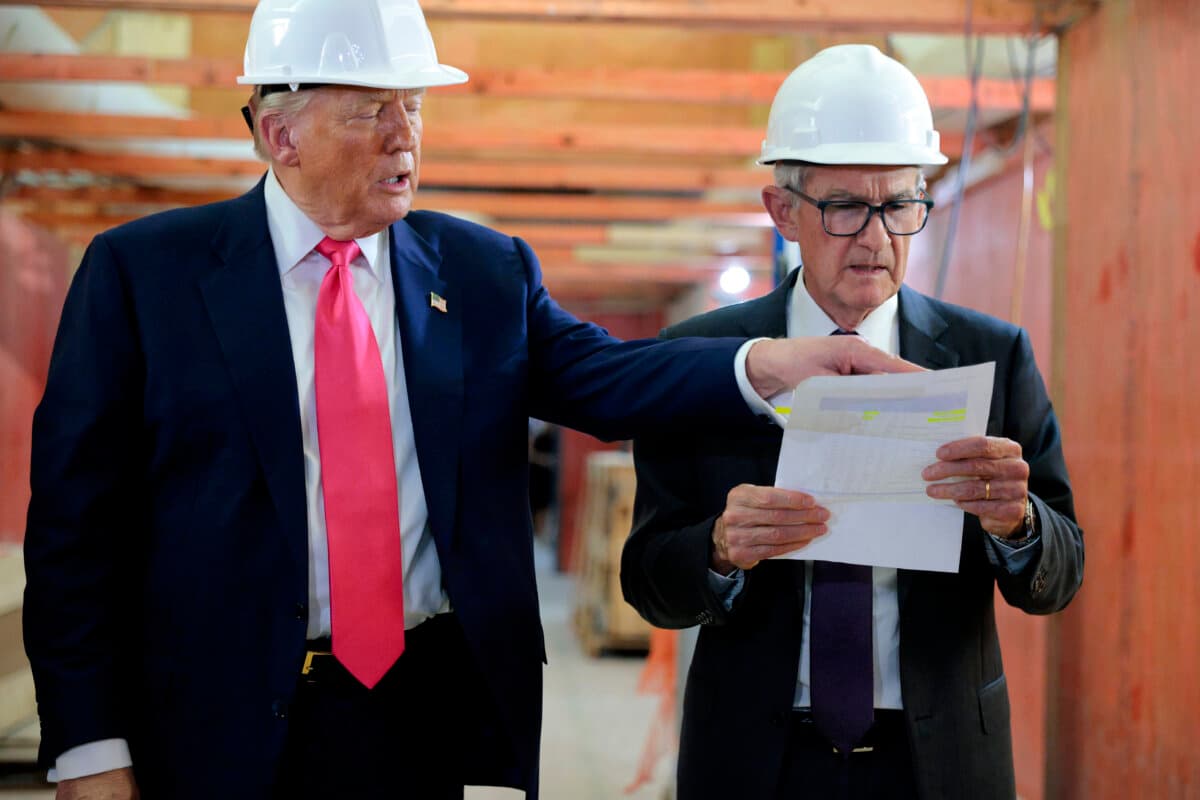
President Donald Trump and Federal Reserve Chair Jerome Powell tour the Federal Reserve’s $2.5 billion headquarters project on in Washington on July 24, 2025. (Chip Somodevilla/Getty Images)
Since ascending to the top of the Fed in January 2018, Powell has experienced two terms like no other chairman or chairwoman before him, enduring a cavalcade of challenges.
Powell’s first year at the central bank was marked by further tightening of monetary policy, raising interest rates four times.
His second year featured three rate cuts to boost a sluggish economy, driven in part by slowing global export growth and weaker international demand.
But these headwinds were minimal compared to what he contended with in 2020.
In response to a once-in-a-century global health pandemic, the Fed slashed interest rates to 0 percent, expanded the money supply by more than $6 trillion, and added about $5 trillion to the balance sheet.
Despite initially dismissing rising inflation as transitory, the data indicated that it was a persistent threat, reaching a 40-year high of 9.1 percent in June 2022.
Powell and his colleagues started tightening monetary policy in the spring of that year, hiking interest rates and trimming the balance sheet.
Delivering the keynote address at the Fed’s annual symposium in Jackson Hole, Wyoming, in August 2022, Powell gave a Paul Volcker-style speech, warning of incoming pain for businesses and households.
“While higher interest rates, slower growth, and softer labor market conditions will bring down inflation, they will also bring some pain to households and businesses,” he said.
“These are the unfortunate costs of reducing inflation. But a failure to restore price stability would mean far greater pain.”
While the broader economy has been able to withstand higher interest rates, Powell continued to wrestle with other risks throughout the United States, from bank failures to geopolitical shocks.
Additionally, he faced a barrage of criticisms from the Trump administration for not lowering rates.
With Warsh taking the reins, the Fed could experience a makeover, from policy to personnel.
Warshonomics Takes Hold at the Fed
During the April 21 Senate Banking Committee hearing, Warsh outlined his vision for the Federal Reserve System, reaffirming his commitment to restoring the century-old institution’s credibility.
Warsh also reiterated his support for Fed independence, which he says is “largely” up to the central bank.
“The Fed must stay in its lane,” Warsh told lawmakers. “Fed independence is placed at greatest risk when it strays into fiscal and social policies where it has neither authority nor expertise.”
Since the beginning of the nomination process, there has been debate over whether Warsh would act as an impartial voice or follow the White House’s direction in making monetary policy decisions.
Based on Wall Street’s expectations, Warsh might not loosen policy for another year.
Until then, he could employ a series of reforms, including reducing the balance sheet, changing how the Fed communicates with the public, and revamping models and measurements.
One key adjustment could be what metric the Fed uses to gauge policy actions.
Warsh clarified to the upper chamber that he wants to rely on trimmed inflation moving forward.
“What I’m most interested in is: What’s the underlying inflation rate? Not: What’s the one-time change in prices because of a change in geopolitics or change in beef?” Warsh said.
“The measures I prefer are looking at things that are called trimmed averages,” he continued.
“We take out all of the tail-risks, all of the one-off items, and we ask ourselves whether the generalized change in prices is having second-order effects on the economy.”
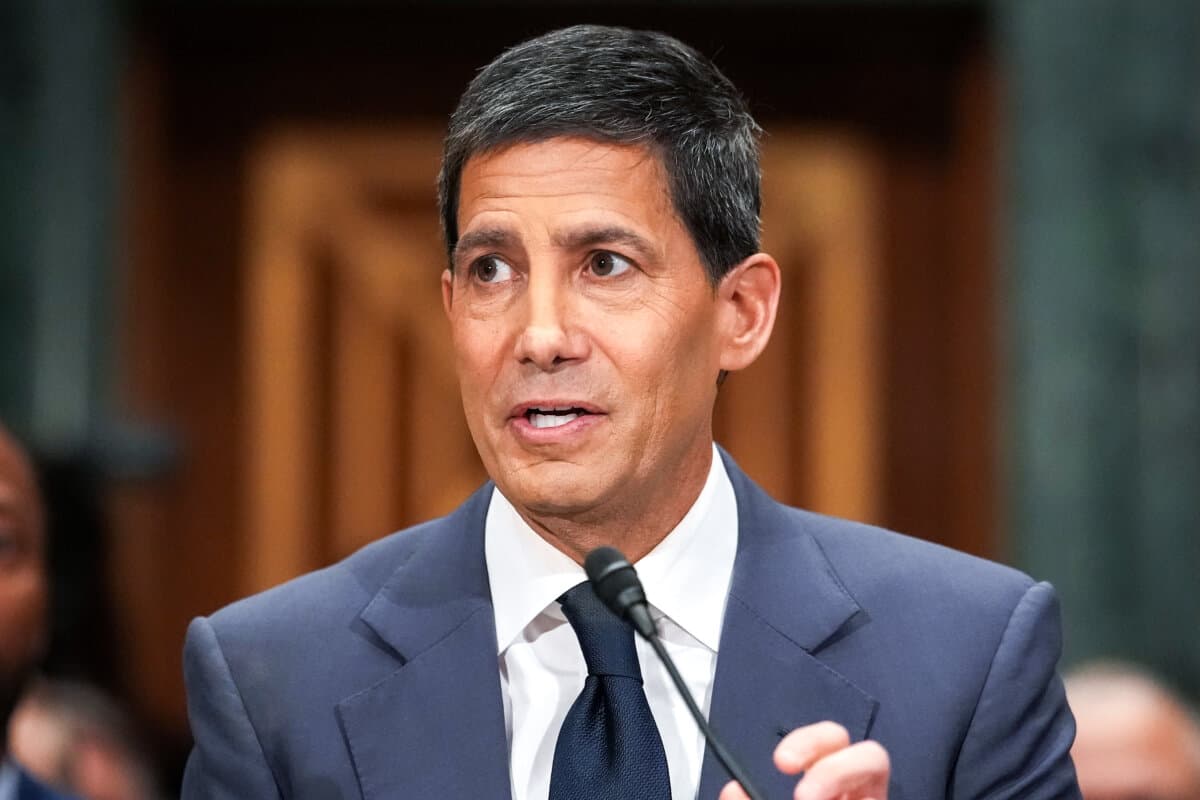
Kevin Warsh delivers an opening statement during his Senate Committee on Banking, Housing, and Urban Affairs confirmation hearing in Washington on April 21, 2026. (Andrew Harnik/Getty Images)
Trimmed inflation removes the outliers, whether a spike in egg prices or a collapse in airfares.
This measurement is currently used by the Dallas Federal Reserve.
The February reading—Dallas Fed economists have yet to publish the March report—suggested the one and 12-month trimmed mean personal consumption expenditures (PCE) price index were 1.8 percent and 2.3 percent, respectively.
In the end, the hearing revealed that Warsh could simultaneously embrace a hawkish and a dovish stance, says Jeffrey Roach, chief economist for LPL Financial.
“As it relates to interest rate expectations, the hearing strengthens the view that Warsh may tighten conditions via balance sheet normalization while simultaneously loosening conditions by lowering interest rates,” Roach said in a note emailed to The Epoch Times.
“These actions may not occur until much later this year as conditions warrant.”
It will also require Warsh to convince 11 other voting members to realize his monetary policy agenda.
The calendar indicates that, if approved, Warsh could lead the next Federal Open Market Committee on June 16 and 17.