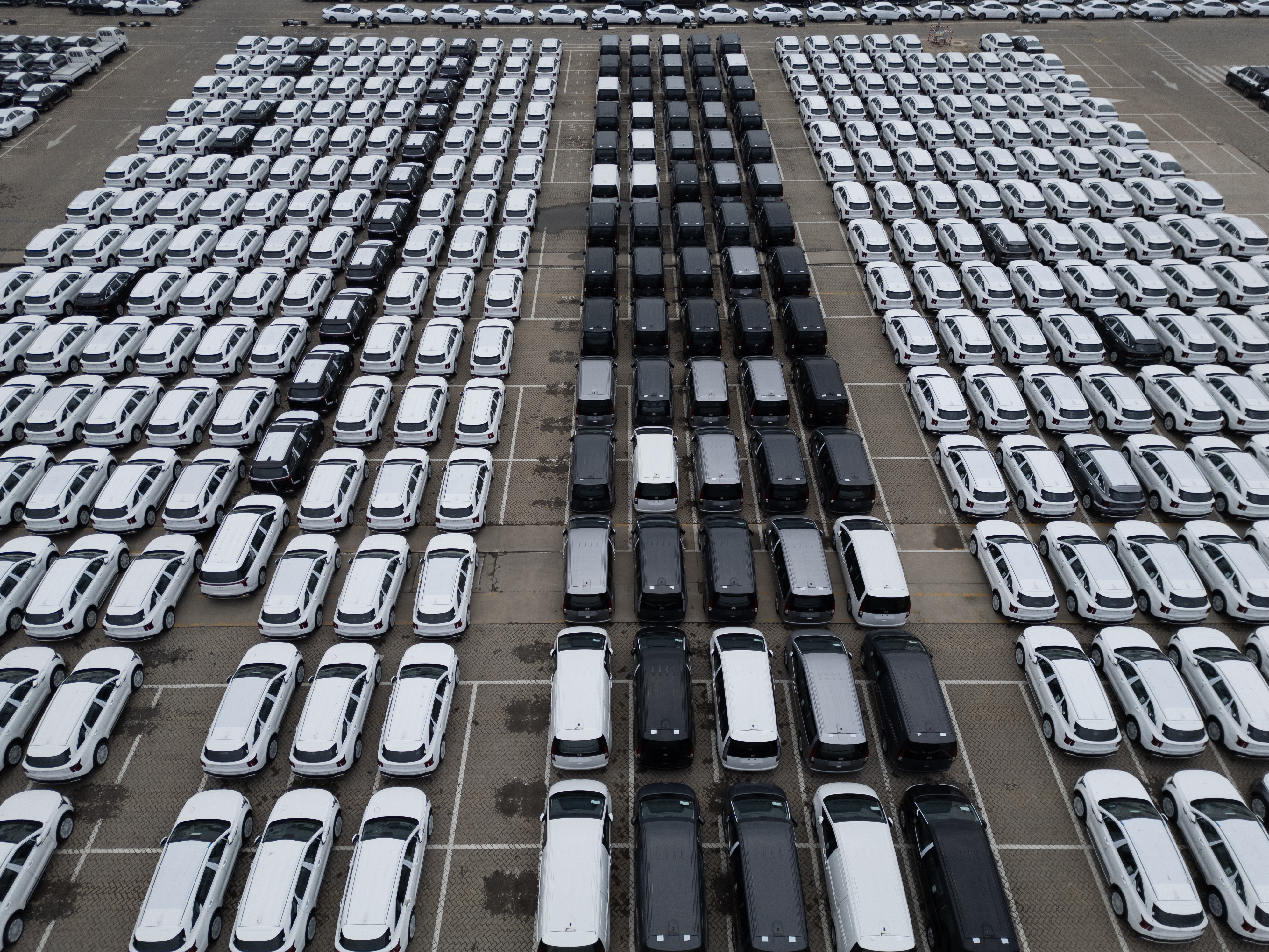

Chinese-made smart vehicles could pose national security risks beyond the theft of personal data, analysts warn.
This is because the cars’ cameras, sensors, location-tracking systems, and remote connectivity create potential channels for gathering information around military installations and critical infrastructure.
The concern is not simply whether a vehicle collects data, but who can access that information, where it’s transmitted, and whether the technology could be exploited during a military conflict or national emergency.
The issue came into focus in Norway after the Norwegian military discovered that Chinese-made rental cars used during a military exercise in September had recorded and stored footage of their activities, including movements around military facilities and security codes entered at gates.
In a written response to parliament on Oct. 20, Norwegian Defense Minister Tore Onshuus Sandvik acknowledged that the military had not conducted a specific risk assessment of using Chinese-made rental cars for the exercise, although a general threat assessment had covered digital risks.
Research testing has also raised questions about where data collected by Chinese-made vehicles is sent.
During a June 2026 United Kingdom parliamentary hearing, Tor Indstoy, who leads Project Lion Cage, a research initiative examining connected-vehicle security, said testing found that about 90 percent of the outgoing data from one Chinese electric vehicle was being sent to a server hosted by Tencent Cloud in Beijing.
The server location changed to Frankfurt after the vehicle was reprogrammed, Indstoy told lawmakers.
High Tech ‘Trojan Horse’
Davy Jun Huang, a U.S.-based political economist and former columnist for Chinese state media outlet CNTV, described the issue as a global security challenge.
“This is a global crisis. Its core is not merely commercial competition or trade protectionism, but primarily national security, data sovereignty, and a deep fear of an invisible ‘Trojan horse,’” Huang told The Epoch Times.
He said modern Chinese-made electric vehicles (EVs) could function as mobile surveillance platforms rather than simply transportation, given their ability to collect and process information from their surroundings.
“EVs can be turned into an around-the-clock mobile sensing and surveillance weapon,” he said. “Modern Chinese smart EVs quietly connect to the internet on their own. They are not simply transportation tools, but mobile super data-collection tools.”
Shen Ming-shih, a research fellow at Taiwan’s Institute for National Defense and Security Research, also told The Epoch Times that connected vehicles are essentially large-scale devices for collecting and transmitting information.
“Modern smart vehicles are equipped with numerous cameras, GPS systems, or radar,” Shen said. “They can comprehensively scan the surrounding environment around military bases, government agencies, or critical infrastructure, and record precise coordinates.”
Connected vehicles can transmit substantial amounts of information across borders, raising questions about data access, storage, and control.
However, the transmission of data to a Chinese-hosted server does not by itself establish that the information was obtained for intelligence purposes or shared with Chinese authorities.
A separate Norwegian security test found that a Chinese-made Yutong electric bus could theoretically be disabled through its remote software-update system, which had digital access to critical battery and power-supply controls.
The operator, Ruter, said the bus’s cameras were not internet-connected and that the test found no risk of video transmission.
The findings nevertheless highlighted how remote connectivity could create vulnerabilities beyond conventional data collection.

A Polestar car in the showroom of a dealership in Beverly Hills, Calif., on June 26, 2026. Electric car maker Polestar will be barred from selling new vehicles in the United States starting with the 2027 model year over national security concerns. (Justin Sullivan/Getty Images)
China’s Legal Framework
Both analysts linked concerns about Chinese-made connected EVs to China’s broader industrial strategy and legal framework.
Shen said Beijing has positioned intelligent connected EVs as a key industry in its drive to strengthen domestic manufacturing and technological self-reliance.
He described the vehicles as part of a wider ecosystem involving big data, smart cities, and navigation systems.
In his assessment, the combination of extensive data-collection capabilities and the regime’s ability to compel corporate cooperation creates a distinct security concern.
Shen cited China’s National Intelligence Law, which requires organizations and citizens to support, assist, and cooperate with national intelligence.
He explained that the regime could potentially require automakers to provide information collected through their vehicles, raising questions about whether Western countries can adequately protect data gathered within their jurisdictions.
Huang likewise argued that China’s legal framework makes it difficult for Western countries to rely solely on assurances from individual manufacturers.
“All enterprises and citizens within the country [China] must cooperate with national security and intelligence work,” Huang said.
Potential Military Use
Beyond surveillance, Shen warned that connected EVs could create vulnerabilities involving remote access and the wider transportation network.
“During peacetime, they may not operate, but during a conflict or crisis, remote control could potentially be used to disable tens of thousands of vehicles or interfere with transportation networks, causing serious social unrest,” he said.
The warning highlights a distinction between collecting information and controlling a vehicle’s functions.
The former could expose sensitive locations, movements, and activities, while the latter could potentially affect mobility and public safety if an adversarial state gained unauthorized access to vulnerable systems.
Huang argued that connected EVs could become tools in a broader information-security strategy because of the volume and detail of the data they can gather.
“Beijing has made EVs a major national strategic priority and developed them into one of the most concrete and detailed tools in information warfare,” he said.
Jon Sun and Luo Ya contributed to this report.