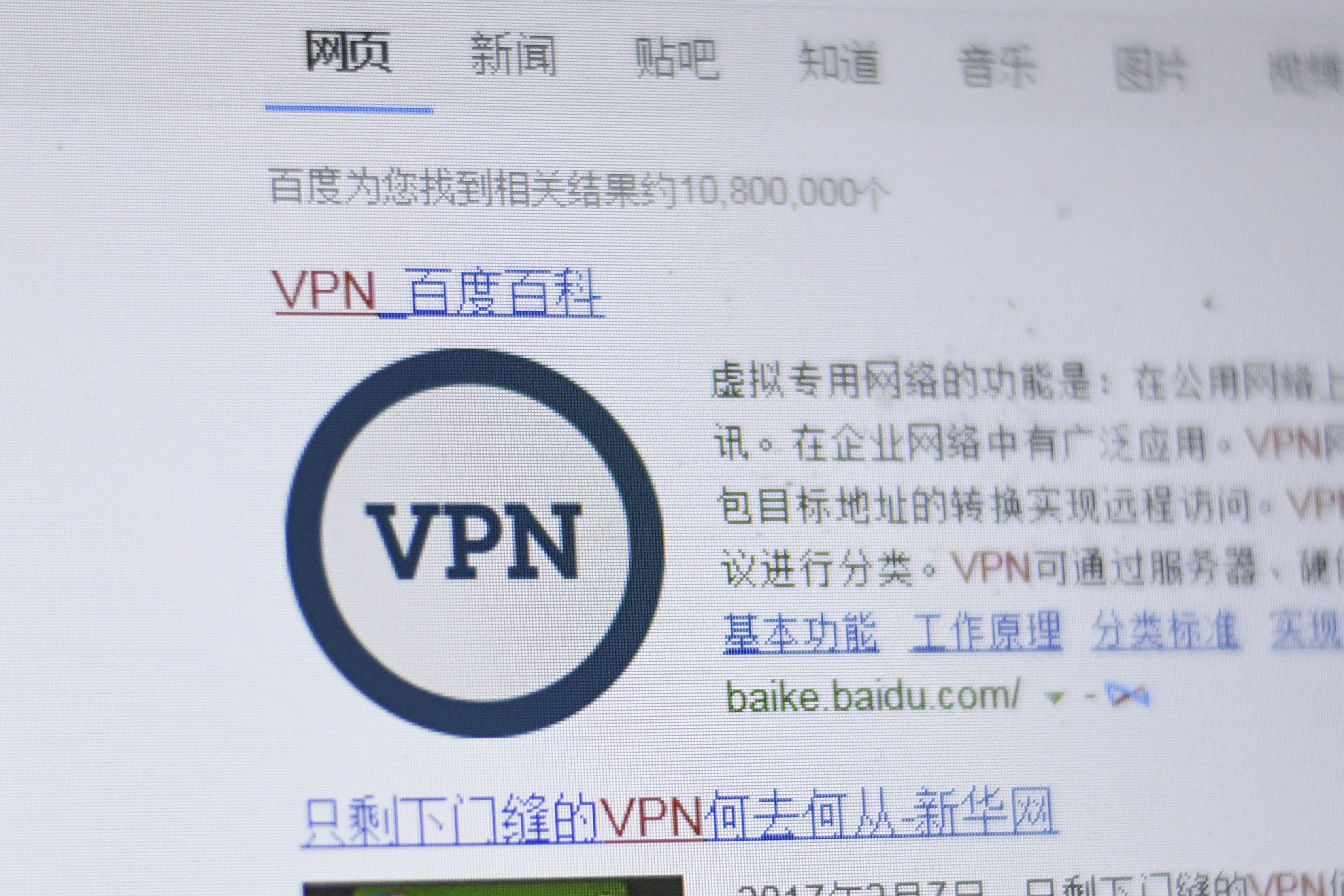

Chinese universities have stepped up efforts to prevent students from using virtual private networks (VPNs) to access blocked foreign websites, with some institutions threatening disciplinary action, monitoring internet connections, and requiring students to sign pledges.
The campaign, reported across multiple provinces and regions in October, coincides with the Fourth Plenum of the 20th Central Committee of the Chinese Communist Party (CCP), held from Oct. 26 to Oct. 29. The measures have expanded beyond routine warnings to include mandatory student meetings, reporting systems, and restrictions on internet access.
Analysts who spoke to The Epoch Times said the campaign reflects the CCP’s concern about political security, particularly the possibility that students could use uncensored information and encrypted communications to organize protests or connect with people outside of China.
On Oct. 23, Central South University in Hunan Province ordered all undergraduate and graduate students to attend themed security meetings addressing the alleged illegality of circumventing internet restrictions and the potential disciplinary consequences. The university encouraged students to report violations to counselors, student affairs officials, cybersecurity authorities, or police. Every student was required to sign a notice, with the school insisting that no one be left out.
Other universities issued similar warnings. Anhui-based Wanbei Health Vocational College said in an Oct. 19 notice that circumventing internet restrictions could threaten political security and expose users to the risk of being recruited by hostile forces, potentially leading to administrative penalties, university discipline, or criminal prosecution.
Several screenshots of notices from universities were posted on X by prominent Chinese-language citizen journalist account @whyyoutouzhele. Northwest University in Shaanxi Province said on Oct. 13 that it would “detect and restrict connections that circumvent the firewall.” The School of Insurance at the Central University of Finance and Economics in Beijing warned on Oct. 9 that VPN use could jeopardize scholarships, recommendations for postgraduate study, and political background checks.
The enforcement has also included disciplinary action. On Sept. 20, Harbin Engineering University announced that 20 students—seven undergraduates and 13 graduate students—had received warnings for using VPNs to access blocked websites, according to @whyyoutouzhele.
Analysts Link Clampdown to Political Security
Yuan Hongbing, former head of the law school at Peking University and renowned Chinese dissident based in Australia, told The Epoch Times that the campaign followed guidance issued to universities by the CCP Central Secretariat, led by Cai Qi, a member of the Party’s seven-person Politburo Standing Committee, after Sept. 20.
“One of the most important provisions was to strictly prohibit university lecturers and students from using circumvention software to engage in ‘illegal’ information exchanges and various contacts with foreign countries, in order to ensure the political security of the CCP’s Fourth Plenum,” Yuan said.
Yuan linked the restrictions to a broader effort to sever connections between people inside and outside China. He said the regime issued a stability maintenance document in response to the July establishment of the China Resistance Movement Alliance, an organization he described as jointly formed by groups in mainland China and Taiwan.
“Stability maintenance” is a term used by the CCP referring to policies that ensure the Party’s authoritarian rule. Its scope covers security, mass surveillance, and social control.
According to Yuan, the alliance called for a campaign beginning on Oct. 19 and running through Oct. 30, urging people in China to use graffiti and slogans to publicly condemn Chinese leader Xi Jinping. Yuan said the prospect of such activities contributed to the regime’s concerns about political stability during the plenum.
The Epoch Times cannot independently verify Yuan’s claims.
Shen Ming-shih, a research fellow at Taiwan’s Institute for National Defense and Security Research, told The Epoch Times that several politically sensitive dates in October, including the CCP’s “National Day” on Oct. 1 and the Party meeting, may have encouraged universities to tighten controls.
He also warned that the restrictions could become a permanent form of online political control, as universities imitate one another to demonstrate compliance.
“The chain reaction is that if other schools are prohibiting [circumvention], I have to prohibit it too, just to get promoted or save face, so I also issue similar notices,” Shen said.
How Much Can Universities Monitor?
The extent to which universities can detect VPN use depends on their networks and monitoring arrangements, Shen said.
Schools using real-name authentication on campus networks can more readily identify users connecting through those networks, he said. Monitoring may be more extensive when universities cooperate with public security agencies or government internet regulators, or require students to install monitoring software on their computers or phones.
Yuan acknowledged that the regime can detect some VPN activity but disputed claims that it can identify every connection used to circumvent censorship. He said circumvention technology had become increasingly sophisticated over the past decade.
Yuan specifically praised software developed by The Epoch Times, saying it had helped Chinese people bypass the regime’s information restrictions. He argued that the regime’s efforts to block such tools reflected fear of losing control over information. Dynamic Internet Technology and The Epoch Times jointly launched Freegate, a program that hides users’ real IP addresses to bypass the CCP’s internet firewall.

Yuan Hongbing in Sydney on March 10, 2025. (NTD)
Fear of Protest, Uncensored Information
Shen said the clampdown serves two broader political purposes: protecting the CCP’s control over public discourse and preventing digital tools from facilitating decentralized protest movements.
Access to foreign websites can expose students to information that challenges official accounts, including material about regime policies and political events. Encrypted communications and circumvention tools can also help people coordinate activities without relying on centralized platforms that authorities can more easily monitor.
Shen cited China’s 2022 “white paper” protests, in which demonstrators in several cities opposed draconian COVID-19 restrictions, and some openly criticized the CCP’s leadership. He said economic deterioration, pressure on young people seeking jobs, and growing social discontent could increase the risk that individual grievances develop into broader political protests.
“Under these circumstances, the regime would naturally be alert to the possibility that students’ dissatisfaction with reality could be intensified and turn economic problems into systemic protest movements,” Shen said.
Yuan offered a more direct political interpretation, arguing that Xi was seeking to suppress opposition ahead of the CCP’s 21st National Congress, expected in 2027, and to extend his rule.
Cheng Wen and Luo Ya contributed to this report.