The California Legislative Analyst’s Office (LAO), an independent government agency, has recommended that policymakers wait to implement Gov. Gavin Newsom’s recent proposal to expedite the state’s Delta Conveyance Project.
“Deferring actions would allow the Legislature more time and capacity for sufficient consideration of the potential benefits, implications, and trade-offs,” the LAO said in a report released on May 27.
Newsom attached trailer bill language in his revised budget proposal in May, aiming to fast-track the Delta Conveyance Project, a major state initiative with a price tag of $20 billion to modernize the transfer of water from the north of the state to the south.
The bill would simplify permitting, limit litigation delays, exempt certain regulations, and confirm the Department of Water Resources’ authority to acquire land for construction, as well as issue bonds for the cost of the project.
Sonja Petek, principal fiscal and policy analyst for the LAO, told The Epoch Times that the agency noted the governor’s proposal “doesn’t have a direct effect on the state budget or on implementing the state budget,” and “the legislature has a lot of tough choices ahead of it in terms of passing this budget.”
“So as we took a look at this proposal, our ultimate recommendation to the legislature was to defer action,” Petek said. “And we say this without prejudice to the merits of the actual project.”
LAO Recommends Against Trailer Bill
Attaching a trailer bill with the budget proposal is a common practice. However, “there has been a tendency in budgets to also include issues that are more policy related,” Petek said.
“This is not the first time that a governor’s administration has proposed a more policy related issue that’s not directly relevant to the budget,” she said.
Petek said that some policy issues in trailer bills may not be as significant, or the implications may not be as large as others.
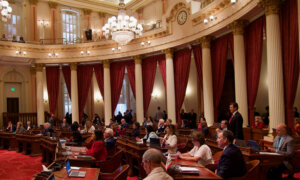
“But for an issue like this one, the Delta Conveyance Project ... especially given how complex of a project this is and how controversial it’s been,” she said, the legislature would benefit from the chance for thorough discussions “in a more deliberate fashion such as through the policy process where it would go through the various committees. They could have hearings, listen to testimony, hear the opinions and expertise of people who have been working on these issues.”
Support and Opposition
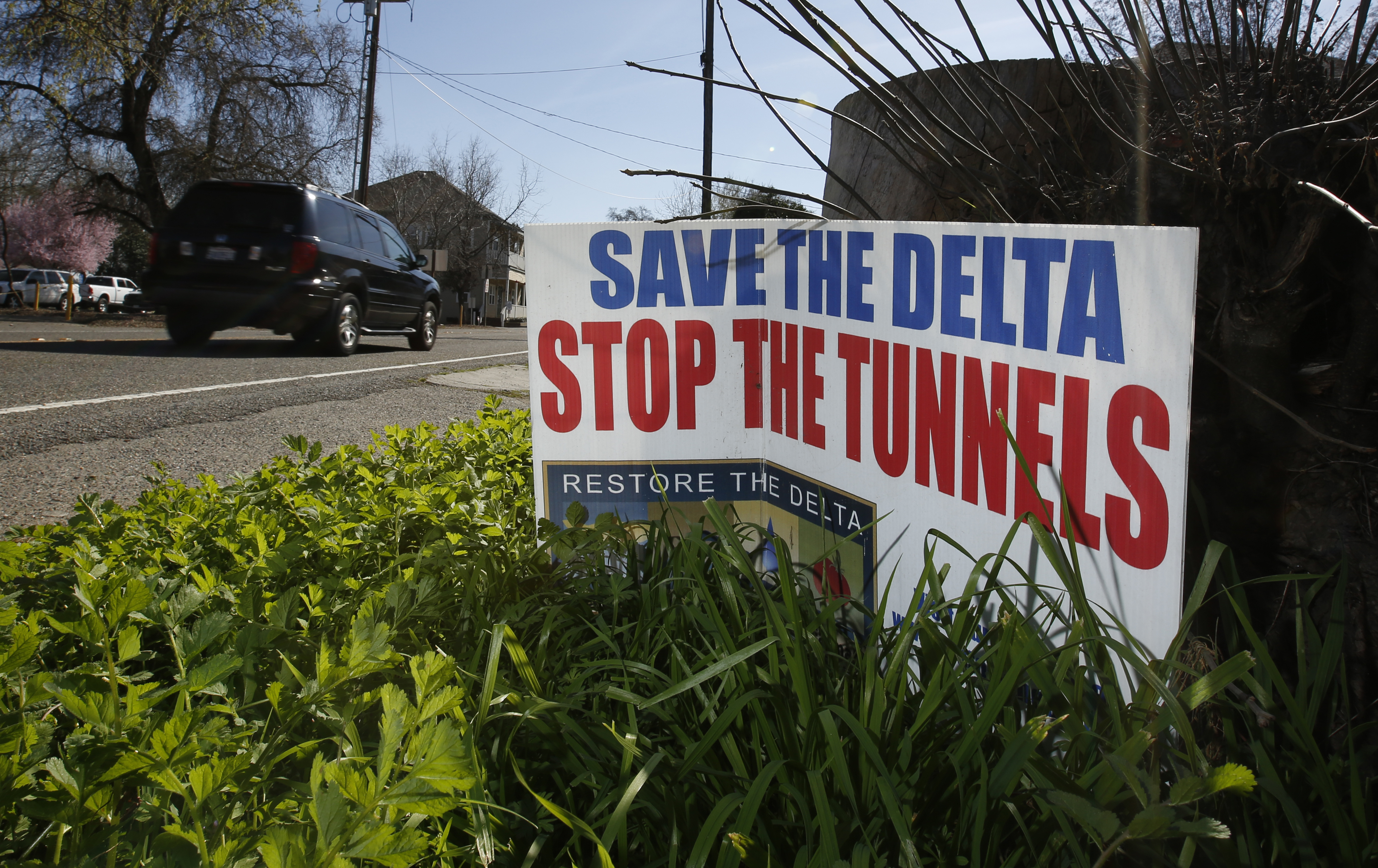
The Delta Conveyance Project differs from existing state and federal water projects in the region in that it would bypass the Sacramento-San Joaquin Delta, with a goal of reducing disruption to the delicate Delta region, and divert water directly from the Sacramento River North of the Delta, through a proposed 45-mile underground tunnel, which would then connect to aqueducts downstream to send water south.
Officially proposed in early 2020 by the California Department of Water Resources, the project completed its Environmental Impact Report in December 2023, with an addendum to the final impact report updated in February 2025. It was poised to advance to the next steps of engineering, design, and permitting, the water department said at the time.
“[But] its path forward is burdened by complicated regulatory frameworks and bureaucratic delays,” Newsom’s office said in a statement in May after releasing the revised budget.
“For too long, attempts to modernize our critical water infrastructure have stalled in endless red tape, burdened with unnecessary delay,” Newsom said. “Our state needs to complete this project as soon as possible, so that we can better store and manage water to prepare for a hotter, drier future.”
Newsom’s budget trailer bill met strong resistance from environmental groups, tribal groups, and state legislators from the informal Delta Caucus, comprised mainly of policymakers representing the northern part of the state and the Delta region.
“Governor Newsom’s proposal to fast-track the costly and destructive Delta Tunnel Project in the state budget is an ill-conceived plan that the Legislature should reject,” state Sen. Jerry McNerney of Pleasanton, California Legislative Delta Caucus co-chair, said.
The project “will destroy nearly 4,000 acres of prime farmland in the fragile Delta, along with salmon fisheries and tribal resources,” he said.
McNerney said that the tunnel’s costs “would have to be shouldered by ratepayers who are already overburdened by skyrocketing utility bills.”
On the other hand, more than 90 organizations, including many water agencies, chambers of commerce, and business associations, supported Newsom’s proposal.
“The Governor’s proposal removes barriers to innovation and advancement for our state’s water system, while protecting the environment and meeting all regulatory and operational requirements,” said Jennifer Barrera, president and CEO of the California Chamber of Commerce.
The Delta Conveyance Project is viewed by proponents as a critical climate-resilience initiative to modernize California’s aging water infrastructure, the governor’s office stated.
Existing Water Projects in the Region
Sacramento-San Joaquin Delta, often referred to as the California Delta or simply the Delta, is situated in the heart and western edge of California’s Central Valley flat, the primary region for the state’s agricultural production.
The Delta is where the Sacramento River from the north and the San Joaquin River from the south converge before flowing into the San Francisco Bay.
Existing water projects managed by the state, the State Water Project, or the federal Central Valley Project all export water from the Delta and deliver it via different systems of aqueducts and canals, serving Southern California cities and Central Valley farmlands, according to the LAO and Petek.