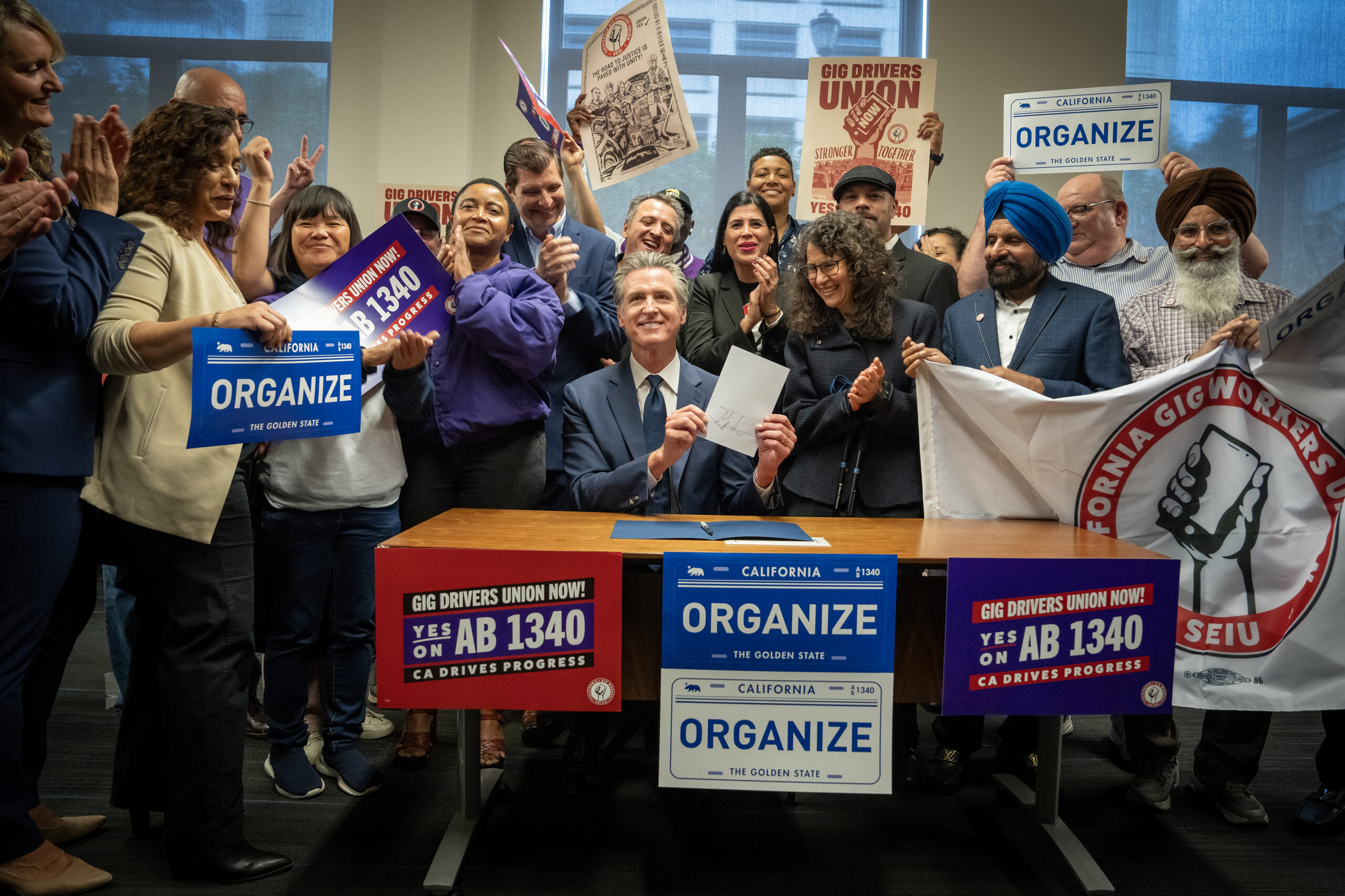

Surrounded by union representatives in Berkeley, California, Gov. Gavin Newsom on Oct. 3 signed into law a bill to allow rideshare drivers to unionize.
The governor hailed Assembly Bill 1340 as a victory for drivers.
“In California, we’re ... proving government can deliver—giving drivers the power to unionize while we continue our work to lower costs for families,” Newsom said in a statement.
Supporters of the legislation also said that the law is a win for workers’ rights in the state.
Newsom and state lawmakers brokered a deal in September with Uber and Lyft, granting rideshare drivers the right to unionize while also preserving their status as independent contractors.
The agreement paired AB 1340 with a senate bill that reduced costs by cutting insurance mandates from $1 million per person to $60,000 per person and $300,000 per accident.
Newsom’s administration estimates that California is home to about 800,000 rideshare workers who mostly work for Uber and Lyft. Other rideshare companies also operate in California but in most cases are specialized for airport transportation or other specialty services.
“This law is about dignity and fairness for the people who keep California moving,” the bill’s author, Assemblywoman Buffy Wicks (D-Oakland), said in an Oct. 3 statement. “For too long, drivers have not had a meaningful seat at the table in helping to shape their livelihoods.”
Tia Orr, the director of the California branch of the Service Employees International Union, said the state was sending the message that “workers are empowered and valued.”
“Shared prosperity starts with unions for all workers,” Orr said in a statement.
The law, which goes into effect on Jan. 1, 2026, establishes the Transportation Network Company Drivers Labor Relations Act and requires the state’s employment relations board to protect the collective bargaining rights of rideshare drivers.
The legislation allows drivers to self-organize into a union and choose representatives.
It declares that it is state policy to promote collective bargaining rights for the drivers covered under the act.
The act also establishes a system to authorize negotiations between the drivers and the companies that pay them and requires companies to make deductions for voluntary union dues and membership fees.
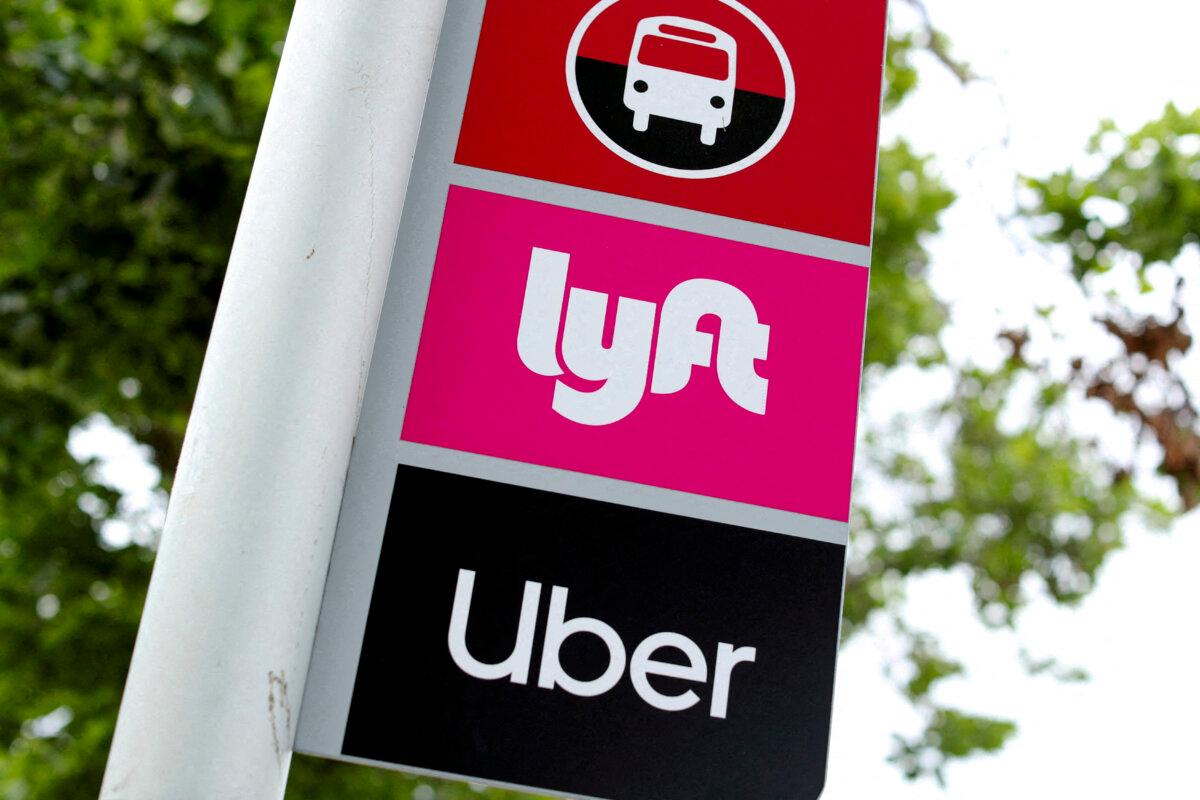
A sign marks a rendezvous location for Lyft and Uber users at San Diego State University in San Diego on May 13, 2020. (Mike Blake/Reuters, File Photo)
The legislation accommodates the voter-approved Proposition 22, passed in 2020, known as the App-Based Drivers and Services Act. Prop. 22 classified rideshare drivers as independent contractors rather than employees.
According to Wicks, the bill will give rideshare drivers the ability to seek access workers’ compensation, sick leave, and overtime. As independent contractors, the drivers aren’t covered by the National Labor Relations Act and therefore previously had no rights to organize or bargain with companies.
The drivers have to take on fuel expenses and pay for maintenance of their vehicles, along with any costs that could arise from accidents, Wicks stated in a legislative analysis of the bill.
When AB 1340 goes into effect next year, these issues can be resolved, according to Wicks and union representatives.
Assemblyman Marc Berman (D-Menlo Park) said that the bill is a “historic leap forward” for fairness and dignity for the workers.
“Rideshare drivers are the backbone of the gig economy, and for too long they have been denied the same rights and protections others take for granted,” Berman said in a statement. “This new law changes that.”
Uber and the California Chamber of Commerce initially opposed the bill as it made its way through the state Senate, saying it would change the way Uber and other services operate.
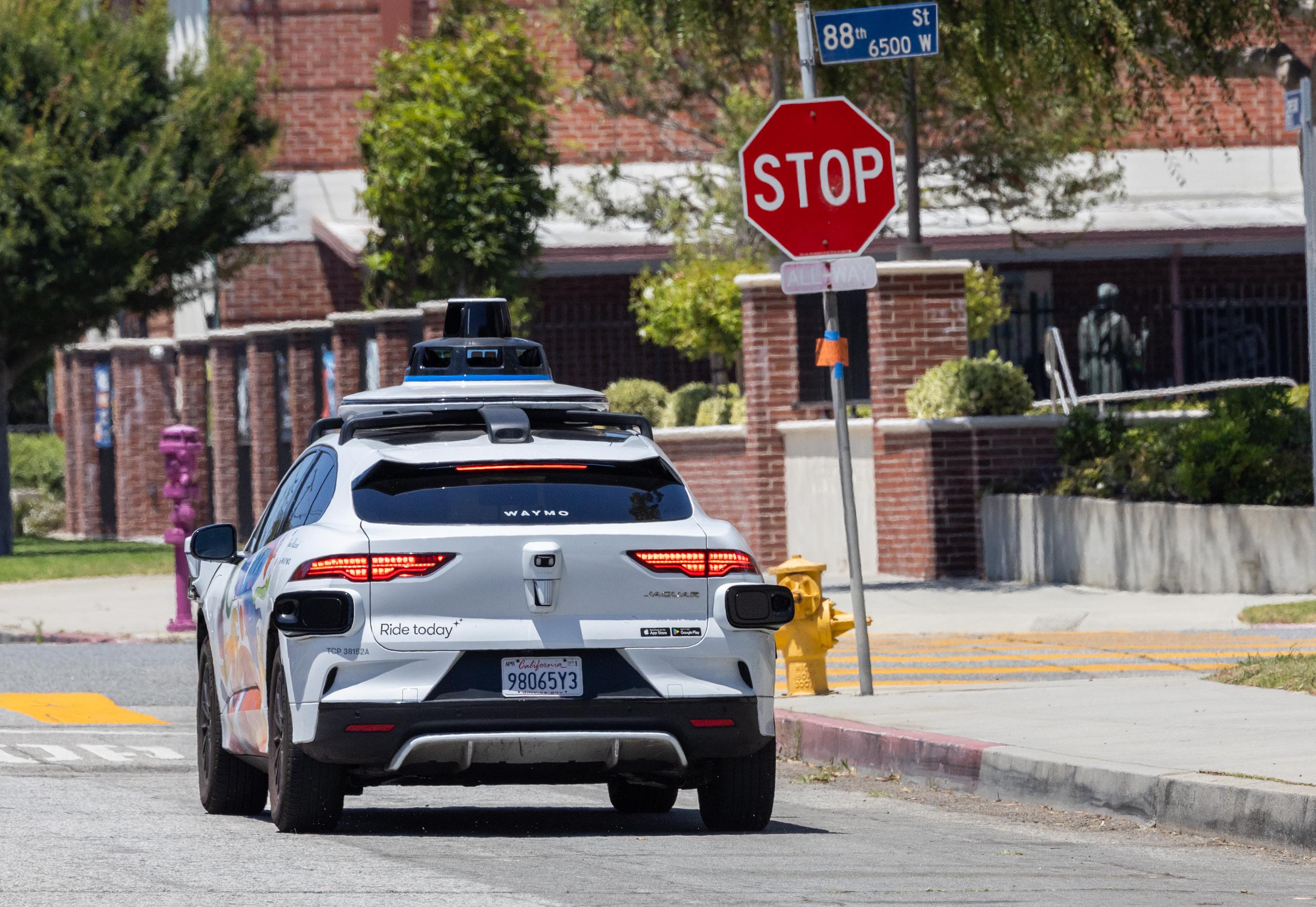
A self-driving Waymo vehicle awaits passengers in Los Angeles on July 1, 2025. (John Fredricks/The Epoch Times)
“If passed as written, AB 1340 would fundamentally alter the way platforms such as Uber operate,” the company said in a statement in August. “It will drive up costs in a state already struggling with affordability, disproportionately hurt low-income communities, and ultimately reduce driver earnings as demand falls.”
Uber and Lyft already face competition from emerging autonomous robotaxi services. Waymo and Tesla have made inroads into California’s cities. Tesla began operating its supervised robotaxi service in the San Francisco Bay Area in July, and Waymo started services in San Francisco and Los Angeles last year.