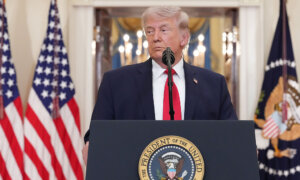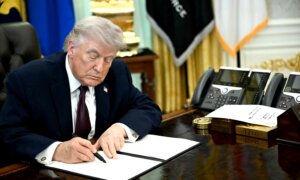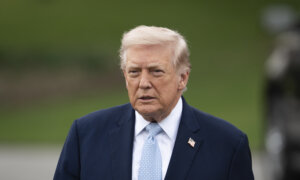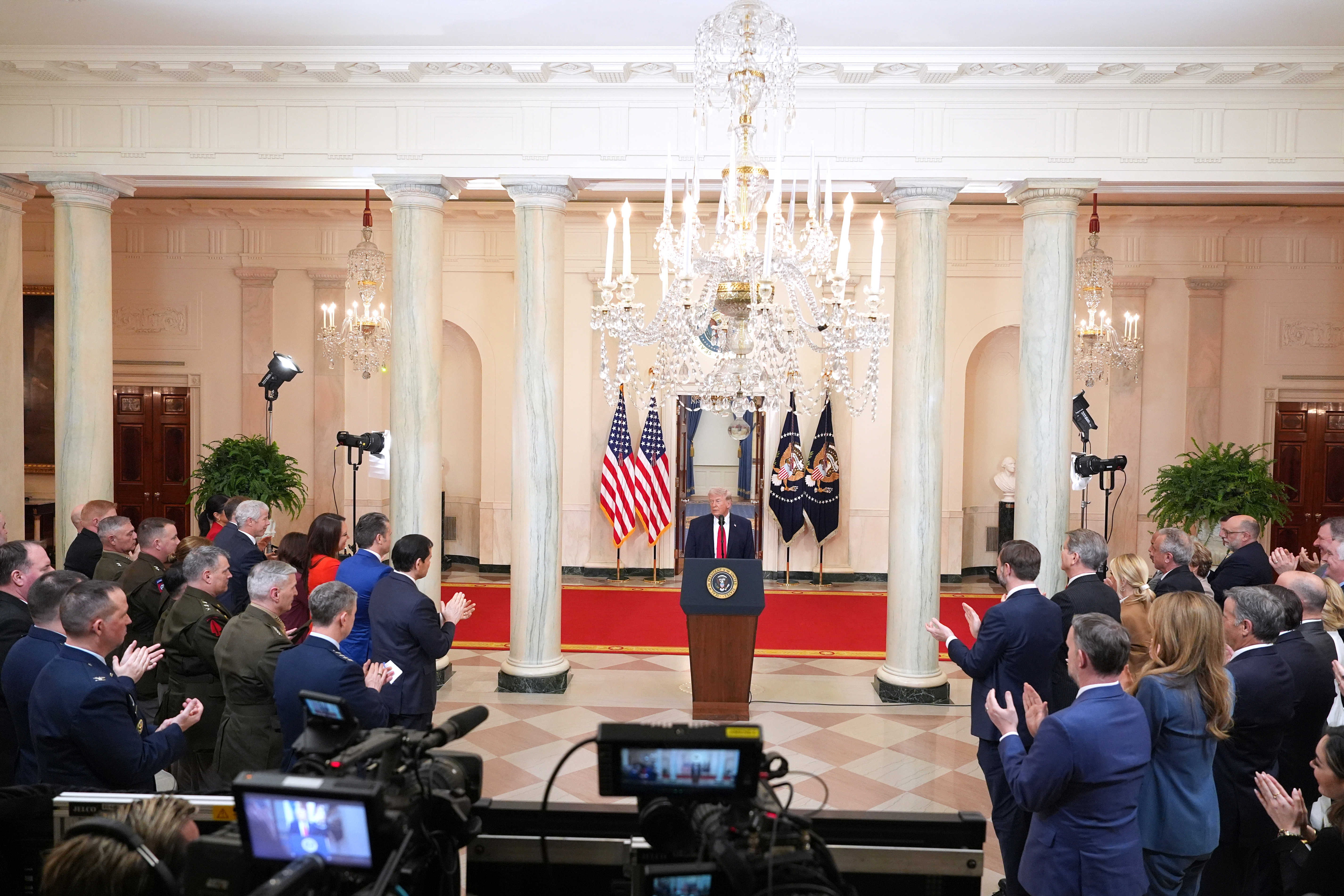


WASHINGTON—In a primetime address on April 1, President Donald Trump described combat operations as nearly complete after just over a month of fighting.
“Never in the history of warfare has an enemy suffered such clear and devastating large-scale losses in a matter of weeks,” Trump said in his White House speech.
In the hours before the president’s remarks, U.S. forces announced they had struck more than 12,300 Iranian targets since commencing combat operations—known as Operation Epic Fury—on Feb. 28. Israeli forces have also conducted thousands of strikes on Iran over the past month.
Meanwhile, Iranian forces kept launching missile and drone attacks against Israel and various other countries across the region, targeting places that have hosted U.S. forces.
Here’s what Trump said about the state of the conflict.
Core Strategic Objectives ‘Nearing Completion’
Since the start of Operation Epic Fury, the Trump administration has defined its objectives as destroying Iran’s navy, ending its missile production capacity, breaking up its support for regional proxies, and preventing it from attaining a nuclear weapon.
“I’m pleased to say that these core strategic objectives are nearing completion,” Trump said on Wednesday night.
Among its list of targets, U.S. forces have reported striking more than 155 Iranian vessels, including traditional warships, as well as minelaying vessels.
U.S. and Israeli forces continue to battle with Iran’s network of partners and proxies.
Hezbollah, a designated terrorist group long considered an ally to Iran, has skirmished with Israeli forces along the Lebanon border.
Yemen’s Houthi movement, another designated terrorist group aligned with Iran, has also begun to fire missiles at Israel in recent days.
Separately, U.S. forces have carried out strikes against Iranian-aligned militia groups in Iraq.
Trump said Operation Epic Fury will continue until all objectives are complete.
“We’re going to hit them extremely hard over the next two to three weeks,” he said. “We’re going to bring them back to the stone ages, where they belong.”
US Monitoring Iranian Nuclear Sites
Blocking Iran’s access to a nuclear weapon poses a potentially open-ended objective.
U.S. forces struck three Iranian nuclear facilities in June 2025.
Before those strikes, Iran had amassed a stockpile of uranium enriched to 60 percent purity. Such purity is higher than necessary for nuclear energy or medical research but shy of weapons-grade material.
The Trump administration has said the United States would not allow the terrorism-backing Iranian regime to obtain a nuclear weapon. U.S. and Iranian negotiators had been discussing Iran’s highly enriched uranium stockpile, and their third round of talks failed to reach an agreement in Geneva two days before the launch of Operation Epic Fury. Hours before the United States struck Iran on Feb. 28, mediatory and Omani Foreign Minister Badr al-Busaidi said Tehran was willing to give up the uranium and submit to an inspection program.
In his Wednesday night remarks, Trump said the nuclear sites that U.S. forces struck last year were “hit so hard that it would take months to get near the nuclear dust” remaining at those facilities.
Rather than potentially risking U.S. forces to go in and take possession of this nuclear material, Trump signaled a willingness to remotely monitor the sites and carry out additional long-range strikes to ensure the material remains inaccessible.
“We have it under intense satellite surveillance and control,” he said. “If we see them make a move, even a move for it, we’ll hit them with missiles very hard again.”
Trump Threatens to Hit Energy Plants If No Deal Reached
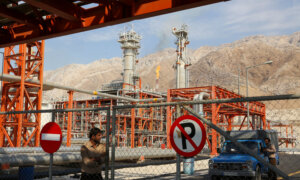
The president reiterated threats made to expand attacks and target power and energy infrastructure in Iran if the regime fails to agree to his terms.
“We have our eyes on key targets,” Trump said. “If there is no deal, we are going to hit each and every one of their electric generating plants, very hard, and probably simultaneously.”
Operations have refrained from destroying the nation’s oil, he said, “though that’s the easiest target of all, because it would not give them even a small chance of survival or rebuilding.”
Iranian President Masoud Pezeshkian published a letter to the American people in an X post April 1, condemning U.S. threats to destroy power plants.
“Attacking Iran’s vital infrastructure—including energy and industrial facilities—directly targets the Iranian people,” he wrote, citing potential human and economic tolls. “Beyond constituting a war crime, such actions carry consequences that extend far beyond Iran’s borders.”
Trump urged Iranian officials to negotiate in good faith, saying that the United States is winning decisively.
“We have all the cards,” the president said. “They have none.”
Hormuz Strait ‘Will Open Up Naturally’ When Conflict Is Over
Trump predicted the Strait of Hormuz, a choke point for oil and gas flows during the conflict, would “open up naturally” once the war subsides.
“They’re going to want to be able to sell oil, because that’s all they have to try and rebuild,” Trump said. “It will resume the flowing, and the gas prices will rapidly come back down.”
He blamed Iran for the spike in fuel costs, saying prices will be lower soon.
“This short-term increase has been entirely the result of the Iranian regime launching deranged terror attacks against commercial oil tankers in neighboring countries that have nothing to do with the conflict,” Trump said. “This is yet more proof that Iran can never be trusted with nuclear weapons.”
European allies and others that rely on the oil will need to maintain security in the strait, as the United States is and will remain energy independent, according to the president.
“They must grab it and cherish it. They can do it easily,” Trump said. “We will be helpful, but they should take the lead in protecting the oil that they so desperately depend on.”