
WASHINGTON—President Donald Trump hosted a gathering of farmers at the White House on March 27 to promote the Farm Bill and announce policy changes aimed at protecting farmers, including updates to renewable fuel standards and new loan programs.
Trump criticized the strict regulatory actions taken during the Biden administration.
“We had a ridiculous Washington restriction,” Trump said, referring to diesel exhaust fluid requirements enacted by his predecessor.
“Today, we’re announcing new guidelines drastically limiting these ridiculous ... rules, saving farmers and consumers billions and billions of dollars.”
Regulatory changes—estimated to save Americans nearly $14 billion—including the elimination of sensor requirements, are intended to mitigate productivity losses caused by system failures, according to a statement from the Environmental Protection Agency.
“Failing [diesel exhaust fluid] systems are not an east coast or west coast or heartland issue; it is a nationwide disaster,” Administrator Lee Zeldin said in a statement.
“Today, we take another step in furthering our work by removing [the] sensors. Farmers and truckers should not be losing billions of dollars because of repair costs or days lost on the job.”
Trump estimated new fuel standards increasing production of American biofuels would generate more than $10 billion in rural economic benefit and create approximately 100,000 new jobs.
The president also announced new loans for farmers offered by the Small Business Administration meant to help lower food costs.
Administrator Kelly Loeffler will oversee the new “grocery guarantee” initiative, launched to provide borrowers with more lending opportunities by increasing the federal government’s guarantee from 75 percent to 90 percent.
Loans will help drive investments and bolster the country’s agricultural networks, providing capital to farmers, producers, and transportation companies, according to the agency.
“By fueling domestic capacity, we will continue to tackle the record-high prices of the Biden Administration and fill America’s grocery stores with affordable, nutritious, homegrown food,” Loeffler said in a statement.
The administration provided more than $7 billion in funding to rural communities last year—out of the $45 billion loaned nationwide to approximately 85,000 small businesses.
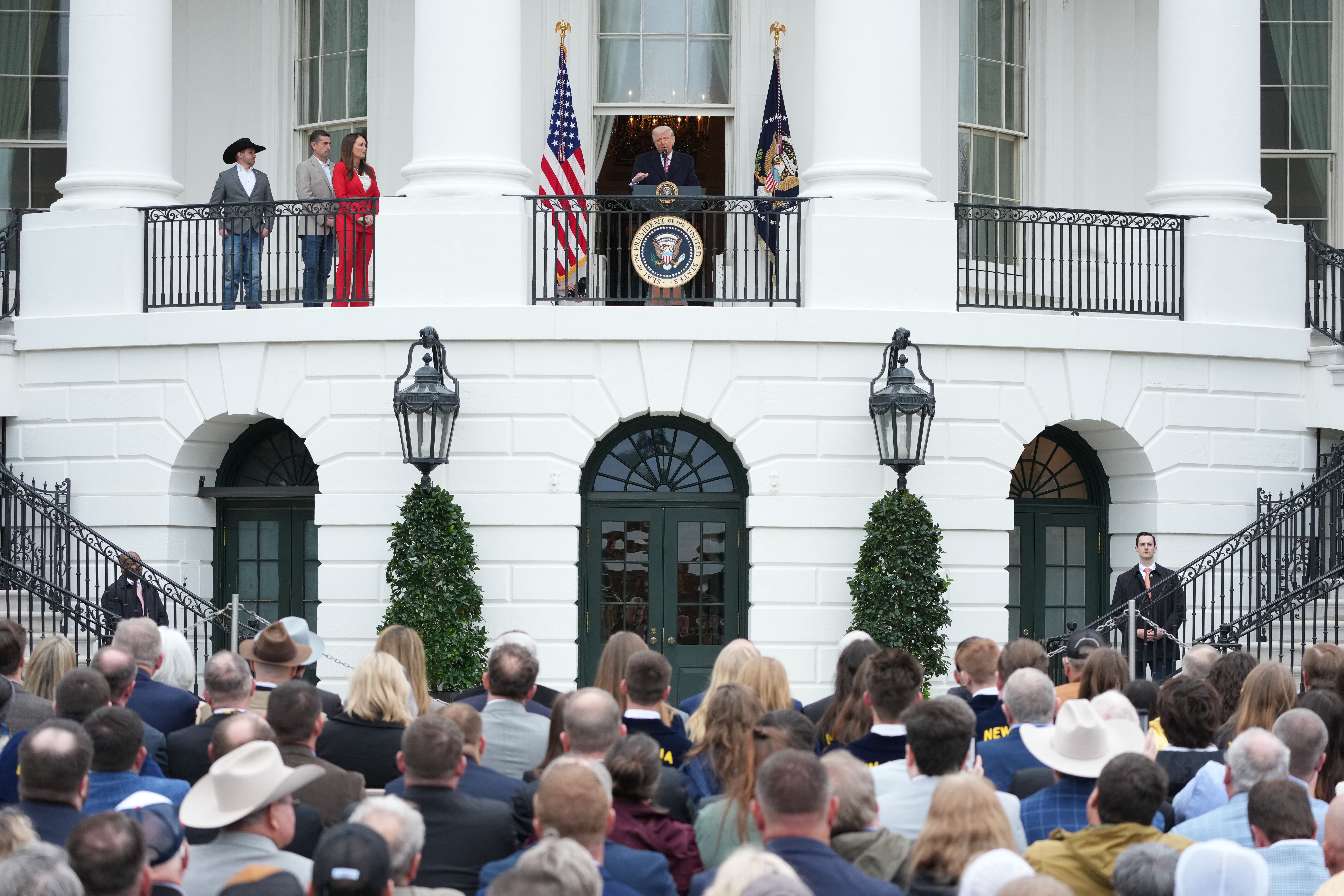
Trump made the remarks from the Truman Balcony of the White House during a ceremony for the Great American Agriculture Celebration on the South Lawn.
The president was joined by Zeldin, Secretary of Agriculture Brooke Rollins, Secretary of Health Robert F. Kennedy Jr., and other Cabinet members and lawmakers.
Representatives of the historic youth leadership organizations 4-H and the Future Farmers of America were in attendance.
Trump highlighted policy changes he enacted to protect farmers, including repealing regulations put in place by the Biden administration related to water and energy and allowing E-15 gasoline sales all year long.
He also mentioned changes included in the One Big Beautiful Bill Act allowing farmers and business owners to write off depreciation for equipment in one year and increasing the estate tax exemption to $15 million.
Additionally, the administration announced last month that farmers have a right to repair farm equipment and diesel machinery used off-road.
The policy change will save farmers money and increase productivity, according to officials.
“By protecting every American’s right to repair, we’re not just fixing devices, we’re securing a stronger, more independent future for our country,” Zeldin said in a statement.
Farmers are facing economic headwinds due to rising fertilizer and oil prices, which spiked after Israeli and U.S. military operations began against Iran on Feb. 28, threatening to push production, transportation, and food costs higher and further exacerbating inflationary pressures.
Wholesale prices of urea, a primary ingredient in nitrogen fertilizer production, are approaching $700 per ton as of March 27, a jump of more than 50 percent since early February.