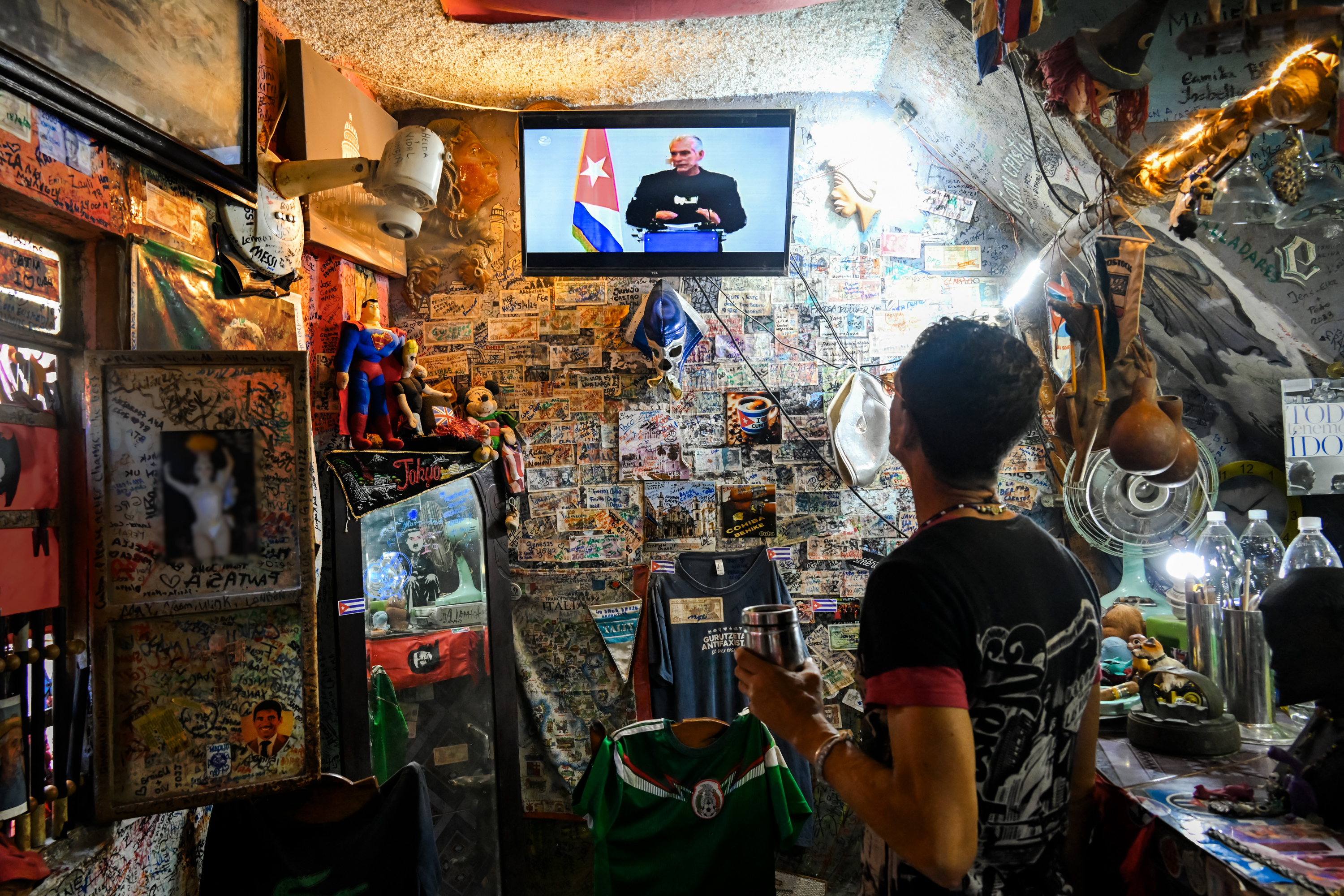
Selena Lambert Ortega, a 24-year-old from Santiago de Cuba, invited people to choose who they believed should be Cuba’s next president, in a Facebook poll posted on Jan. 12. Within hours, the post went viral.
Respondents overwhelmingly favored U.S. Secretary of State Marco Rubio, the son of Cuban American immigrants.
A few hours later, state security agents in Santiago de Cuba, the island’s second-largest city, summoned Lambert Ortega and ordered her to delete the poll.
Before the post was removed, Rubio had received about 35,000 votes, while the current Cuban leader, Miguel Díaz-Canel, received only 475.
What began as a simple post on social media turned into a revealing snapshot of current public sentiment, according to Ninoska Pérez Castellón, a radio host and prominent member of the Cuban exile community in Miami.
“The poll was taken off Facebook, but it shows you what the mentality is inside Cuba,” she told The Epoch Times.
When Pérez Castellón visited the U.S. State Department recently, she showed Rubio the Facebook poll.
The secretary of state laughed and joked that he did not want any extra work, Pérez Castellón said.
Rubio is leading negotiations with the Cuban regime and has clearly stated the U.S. position. Cuba has to change its political system “dramatically,” he told reporters on March 17, noting that the current leaders are incapable of fixing the failing economy.
“They have to get new people in charge,” Rubio said.
U.S. President Donald Trump and U.S. Secretary of State Marco Rubio answer questions about Cuba in the Oval Office on March 17, 2026. (Reuters)
For decades, Havana managed to withstand the U.S. embargo on Cuba with help from the Soviet Union, which provided subsidies until its collapse in 1991.
Later, Venezuela supported the Caribbean island by supplying oil at reduced prices. This has played a critical role in Cuba’s economy for the past two decades.
In the early 2000s, Venezuelan leader Hugo Chávez granted Havana access to his country’s rich oil reserves through a barter agreement that helped the island recover from its economic crisis.
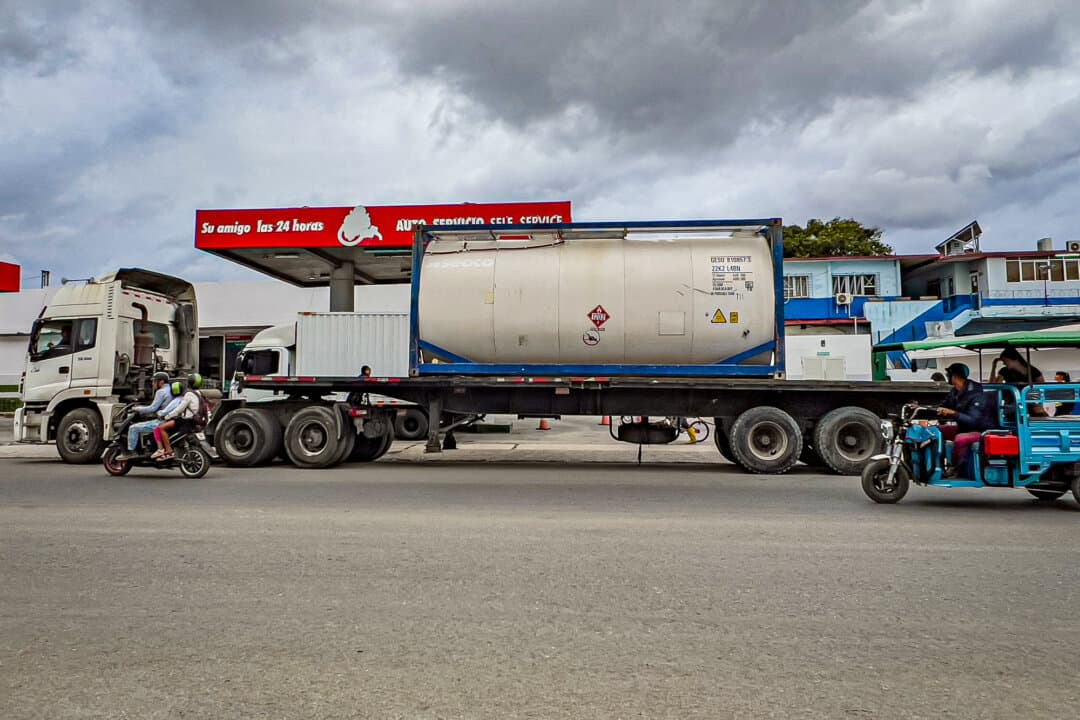
A truck belonging to a private Cuban company remains parked in front of a gas station with an ISO tank of imported fuel in Havana on March 19, 2026. The Cuban regime has allowed private small and medium-sized enterprises to source fuel via state importers to ease shortages, after Venezuelan and Mexican supplies dried up, and as the United States moved to license resales to Cuba's private sector. (Adalberto Roque/AFP via Getty Images)
Cuba received billions of dollars in crude oil and, in exchange, provided Venezuela with medical, technological, military, and intelligence support.
Following the U.S. military operation and capture of former Venezuelan leader Nicolás Maduro in early January, oil shipments from Venezuela were suspended.
Cuba now faces one of its most severe economic crises in decades.
Large protests erupted on the island amid frequent blackouts, severe food shortages, and limited access to medicine.
Cubans bang pots in protest as the national power grid collapses in Havana on March 16, 2026. (Reuters)
In Cuba, people are less afraid to protest, and many see that the embargo is not the main reason for their problems, Pérez Castellón said.
“This is a country that is in ruins,“ she said. ”You’ve seen the images of the trash piling up on the streets. You’ve seen people without electricity for long periods. Their food spoils.
“They have no water. They can’t wash their clothes or send the kids to school. So it is a whole drama of what people are living through there.”
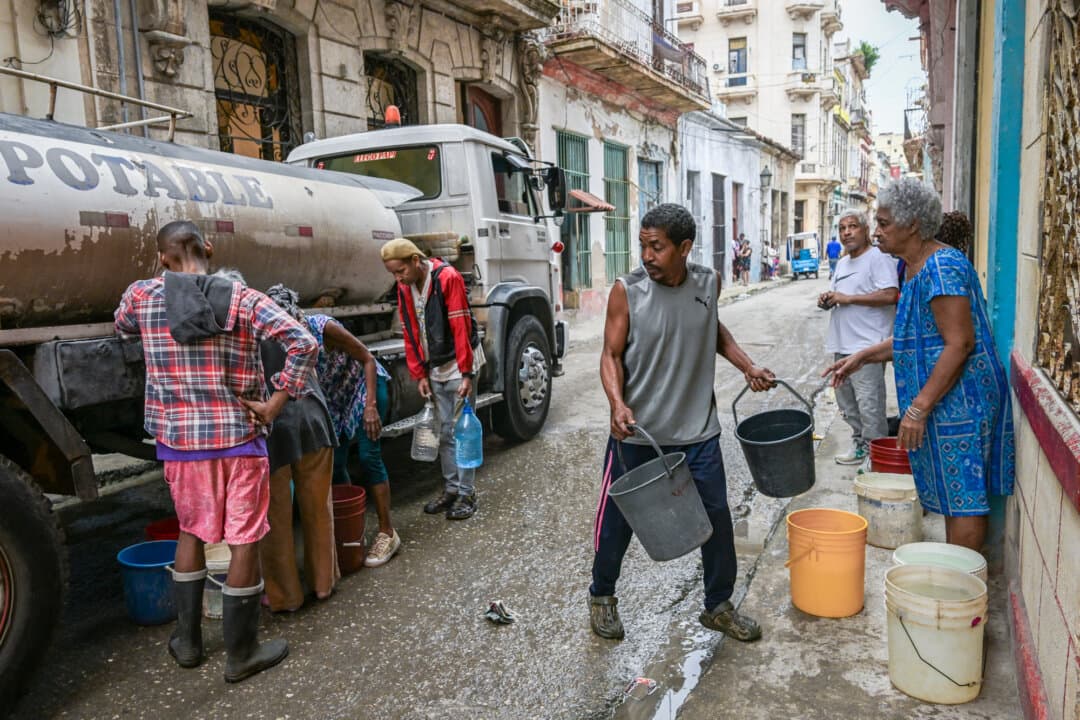
People wait to fill their jerry cans and buckets from a water tanker truck in Havana on March 20, 2026. (Yamil Lage/AFP via Getty Images)
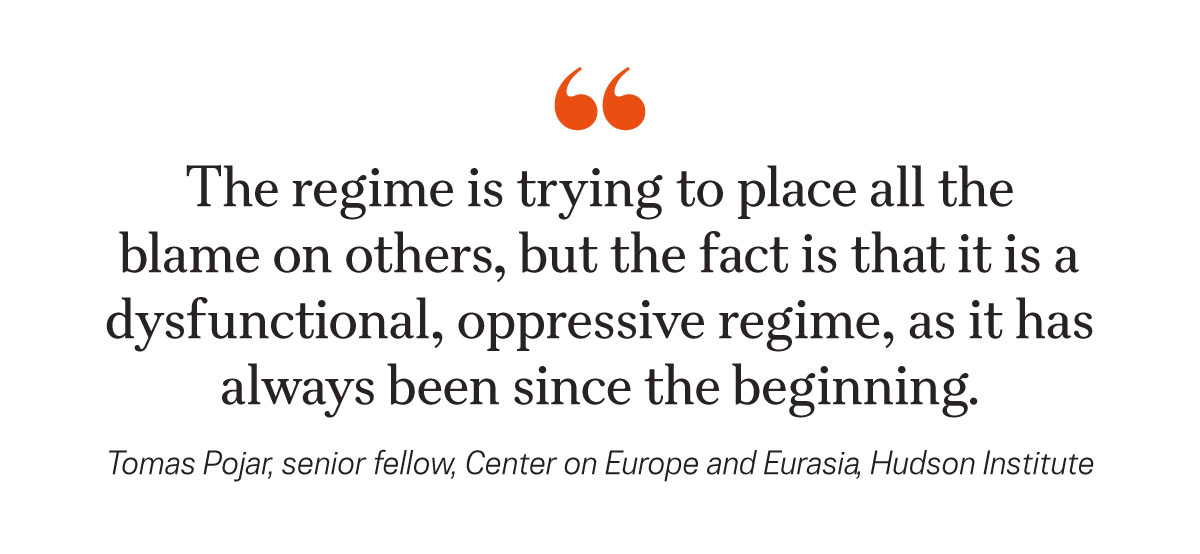
“The Cubans are suffering because of the regime that they have had there for decades. There is no doubt about it,” said Tomas Pojar, a senior fellow at Hudson Institute’s Center on Europe and Eurasia and former national security adviser to the Czech government.
“The regime is trying to place all the blame on others, but the fact is that it is a dysfunctional, oppressive regime, as it has always been since the beginning.”
According to Human Rights Watch, Cubans are fleeing the country in large numbers.
The island lost 10 percent of its population in recent years, according to government data, but independent studies show that the actual number could be much higher, Human Rights Watch stated in a report.
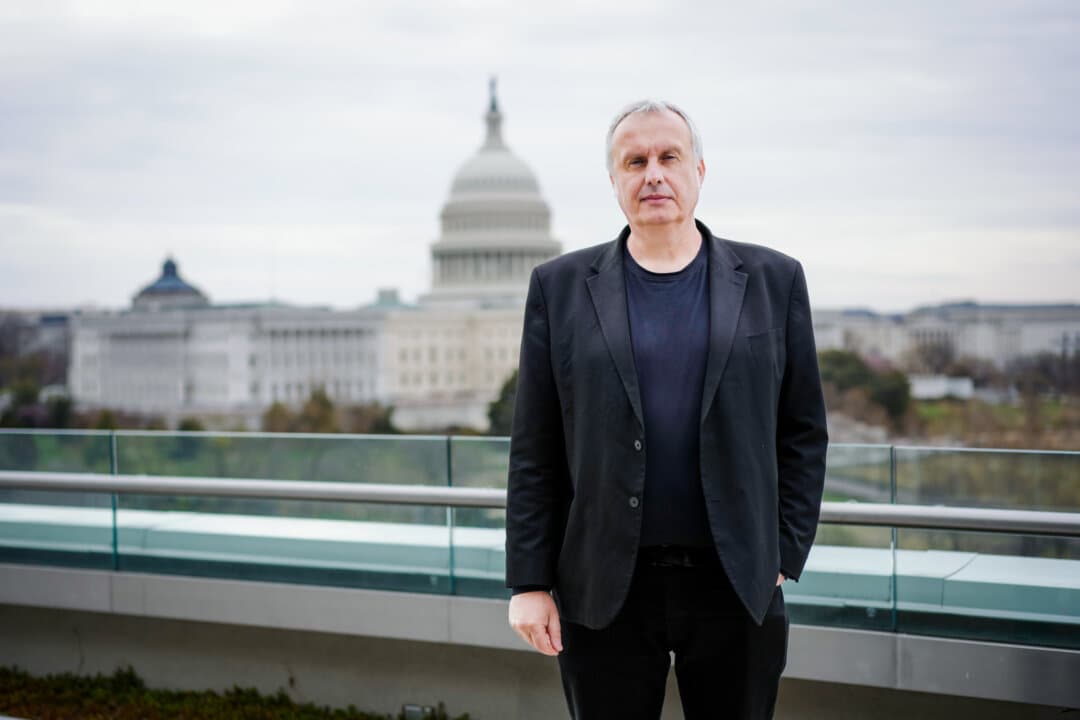
Tomas Pojar, a senior fellow at Hudson Institute's Center on Europe and Eurasia and former national security adviser to the Czech government, in Washington on March 18, 2026. (Madalina Kilroy/The Epoch Times)
US Demands Sweeping Changes
Rubio, when asked whether he would support easing the embargo on Cuba, pointed to the 1996 Helms–Burton Act.
“Suffice it to say, the embargo is tied to political change on the island,” Rubio said. “The embargo’s codified.”
The Helms–Burton Act, signed by President Bill Clinton, strengthened U.S. sanctions on Cuba and codified the embargo in law.
As a result, no president can unilaterally lift the sanctions until specific conditions are met.
The conditions stated in the law include releasing all political prisoners, legalizing political parties and a free press, and holding “free and fair elections” under international supervision.
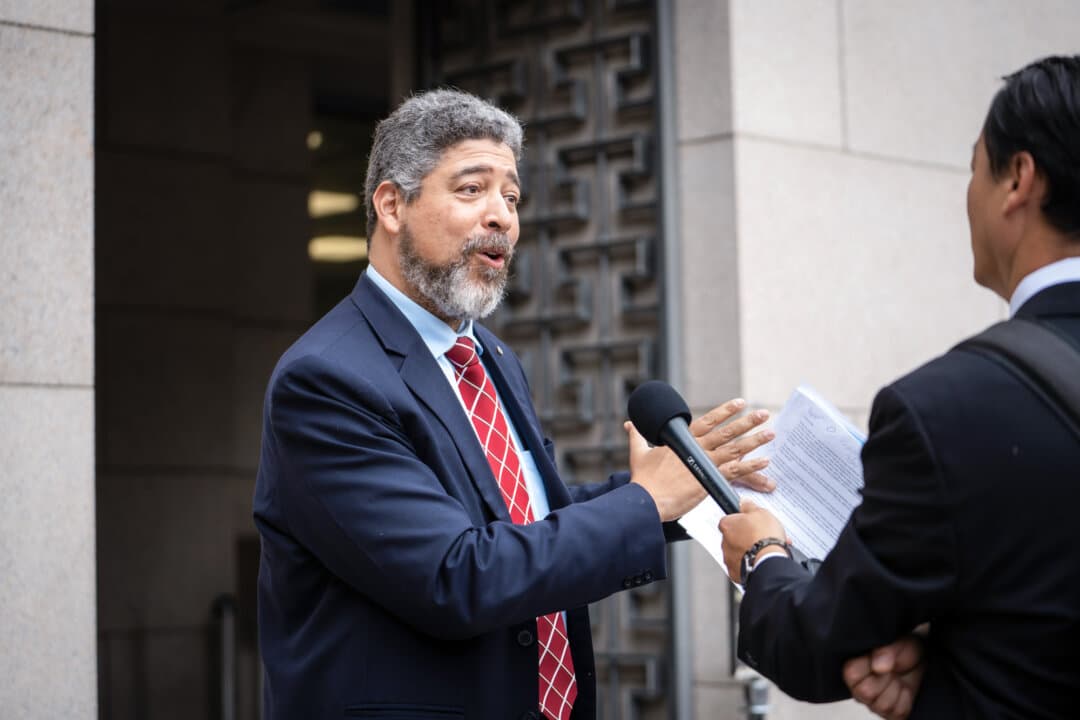
John Suarez, executive director at the Center for a Free Cuba, speaks during an interview after an event about escalating transnational repression by the Chinese Communist Party, on Capitol Hill in Washington on June 6, 2025. (Madalina Vasiliu/The Epoch Times)
Although Rubio has not publicly outlined the Trump administration’s demands, his emphasis on the law clearly signals U.S. demands in the ongoing negotiations, according to John Suarez, executive director at the Center for a Free Cuba in Washington.
“There are two possibilities for the United States: Congress repeals the law, or the regime fulfills those conditions to have the sanctions lifted,” Suarez said.
“There’s wiggle room to try to improve relations in certain areas, but fundamentally, the embargo does not go away until those conditions are met.”
Other provisions of the law call for progress toward a market-based economy and the establishment of an independent judiciary system. The law also requires compensation for U.S. properties confiscated on the island.
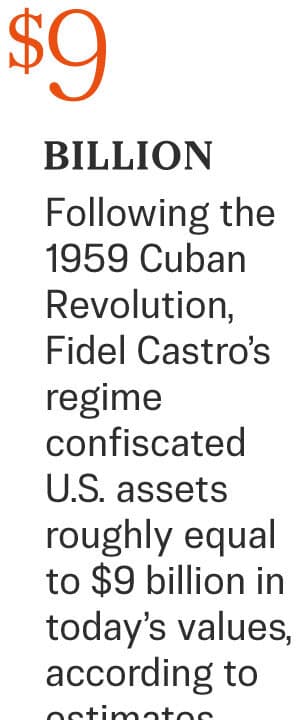
Following the 1959 Cuban Revolution, Cuban leader Fidel Castro’s government confiscated more than $1.9 billion in U.S. assets, including land, refineries, and factories.
The amount is roughly equal to $9 billion in today’s dollars, according to estimates.
Nearly 6,000 individuals and companies are now seeking compensation from the Cuban regime.
The law also requires that Cuba be governed by a “democratically elected government,” which specifically excludes the Castro brothers, Fidel and Raúl Castro.
Fidel Castro died in 2016 at age 90.
Raúl Castro, 94 and a former Cuban president, is still alive. He and his grandson, Raulito Castro, are reportedly involved in talks with the United States.
In Cuba, Raulito Castro is known as “El Cangrejo” (“the crab”) and works as his grandfather’s bodyguard. He has drawn criticism for his reportedly lavish lifestyle.
“The Castro family is still terribly influential, even if they don’t have a formal title,” Suarez said. “They still have a lot of sway in Cuba.”
Trump Pursues ‘Friendly Takeover’
In recent weeks, U.S. President Donald Trump has suggested that Cuba might be next, after U.S. forces captured Maduro in Caracas on Jan. 3 and initiated strikes on Iran on Feb. 28.
“Cuba’s at the end of the line,” the U.S. president said on March 7 in Miami during a summit with Latin American leaders.
President Donald Trump and War Secretary Pete Hegseth speaking at a Shield of the Americas event in Doral, Fla., on March 7, 2026. (Reuters)
However, on several occasions, he has said that he is pursuing a “friendly takeover” of the island.
He has also said he would have the “honor of taking Cuba.”
“That’s a big honor,“ he told reporters on March 16. ”They’re a very weakened nation right now.”
Trump did not clarify what he meant by “taking Cuba.”
President Donald Trump speaks to reporters about Cuba in the Oval Office on March 16, 2026. (AP)
Gen. Francis Donovan, head of U.S. Southern Command, told lawmakers in Washington on March 19 that the U.S. military is not rehearsing for an invasion of Cuba or actively preparing to take over the island.
In a recent post on X, Díaz-Canel reacted to Trump’s remarks.
“The U.S. publicly threatens Cuba almost daily,” he wrote on March 17.
“They intend and announce plans to seize the country, its resources, its properties, and even the very economy they seek to strangle to make us surrender.”
On March 13, the Cuban leader for the first time admitted that Havana had held talks with Washington.
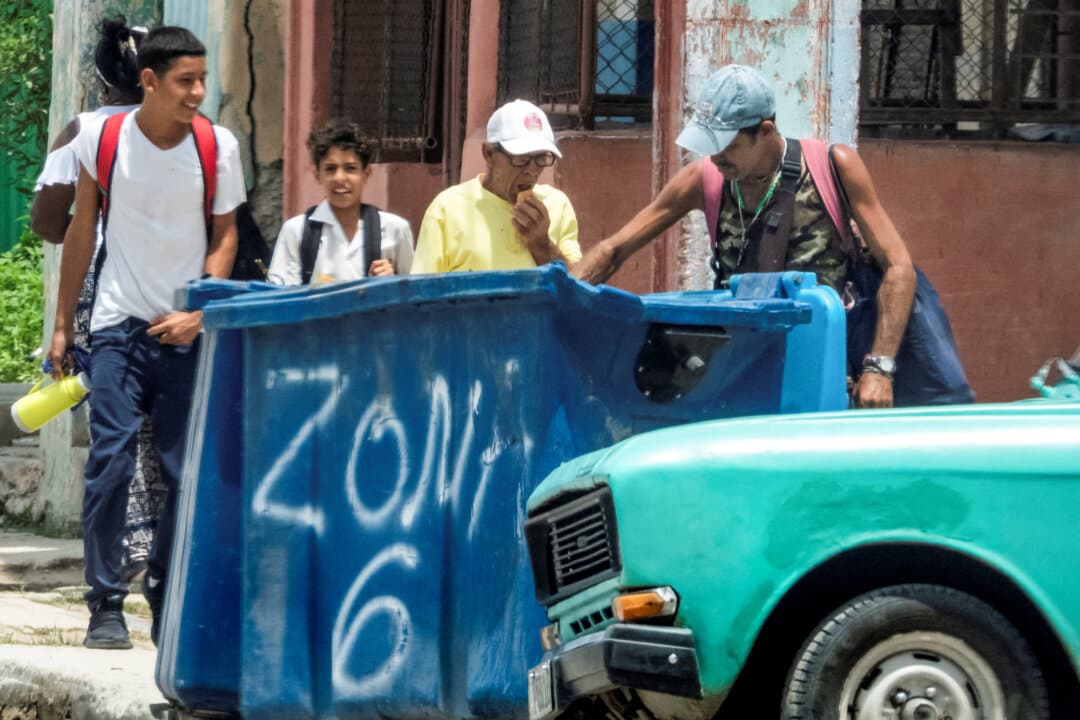
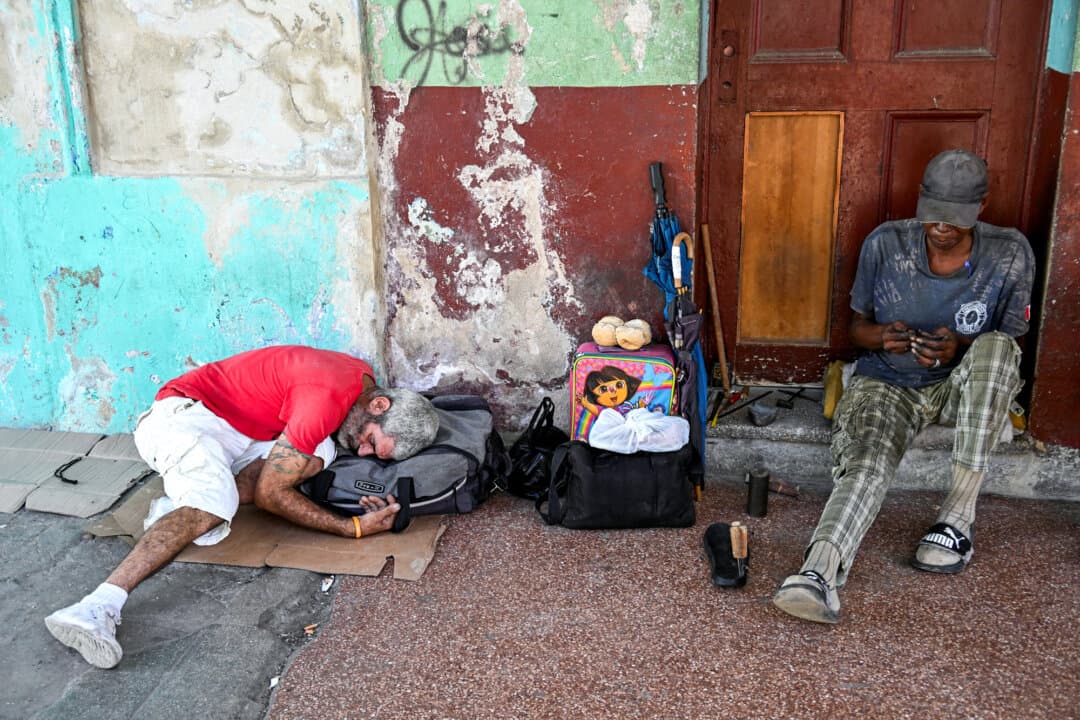
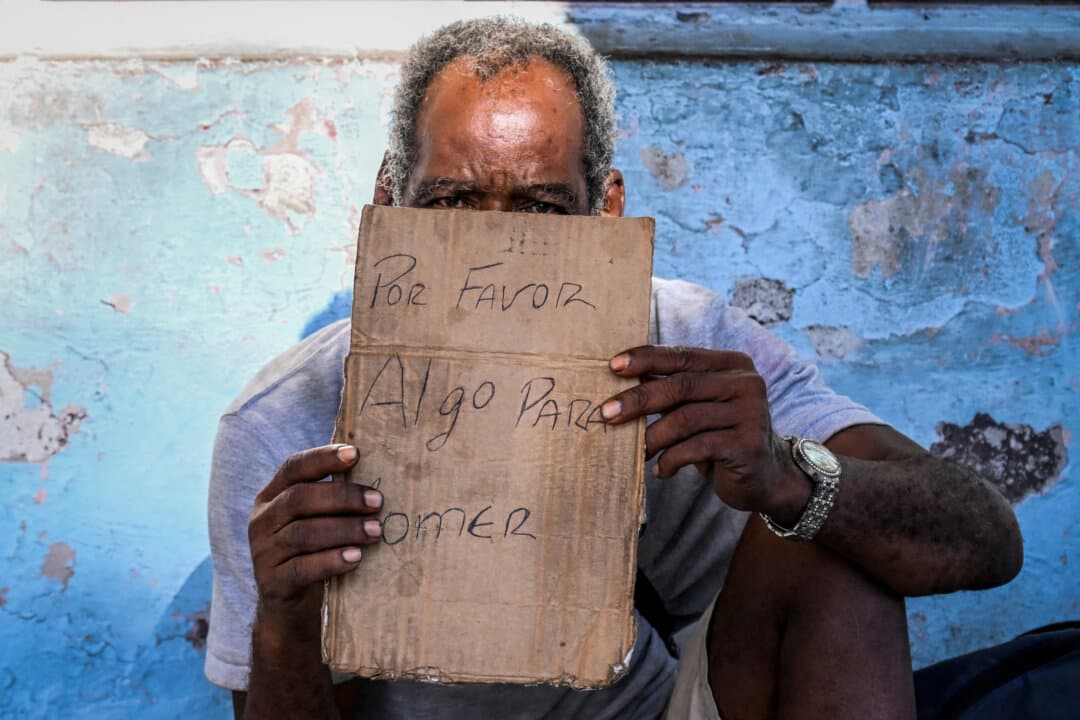
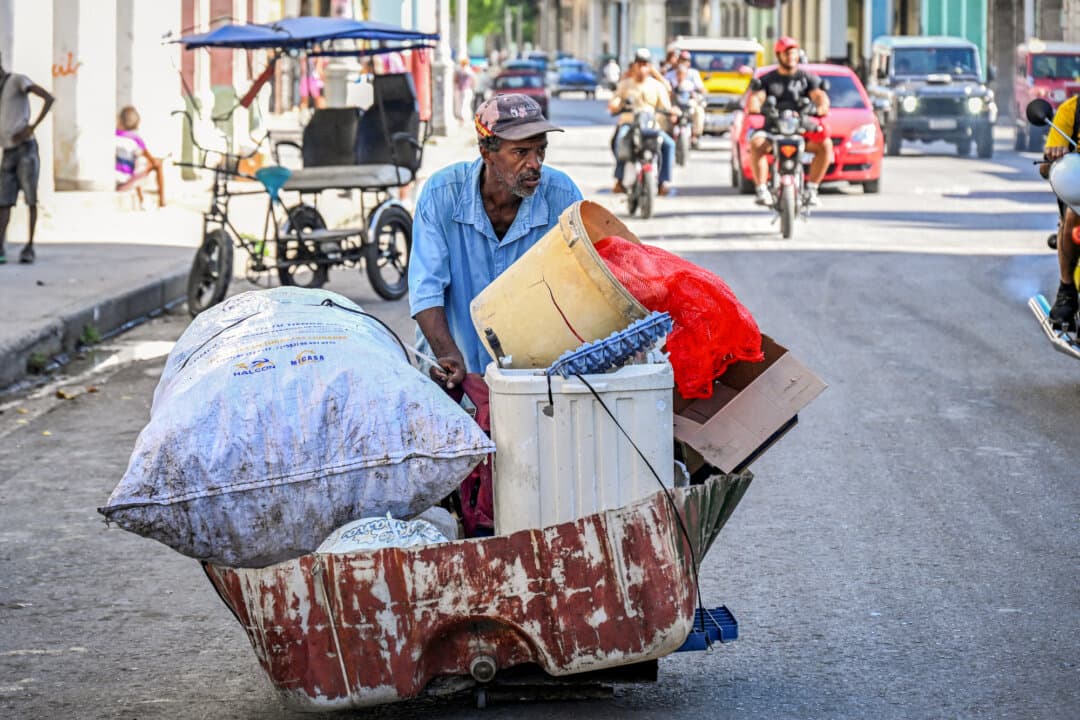
(Top Left) A man rummages through a dumpster in Havana on July 15, 2025. (Top Right) Homeless people sitting and lying on a street in Havana on July 21, 2025. (Bottom Left) A man begs for food on a street in Havana on July 21, 2025. (Bottom Right) A man carries collected garbage on a street in Havana on July 21, 2025. Poverty levels have increased sharply as the Caribbean country reckons with its worst economic crisis in three decades, marked by shortages of food, medicine, and fuel, as well as daily power blackouts. (Adalberto Roque/AFP via Getty Images, Yamil Lage/AFP via Getty Images)
His announcement came after Cuba said it would release 51 people from prison, a decision it attributed to its relationship with the Vatican.
The Spanish nonprofit Prisoners Defenders estimated that there were 1,214 political prisoners in Cuba as of February.
Although releasing some prisoners is a good start, all political prisoners must be freed, as required by the Helms–Burton Act, according to experts.
Cuba currently does not allow any legal opposition parties, and opposition figures who could gain support are often killed or put in prison. Hence, releasing prisoners is a significant step toward ensuring free and fair elections and supporting a democratic transition in Cuba, Suarez said.
Pérez Castellón agreed, noting that Cuba’s opposition remains fragmented, unlike in Venezuela.
“In Venezuela, [opposition leader] María Corina Machado had a whole movement behind her,” she said.
However, in Cuba, dissidents mostly act independently and operate in small groups.
U.S. officials, including Rubio, have spoken with some opposition members in Cuba, but there is no unifying figure comparable to María Corina Machado, she said.
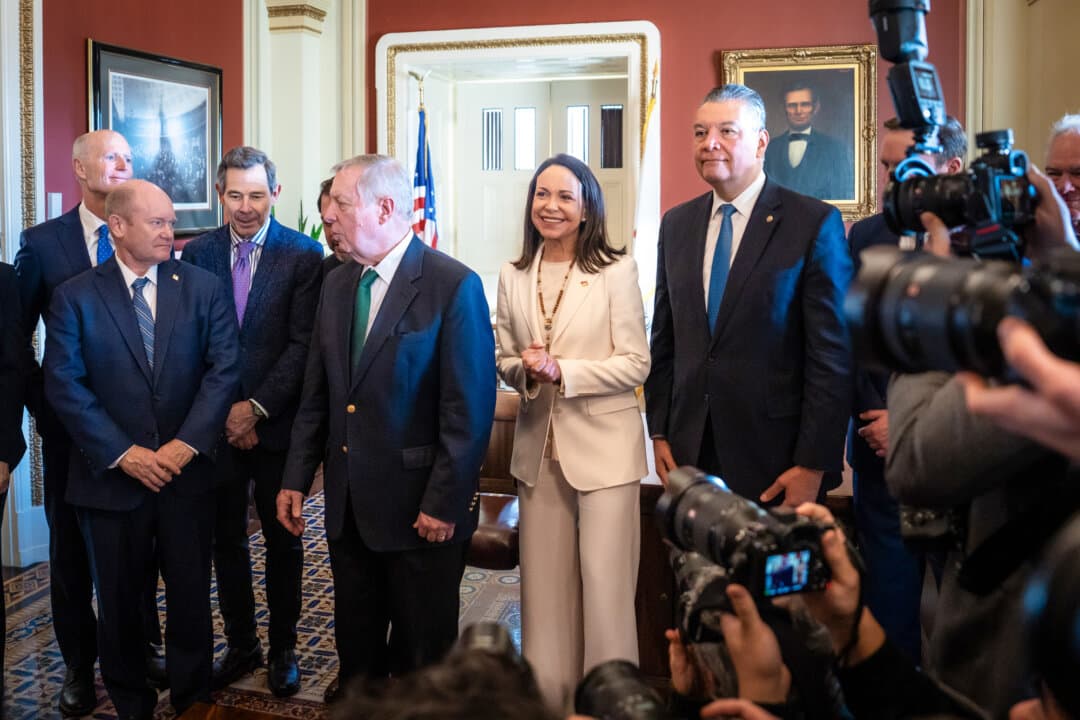
Venezuelan opposition leader María Corina Machado ahead of a meeting with lawmakers on Capitol Hill in Washington on Jan. 15, 2025. (Madalina Kilroy/The Epoch Times)