
WASHINGTON—Although joint U.S. and Israeli strikes have diminished Iran’s ability to exert influence throughout the Middle East, the U.S. intelligence community says the Shiite Islamic regime’s power structure remains intact.
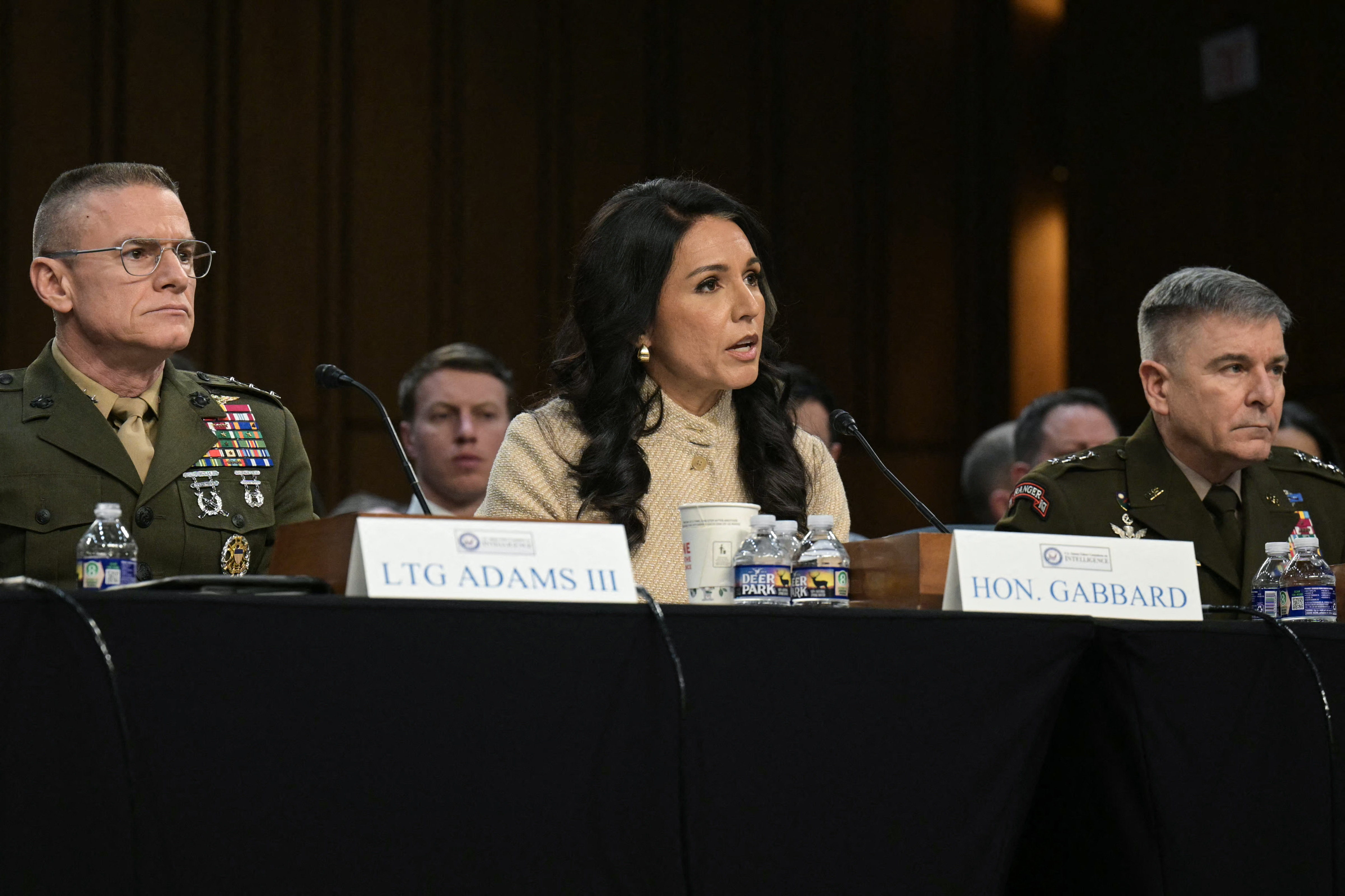
Director of National Intelligence Tulsi Gabbard made her comments during a Senate Intelligence Committee hearing on March 17 to discuss her office’s latest annual assessment of global threats.
“The regime in Iran appears to be intact but largely degraded by Operation Epic Fury,” Gabbard wrote in a prepared statement ahead of the Senate hearing.
Gabbard further assessed that Iran’s strategic position in the region had already slipped as a result of increased international economic sanctions before the ongoing joint U.S.–Israeli military operations.
The U.S. Central Command has reported nearly 8,000 U.S. strikes on Iranian targets since Feb. 28. The Israeli military has reported that its forces have conducted a similar number of strikes on Iranian targets.
In addition to targeting Iranian political and military leadership, U.S. and Israeli forces have worked to diminish Iran’s offensive ballistic missiles, one-way attack drones, and conventional air and naval forces.
“Even so, Iran and its proxies remain capable of and continue to attack U.S. and allied interests in the Middle East,” Gabbard said. “If a hostile regime survives, it will seek to begin a years-long effort to rebuild its missiles and [unmanned aerial vehicle] forces.”
Kent Resignation Fuels Threat Debate
Gabbard offered her testimony one day after Joe Kent resigned from his position as director of the National Counterterrorism Center.
In his resignation letter, addressed to President Donald Trump, Kent raised issues with the current hostilities in the Middle East and said Iran “posed no imminent threat to [the] nation.”
In her opening remarks before the Senate on March 18, Gabbard said the U.S. intelligence community has assessed that Iran “previously demonstrated space launch, and other technology it could use to begin to develop a militarily viable [intercontinental ballistic missile] before 2035, should Tehran attempt to pursue that capability.”
At another point during the hearing, Senate Intelligence Committee Chairman Tom Cotton (R-Ark.) asked CIA Director John Ratcliffe about the potential for Iran to pair its existing space launch technology with its medium-range ballistic missile know-how to produce an intercontinental ballistic missile in as few as six months.
Ratcliffe said that if Iran were allowed to continue pursuing longer missile ranges, it could eventually threaten Europe and then the United States.
“We know that Iran is gaining experience in these larger, more powerful booster technologies through its so-called space launch vehicle program,” Ratcliffe said.
“If left unimpeded, yes, senator, they would have the ability to range missiles to the continental U.S.”
In another exchange with Sen. Jerry Moran (R-Kan.), Ratcliffe said he did not see evidence that Iran had abandoned its nuclear ambitions or its desire to build missiles capable of reaching the United States.
Toward the end of the hearing, Sen. Jon Ossoff (D-Ga.) pressed Gabbard as to whether the U.S. intelligence community had determined that Iran posed an “imminent nuclear threat.”
“The intelligence community assessed that Iran maintained the intention to rebuild and to continue to grow their nuclear enrichment capability,” she initially replied.
As Ossoff reiterated the question, Gabbard said it is up to the president to determine what constitutes an imminent threat.
Ossoff said the intelligence community should be able to offer an assessment independent of the president.
Regional Disruptions Draw Scrutiny
Since the fighting began, Iranian forces have launched hundreds of ballistic missiles and one-way attack drones across the Middle East and disrupted commercial shipping traffic running through the narrow Strait of Hormuz.
Over the weekend, Iranian state media listed three port facilities in the United Arab Emirates as legitimate targets, alleging that those ports were used to support strikes on Iranian territory.
Following reported attacks on Iran’s South Pars gas field on March 18, Iranian forces threatened new strikes on oil facilities in Saudi Arabia, the United Arab Emirates, and Qatar.
At a White House news briefing on March 16, a reporter asked Trump whether he had been briefed about Iran’s potential retaliatory tactics.
“Nobody,“ Trump said. ”No. The greatest experts, nobody thought they were going to hit [those surrounding countries].”
During the hearing on March 18, Sen. Ron Wyden (D-Ore.) asked Gabbard about Trump’s remark and whether U.S. intelligence had assessed that Iran could target other nations in the region.
“The intelligence community has continued to assess the potential threats to the region, the existing threats to the region, and [is] providing those assessments to the policymakers and decision-makers,” she said.
Sen. Mark Kelly (D-Ariz.) asked Gabbard and Ratcliffe to say “yes or no” to the question whether they had briefed Trump on the likelihood that Iran would seek to close the Strait of Hormuz if attacked.
Gabbard said she would not comment on what briefings she has provided to the president.
Ratcliffe said, “There has been and continues to be analysis with respect to that.”
At a Pentagon news briefing last week, Secretary of War Pete Hegseth said reports that the Trump administration had underestimated the conflict’s potential impact on the Strait of Hormuz were “patently ridiculous.”
The U.S. Central Command announced on March 17 that U.S. forces had dropped multiple 5,000-pound deep penetrating bombs on Iranian missile sites near the Strait of Hormuz that threatened international shipping.
Correction: A previous version of this article misspelled the name of Sen. Jon Ossoff. The Epoch Times regrets the error.